
 #1 of 4
 #1 English-language movie of Week 6, 2005
2005 · Drama, Mystery
$67.2M worldwide · 59% of the chart's total
$46.8M US & Canada · 70% $20.4M elsewhere · 30%

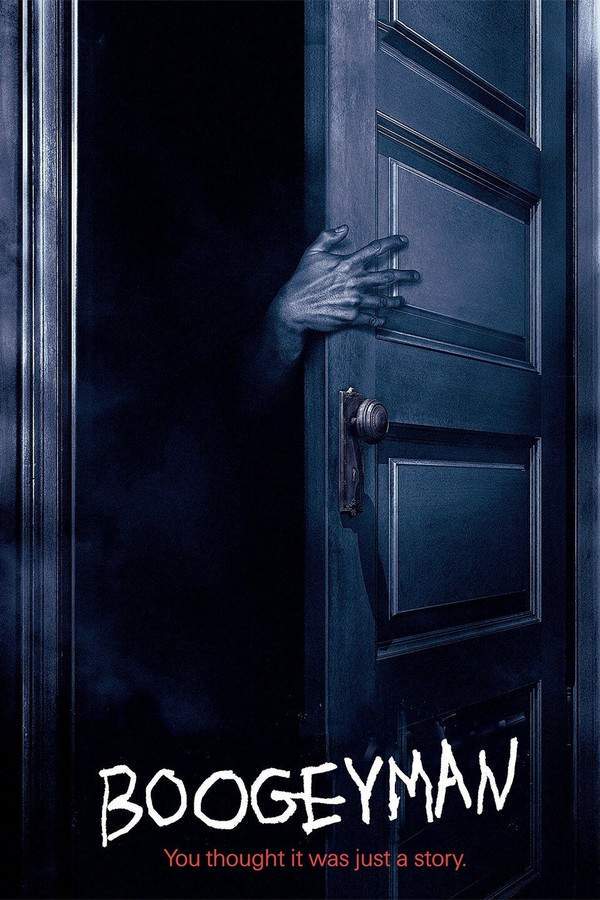
Boogeyman (2005) is the highest-grossing English-language movie released in week 6 of 2005 (Jan 30–Feb 5), with $67.2M worldwide, ahead of The Wedding Date (2005) at $47.1M and The Nomi Song (2005) at $74.6K. 4 English-language films released that week report a worldwide gross, $114.4M in all, 69% of it from the US & Canada. That is down 25% on Week 5, 2005, whose releases took $153.1M.
#1 of 4 2005 · Drama, Mystery
$67.2M worldwide · 59% of the chart's total
Boogeyman (2005) leads with $67.2M, 59% of the total. The top 4 together took $114.4M, almost all of what the 4 films earned. Each bar splits a film's gross into the US & Canada and the rest of the world.
Number 1  Number 2
  Number 3
  Number 4
 US & Canada (domestic) Rest of the world
Lifetime worldwide grosses in US dollars, not adjusted for inflation; domestic means the US & Canada. Films are grouped by their release date in week 6 of 2005 (Jan 30–Feb 5).
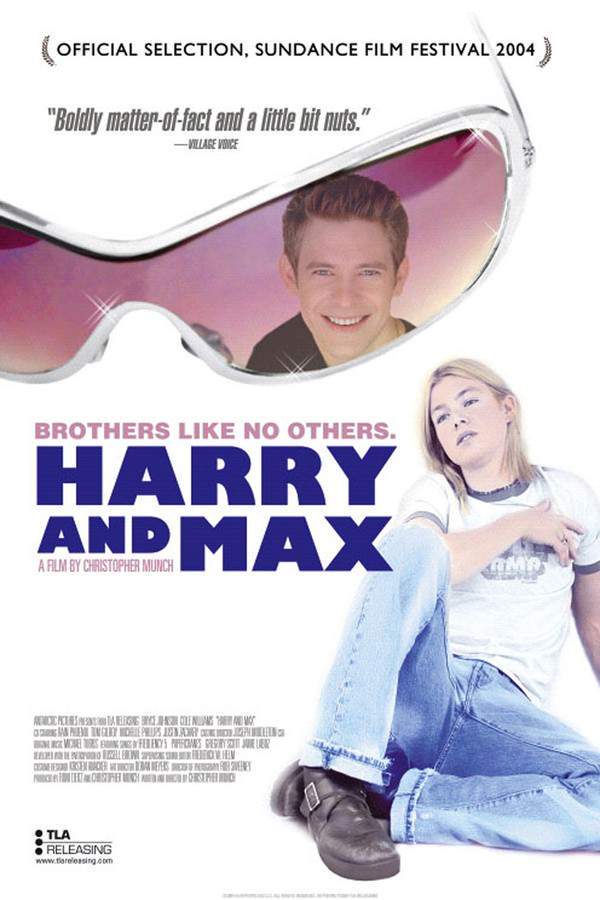
Feb 4, 2005 US and Canada: $46.8M Rest of the world: $20.4M Worldwide: $67.2M Feb 4, 2005 US and Canada: $31.7M Rest of the world: $15.4M Worldwide: $47.1M Feb 4, 2005 US and Canada: $74.6K Rest of the world: Worldwide: $74.6K Feb 4, 2005 US and Canada: $15.2K Rest of the world: Worldwide: $15.2K Of the top 4, The Nomi Song (2005) earned the biggest share at home (100% in the US & Canada), while The Wedding Date (2005) made 33% of its gross abroad. Across all 4 films, $78.6M (69%) came from the US & Canada.
Week 6 releases took $114.4M. The biggest of these 9 weeks is week 7 (Feb 6–12) with $449.9M, led by Hitch (2005).
Of these 10 years, Week 6, 2001 earned the most: $377.8M from 4 films, led by Hannibal (2001). Week 6, 2005 took $114.4M.
| Week | Films | Worldwide | Change | Biggest film |
|---|---|---|---|---|
| Week 6, 1996 Feb 4–10 2 films | 2 | $160.9M | – | Broken Arrow (1996) $150.3M |
| Week 6, 1997 Feb 2–8 4 films · +18% | 4 | $190.4M | +18% | Dante's Peak (1997) $178.1M |
| Week 6, 1998 Feb 1–7 4 films · −78% | 4 | $42.7M | −78% | The Replacement Killers (1998) $19.2M |
| Week 6, 1999 Jan 31–Feb 6 2 films · +289% | 2 | $166M | +289% | Payback (1999) $161.6M |
| Week 6, 2000 Jan 30–Feb 5 2 films · −2% | 2 | $162M | −2% | Scream 3 (2000) $161.8M |
| Week 6, 2001 Feb 4–10 4 films · +133% | 4 | $377.8M | +133% | Hannibal (2001) $351.7M |
| Week 6, 2002 Feb 3–9 5 films · −58% | 5 | $157.7M | −58% | Collateral Damage (2002) $78.4M |
| Week 6, 2003 Feb 2–8 3 films · +80% | 3 | $283.4M | +80% | How to Lose a Guy in 10 Days (2003) $177.5M |
| Week 6, 2004 Feb 1–7 9 films · −59% | 9 | $115.6M | −59% | Barbershop 2: Back in Business (2004) $66M |
| Week 6, 2005 Jan 30–Feb 5 4 films · −1% | 4 | $114.4M | −1% | Boogeyman (2005) $67.2M |
53 weeks of 2005 with reported grosses; the biggest is week 50 (Dec 4–10) with $1.1B, led by The Chronicles of Narnia: The Lion, the Witch and the Wardrobe (2005).
The chart's numbers in short: the #1 film, the total, the billion-dollar hits and the US & Canada share, answered from the same 4 films as the chart.
Boogeyman (2005) leads with $67.2M worldwide, $46.8M of it in the US & Canada. Next come The Wedding Date (2005) at $47.1M and The Nomi Song (2005) at $74.6K.
4 English-language films released in week 6 of 2005 (Jan 30–Feb 5) report a worldwide gross, $114.4M in all, or $28.6M per film on average. Week 5, 2005 releases took $153.1M.
None. The biggest, Boogeyman (2005), earned $67.2M.
Films are ranked by lifetime worldwide gross in US dollars, not adjusted for inflation, and grouped by their release date in week 6 of 2005 (Jan 30–Feb 5). The figures are the reported box office grosses in our database. A gross that looks misattributed, such as one figure shared by two unrelated films or a blockbuster total on an obscure title, is left out rather than shown as a fact, and so are films whose stored language is most likely wrong.
Grosses change while films are in theaters and whenever a new figure is reported; this chart reads the latest numbers in our database, so an older film can still move after a re-release.