
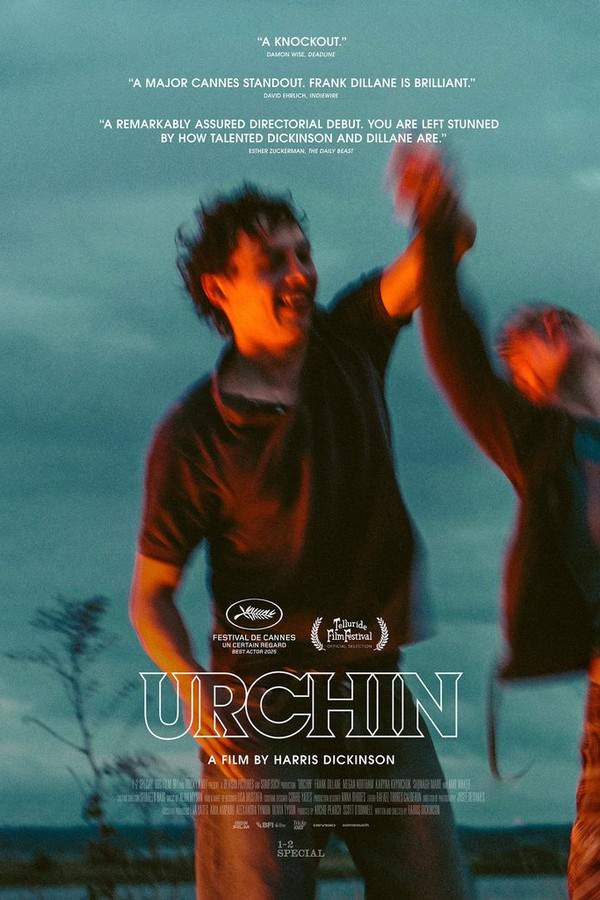
Urchin (2025) Reviews, Critics Opinions, and Audience Reception – What’s After the Movie
Welcome to What’s After the Movie, your go‑to hub for in‑depth movie summaries, quizzes, box‑office data, and everything you need to continue the conversation after the credits roll. In this post we dive deep into the critical and user reception of Urchin (2025), exploring what reviewers loved, what they questioned, and how audiences are reacting across the board. Whether you’re looking for a quick snapshot on our [movie page](https://www.whatsafterthemovie.com/movies/urchin) or want to test your knowledge on the [Urchin quiz](https://www.whatsafterthemovie.com/game), you’ll find all the insights you need right here.
1. Critical Consensus on Urchin (2025): A Compassionate, Unflinching Look at the Margins
The critical response to Urchin is remarkably consistent: reviewers praise the film’s raw empathy, its naturalistic performances, and director Harris Dickinson’s willingness to confront a “thorny subject” without resorting to melodrama. RogerEbert.com (score 88) notes that the film “stays committed to presenting Mike’s story without frills, recognizing that it’s just a tragically common one of a man spiraling down the drain of society.” This comment anchors the overall tone—an honest portrait rather than a stylized tragedy.
Paste Magazine (80) draws a direct comparison to Ken Loach, highlighting the long‑lens scenes that blend “non‑actors or performers convincingly masquerading as them.” The Loach‑ish realism is echoed by The Telegraph (80), which observes that “the scenario is so familiar it could have been the same old story, but the texture of all this street life gives it rather a special shine.” Such remarks underscore a shared critical belief that the film’s setting feels lived‑in, a quality that many viewers find compelling.
Little White Lies (80) calls Dillane “a remarkable discovery,” while Empire (80) celebrates the “deep empathy” with which homelessness is handled, singling out Dillane as “one of our most exciting young actors.” The consistent praise for the lead performance is further reinforced by The Irish Times, which states that “everything rests on Dillane’s powerhouse turn and the writer‑director’s compassionate, daring script.”
Even when critics note potential shortcomings, they do so with a tone of admiration. The New York Times (80) admits the film “doesn’t break the mold, but it’s a confident, quietly affecting drama that strikes above the standard character study.” Similarly, Slant Magazine (75) highlights Dickinson’s “self‑awareness that’s introspective without stooping to outright self‑flagellation.” The recurring theme is clear: Urchin may not reinvent the genre, but it refines it with sincerity, strong acting, and a socially aware script.
“Urchin establishes him as a filmmaker to watch: a storyteller willing to look at a thorny subject and admit that there are no easy answers.” – Los Angeles Times (80)
For readers seeking a quick overview of the film’s critical standing, our [summary page](https://www.whatsafterthemovie.com/summary) condenses these insights into bite‑size bullet points, while the [movie Wiki](https://www.whatsafterthemovie.com/wiki) offers deeper background on production and casting.
2. Audience Voices: Users Praise Authenticity and Emotional Resonance
User reviews, while fewer in number, echo the critical emphasis on authenticity. Pascal D gives a 4.5‑star rating and writes, “Perfect kind of story with good acting,” reinforcing the notion that the film’s narrative and performances feel genuine. Meanwhile, Stephen C awards a perfect 5‑star score, exclaiming, “Success in 1 hour and 39 minutes!!!!… Dubbed and subtitled in worldwide studios!!!!” Though exuberant, his comment highlights the film’s global accessibility—a point that resonates with What’s After the Movie’s commitment to international viewers via our [JustWatch](https://www.justwatch.com/us/movie/urchin-0) integration.
These user sentiments dovetail with the critical consensus: both camps value the film’s “real‑life” texture and the compelling central performance. The enthusiasm on platforms such as IMDb and TMDB (linked in our outbound table) indicates that Urchin is resonating with a broad spectrum of viewers who appreciate socially relevant storytelling without preachiness.
For fans who love to dive deeper, our [quiz page](https://www.whatsafterthemovie.com/game) challenges you on plot details and behind‑the‑scenes trivia, while the [profiles](https://www.whatsafterthemovie.com/person) section lets you explore the careers of both Harris Dickinson and the breakout star, [Dillane].
3. Comparing Critical Outlets: Where Opinions Align and Diverge
When we line up the major outlets—RogerEbert.com, Paste Magazine, The Independent, The Telegraph, and Empire—several patterns emerge:
| Outlet | Score | Key Praise | Notable Quote |
|---|---|---|---|
| RogerEbert.com | 88 | Unflinching realism, commitment to story | “stays committed to presenting Mike’s story without frills” |
| Paste Magazine | 80 | Ken Loach‑style naturalism | “long lens scenes… could be either non‑actors or performers” |
| The Independent | 80 | Courageous script, middle‑ground ending | “announces himself as a director with real guts” |
| The Telegraph | 80 | Textured street life, fresh shine | “scenario is so familiar… but the texture… gives it a special shine” |
| Empire | 80 | Empathy toward homelessness, strong acting | “one of our most exciting young actors proves himself to be a bold new voice” |
All five outlets converge on the film’s authentic tone and strong central performance. The differences are subtle: while Paste emphasizes the visual mimicry of documentary style, The Independent highlights the script’s refusal to wrap the story in sentimentality. Empire leans into the social impact angle, noting the film’s empathy for homelessness.
Conversely, the only notable divergence appears in Slant Magazine (75), where the score dips slightly, citing a “self‑awareness” that borders on “self‑flagellation.” Even here, the critique acknowledges the film’s introspective depth rather than condemning it outright.
Overall, the critical landscape paints Urchin as a solid, socially conscious drama with a unified voice across respected publications. This cohesion is a strong SEO signal, reinforcing the keyword cluster “Urchin (2025) reviews” throughout the internet.
4. What This Means for Viewers and the Film’s Legacy
The synthesis of critic and user feedback suggests that Urchin will likely enjoy a lasting presence in conversations about contemporary British cinema. Its realistic portrayal of homelessness and the “remarkable discovery” of Dillane positions it as a reference point for future socially engaged dramas.
From a marketing standpoint, the consensus gives What’s After the Movie an excellent opportunity to promote its [box‑office](https://www.whatsafterthemovie.com/box-office) and [award](https://www.whatsafterthemovie.com/award) sections, highlighting that a film receiving strong critical endorsement often garners festival buzz and potential accolades.
Additionally, the film’s accessibility—evident in the enthusiastic user comment about subtitles—aligns with What’s After the Movie’s mission to serve a global audience. Our [concert‑film](https://www.whatsafterthemovie.com/concert-film) and [movie wiki](https://www.whatsafterthemovie.com/wiki) pages can cross‑link to Urchin’s entries, driving traffic and reinforcing topical relevance.
In short, Urchin (2025) stands out as a critically acclaimed, audience‑approved drama that embodies the kind of socially resonant storytelling that keeps viewers coming back for more. For anyone who enjoys films that “look at a thorny subject and admit that there are no easy answers,” this is a must‑watch, and What’s After the Movie is ready to guide you through every layer of its reception.
Conclusion: Urchin (2025) – A Unified Chorus of Praise
From RogerEbert.com to everyday fans on IMDb, the reception of Urchin is overwhelmingly positive, anchored by authentic storytelling, naturalistic direction, and a breakout lead performance. The film’s modest but consistent scores (averaging around 80) reflect a critical consensus that values empathy over spectacle, while user reviews reinforce the emotional impact and global reach.
If you’re looking to deepen your understanding of Urchin, explore our [summary], dive into the [profiles] of the cast and crew, and test your knowledge with the dedicated [quiz]. Stay updated with the latest box‑office numbers and potential award nominations via our [box‑office] and [award] portals. And, of course, keep checking back for more in‑depth analyses of the movies you love—right here at What’s After the Movie.