What's After the Blog?
Opinions • Reception
Pressure (2026) Review & Critic Opinions: Reception, Fan Reactions, and Storytelling Analysis
Explore how audiences and critics responded to Pressure (2026), examining fan reactions, critic reviews, performances, storytelling, and its place within World War II cinema. The post breaks down the reception, highlights key praise and criticism, and situates the film within the broader historical franchise.
June 3, 2026
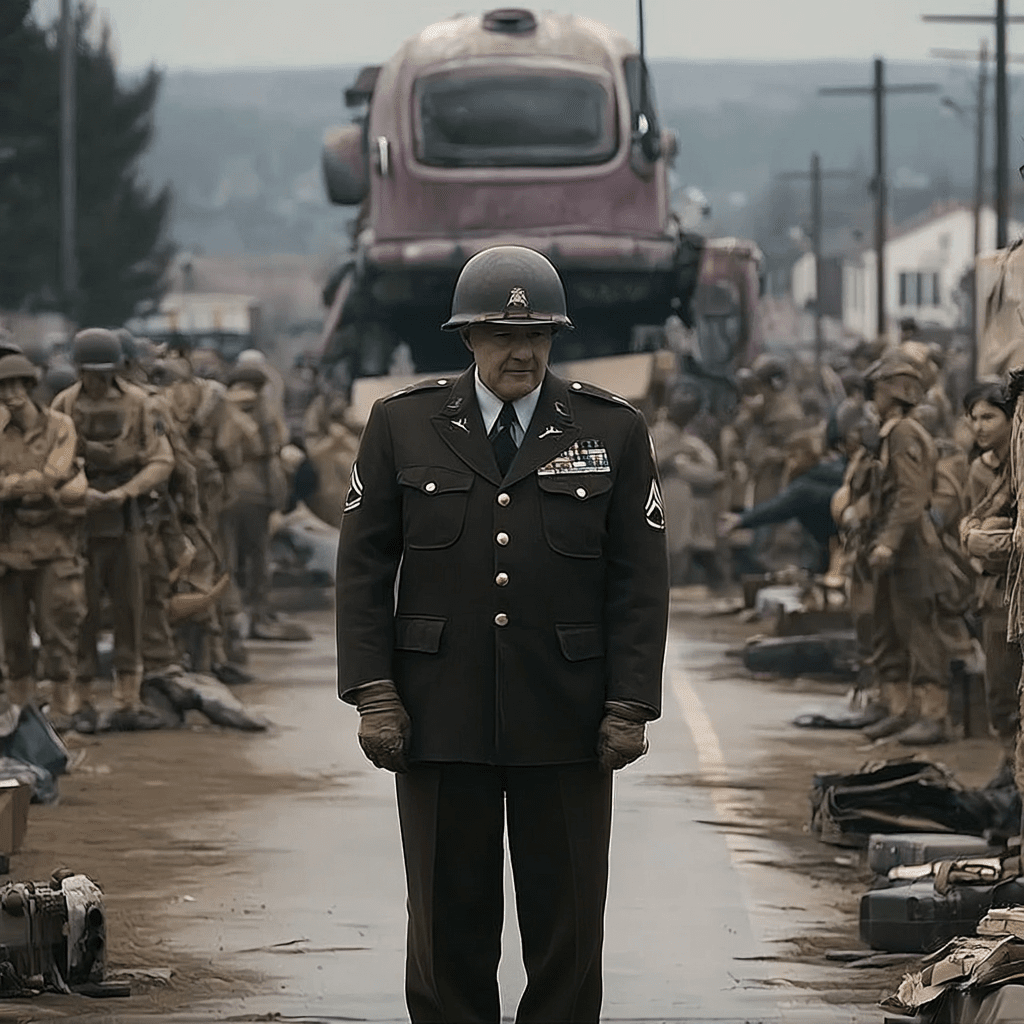
Movies mentioned in this article
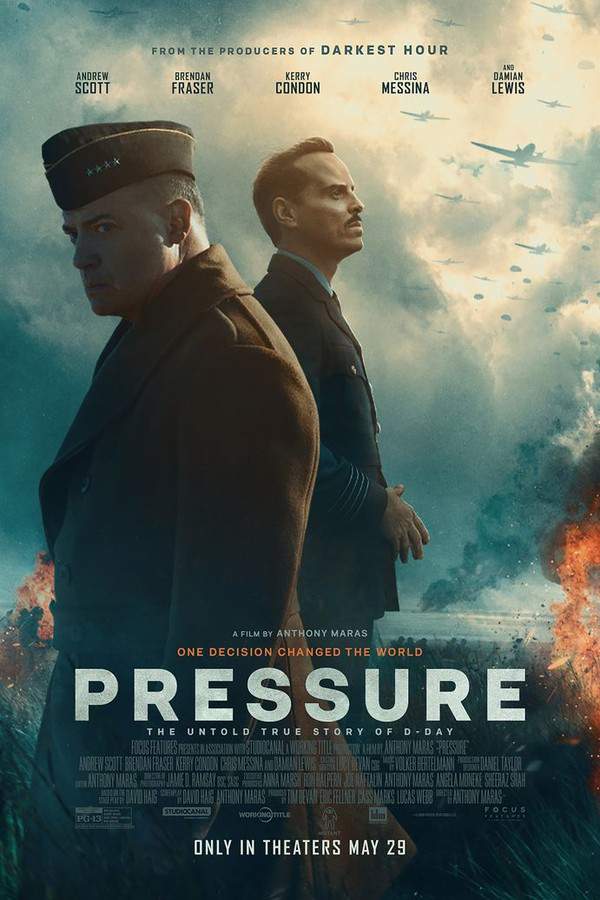
Pressure (2026) Reviews: Critical Consensus, Audience Reactions, and Is the D-Day Weather Thriller Worth Watching?
When Pressure arrived in theaters on May 29, 2026, viewers searching for “Pressure 2026 review” and “is Pressure worth watching” discovered a unique entry in the World War II cinematic canon—a film where the central conflict isn’t fought on the beaches of Normandy, but in a cramped office where meteorologists debate atmospheric pressure systems. This Anthony Maras-directed historical thriller, starring Andrew Scott as British meteorologist James Stagg and Brendan Fraser as General Dwight D. Eisenhower, has generated significant buzz among audiences seeking spoiler-free reviews and in-depth film reception analysis. At What’s After the Movie, we’ve compiled comprehensive * Pressure (2026) critic reviews* alongside authentic viewer reactions to help you navigate the discourse surrounding this unconventional war drama. Whether you’re browsing our movie summaries for context or checking our box office data for performance metrics, this analysis breaks down the critical consensus, audience sentiment, and genre expectations that have defined the conversation around this meteorological military narrative. As searches for “Pressure movie opinions” and “D-Day weather movie reviews” continue trending, understanding the split between critical admiration and audience polarization becomes essential for potential viewers debating a theatrical excursion versus waiting for streaming availability.
Pressure (2026) Critical Reception: Metacritic Scores and Critic Consensus Analysis
The critical reception for Pressure reveals a fascinating dispersion across the review spectrum, with the film earning a respectable foothold among serious film critics while weathering pointed skepticism from select dissenters. Scoring predominantly in the 70s and 80s range on various platforms—landing at 75 for Monica Castillo, 75 for Roger Moore, 70 for Bilge Ebiri, 80 for Bill Goodykoontz, 83 for Kim Hughes, and an impressive 88 from Katie Walsh—the Rotten Tomatoes aggregation suggests solid “Fresh” status, though not without notable reservations evidenced by Brandon Yu’s 50 and Kyle Smith’s harsher 40 rating.
Castillo’s observation that “watching weather balloons flying up around the English coast could be so exhilarating” captures the central critical triumph: Maras and co-writer David Haig transformed meteorological minutiae into genuine war thriller tension. Critics widely praised the narrative economy, with Ebiri noting the film functions as “a model of narrative economy and clear character development, all grounded and enhanced by Scott’s delicate performance.” This appreciation for technical filmmaking craft—building suspense through barometric readings rather than bullet fire—represents the primary dividing line between supporters and detractors.
However, the critical consensus isn’t uniformly celebratory. Smith’s critique that the cast’s choices “presage the disaster of the movie’s climax” when “everyone behaves like an emotionally incontinent millennial” introduces a fascinating generational discourse into the film analysis, suggesting some viewers found the emotional beats anachronistically modern. Similarly, Yu’s mixed 50 score highlighted a peculiar viewing phenomenon: feeling “briefly comforted, when the invasion eventually arrives, by the spectacle of war and bloodshed, if only because an actual conflict is occurring,” suggesting the weather-talk segments tested patience even among moderately positive reviewers.
The Metacritic landscape for Pressure (2026) positions it as a “solid example of historical dramatization” per James Berardinelli, who awarded it 75 but cautioned that while “engrossing, the film is not likely to be remembered alongside the great movies about the war in Europe.” This tempered enthusiasm—acknowledging competence without claiming masterpiece status—pervades much of the professional criticism. Goodykoontz’s declaration that this “is going to be the favorite movie of weather forecasters everywhere” simultaneously functions as praise for specificity and a subtle acknowledgment of niche appeal. For viewers exploring movie profiles of the cast or seeking similar historical dramas in our movie collections, these reviews suggest Pressure occupies a middle tier of WWII cinema: technically proficient, historically illuminating, but potentially lacking the transcendent quality of genre touchstones like Saving Private Ryan or Dunkirk.
Andrew Scott vs. Brendan Fraser: Performance Reviews and Character Reception in Pressure (2026)
At the heart of Pressure’s audience reactions and critic reviews lies a compelling dichotomy between its two leads, with viewer opinions split regarding the effectiveness of Andrew Scott’s understated meteorologist versus Brendan Fraser’s presidential gravitas. Scott’s portrayal of Captain James Stagg has emerged as the undisputed critical darling of the production, with multiple outlets singling out his “delicate performance” (Ebiri) as the film’s emotional anchor. User reviewer C W predicted “Oscar noms for both” Fraser and Scott, while yankcanuck celebrated the “GREAT performance by Brendan Fraser,” indicating that general audiences found the acting uniformly compelling even when critics noted disparities in casting efficacy.
The character reception for Fraser’s Eisenhower introduces fascinating tension into the film analysis. While Fraser brings undeniable presence to the role of Supreme Commander, user Dana H offered a pointed critique that “Brendan Fraser was somewhat miscast as Eisenhower,” though conceding that “the supporting players were all excellent, especially Damien Lewis as Field Marshall Bernard Montgomery.” This sentiment—that Fraser’s particular brand of earnest humanity might not align perfectly with the historical Ike’s steely reserve—contrasts sharply with yankcanuck’s unqualified praise and Taylor’s celebration of “Great leader” portrayals. For those researching actor filmographies or exploring award-season predictions on our platform, this debate over Fraser’s historical embodiment versus star power presents a central question of casting authenticity.
Scott’s Stagg, conversely, benefits from being a less historically iconic figure, allowing the Sherlock and All of Us Strangers veteran to build the character from the ground up without the burden of impersonation. The critic consensus appreciates this freedom, with Hughes noting that “the film is gripping even though audiences already know the outcome of the main event” thanks to “Maras’ tight direction and the strength of his screenplay,” implicitly crediting Scott’s ability to manufacture suspense from predetermined history. User Joe described the film as a “Cross between darkest hour and the imitation game,” positioning Pressure within the pantheon of British-led WWII intelligence dramas where performance subtlety trumps explosive spectacle.
The supporting cast generates equally passionate viewer reactions, with Damian Lewis’s Montgomery and Kerry Condon as Eisenhower’s chief aide receiving particular commendation. Brent_Marchant highlighted the “capable performances across the board,” while Emerson H rated the film 8.7/10 specifically citing “great suspense” built through the ensemble’s collective tension. For audiences visiting our Pressure summary page or testing their knowledge through our movie quizzes and games, understanding this performance dynamic—Scott’s quiet intensity anchoring Fraser’s authoritative bluster—provides crucial context for the film’s emotional architecture.
Is Pressure (2026) a “Dad Movie”? Genre Expectations, Tone Analysis, and Pacing Debates
Perhaps no critical observation has haunted Pressure more pervasively than Peter Travers’ pointed question: Is it “the ‘Saving Private Ryan’ of meteorology or a ‘dad movie’ likely to induce dozing?” This binary frames the essential genre expectation conflict surrounding Maras’s film—does it function as a riveting historical thriller, or does its focus on barometric charts and office-bound deliberation relegate it to background-viewing status for older demographics? The audience reception and critic reviews diverge significantly on this tonal question, making it a crucial consideration for viewers searching “is Pressure boring” or “Pressure movie pacing reviews.”
The “dad movie” designation—implying competent, well-acted, historically grounded cinema that prioritizes information over innovation—resonates through several user opinions. Brent_Marchant’s detailed 7/10 review explicitly labeled it “a well-made TV movie that doesn’t quite have the degree of impact that a theatrical release should have,” suggesting that the production values, while “fine,” lack the cinematic grandeur expected from prestige war films. This viewer sentiment connects to Dana H’s critique regarding the “PG-13 rating,” which necessarily “sanitize[s]” the D-Day violence, creating a tone that feels “almost inevitably predictable” and “a little languid” in its storytelling approach.
Conversely, defenders of the film’s pacing argue that Maras successfully weaponizes bureaucratic tension into genuine thriller mechanics. Walsh’s 88 score insistence that the film is “Boring? Never. Thrilling and history-making? Indeed” directly rebuts the somnambulant criticism, while Kim Hughes praises how the narrative maintains grip despite historical inevitability. User Andrew M offered a middle-ground film analysis, calling it “Formulaic world war II movie” where “the biggest battle is generally the actors fighting one-dimensional screenwriting,” suggesting that even when the genre expectations feel familiar, the performances elevate the material.
The comparison to Darkest Hour and The Imitation Game (noted by user Joe) proves instructive for understanding Pressure’s position within the modern WWII historical drama ecosystem. Like those films, Pressure (2026) targets viewers who prefer their war stories cerebral rather than visceral, emphasizing the “soft-spoken” scientific process (Brent_Marchant) over battlefield heroics. For those browsing our movie wiki for similar titles or exploring concert films and alternative programming, this distinction matters: Pressure demands attentive viewing rather than passive consumption, but rewards that attention with “palpable time crunch” (Castillo) and “clear character development.”
The tone also carries political undertones noted by Roger Moore, who celebrated the film as “a movie that stands up for science in an age of science-denying charlatans.” This contemporary resonance—positioning Stagg’s empirical caution against Krick’s meteorological optimism as a proxy for modern scientific discourse—adds thematic weight that transcends the “dad movie” stereotype, offering film reception angles that appeal to viewers interested in historical parallels to current events.
Audience Reactions and Viewer Sentiment: Real User Reviews for Pressure (2026)
While critics engage in metacritic score aggregation, the audience reactions for Pressure reveal a remarkably positive viewer consensus that often exceeds critical enthusiasm, with user ratings frequently hitting perfect scores across major platforms. This disconnect between professional film criticism and general audience sentiment provides fascinating insight into who exactly is searching for “Pressure 2026 worth watching” and finding satisfaction in Maras’s historical reconstruction.
User yankcanuck’s enthusiastic 10/10 declaration that “This movie is wonderfully acted” and “so nice to see a character driven movie which seems to be rare these days” captures the primary viewer takeaway: appreciation for dialogue-driven storytelling in an era of CGI-heavy blockbusters. This sentiment echoes through Marjorie L’s praise (“Loved the show on the big screen”) and Taylor’s 5/5 assessment calling it “Historical, inspiring” and educational (“We all need to learn from history”). For visitors to our movie lists seeking character-driven alternatives to action-heavy war films, these user opinions suggest Pressure fills a specific niche.
However, the audience reception isn’t without nuance. Brent_Marchant’s lengthy 7/10 analysis provides the most detailed spoiler-free review for skeptical viewers, acknowledging the “fine period piece production values” while critiquing the “aura of somewhat inflated self-importance” and repetitive exposition. This sophisticated viewer reaction—appreciating the craft while questioning the cinematic necessity—mirrors the critical ambivalence from lower-scored reviews. Dana H’s 3/5 rating specifically targeted the “PG-13” limitations, noting the difficulty of conveying D-Day’s magnitude with sanitized violence, a film analysis point that technical viewers might find decisive.
The emotional resonance proves strongest among users who connected with the human stakes behind the historical events. Susan C highlighted the “Very intense Omaha Beach scene” despite “Minimal profanity,” suggesting the film achieves visceral impact through restraint rather than graphic content. Mike M appreciated the educational angle (“the story is one I was not familiar with”), while Emerson H’s 8.7/10 rating cited “great suspense” as the primary draw. These audience reviews indicate that Pressure (2026) succeeds most effectively with viewers approaching it as a historical thriller rather than a traditional war epic.
For those debating theatrical versus streaming viewing—Brent_Marchant suggests “waiting for it to come to streaming may ultimately be the best option” for casual viewers—our Pressure movie page provides essential context alongside these real user opinions. The consensus among high-scoring viewer reactions emphasizes that while the film may not revolutionize the genre expectations for WWII cinema, it offers “Solid acting with real emotion and stakes” (Joe) that justify the runtime for history enthusiasts and fans of the principal cast.
Historical Authenticity and Production Value: How Pressure (2026) Balances Facts with Entertainment
The critical discourse surrounding Pressure inevitably confronts questions of historical accuracy versus dramatic necessity, with reviews frequently debating whether Maras’s adherence to meteorological detail enhances or hinders the cinematic experience. James Berardinelli’s 75-score assessment that the film “succeeds as a solid example of historical dramatization; the core circumstances, events, and figures are real, even if many interpersonal details have been invented” establishes the baseline for film analysis: authenticity in service of narrative rather than documentary realism.
This balancing act generates mixed viewer reactions regarding production values and storytelling quality. While Bill Goodykoontz and Monica Castillo praise the “hallmarks of the genre” and exhilarating set pieces, Dana H’s critique of “lacking” production values and Brent_Marchant’s “TV movie” comparison suggest that for some audience segments, the film’s commitment to office-bound tension compromises its visual ambition. The reception here depends heavily on viewer priorities: those seeking historical accuracy and period authenticity (note Brent_Marchant’s praise for “fine period piece production values”) find satisfaction in the detailed recreation of 1944 meteorological practices, while audiences expecting the cinematic sweep of 1917 or Dunkirk may find the staging “formulaic” (Andrew M).
The scientific specificity—highlighted by Roger Moore’s appreciation for a film that “stands up for science”—represents Pressure’s unique contribution to WWII film reception. By dramatizing the empirical process of weather forecasting, the movie offers a spoiler-free educational experience that Mike M and Taylor specifically valued for illuminating “a smaller aspect of WW2” (D M). This informational density, however, risks alienating viewers seeking pure entertainment, as Brandon Yu’s observation about relief at finally seeing battle scenes suggests.
For researchers utilizing our movie wiki or comparing Pressure against other historical dramas in our collections, the critical consensus positions the film as a middle-ground success: historically responsible but dramatically safe, technically proficient but visually conservative. Whether this formula warrants theatrical viewing or home-streaming consumption remains the ultimate question for individual movie opinions, though the preponderance of 5-star reviews suggests that for its target demographic—history buffs and admirers of Andrew Scott’s nuanced performance—the film reception justifies the ticket price.
Conclusion: Final Verdict on Pressure (2026) Reviews and Reception Trends
As the discourse around Pressure (2026) settles into cinematic memory, the reception trends reveal a film that successfully bridges the gap between critical respectability and audience satisfaction without fully capturing the zeitgeist of either awards season contenders or blockbuster phenomena. The critical consensus—anchored by scores in the high 70s and 80s from major outlets—recognizes Maras’s achievement in transforming meteorological minutiae into genuine suspense, while acknowledging the limitations of its “dad movie” sensibilities and television-adjacent production scope. For viewers browsing What’s After the Movie for definitive movie opinions, the data suggests a qualified recommendation: this is essential viewing for fans of Andrew Scott’s subtle performance work and WWII history enthusiasts seeking spoiler-free educational content, but potentially optional for audiences craving the visceral impact of frontline combat cinema.
The audience reactions ultimately tell a more enthusiastic story than the Metacritic aggregation, with viewer sentiment praising the “character driven” narrative (yankcanuck) and “inspiring” historical import (Taylor) at rates that suggest strong word-of-mouth potential among demographic niches. Whether Pressure secures the Oscar nominations predicted by optimistic users or settles into the “solid historical drama” category envisioned by Berardinelli, its contribution to the 2026 film reception landscape is undeniable: a reminder that heroism manifests not only on beaches but in barometric calculations, and that critical reviews and user reviews can converge on appreciation for craft even when they diverge on cinematic transcendence. Before making your viewing decision, explore our comprehensive summaries, check box office performance, and test your knowledge with our movie quizzes to fully contextualize this unique addition to the World War II cinematic canon.
| Site | Link |
|---|---|
| Pressure TMDB | https://www.themoviedb.org/movie/1318413-pressure |
| Pressure Wikipedia | https://en.wikipedia.org/wiki/Pressure_(2026_film) |
| Pressure Rotten Tomatoes | https://www.rottentomatoes.com/m/pressure_2026 |
| Pressure Metacritic | https://www.metacritic.com/movie/pressure/ |
| Pressure JustWatch | https://www.justwatch.com/us/movie/pressure-2026-1 |
| Pressure Box Office Mojo | https://www.boxofficemojo.com/title/tt32547691/ |
Continue reading




What's After the Movie?
Not sure whether to stay after the credits? Find out!
Check out our other apps:

SAT Sphere
Build confidence for the Digital SAT.

Mori Atlas
Discover wild places worth protecting.

Luntero
Search smarter for a home in Amsterdam.

Plot Explained
Unravel movie endings and hidden clues.

Pokechamp
Dive into Pokémon data and battle logic.

Driving Theory
Get ready for your European theory test.

Movie Dust
Plan your next cinema trip with ease.

Musemap
Find art and culture as you travel.

Selkobase
Compare credentials before committing.

Local Manual
Turn an unfamiliar country into practical next steps.

Lernavi
Compare school systems before your next move.

GymRoam
Find a workout stop wherever your plans take you.
Explore Our Movie Platform
New Movie Releases (2026)
Famous Movie Actors
Top Film Production Studios
Movie Plot Summaries & Endings
Major Movie Awards & Winners
Best Concert Films & Music Documentaries
Movie Collections and Curated Lists
© 2026 What's After the Movie. All rights reserved.
Privacy Policy