What's After the Blog?
Opinions • Reception
The Wizard of the Kremlin (2026) Review & Critics Opinions – Reception, Fan Reactions, and Performance Analysis
Explore how critics and fans responded to The Wizard of the Kremlin (2026), analyzing reviews of Jude Law and Paul Dano’s performances, storytelling depth, and its place in post‑Soviet thriller franchises. The post breaks down fan reactions, critic scores, and the overall reception of this politically charged drama.
May 12, 2026
Movies mentioned in this article
The Wizard of the Kremlin (2026) Reviews & Reception: Critical Consensus vs. Audience Reactions
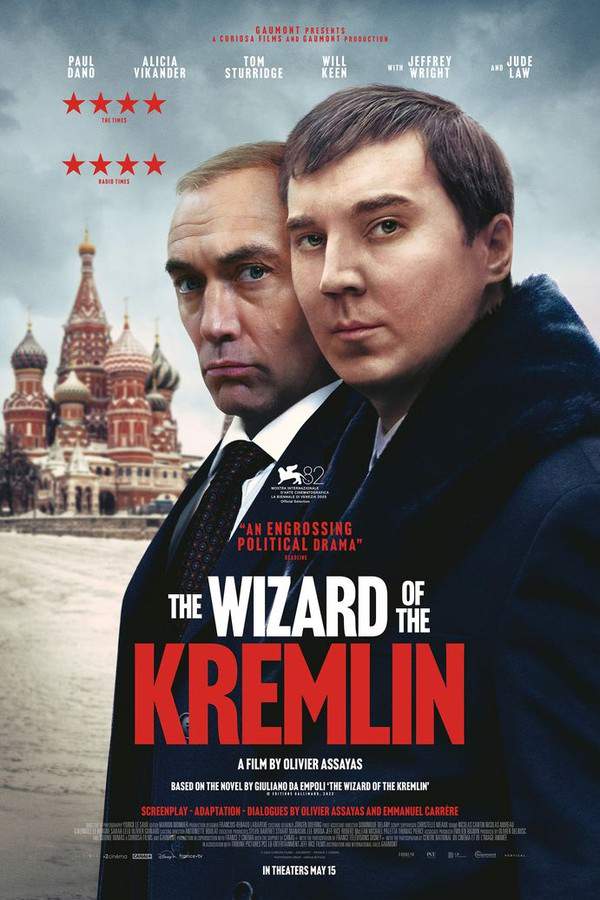
When Olivier Assayas adapted Giuliano da Empoli’s bestselling novel Le Mage du Kremlin for the screen, expectations ran high for a prestige political thriller that would dissect the enigmatic rise of Vladimir Putin through the lens of fictional spin doctor Vadim Baranov. With Jude Law stepping into the complex portrayal of the Russian leader and Paul Dano delivering what many anticipated would be a career-defining performance as the behind-the-scenes manipulator, The Wizard of the Kremlin arrived in theaters amid intense scrutiny. Given the ongoing geopolitical tensions and the film’s proximity to contemporary conflicts, audiences immediately began searching for spoiler-free reviews, critical consensus, and honest audience reactions to determine whether this nearly two-and-a-half-hour epic was worth the investment. What emerged from the film reception landscape, however, was not a unified verdict but a stark divergence between critical establishment and general moviegoers. While professional reviewers grappled with pacing concerns and questions of authenticity, everyday viewers found themselves captivated by the atmospheric immersion and psychological complexity, creating one of the most polarized viewing experiences of recent years. For those tracking viewer reactions and detailed film analysis, this reception study offers a comprehensive examination of where consensus breaks down and why your own viewing experience might align more with the passionate audience defenders than the skeptical critical establishment.
Critical Reception Divided: Is The Wizard of the Kremlin Worth Watching?
The question of whether The Wizard of the Kremlin constitutes essential viewing depends entirely on which critical voice you trust, as the film generated one of the most schizophrenic responses from the review aggregator circuit in recent memory. On one end of the spectrum, Original-Cin delivered a resounding endorsement with a 91/100 score, declaring the film “one of those rare dramatized histories that seamlessly blends facts with fiction.” This high praise positioned Assayas’s work alongside the finest entries in the political thriller canon, suggesting a sophisticated approach to narrative construction that rewards patient viewers with authentic historical texture woven through dramatic invention.
Conversely, the majority of the critical establishment landed in a far more skeptical middle ground, with several major outlets delivering what could charitably be described as lukewarm appraisals. Empire Magazine encapsulated this frustration with a 40/100 verdict, labeling the project “an occasionally interesting but over-stretched attempt to recount Putin’s rise to power, best appreciated for the few moments in which Jude Law appears.” This sentiment—that the film functions better as a showcase for its lead than as a cohesive narrative—resonated across multiple reviews. Collider reinforced this criticism with biting precision, calling the film “a bloated, tiring recitation of facts that doesn’t know how to elevate its dark subject matter,” while Screen Rant similarly noted that “just when it feels like it’s going to hit the gas, The Wizard of the Kremlin holds back, all the way up to its confounding, out-of-left-field ending that is both abrupt and fittingly bleak.”
The most damaging assessments came from critics who found the film’s intellectual aspirations undermined by its execution. Slant Magazine, awarding a mere 38/100, lamented that “Olivier Assayas’s knack for fostering insight through irony is nowhere to be found in the film,” while The Daily Beast delivered perhaps the most cutting dismissal, describing the picture as “a prototypical example of talking, ceaselessly and crudely, at the audience.” These reactions suggest that for viewers expecting the kinetic tension of modern political thrillers or the propulsive narrative momentum of Argo or Zero Dark Thirty, Assayas’s deliberately measured approach feels less like artistic restraint and more like narrative constipation.
Yet the film found defenders among critics who appreciated its methodical world-building. The Telegraph (60/100) offered a qualified recommendation, noting it was “smart and watchable in a miniseries sort of way, and sets the current war in Ukraine in an instructive wider context,” while praising Dano as “ideally cast as the unreadable vizier serenely pulling strings behind the scenes.” Radio Times (80/100) elevated this praise further, suggesting that “Assayas and his team have created an indelible portrait of contemporary Russia, ‘a prison the size of a country’ as it’s called, one that perhaps only an outsider could ever get away with.” This division between those who see the film as an incisive outsider’s perspective and those who view it as an overlong lecture creates the central tension in evaluating whether The Wizard of the Kremlin merits a trip to the theater or a spot on your watchlist.
Jude Law’s Transformation and Performances Under the Microscope
If the narrative structure of The Wizard of the Kremlin generated controversy, the acting performances emerged as the one undisputed triumph capable of bridging the gap between hostile critics and appreciative audiences. The central achievement, universally acknowledged even by negative reviews, was Jude Law’s metamorphosis into Vladimir Putin—a performance that required not merely physical transformation but the embodiment of a specific strain of bureaucratic menace that defines authoritarian ascent.
The Irish Times captured this evolution most eloquently, noting that “mostly the film is a showcase for Jude Law’s increasingly impressive late-career metamorphosis. The actor, who has spent recent years successfully probing wounded masculinities (The Young Pope, Firebrand), brings a strikingly controlled energy to his portrayal of Vladimir Putin as a lofty and weaponised civil servant.” This observation highlights how Law’s recent career choices—moving away from traditional leading man roles toward complex, often spiritually tormented figures—informed his approach to Putin, treating the Russian leader not as a caricatured villain but as a calculating instrument of state power who wears his authority with the casual comfort of a well-tailored suit.
While critics debated the film’s overall merit, user reactions consistently singled out the acting as the primary reason to engage with the material. Runa R, awarding the film 4.5/5 stars, emphasized that “the performances of Jude Law and Paul Dano are superb — especially how the latter, in such a subtle and restrained tone, conveys the horrors of a totalitarian state.” This appreciation for Dano’s nuanced work as the fictional advisor Baranov represents a crucial point of consensus: where the screenplay may falter in exposition, the actors compensate through micro-expressions and physical restraint that suggest volumes about the paranoia and calculation inherent in Kremlin politics.
Time Out, despite giving the film a middling 60/100 score, acknowledged this strength, praising “an excellent Jude Law all inscrutable psychopathy as a younger Vladimir Putin and Alicia Vikander the perfect embodiment of an amoral post-Soviet arrivista.” The chemistry between Law’s contained menace and Vikander’s opportunistic ambition reportedly creates some of the film’s most electric sequences, even when the surrounding narrative sags under the weight of political exposition. For viewers interested in actor profiles and performance analysis, these interactions offer masterclasses in power dynamics and subtle intimidation.
However, not all reactions to the casting were positive. User Paul K delivered a sarcastic 0.5/5 star review noting, “Ironically the perfect example of Russian soft power. Jude Law looks a bit like Putin because of his receding hairline. That’s about the best part of this film.” This dismissal, while extreme, points to a minority skepticism about the effectiveness of Western actors embodying Russian political figures—a controversy that extended beyond performance quality into questions of cultural authenticity and cinematic ethics. Nevertheless, for those wondering is The Wizard of the Kremlin worth watching purely for the acting showcase, the overwhelming consensus suggests that Law and Dano deliver performances worthy of awards consideration, regardless of the film’s structural imperfections.
Pacing, Narrative Structure, and the “Overlong” Debate
Perhaps no aspect of The Wizard of the Kremlin generated more contentious discussion than its runtime and narrative rhythm, with the line between “deliberately meditative” and “self-indulgently padded” becoming the primary battleground in critical discourse. At approximately two and a half hours, the film demands significant investment from viewers, and reactions diverged sharply based on expectations regarding historical biopic conventions versus slow-burn political procedural aesthetics.
The Telegraph crystallized the central complaint with its observation that the film functions “in a miniseries sort of way,” suggesting that Assayas’s material would have breathed more effectively across four or five hours of television rather than compressed into a theatrical feature. Collider expanded on this frustration, arguing that “for a story that should be brimming with intrigue, danger, and the horrors of inventing your own reality, The Wizard of the Kremlin is instead a bloated, tiring recitation of facts.” These critiques point to a fundamental disconnect: the film promises the taut suspense of a political conspiracy thriller but delivers the methodical accumulation of detail more commonly found in documentary or prestige television formats.
Yet audience reactions frequently contradicted this assessment of the film’s pacing. Sven V, awarding a full 5/5 stars, countered that while it was a “slow movie,” it remained “nevertheless interesting from the beginning to the end. Enjoyed myself for 2.5 hours.” This sentiment—that the runtime flies by despite—or perhaps because of—the deliberate pacing—resonates among viewers who approached the film as a character study rather than a plot-driven suspense vehicle. User A M, despite giving the film a moderate 3/5 stars, acknowledged in Spanish that while the plot moves slowly with “escenas innecesariamente largas” (unnecessarily long scenes), the atmospheric immersion and “buena ambientación” (good atmosphere) sustain engagement, culminating in a “final desgarrador” (heartbreaking ending) that justifies the journey.
The ending itself became a particular flashpoint for debate. Screen Rant characterized the conclusion as “confounding, out-of-left-field… both abrupt and fittingly bleak,” while User A M praised it as “tanto inesperado como impactante como desgarrador” (unexpected, shocking, and heartbreaking). This divergence suggests that viewers who surrender to the film’s temporal demands—who accept the slow accumulation of bureaucratic detail and political maneuvering—find the conclusion emotionally devastating and intellectually satisfying, whereas those who resist the pacing experience the ending as merely confusing or anticlimactic. For viewers browsing movie collections of political dramas, understanding this pacing tolerance becomes essential: if you appreciated the unhurried tension of Tinker Tailor Soldier Spy or the procedural density of Zodiac, The Wizard of the Kremlin likely merits your patience; if you prefer the kinetic momentum of the Bourne franchise, this may prove a challenging sit.
Political Context, Timing, and Propaganda Accusations
No analysis of The Wizard of the Kremlin reception could be complete without addressing the elephant in the room: the film’s release timing amidst ongoing Russian military aggression and the ethical implications of Western artists dramatizing Russian political figures. This context generated some of the most heated and politically charged user reviews, creating a separate controversy that existed independently of cinematic quality judgments.
User 7th B delivered the most scathing political critique with a 0.5/5 star review, stating, “If one somehow refrains from criticizing the timing of the film’s release during the Russian aggression against Ukraine, then have a great time watching this great example of how Russian propaganda is voluntarily brought to the big screen by Western directors and actors. The only question is – is it really voluntary?” This accusation—that the film inadvertently (or intentionally) serves as “soft power” for the Russian state—found echoes in User Paul K’s aforementioned dismissal and User Ira L’s sarcastic 0.5/5 review referencing “TheCringeIsTooStrong.gif” and mocking the press tour justifications offered by the cast.
These reactions suggest a significant portion of the viewing public interpreted the film not as critical examination but as glamorization or normalization of authoritarian figures. The concern—that providing a “humanizing” backstory for Putin through the lens of historical fiction might serve contemporary propaganda efforts—created a moral barrier to engagement for politically conscious viewers. This controversy extends beyond typical film criticism into the realm of cultural analysis and geopolitical ethics, making The Wizard of the Kremlin a test case for the responsibilities of historical cinema during active conflicts.
However, defenders of the film pushed back against these accusations by emphasizing its instructive value. User Tormod N, awarding 4/5 stars, argued that the film “Explained the russian/putins side of the war in good details. Absolutely worth a watch.” This perspective views the film not as propaganda but as necessary context—an explanation of the bureaucratic and historical machinery that produced the current geopolitical moment. Similarly, Radio Times’s praise for the “prison the size of a country” portrait suggests the film functions as indictment rather than celebration, offering Western audiences insight into the systemic corruption and authoritarian inertia that defines post-Soviet governance.
For those compiling movie lists of controversial political cinema or tracking awards season controversies, this polarization creates fascinating tensions. The film forces viewers to confront whether context and explanation constitute justification—a debate that raged through social media and review platforms with an intensity rarely seen outside of documentary cinema. Whether you approach The Wizard of the Kremlin as an essential history lesson or a problematic indulgence largely depends on your prior geopolitical stance and your willingness to separate artistic intent from real-world political implications.
Audience Verdict: Why Viewers Rate The Wizard of the Kremlin Higher Than Critics
Perhaps the most fascinating phenomenon surrounding The Wizard of the Kremlin is the significant gap between critical consensus and audience satisfaction—a divergence that speaks to differing expectations between professional reviewers and general moviegoers. While critics largely clustered in the 40-60 range (suggesting mixed-to-negative reception), user scores frequently soared to 4 and 5 stars, with viewers expressing confusion at the critical establishment’s coolness toward the project.
User Christian J articulated this disconnect perfectly with a 4.5/5 star review: “I hesitated to go after seeing that the so-called critics’ review score was just north of 50%. So glad I went. I’m confounded that the score is so low given the quality of the movie. It’s not a fantastic movie, but it’s good, worth seeing if you’re interested in this subject, and definitely higher than 50%. I’d put it at 75-80%.” This sentiment—that the film delivers solid, engaging historical drama unfairly maligned by critics expecting either more sensationalism or more overt political commentary—recurs throughout audience reactions.
French user Poulet reinforced this enthusiasm with a perfect 5/5 stars, describing “Un film captivant adapté du roman éponyme… Le moment finale du film est inatendu et surprenant” (A captivating film adapted from the eponymous novel… The final moment of the film is unexpected and surprising). This appreciation for the source material—Empoli’s novel was a literary sensation in Europe—suggests that viewers familiar with the book found the adaptation satisfying, while critics unfamiliar with the source material may have judged the film solely on its cinematic merits without the context of the novel’s narrative architecture.
The demographic split appears to hinge on historical interest and tolerance for atmospheric storytelling over plot mechanics. Tormod N’s observation that the film works “Especially if you are into russian history” and might be “a bit slow” for general audiences indicates that The Wizard of the Kremlin functions as specialized cinema for history buffs and political junkies rather than general entertainment. This specialization explains the critic/audience divide: professional reviewers must evaluate films for broad appeal, whereas niche audiences who sought out this specific content found exactly what they were looking for—atmospheric immersion in late-Soviet and early-Putinist political machinery.
For visitors to What’s After the Movie exploring quizzes and games or browsing concert films and alternative programming, this audience verdict suggests that The Wizard of the Kremlin rewards viewers who approach it with specific interests in political history and character-driven drama rather than those seeking explosive thriller set pieces. The box office performance and long-term streaming viability will likely depend on this passionate niche audience rather than broad crossover appeal, positioning the film as a cult object for political cinema enthusiasts rather than a mainstream blockbuster.
Final Analysis: Navigating the Polarized Reception of The Wizard of the Kremlin
As the dust settles on the theatrical release of The Wizard of the Kremlin, the verdict remains stubbornly subjective, contingent upon what individual viewers seek from their political cinema experience. The film stands as a Rorschach test: critics see an overlong, talky prestige television project awkwardly compressed into theatrical format, while audiences see an engrossing character study buoyed by exceptional performances and atmospheric authenticity. This dichotomy suggests that Assayas succeeded in creating exactly the film he intended—a deliberately paced, intellectually rigorous examination of power’s consolidation—even if that creation alienated viewers expecting more conventional thriller mechanics.
For those debating whether to invest two and a half hours in this political thriller, the answer lies in alignment with your viewing preferences. If you value Jude Law’s late-career reinvention and Paul Dano’s capacity for conveying psychological complexity through minimal dialogue, the film offers essential viewing regardless of its structural imperfections. If you require kinetic pacing and unambiguous political messaging, the critical consensus holds true, and you may find yourself agreeing with Collider’s assessment of a “tiring recitation of facts.”
Ultimately, The Wizard of the Kremlin joins the ranks of controversial historical dramas that find their audience slowly, through word-of-mouth and streaming rediscovery, rather than through opening weekend consensus. Whether you approach it as a spoiler-free review curiosity or a deep film analysis subject, the movie demands engagement with its ideas, its timing, and its uncomfortable proximity to current events. For the complete picture—including detailed cast information, production history, and ongoing reception updates—visit the dedicated movie page at What’s After the Movie, your comprehensive resource for understanding what comes next in cinema.
| Site | Link |
|---|---|
| The Movie Database (TMDB) | The Wizard of the Kremlin TMDB |
| Wikipedia | The Wizard of the Kremlin Wikipedia |
| Rotten Tomatoes | The Wizard of the Kremlin Rotten Tomatoes |
| Metacritic | The Wizard of the Kremlin Metacritic |
| JustWatch | The Wizard of the Kremlin JustWatch |
| Box Office Mojo | The Wizard of the Kremlin Box Office Mojo |
Continue reading




What's After the Movie?
Not sure whether to stay after the credits? Find out!
Check out our other apps:

SAT Sphere
Build confidence for the Digital SAT.

Mori Atlas
Discover wild places worth protecting.

Luntero
Search smarter for a home in Amsterdam.

Plot Explained
Unravel movie endings and hidden clues.

Pokechamp
Dive into Pokémon data and battle logic.

Driving Theory
Get ready for your European theory test.

Movie Dust
Plan your next cinema trip with ease.

Musemap
Find art and culture as you travel.

Selkobase
Compare credentials before committing.

Local Manual
Turn an unfamiliar country into practical next steps.

Lernavi
Compare school systems before your next move.

GymRoam
Find a workout stop wherever your plans take you.
Explore Our Movie Platform
New Movie Releases (2026)
Famous Movie Actors
Top Film Production Studios
Movie Plot Summaries & Endings
Major Movie Awards & Winners
Best Concert Films & Music Documentaries
Movie Collections and Curated Lists
© 2026 What's After the Movie. All rights reserved.
Privacy Policy