What's After the Blog?
Opinions • Reception
The Super Mario Galaxy Movie (2026) Review, Critics Opinions & Reception – Fan Reactions, Performance & Storytelling
Explore fan reactions and critic reviews of The Super Mario Galaxy Movie, examining its performance, storytelling, and place within the beloved Mario franchise. This post analyzes reception, highlights standout moments, and compares audience opinions with critical consensus.
April 2, 2026

Movies mentioned in this article
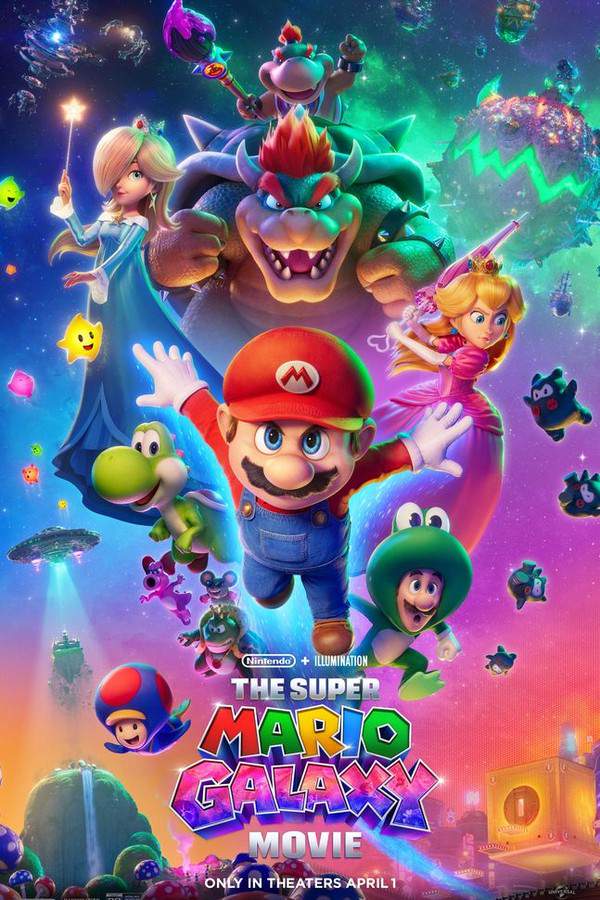
The Super Mario Galaxy Movie Reviews & Reception: Is This 2026 Nintendo Sequel Worth Watching?
When The Super Mario Galaxy Movie blasted into theaters on April 1, 2026, it carried the weight of astronomical expectations. Following the monumental commercial success of 2023’s The Super Mario Bros. Movie, this ambitious adaptation of one of Nintendo’s most beloved 3D platformers promised to take the franchise into the cosmos—literally. But as the dust settled and the Lumas stopped swirling, a fascinating and increasingly familiar phenomenon emerged within the cinematic landscape: a yawning chasm between professional critical consensus and passionate audience reception. While critics dismissed the film as sensory overload lacking narrative substance, general moviegoers and Nintendo faithful flocked to theaters in droves, hailing it as a celebratory love letter to four decades of gaming history.
This divergence raises essential questions about the modern state of video game adaptations, the evolution of cinema in an IP-driven market, and who these films are actually designed to serve. At What’s After the Movie, we’ve compiled comprehensive data on the film’s reception across multiple platforms, analyzing everything from box office trends to detailed audience sentiment metrics. Whether you’re searching for a Super Mario Galaxy Movie spoiler-free review, wondering about the critical consensus, or trying to determine if this cosmic adventure deserves your theater dollars, this deep dive examines the genuine reactions, controversial critiques, and unfiltered fan opinions that define this divisive 2026 release.
Critical Consensus vs. Audience Reactions: The Great Divide in The Super Mario Galaxy Movie Reception
The most striking aspect of The Super Mario Galaxy Movie’s reception is the statistical and philosophical gap between credentialed critics and everyday viewers. On aggregate platforms, professional reviews skew toward the mixed-to-negative range, with scores hovering between 20% and 67% from major outlets. Conversely, user-generated ratings tell a drastically different story, overwhelmingly clustering in the 8/10 to 10/10 range across social platforms and fan communities. This disparity isn’t merely numerical—it represents a fundamental disagreement about what constitutes cinematic value in the age of transmedia storytelling.
Professional critics have been notably harsh in their assessments. New York Magazine (Vulture) delivered one of the most vivid condemnations, describing the viewing experience as “like being asphyxiated in a ball pit filled with candy,” noting that while the film “pantomimes the hallmarks of a good time,” its “fast, forced cheeriness” and “subplot-happy narrative” ultimately achieve the opposite of charm, instead inducing anxiety about “what we’re missing.” The Wall Street Journal similarly dismissed the directorial efforts of Aaron Horvath and Michael Jelenic, alongside Matthew Fogel’s screenplay, suggesting the film “seems very much like a movie made by 5-year-olds” rather than one simply intended for them. Perhaps most damning, The New York Post compared the production to “Disney direct-to-video release” fare like The Lion King 1½, criticizing its “unconfident, powder-sugar tone” paired with “overeager advertising of an internet pop-up.”
Yet audiences—particularly those with deep Nintendo literacy—have mounted a fierce defense. User “Eldery” articulated a sentiment echoed across French-speaking markets, accusing traditional journalists of parasitic gatekeeping: “Les journalistes qui n’ont jamais tenu une manette veulent détruire les films tirés de jeux vidéo” (“Journalists who have never held a controller want to destroy films based on video games”). This reviewer pledged repeat viewings, suggesting that critical opinion holds no power over the creator-consumer relationship. Similarly, Spanish-language reviewer “BorisThe_Spister” declared they had “never left a movie theater so happy,” praising the film as precisely what Miyamoto intended: “la celebración del 40° aniversario de Super Mario Bros,” packed with references to the mustached plumber’s history that generalist critics simply cannot perceive.
At What’s After the Movie, our movie page tracks this divergence in real-time, offering visitors the ability to compare critic aggregates against verified audience scores. The data suggests that The Super Mario Galaxy Movie functions as a Rorschach test: critics see a lack of narrative sophistication, while fans see faithful transmutation of interactive joy into cinematic spectacle.
Narrative Structure and Pacing Critiques: Is The Super Mario Galaxy Movie “Impenetrable”?
Beyond general impressions, critical dissatisfaction crystallizes around specific formal complaints regarding storytelling architecture and pacing. The Reveal perhaps most succinctly summarized the barrier to entry for non-gamers, declaring the film “pretty much as impenetrable as Finnegan’s Wake for those not locked into its hermetic, mushroom-and-brick-filled world.” This comparison to Joyce’s notoriously difficult modernist novel suggests that the film’s narrative operates on assumptions of pre-existing franchise literacy that traditional cinema typically eschews.
IndieWire’s critique focused on mechanical storytelling rhythms, noting that the film’s “surplus of action and chase scenes follows the same rigid formula of swooping camera movements and game power-up deus ex machinas.” According to their analysis, this repetitious structure ensures “no sequence ever proves particularly exciting,” with the final confrontation proving “particularly anemic and rushed, as if the film is hurrying along to avoid having to delve into its storylines with more than a surface skim.” The Austin Chronicle reinforced this disappointment in adaptation theory terms, arguing that “an adaptation is at its best when elevating and accentuating the material it’s pulling from,” concluding that “nothing in the film I saw elevated, accentuated, or even double-jumped its video-game counterpart.”
Perhaps the most significant comparative critique came from The Washington Post, which unfavorably measured The Super Mario Galaxy Movie against competitor Sega’s cinematic offerings: “The movie loses many opportunities for stronger emotional resonance — the Sonic the Hedgehog films succeed far better because of their strong focus on character relationships.” This observation highlights a specific critical expectation—that even spectacle-driven family films must anchor their visual bombast in recognizable emotional arcs and interpersonal dynamics.
However, defenders like user “Mortanius_lok” reject these premises entirely, arguing that such critiques represent “snobisme difficile à supporter” (unbearable snobbery). In their view, traditional media reproaches the film for failing to offer “un récit sombre ou psychologique” (a dark or psychological narrative), ignoring that Nintendo’s universe has always built itself on lightness and joy. They argue that seeking depth in Mario betrays the essence of the franchise: “Je n’attends pas d’un Mario une histoire profonde ou complexe. Ce serait même, à mon sens, trahir l’essence de la licence” (“I don’t expect a deep or complex story from Mario. It would even be, in my opinion, betraying the essence of the franchise”). This perspective suggests that critics apply inappropriate aesthetic frameworks to a work intended as “une bouffée d’air frais” (a breath of fresh air)—essentially collective therapy rather than dramatic art.
For viewers seeking to understand these narrative approaches before committing to a ticket, our summary section provides detailed breakdowns of film structures without spoilers, while our wiki explores how this adaptation compares to the source material’s storytelling innovations.
Visual Spectacle and Technical Achievement: The Uncontested Triumph of The Super Mario Galaxy Movie
Amidst the discord surrounding narrative merit, one aspect of The Super Mario Galaxy Movie enjoys near-universal acknowledgment: its technical execution and visual splendor. Even the film’s harshest detractors concede that the production delivers a sensory feast that successfully translates the cosmic aesthetics of the Wii and Switch classics into cinematic language.
ReelViews, while offering a lukewarm overall assessment, admitted that “if the idea of spending 90 minutes in a movie theater seeing gorgeously rendered versions of a hugely popular gaming world and its characters going through the motions appeals to you, then The Super Mario Galaxy Movie will scratch the itch.” Consequence of Sound characterized the experience as “a ride featuring a lot of bright colors, familiar characters, and the occasional deranged moment,” acknowledging that while clear story structure might be absent, the visual “ride” itself functions effectively. Total Film noted that while “the boundless inventiveness Nintendo is known for never quite bleeds through as you would expect,” the film still “shoots for the stars,” suggesting that the visual ambition, if not the narrative innovation, remains commendable.
Audience reactions regarding the technical craft trend even more positive. User “Grim-Owl” specifically praised the “god tier” animation and fluidity, particularly highlighting fight scenes that capture the kinetic energy of the source games. The integration of musical cues—those nostalgic Galaxy themes reorchestrated for the big screen—received specific mention from user “reconjax,” who described the audio-visual combination as transporting them back to “late nights in your pjs having fun with this game.”
This technical proficiency serves as the film’s primary defense against accusations of cynicism. Unlike live-action adaptations that sometimes feel mechanically constructed by algorithms, The Super Mario Galaxy Movie clearly represents the work of craftspeople who understand and cherish the visual language of 3D platformers. The directors’ backgrounds in animation (accessible via our person profiles) inform a film that treats the Mushroom Kingdom not as a setting to be grounded in reality, but as a sandbox of pure imagination.
For fans of cinema technology and animation history, our collection pages group this film with other visually ambitious animated features, while our box office data tracks whether this visual splendor translates to commercial longevity beyond opening weekend.
Video Game Literacy and Medium Translation: Do Critics Understand Nintendo’s Language?
Beneath the surface-level disagreements about quality lies a deeper philosophical conflict regarding interactivity versus passivity, and whether traditional film criticism possesses the vocabulary necessary to evaluate game-to-film adaptations. The Super Mario Galaxy Movie has become a flashpoint in this ongoing cultural discourse, with supporters arguing that critics approach the film with fundamentally inappropriate expectations.
The accusation of media illiteracy appears repeatedly in user reviews. “PAGM-13” contended that “los criticos del cine buscan historias profundas y elaboradas, desarrollo de personajes, narrativas complejas, sin entender que la magia del universo de Mario esta en su simpleza y sencillez” (“film critics look for deep and elaborate stories, character development, complex narratives, without understanding that the magic of Mario’s universe lies in its simplicity”). They further argued that critics fail to comprehend the numerous references to Mario’s universe and other Nintendo properties, rendering them unable to connect with the film’s actual text. User “irvingsd” went further, suggesting that “los medios de crítica son poco maduros, solamente critican por odio a una empresa que no es de su país” (“the criticism media are immature, they only criticize out of hatred for a company that is not from their country”), introducing the geopolitical dimension of Japanese IP versus Western critical establishments.
This defensive posture suggests that The Super Mario Galaxy Movie functions not merely as entertainment but as a marker of cultural identity—a test of whether one belongs to the “hermetic, mushroom-and-brick-filled world” referenced by The Reveal. The film demands what academics might call “paratextual literacy”: knowledge of power-up hierarchies, understanding of Rosalina’s tragic backstory (which user “Grim-Owl” wished had received more screen time), and recognition of musical leitmotifs drawn from decades of gaming history.
The directors’ approach—detailed in our wiki—seems to privilege this initiated audience over newcomers. While this choice alienates generalist critics, it creates a powerful bond with the Nintendo faithful who feel seen and respected rather than pandered to. For viewers wondering whether they possess sufficient background to enjoy the film, our game section offers trivia and background materials that can enhance viewing literacy before purchasing tickets.
Nostalgia, Fan Service, and Generational Celebration: Who Is The Super Mario Galaxy Movie Actually For?
Ultimately, the reception of The Super Mario Galaxy Movie clarifies its intended audience: not the general filmgoing public seeking the next Spider-Verse or Pixar masterpiece, but rather multigenerational Nintendo enthusiasts seeking communal celebration of shared digital childhoods. The film operates as a 40th-anniversary monument first and a standalone cinematic narrative second.
User “BorisThe_Spister” captured this celebratory essence perfectly, describing the film as “precisamente lo mencionó Miyamoto: la celebración del 40° aniversario de Super Mario Bros,” noting that from beginning to end, “no terminas de ver referencias a la historia del fontanero bigotón favorito de todos” (“you never stop seeing references to the favorite mustached plumber’s history”). This density of allusion—ranging from obscure power-ups to callbacks to the original Donkey Kong arcade cabinets—creates an archaeological experience for longtime fans.
User “reconjax” articulated the emotional dimension of this nostalgia, connecting the film’s sensory triggers to specific childhood memories: “The sounds and movie will have you nostalgic and remember those late nights in your pjs having fun with this game.” This suggests that the film functions therapeutically, as user “Mortanius_lok” suggested—a “forme de thérapie collective” (form of collective therapy) in dark times.
However, this specificity creates accessibility issues. As “Grim-Owl” acknowledged, “for not so big fans or not fans in general,” the film risks feeling “bloated like it’s jingling keys in your face.” This self-awareness among supporters suggests that The Super Mario Galaxy Movie makes no apologies for its insularity—it is a film made by Nintendo fans, for Nintendo fans, about the experience of growing up with Nintendo.
For those looking to explore how this film fits into broader franchise patterns, our list feature ranks video game adaptations by audience satisfaction, while our concert-film section (which includes event cinema experiences like gaming tournaments and anniversary screenings) captures the communal viewing contexts where Super Mario Galaxy truly thrives.
Conclusion: The Super Mario Galaxy Movie Reception Verdict—Cinema for the Faithful
As the discourse around The Super Mario Galaxy Movie (2026) settles into historical context, the film emerges as a fascinating case study in audience-specific cinema. For critics seeking traditional narrative arcs, emotional catharsis, and universal accessibility—the qualities that elevated The Lego Movie or the Sonic franchise—the film represents a missed opportunity, a “kaleidoscopic and nerve-wracking” exercise in brand management that substitutes visual chaos for storytelling discipline. These perspectives, voiced by outlets from Vulture to The Wall Street Journal, argue that the medium of cinema demands more than faithful adaptation of interactive mechanics; it requires translation into the language of character development, thematic coherence, and emotional stakes.
Yet for the Nintendo faithful—the generation who grew up tilting Wiimotes to guide Mario through the cosmos, who recognize every musical cue and visual callback—the film delivers exactly what was promised: a 40th-anniversary celebration that validates their decades of fandom. The overwhelmingly positive user scores, the defensive rhetoric against critical “snobbery,” and the pledges of repeat viewings suggest that The Super Mario Galaxy Movie succeeds not despite its insularity, but because of it. It is a film that trusts its audience to meet it on its own terms, power-ups and all.
For viewers still uncertain whether to engage with this divisive adaptation, the question is not whether the film is objectively “good” by traditional cinematic metrics, but rather whether you approach it as a tourist or a pilgrim. If you seek a standalone cinematic masterpiece, look elsewhere. If you seek validation of your childhood joys rendered in “god tier” animation, this may be your film of the year.
Explore comprehensive reception data, detailed summaries, and franchise context at What’s After the Movie. Visit our dedicated movie page for real-time score updates, check our box office tracking for commercial performance, or browse our summary archives for spoiler-free guidance on whether this cosmic journey deserves your time.
| Site | Link |
|---|---|
| The Super Mario Galaxy Movie on TMDB | TMDB |
| The Super Mario Galaxy Movie on Wikipedia | Wikipedia |
| The Super Mario Galaxy Movie on Rotten Tomatoes | Rotten Tomatoes |
| The Super Mario Galaxy Movie on Metacritic | Metacritic |
| The Super Mario Galaxy Movie on JustWatch | JustWatch |
| The Super Mario Galaxy Movie on Box Office Mojo | Box Office Mojo |
| The Super Mario Galaxy Movie on Letterboxd | Letterboxd |
Continue reading



What's After the Movie?
Not sure whether to stay after the credits? Find out!
Check out our other apps:

SAT Sphere
Build confidence for the Digital SAT.

Mori Atlas
Discover wild places worth protecting.

Luntero
Search smarter for a home in Amsterdam.

Plot Explained
Unravel movie endings and hidden clues.

Pokechamp
Dive into Pokémon data and battle logic.

Driving Theory
Get ready for your European theory test.

Movie Dust
Plan your next cinema trip with ease.

Musemap
Find art and culture as you travel.

Selkobase
Compare credentials before committing.

Local Manual
Turn an unfamiliar country into practical next steps.

Lernavi
Compare school systems before your next move.

GymRoam
Find a workout stop wherever your plans take you.
Explore Our Movie Platform
New Movie Releases (2026)
Famous Movie Actors
Top Film Production Studios
Movie Plot Summaries & Endings
Major Movie Awards & Winners
Best Concert Films & Music Documentaries
Movie Collections and Curated Lists
© 2026 What's After the Movie. All rights reserved.
Privacy Policy