What's After the Blog?
Opinions • Reception
I Love Boosters (2026) Review, Critics Opinions & Audience Reception – How the Fashion Heist Film Performs
Explore fan reactions and critic reviews of I Love Boosters (2026), analyzing the film’s performance, storytelling, and its place within the emerging heist‑fashion franchise. This post breaks down audience reception, critical consensus, and what the buzz means for future installments.
May 27, 2026
Movies mentioned in this article
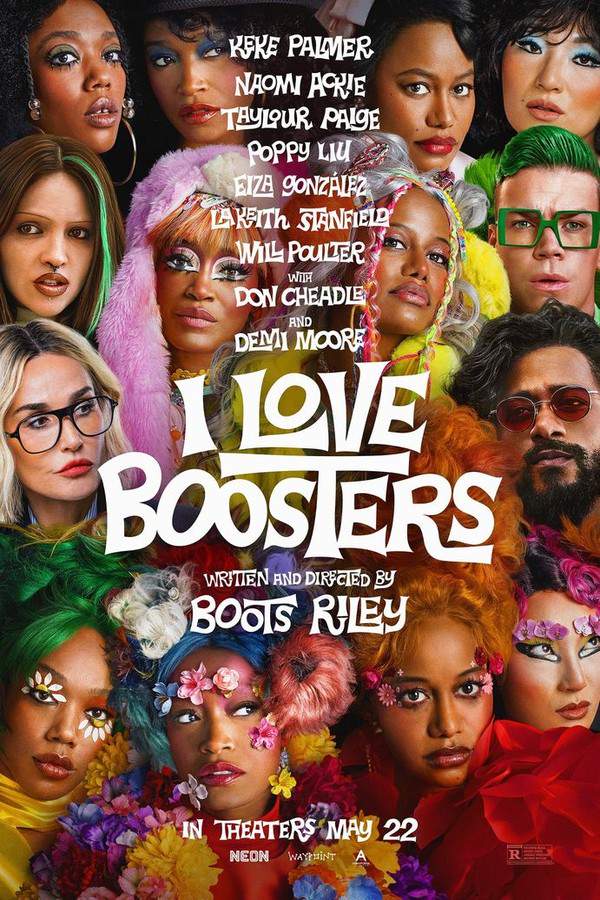
I Love Boosters (2026) Review: Critical Reception, Audience Reactions, and Film Analysis
When I Love Boosters hit theaters on May 22, 2026, it arrived riding a wave of anticipation that few sophomore features can claim. Following Boots Riley’s genre-defying 2018 debut Sorry to Bother You—which itself became a cult classic of anti-capitalist satire—this latest offering promised another audacious dive into surrealist social commentary. But as film enthusiasts began searching for I Love Boosters reviews, I Love Boosters critic reactions, and spoiler-free analysis of the Keke Palmer-led fashion heist narrative, it became immediately apparent that Riley’s sophomore effort would prove even more divisive than his first. With Metacritic scores ranging from a scathing 40 to an enthusiastic 88, and audience reactions split between hailing it as a revolutionary masterpiece and dismissing it as an incoherent mess, understanding the full reception landscape of this 2026 release requires digging deeper than simple thumbs up or down metrics. Whether you’re researching I Love Boosters viewer reactions to decide if it’s worth watching, seeking detailed film analysis of its anti-capitalist themes, or simply exploring the latest entries in contemporary political cinema, this comprehensive breakdown examines what critics, fans, and casual moviegoers are actually saying about one of the year’s most polarizing pictures. For complete cast details, production information, and box office performance data, visit the dedicated I Love Boosters movie page on What’s After the Movie.
Critical Consensus and Metacritic Analysis: How Critics Received I Love Boosters (2026)
The critical reception for I Love Boosters presents a fascinating case study in how modern film criticism grapples with ambitious, politically charged cinema that refuses conventional storytelling norms. With scores scattered across the entire critical spectrum—from Nick Schager’s disparaging 40/100 to Katie Walsh’s glowing 88/100—the film has achieved the rare distinction of being simultaneously celebrated as a visionary triumph and condemned as an insufferable failure. This divergence speaks to the challenging nature of Riley’s specific brand of anarchic, carnival-esque filmmaking, which seems to demand that critics decide whether ambition and originality can excuse narrative messiness.
James Berardinelli’s assessment that the film is “imperfect but sometimes dazzling” and offers “a fresh, imaginative vision driven more by creative impulses than the quest for big box-office dollars” captures the sentiment of the film’s defenders. These critics view I Love Boosters as exactly the kind of risk-taking cinema that mainstream Hollywood has abandoned in favor of franchise safety. Berardinelli’s observation highlights a crucial context for understanding the positive reviews: many critics approached the film as a necessary antidote to sanitized, corporate filmmaking, forgiving its excesses in favor of its revolutionary spirit. Similarly, Jacob Oller’s declaration that the film “paints another winning amusement park ride in the bright colors of its filmmaker’s politics” suggests that for some viewers, the sensory overload is precisely the point—a deliberate strategy to disorient and exhilarate rather than comfort.
However, the critical consensus is far from unanimous. Richard Brody’s characterization of the film as “exuberantly inventive but overstretched” and Maya Phillips’s note that “too many elements… hang like excess fabric” point to a recurring complaint among moderate and negative reviews: that Riley’s sophomore effort lacks the tightrope-walking precision of his debut. Where Sorry to Bother You maintained a narrative throughline even as it descended into surrealism, I Love Boosters—according to these critics—sacrifices coherence for chaos. Nick Schager’s harsh dismissal of the film as “simplistic, scattershot, and—worst of all—unfunny” represents the other end of the spectrum, suggesting that for viewers not already aligned with Riley’s political wavelength, the film offers little redeeming entertainment value.
The most enthusiastic praise tends to focus on specific elements rather than the whole. Peter Travers’s gleeful description of “Keke Palmer vs Demi Moore in a fashion smackdown” emphasizes the film’s star power and camp potential, while Amy Nicholson’s assertion that “the audacity of it—the exuberance Riley puts into making and loving movies—is what I want to see more of” speaks to a critical desire for passionate, personal filmmaking regardless of perfect execution. For audiences tracking critical consensus before deciding whether I Love Boosters is worth watching, the Metacritic and Rotten Tomatoes aggregates tell only part of the story; the real question is whether you value adventurous failure over safe competence. Those interested in how this reception compares to other politically charged satires can explore our awards tracking section and box office performance metrics to see how critical darling status correlates with commercial success.
Audience Reactions and Viewer Sentiment: The Polarized Response to I Love Boosters
If the critical reception represents a wide spectrum of professional opinion, the audience reaction to I Love Boosters resembles a battlefield—with combatants dug into trenches of either unwavering devotion or complete rejection. User scores range from the maximum 10/10 (awarded by viewers like STLFCFan23 and Reveiller0) to the minimum 0/10 (from TheGalaxyWeb), with little middle ground in between. This polarization reveals that I Love Boosters is not merely a film you watch but a film you react to based on your existing ideological framework, tolerance for narrative experimentation, and patience for Riley’s maximalist approach.
The negative user reactions often center on accusations of heavy-handed messaging and structural incoherence. Miles_Long’s scathing critique that “the message of this film beats you in the face like a shoplifter trying to escape a Walgreens security guard” and that it’s “not clever, it’s annoying” represents a significant portion of the audience who found Riley’s anti-capitalist satire preachy rather than provocative. Similarly, AntIsCool’s detailed breakdown complains that “the story felt completely all over the place” with “pacing [that] was terrible,” noting that “by the halfway point I was checking the time.” These reviews suggest that for general audiences expecting a heist comedy or fashion industry satire in the vein of The Devil Wears Prada, I Love Boosters delivers something far more abstract and politically explicit than anticipated.
Conversely, the positive user reactions celebrate exactly what the negative reviews criticize. STLFCFan23 praises it as “a great film with a strong message about systemic inequality and community solidarity,” calling it “easily one of the best, most imaginative movies of the year.” Reveiller0 echoes the critical comparison to amusement park rides, stating it “keeps you constantly guessing” and successfully achieves Riley’s goal of feeling like a cinematic roller coaster. Perhaps most tellingly, Muggs offers the memorable description: “A Terry Gilliam movie for the ADHD generation? A screwball sci-fi anti-capitalist, pro-union agitprop revolutionary pop-art bomb planted in the multiplex?” This review acknowledges the film’s messiness—“Boots got a budget & felt the need to indulge every whim to a degree that sometimes exhausts”—while ultimately treasuring it as a “flawed, scrappy absurdist art-object.”
The political divide in audience reactions is impossible to ignore. While some viewers like blufnx criticize the film as “Glorified shoplifting” and express concern about glorifying retail theft during a period of increased store raids, others see the “boosting” narrative as a legitimate metaphor for wealth redistribution. This split indicates that I Love Boosters functions as a Rorschach test for viewers’ feelings about capitalism, luxury consumption, and direct action. For those seeking to engage with these debates or test their own knowledge of the film’s themes, our movie quizzes and games offer interactive ways to explore the themes further, while the full movie wiki provides detailed context on the production’s development and intent.
Keke Palmer and Demi Moore: Performance Reviews and Character Dynamics
Amidst the swirling controversy over narrative coherence and political messaging, the performances in I Love Boosters have emerged as one of the few areas of near-universal praise—though even here, critics note significant disparities in how the ensemble cast is utilized. The central dynamic between Keke Palmer’s Corvette, an aspiring designer turned luxury goods thief, and Demi Moore’s Christie Smith, the fashion mogul target of the heist, drives the film’s engine, with multiple critics describing their confrontation as the film’s highlights.
Peter Travers’s enthusiastic “fashion smackdown” characterization captures the camp energy that Palmer and Moore bring to their scenes together. Palmer, as the leader of the “boosters,” receives consistent praise for grounding the film’s surreal elements with charismatic, believable leadership. Critics note that she manages to sell the film’s more absurdist moments through sheer force of personality, making the transition from aspiring designer to anti-capitalist fashion thief feel earned rather than arbitrary. Meanwhile, Moore’s portrayal of the narcissistic designer who views her overpriced clothing as “body art” and seeks power over her “bamboozled customers” provides the perfect foil—simultaneously repulsive and mesmerizing in her corporate villainy.
However, the supporting cast presents a more complicated picture of reception. Brent_Marchant’s detailed user review specifically calls out “the generally poor use of cast members LaKeith Stanfield, Don Cheadle and the trio of boosters,” suggesting that while Palmer and Moore shine, the film wastes its deep bench of talent. This criticism is echoed in observations about Naomi Ackie and Taylour Paige’s roles as Corvette’s associates, with some reviewers wishing their characters had been developed beyond their function in the heist mechanics.
Will Poulter’s turn as a retail store manager receives specific positive mention from Brent_Marchant as “uncharacteristically play[ing] against type in his usual bad ass persona,” while Poppy Liu’s portrayal of a Chinese employee advocate is cited as another standout in an otherwise overstuffed narrative. The uneven utilization of such a talented ensemble contributes to the film’s mixed reception—suggesting that while I Love Boosters succeeds in creating memorable star moments, it occasionally fumbles the ensemble chemistry that made Sorry to Bother You so effective. For detailed information on the full cast and their filmographies, visit our actor profiles section, and check the I Love Boosters summary page for character breakdowns.
Visual Aesthetics, Tone, and Boots Riley’s Directorial Ambition
Beyond the performances and politics, much of the conversation surrounding I Love Boosters centers on its distinct visual language and tonal audacity—a “circus-inspired” sensory experience that has left viewers either exhilarated or exhausted. Roger Moore’s description of the film as a “loopy, anarchic comedy” only scratches the surface of what Riley attempts: a candy-colored fever dream that uses the visual vocabulary of high fashion and retail spectacle to critique the very industries it depicts.
The production design has emerged as the film’s most universally praised technical element. Multiple critics describe the color palette as “eye-popping” and “vibrant,” with Brent_Marchant specifically citing the “stunningly colorful production design that’s a vibrant feast for the eyes.” This visual richness serves Riley’s stated goal—confirmed by user Reveiller0’s observation that “Boots says he wanted it to feel like an amusement park ride”—of creating a film that overwhelms the senses in order to mirror the overwhelming nature of consumer capitalism. The costumes, particularly the contrast between Corvette’s crew and Christie Smith’s high-fashion empire, function as character development and political statement simultaneously.
However, the technical elements are not without criticism. Muggs’s observation that the “sound mix is a bit of a mess with wall-to-wall Tune-Yards music turned up too high” points to a recurring complaint that the film’s audio-visual aggression crosses from immersive into abrasive. The score by Tune-Yards—while praised by Walsh for contributing to the “wildly entertaining” atmosphere—apparently proves divisive for viewers sensitive to sonic overload.
The surrealist elements have generated significant debate about where visionary filmmaking ends and self-indulgence begins. While Jacob Oller celebrates the “winning amusement park ride” aesthetic, Brent_Marchant argues that “the basic distinctions between reality and fantasy become irretrievably blurred,” suggesting that Riley’s commitment to surrealism ultimately undermines the narrative’s emotional stakes. This tension between ambition and accessibility defines the film’s visual reception: it is simultaneously too much and exactly enough, depending on the viewer’s tolerance for cinematic chaos. Those interested in exploring similar visually ambitious films can browse our movie collections and curated film lists for comparable works of surrealist cinema.
Political Satire and Anti-Capitalist Themes: Message vs Execution
At its core, I Love Boosters is a film about the redistribution of wealth and the morality of theft in a world of extreme inequality—a premise that has generated the most heated debates about the film’s effectiveness. Richard Brody’s description of the plot as an “exuberantly inventive… comedy about the redistribution of luxury goods” and Roger Moore’s note that “capitalism’s end game is taunted and satirized” establish the film’s central thematic concerns. However, the execution of these themes has critics and audiences divided between hailing Riley as a bold truth-teller and criticizing him as a pedantic lecturer.
The most sophisticated critique comes from Brent_Marchant, who argues that while the film’s themes regarding “social and economic fairness, personal ethics, and the business and political climate” are laudable, “the volume on these notions has been turned up considerably, to the point where it fundamentally screeches at the audience.” This observation suggests that I Love Boosters suffers from the sophomore slump of over-correction—where Sorry to Bother You balanced its messaging with absurdist humor, the sequel apparently sacrifices subtlety for sermonizing. The result, according to this perspective, is a film that “becomes mind-bogglingly overwhelming and tedious,” losing viewers who might otherwise agree with its politics.
Conversely, Katie Walsh’s enthusiastic review argues that despite the “heavy political themes and rallying cries to action,” Riley succeeds because “his message never loses its clarity: Liberation is for everyone, and, most importantly, it should be fun.” This defense suggests that the film’s political explicitness is not a bug but a feature—a necessary response to increasingly dire economic conditions that demand more than subtle allegory. Amy Nicholson’s declaration that “the audacity of it… is what I want to see more of from every filmmaker” supports this view, positing that in an era of corporate filmmaking, Riley’s uncompromising political voice is valuable precisely because it refuses to cater to centrist sensibilities.
The specific metaphor of “boosting” (shoplifting) as revolutionary praxis has proven particularly contentious. While the film apparently portrays the theft of luxury goods as a form of activism and community solidarity, some viewers like blufnx reject this framing entirely, calling it “Glorified shoplifting” and questioning whether cinema should romanticize retail theft during periods of social unrest. This criticism highlights the risk of Riley’s specific satirical approach—when real-world store raids are occurring, the line between critiquing capitalism and endorsing criminal behavior becomes blurred in ways that make some audiences uncomfortable.
Sarah-Tai Black’s observation that “politics and characters… are struggling to find their full expression against the weight of the film’s undeniably spirited ambition” perhaps best summarizes the critical middle ground: the politics are present and important, but the filmmaking occasionally buckles under the pressure of conveying them. For viewers seeking to understand the full context of these themes, our movie wiki provides background on Riley’s previous work and political influences, while the I Love Boosters main page offers additional analysis of the film’s cultural commentary.
Final Verdict: Is I Love Boosters Worth Watching in 2026?
For audiences standing at the box office—or browsing streaming platforms—wondering whether I Love Boosters deserves their time and money, the answer depends entirely on what you value in cinema. If you prioritize narrative coherence, subtle political messaging, and traditional three-act structure, the overwhelming consensus from detractors suggests you should approach with caution or skip entirely. Nick Schager’s dismissal of the film as “insufferable” and AntIsCool’s regret that they hadn’t “spent [their] time watching almost anything else” represent genuine reactions from viewers who found the film’s chaos intolerable.
However, if you seek cinema that takes big swings, prioritizes imagination over coherence, and uses the medium for explicit political engagement, the film’s defenders make a compelling case that I Love Boosters is essential viewing. As James Berardinelli notes, the film offers “something in depressingly short supply in theaters these days: a fresh, imaginative vision.” For these viewers, the film’s flaws—its overstuffed narrative, its aggressive sound mix, its occasionally heavy-handed messaging—are acceptable prices to pay for originality in an increasingly homogenized landscape.
The film’s long-term reception will likely follow the trajectory of Sorry to Bother You: initial confusion and polarization giving way to cult appreciation as audiences catch up to Riley’s wavelength. The amusement park ride quality that multiple reviewers mention suggests the film will reward repeat viewings and midnight screenings, even if it alienates casual Friday night moviegoers. For those curious about surrealist political cinema, fashion industry satires, or simply witnessing a filmmaker with a unique vision work with a major budget, I Love Boosters is likely worth the risk—even if you end up among the detractors, the conversation surrounding the film proves more engaging than most safe, corporate alternatives.
Before making your decision, explore the I Love Boosters movie page on What’s After the Movie for the latest viewer ratings, box office updates, and detailed cast information. Whether you ultimately love it or hate it, Riley’s sophomore feature demands to be discussed, debated, and dissected—qualities that, in themselves, make it a significant cinematic event in 2026.
Conclusion: Understanding the Divided Reception of I Love Boosters
The reception of I Love Boosters (2026) ultimately reveals more about the current state of cinema audiences than it does about the film’s objective quality. In an era where franchise content dominates multiplexes and risk-taking is often punished at the box office, Boots Riley’s refusal to compromise his vision—however messy that vision may be—has created a natural dividing line between viewers who crave audacity and those who demand polish. The film’s Metacritic spread and polarized audience scores indicate that I Love Boosters is not a movie that allows for passive consumption; it demands you engage with its politics, surrender to its surrealism, or reject both entirely.
What emerges from the critical and user reviews is a portrait of a filmmaker operating at maximum capacity, perhaps too maximum for some tastes. The consensus suggests that while the performances—particularly Palmer and Moore’s fashion face-off—provide solid anchors, and the production design offers visual delights, the film’s narrative overabundance and aggressive messaging create barriers for general audiences. Yet for those willing to meet Riley on his own terms, the film offers the rare experience of genuinely unpredictable cinema—a “scrappy absurdist art-object” that challenges rather than comforts.
As the film continues its theatrical run and eventually moves to streaming platforms, its reputation will likely evolve. Whether it becomes a misunderstood masterpiece or a cautionary tale about sophomore slumps, I Love Boosters secures its place in 2026’s cinematic conversation as a film that dared to be different, even if that difference alienated as many viewers as it enchanted. For ongoing coverage, detailed summaries, and to join the conversation about this divisive release, visit the I Love Boosters dedicated page and explore our full suite of movie resources at What’s After the Movie.
External Resources and Related Links
| Site | Link |
|---|---|
| I Love Boosters The Movie Database | TMDB |
| I Love Boosters Wikipedia | Wikipedia |
| I Love Boosters Rotten Tomatoes | Rotten Tomatoes |
| I Love Boosters Metacritic | Metacritic |
| I Love Boosters JustWatch | JustWatch |
| I Love Boosters Box Office Mojo | Box Office Mojo |
Continue reading




What's After the Movie?
Not sure whether to stay after the credits? Find out!
Check out our other apps:

SAT Sphere
Build confidence for the Digital SAT.

Mori Atlas
Discover wild places worth protecting.

Luntero
Search smarter for a home in Amsterdam.

Plot Explained
Unravel movie endings and hidden clues.

Pokechamp
Dive into Pokémon data and battle logic.

Driving Theory
Get ready for your European theory test.

Movie Dust
Plan your next cinema trip with ease.

Musemap
Find art and culture as you travel.

Selkobase
Compare credentials before committing.

Local Manual
Turn an unfamiliar country into practical next steps.

Lernavi
Compare school systems before your next move.

GymRoam
Find a workout stop wherever your plans take you.
Explore Our Movie Platform
New Movie Releases (2026)
Famous Movie Actors
Top Film Production Studios
Movie Plot Summaries & Endings
Major Movie Awards & Winners
Best Concert Films & Music Documentaries
Movie Collections and Curated Lists
© 2026 What's After the Movie. All rights reserved.
Privacy Policy