What's After the Blog?
Opinions • Reception
Star Wars: The Mandalorian and Grogu (2026) Review & Critics' Reception – Fan Opinions, Scores, and Analysis
Explore how fans and critics are reacting to Star Wars: The Mandalorian and Grogu, examining performances, storytelling, and its place in the franchise, with detailed review scores and audience sentiment.
May 25, 2026

Movies mentioned in this article
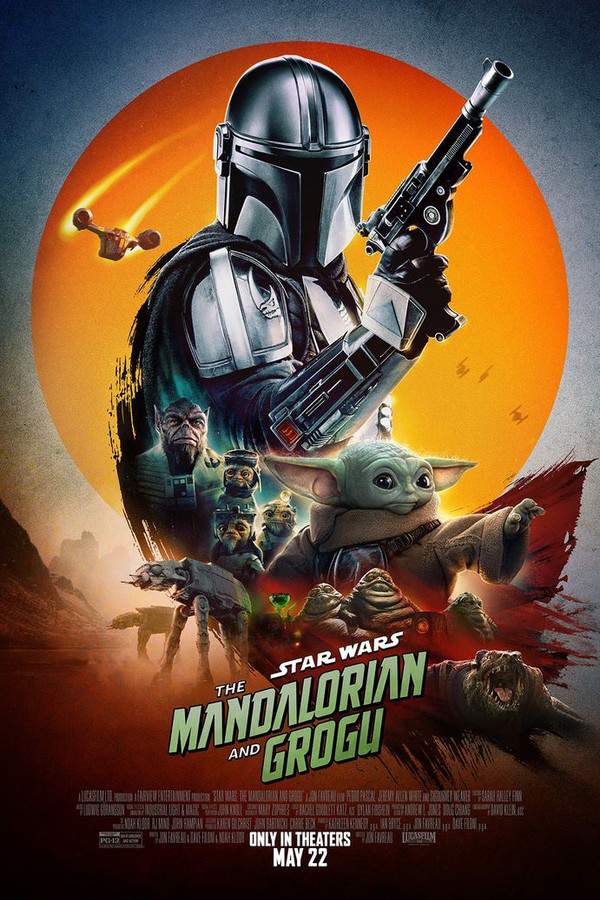
Star Wars: The Mandalorian and Grogu (2026) Reviews, Reception & Critical Consensus: Is It Worth Watching?
When Disney announced that Star Wars: The Mandalorian and Grogu would mark the franchise’s theatrical return after a seven-year cinematic drought, anticipation reached fever pitch among the global fanbase. As the first Star Wars film to hit theaters since The Rise of Skywalker (2019), Jon Favreau’s big-screen adaptation of the beloved streaming series carried enormous weight—not just for box office expectations, but for the future direction of the galaxy far, far away. With Pedro Pascal’s Din Djarin and the adorable Grogu making the leap from Disney+ to IMAX, audiences and critics alike wondered whether this transition would reinvigorate the franchise or merely extend the streaming narrative into an unnecessary theatrical experiment. If you’re looking for a comprehensive breakdown of where this film fits into the larger Star Wars canon, visit our detailed summary page for Star Wars: The Mandalorian and Grogu or check the main movie page for cast details, box office data, and more. The reception has proven to be one of the most divisive in recent franchise history, creating a fascinating rift between professional critics who largely shrug at the offering and general audiences who seem to have embraced the spacefaring duo’s latest adventure with considerably more enthusiasm.
Critical Consensus vs. Audience Reception: The Great Divide on The Mandalorian and Grogu (2026)
The most striking aspect of Star Wars: The Mandalorian and Grogu’s reception is the vast chasm separating critic reviews from audience reactions, a division that has sparked intense debate across film communities and social media platforms. While professional reviewers have largely assigned middling to negative scores—ranging from David Fear’s scathing 40/100 assessment to Kyle Smith’s brutal 30/100 takedown—user reviews tell a dramatically different story, with scores consistently hovering between 8/10 and perfect 10/10 ratings. This disconnect raises important questions about franchise fatigue among entertainment journalists versus the enduring appetite for classic Star Wars adventure among general moviegoers.
Critics like Fear have been particularly harsh in their Star Wars: The Mandalorian and Grogu film analysis, with Fear declaring that while the movie “will keep the corporate bottom line from cratering,” creatively “it makes the whole franchise feel completely and utterly cooked.” His pointed paraphrase of the series’ famous mantra—“This is not the way”—encapsulates the sentiment among disappointed reviewers who see the film as a symptom of creative bankruptcy rather than a revitalization. Similarly, Kyle Smith attacked the screenplay (co-written by Favreau, Dave Filoni, and Noah Kloor) for featuring “a grindingly simple plot that provides the weakest possible pretext to staple together a series of uninspired monster and droid fights.” These critical reviews suggest a fundamental dissatisfaction with what many see as a lack of narrative ambition, particularly when compared to more daring entries in the Star Wars canon.
Yet audience reactions present a stark counter-narrative that cannot be ignored when evaluating whether The Mandalorian and Grogu is worth watching. User TimmyBlue awarded the film an enthusiastic 8/10, praising how it “captured the spirit of the 80’s & essence of the original trilogy with an incredible creativity of its own.” This sentiment echoes across numerous viewer reactions, with KalKenobi83 calling it “a masterclass in tactile, pulpy Star Wars action” and awarding it 7.9/10. The discrepancy becomes even more apparent when considering ThroneBender’s 9/10 review, which bluntly states that “the critics are out of touch of the audience,” suggesting that professional reviewers may be approaching the film with jaded expectations disconnected from what casual fans seek in blockbuster entertainment. For those tracking these divergent opinions, our box office analysis section provides real-time data on how these word-of-mouth dynamics translate to commercial performance, while the movie profiles offer deeper dives into the creative teams behind the controversy.
The “Nothing Burger” Narrative: Is The Mandalorian and Grogu (2026) Creatively Bankrupt?
Among the most damaging criticisms leveled at Star Wars: The Mandalorian and Grogu is the accusation that the film represents a “nothing burger”—technically competent but narratively empty, existing merely to maintain brand visibility rather than advance the art of storytelling. David Sims of The Atlantic crystallized this critique in his spoiler-free review, noting that “compared with the most recent Star Wars films, which prompted fierce debate, The Mandalorian and Grogu seems unlikely to truly offend anyone; it is neither a confusing mess nor so offbeat as to divide the fan base. Instead, it’s content to be a nothing burger, two dutiful hours of laser blasts and flat dialogue that will do just enough to keep toys stacked on shelves.” This observation cuts to the heart of concerns about franchise fatigue and corporate micromanagement in modern Hollywood.
Katie Walsh expanded upon this “safe” criticism in her assessment, arguing that “Grogu’s cuteness may be a powerful force, but it’s not enough to sustain this big-screen leap, especially in a blockbuster this bloated, and frankly, dull.” Her conclusion that “if it feels like a serial, maybe it should have stayed a series” speaks to broader anxieties about the television-to-film transition and whether the cinematic marketplace is being flooded with content designed for smaller screens. James Berardinelli similarly labeled the film “disposable,” noting that while “it’s far from unwatchable and offers moments of enjoyability,” particularly praising “the high-energy prologue,” the overall experience lacks the staying power of memorable cinema. These critical consensus viewpoints suggest that for viewers seeking groundbreaking Star Wars storytelling or bold new directions, The Mandalorian and Grogu may prove disappointing.
However, defenders of the film push back against the notion that every blockbuster must reinvent the wheel. Brian Lowry offered a more charitable 70/100 perspective, highlighting that “there’s a Saturday-matinee-type unpretentiousness about the film that doesn’t really aspire to much more than letting the audience have a good time.” This framing positions the movie not as a failed attempt at high art, but as a successful execution of populist entertainment. Aparita Bhandari struck a similar chord, suggesting that “The Mandalorian and Grogu is perfectly suitable as a summer flick to beckon you back to the theatres,” even while questioning its lasting mythological impact. For audiences curious about how these debates have evolved throughout Star Wars history, our movie wiki traces the evolution of critical reception across the entire saga, from the prequel controversies to the sequel trilogy divisions. Ultimately, whether the “nothing burger” critique lands depends largely on viewer expectations—those seeking a comfortable return to familiar characters and straightforward action may find exactly what they’re looking for, while those hoping for the next Empire Strikes Back will likely echo royalgu07’s disappointed 5/10 verdict that “there is no arc, there is nothing new.”
Action Cinematography and Visual Spectacle: Why Fans Are Calling The Mandalorian and Grogu a Masterclass
Where Star Wars: The Mandalorian and Grogu unquestionably succeeds—at least according to its defenders—is in the realm of pure cinematic craft, particularly regarding action choreography, visual effects, and immersive theatrical presentation. KalKenobi83’s detailed user review lavished praise on the film’s technical execution, describing it as “a masterclass in tactile, pulpy Star Wars action and a fantastic appetizer for the 2026 cinematic slate.” The review specifically highlights how the film “treats its weaponry and combat with a grounded weight; these aren’t weightless laser pointers,” comparing Din Djarin’s “calculated, heavy-hitting precision” to the kinetic intensity of John Wick or the grounded realism of Andor. This elevation of a non-Force-sensitive protagonist to top-tier combat status represents a significant achievement for fans who appreciate martial prowess over mystical abilities in their Star Wars storytelling.
The visual language of the film has also garnered significant appreciation among viewers who experienced it in premium formats. User johnsibly awarded the film 9/10 and specifically recommended “the 3D IMAX version,” noting that “the 3D is used subtlety to feel like your part of the experience rather than a gimmick.” This sentiment about the theatrical immersion factor directly counters criticisms that the film feels like an extended television episode. Freshtbh went even further in their perfect 10/10 assessment, drawing a fascinating parallel to Star Wars history by suggesting that “the cinematography looked awesome also and will get appreciation once the dust settles in the same way The Phantom Menace did.” This prognostication implies that initial critical resistance might eventually give way to reappraisal based on the film’s visual merits alone.
zcraack’s 9/10 review (written in Spanish) emphasized that “las escenas de acción estaban excelentes, el cgi y los efectos prácticos de alto nivel” (“the action scenes were excellent, high-level CGI and practical effects”), while jeanmb7 praised the “trilha sonora e efeitos especiais mto bons” (“very good soundtrack and special effects”). These international perspectives confirm that the film’s technical polish transcends language barriers. Even critics who found fault with the narrative, such as Peter Travers, acknowledged that the film “slides by on the indisputable sweetness of Baby Yoda and Pedro Pascal as his helmet-head daddy,” suggesting that the central relationship provides enough emotional scaffolding to support the spectacle. For those interested in exploring how this film compares to other entries in the franchise’s visual evolution, our movie collections page organizes Star Wars films by cinematographic style and technical achievement, while our lists section features curated rankings of the best-looking entries in the saga.
From Streaming to Silver Screen: Does The Mandalorian and Grogu Work as a Theatrical Experience?
Perhaps the most contentious debate surrounding Star Wars: The Mandalorian and Grogu involves its fundamental identity as a cinematic release versus its origins as prestige television. The transition from the small screen to IMAX has generated significant discourse about whether the narrative scope and structural pacing of a streaming series can successfully translate to the demands of theatrical blockbusters. Katie Walsh’s pointed observation that “if it feels like a serial, maybe it should have stayed a series” captures the anxiety of critics who feel that the film’s episodic structure betrays its television roots, resulting in what they perceive as a bloated runtime without the escalating tension required for feature films.
KalKenobi83’s otherwise positive 7.9/10 review conceded this structural weakness, noting that “the hyper-direct narrative can occasionally feel thin, and the uneven pacing notably lets its foot off the gas toward the final act.” This criticism suggests that while the individual set pieces may dazzle, the connective tissue between them lacks the propulsive momentum of great cinema. Usercutcrew8234’s pragmatic 8/10 assessment acknowledged these limitations directly: “It’s a fun action movie with some funny moments. Will it redefine a genre? No. Will it change your life? No. Is it a fun time spent at the movies? Yes. Does it need to be or do more? No.” This utilitarian approach to filmgoing—valuing immediate entertainment over lasting artistic impact—represents a significant portion of the audience response that critics seem to overlook.
Unbiased_Critic’s 8/10 review offered perhaps the most practical advice for potential ticket buyers: “It’s a fun Sci Fi romp within the Star Wars - The Mandalorian universe that’s definitely worth watching if you’re into any of those three things. It’s not a mind bending masterpiece, so, only if you have to spend $70 to get to a theatre, pay the entrance and buy yourself plenty of snacks to enjoy a movie would you feel disappointed.” This cost-benefit analysis of the theatrical experience highlights how modern moviegoing economics factor into reception. For viewers deciding between theaters and eventual streaming, our concert films and special presentations section offers insights into which productions demand the big-screen treatment. Meanwhile, those looking to test their knowledge of the franchise before seeing the film can visit our quizzes and games section for trivia and interactive content related to The Mandalorian lore.
Emotional Resonance and Character Chemistry: The Saving Grace of Din Djarin and Grogu
Beneath the debate about spectacle and structure lies the true heart of Star Wars: The Mandalorian and Grogu: the relationship between a lone bounty hunter and his force-sensitive foundling. This emotional core has emerged as the film’s most defensible quality, even among skeptical reviewers. Peter Travers acknowledged that the movie succeeds primarily through “the indisputable sweetness of Baby Yoda and Pedro Pascal as his helmet-head daddy,” suggesting that the central chemistry transcends the screenplay’s shortcomings. This dynamic—focusing on found family, protection, and loyalty—represents a return to the thematic foundations that made the original Mandalorian series a cultural phenomenon.
TimmyBlue’s enthusiastic 8/10 review expanded on this emotional resonance extensively, praising how the film emphasizes “Friendship. Family. Caring. Loyalty.” The review specifically highlighted Favreau’s directorial tendency to “create projects about relationships and the incredible importance of those over everything else….even big missions.” This focus on human (and alien) connection over galactic stakes provides an alternative to the Skywalker Saga’s dynastic melodrama, offering instead an intimate portrait of parenthood and partnership. The addition of Sigourney Weaver as Colonel Ward, as noted by KalKenobi83, “elevates the gravity of the sandbox,” bringing sci-fi credibility and maternal authority to the proceedings. However, some viewers like royalgu07 criticized the character development, arguing that “there is no arc” and that Din Djarin suffers from “a flat character arc reminiscent of Han Solo in Return of the Jedi—heavy on competence, light on internal evolution.”
Despite these criticisms about character stagnation, the father-son dynamic between Din and Grogu continues to resonate with families and younger viewers. Freshtbh’s touching 10/10 review centered on “the sight of my 8 year old gasping and looking at my face for reaction every 5 minutes throughout the entire film,” suggesting that the movie succeeds as generational bonding experience even if it fails as ambitious cinema. For those interested in exploring the character profiles and actor filmographies, including Pedro Pascal’s extensive career beyond the helmet, visit our person profiles page. Additionally, readers can explore our comprehensive summaries archive to trace the evolution of Din and Grogu’s relationship from their first appearance through this cinematic installment, or check our awards section to see if this emotional chemistry has translated to industry recognition.
Conclusion: Navigating the Divided Reception of Star Wars: The Mandalorian and Grogu
As the dust settles on the theatrical release of Star Wars: The Mandalorian and Grogu, the verdict remains decidedly split, creating a fascinating case study in modern franchise management and audience expectation. For viewers asking “is The Mandalorian and Grogu worth watching?” the answer largely depends on what they seek from their Star Wars experience. If you approach the film expecting a revolutionary expansion of the mythology or a bold new cinematic vision ala Andor or Rogue One, you may find yourself agreeing with David Fear’s assessment that the franchise feels “cooked,” or siding with David Sims’ characterization of the film as a “nothing burger.” The critical consensus suggests that the film plays it too safe, offering competent but uninspired action that serves corporate interests more than creative ones.
However, if you seek a comfortable return to the Western-infused space opera vibes of the original trilogy, delivered with modern visual polish and the undeniable charm of Pedro Pascal’s stoic paternalism, the audience reactions suggest you’ll find much to enjoy. The film succeeds as a “Saturday matinee” experience, offering tactile action, impressive IMAX visuals, and enough Grogu-induced heartwarming moments to justify the ticket price. It may not advance the Star Wars universe in meaningful ways, and it may indeed suffer from its television origins, but for fans who simply want to spend two hours in a galaxy far, far away without the baggage of the Sequel Trilogy’s controversies, The Mandalorian and Grogu delivers exactly what it promises.
Ultimately, the film represents a fork in the road for Star Wars—a choice between safe, streaming-derived comfort food and the risky, boundary-pushing storytelling that once defined the franchise’s best moments. Whether this theatrical experiment leads to more ambitious projects or further corporate caution remains to be seen. For the latest updates on reception, box office performance, and where this film fits in the larger Star Wars landscape, bookmark our main movie page for Star Wars: The Mandalorian and Grogu and explore our full database of reviews, summaries, and film analysis at What’s After the Movie.
| Site | Link |
|---|---|
| Star Wars: The Mandalorian and Grogu IMDB | IMDB |
| Star Wars: The Mandalorian and Grogu TMDB | TMDB |
| Star Wars: The Mandalorian and Grogu Rotten Tomatoes | Rotten Tomatoes |
| Star Wars: The Mandalorian and Grogu Metacritic | Metacritic |
| Star Wars: The Mandalorian and Grogu JustWatch | JustWatch |
| Star Wars: The Mandalorian and Grogu Box Office Mojo | Box Office Mojo |
| Star Wars: The Mandalorian and Grogu Letterboxd | Letterboxd |
Continue reading


What's After the Movie?
Not sure whether to stay after the credits? Find out!
Check out our other apps:

SAT Sphere
Build confidence for the Digital SAT.

Mori Atlas
Discover wild places worth protecting.

Luntero
Search smarter for a home in Amsterdam.

Plot Explained
Unravel movie endings and hidden clues.

Pokechamp
Dive into Pokémon data and battle logic.

Driving Theory
Get ready for your European theory test.

Movie Dust
Plan your next cinema trip with ease.

Musemap
Find art and culture as you travel.

Selkobase
Compare credentials before committing.

Local Manual
Turn an unfamiliar country into practical next steps.

Lernavi
Compare school systems before your next move.

GymRoam
Find a workout stop wherever your plans take you.
Explore Our Movie Platform
New Movie Releases (2026)
Famous Movie Actors
Top Film Production Studios
Movie Plot Summaries & Endings
Major Movie Awards & Winners
Best Concert Films & Music Documentaries
Movie Collections and Curated Lists
© 2026 What's After the Movie. All rights reserved.
Privacy Policy