Animal Farm 2025 Reviews: Critical Reception, Audience Backlash, and Ideological Controversy Explained
When Animal Farm arrived in theaters, it carried the weight of one of literature’s most revered political allegories on its animated shoulders. George Orwell’s 1945 novella has survived decades of censorship attempts, Cold War-era scrutiny, and academic deconstruction—yet nothing quite prepared the cultural landscape for the maelstrom of controversy that would engulf this 2025 adaptation. For moviegoers searching for honest Animal Farm 2025 reviews and spoiler-free guidance on whether this reimagining honors its source material, the reception landscape presents a deeply fractured picture that transcends typical “hit or miss” categorizations.
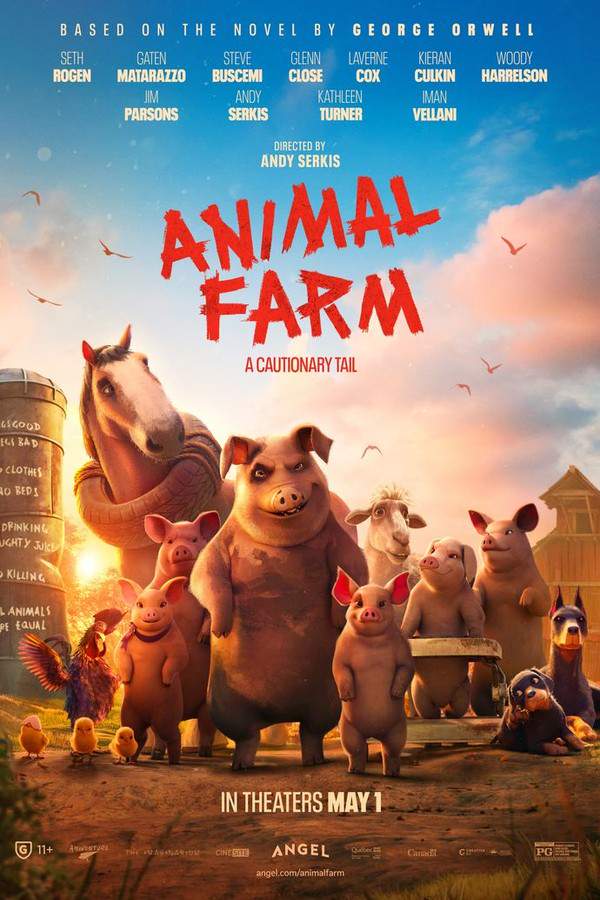
At What’s After the Movie, we’ve analyzed thousands of film receptions, but rarely have we encountered a movie that generates such diametrically opposed ideological accusations while simultaneously uniting critics and audiences in their dissatisfaction with execution. Directed by Andy Serkis and featuring Seth Rogen as the voice of Napoleon, this adaptation from Angel Studios has become a lightning rod for debates about political messaging in family entertainment, the ethics of adaptation, and the challenges of translating dystopian literature into commercially viable animation. Whether you’re seeking detailed movie summaries or exploring our comprehensive movie wiki for context on Orwell’s original vision, understanding this film’s reception requires navigating a complex web of critical consensus, audience betrayal, and cultural warfare.
This analysis examines the Animal Farm 2025 critical consensus, explores why viewer reactions have been so virulently negative, and unpacks the fascinating phenomenon of both left-wing and right-wing audiences claiming the film betrays Orwell’s original message. For those wondering “is Animal Farm 2025 worth watching?” or searching for authentic audience reactions versus critic reviews, we’ve synthesized the genuine critical and user feedback to provide clarity on this divisive cinematic experiment.
Critical Consensus on Animal Farm 2025: Ambition Crushed by Ideological Confusion and Tonal Whiplash
The critical reception of Animal Farm 2025 reveals a rare moment of alignment between professional reviewers and general audiences, though critics approached their disappointment with more measured language than the vitriolic user scores flooding Metacritic and Rotten Tomatoes. Reviewing the film reception landscape, one discovers a overwhelming sentiment that this adaptation fundamentally misunderstands its source material while simultaneously failing to establish its own coherent identity.
The Hollywood Reporter delivered a particularly damning assessment, noting that the film “sacrifices the story’s powerful political and social themes in favor of by-the-numbers plotting,” a criticism that echoes across multiple major outlets. This observation strikes at the heart of what many consider the adaptation’s fatal flaw: the reduction of Orwell’s nuanced anti-totalitarian satire into a sanitized, ideologically muddled narrative that neither satisfies adults familiar with the original text nor properly introduces children to its complex themes. When examining Animal Farm critic reviews, this tension between adult political allegory and family-friendly accessibility emerges as the primary point of contention.
Andy Serkis’s direction faced particularly harsh scrutiny from the Los Angeles Times, which described the visual execution as “visually unappetizing,” suggesting the film “plays as if someone sloppily traced over a masterpiece.” The review’s vivid metaphor of Serkis “twist[ing] some grand knob with settings like ‘Louder,’ ‘Faster,’ ‘Jokier,’ ‘Bigger’” encapsulates the broader critical consensus that the filmmaking choices prioritized chaotic energy over thematic coherence. For viewers consulting our movie person profiles to understand Serkis’s vision, this criticism suggests a director struggling to reconcile his performance-capture expertise with the subtle demands of Orwell’s material.
The New York Times offered perhaps the most diplomatic yet devastating critique, suggesting “there’s a reasonably OK movie somewhere inside Animal Farm, but it’s drowning in ideological confusion.” The review continued with a observation that has become central to Animal Farm 2025 analysis: “one rarely asks children’s cartoons featuring talking pigs to be wellsprings of thoughtful political theorizing — except that this is ‘Animal Farm.’” This captures the essential paradox bedeviling the film: by attempting to pivot Orwell’s specifically adult-oriented political warning into accessible family entertainment, the adaptation created a tonal disaster that satisfies neither demographic.
IndieWire’s assessment that “there’s too much effort, too much time, and too much sincerity apparent behind this film to dismiss it outright” adds crucial nuance to the critical consensus, describing the project as “frustrating, and maybe even tragic” rather than simply incompetent. This distinguishes the reception from typical “bad movie” dismissals, suggesting instead a squandered opportunity where genuine artistic intent collided with misguided execution. The Austin Chronicle reinforced this interpretation, noting “the tonal disconnect between the subtext and the delivery leaves this Animal Farm wobbling like the first time Napoleon tries to walk on two legs.”
The Wall Street Journal’s critique focused on aesthetic execution, declaring the animation “charmless and bland” while noting that while the film “roams pretty far from Orwell’s vision, that’s not the reason the film fails. It fails because it’s obvious, witless and dull.” For audiences seeking Animal Farm 2025 film analysis regarding its visual presentation, these assessments suggest a production that failed to leverage its animated medium effectively, instead delivering what The Travers Take characterized as a “cutsey, cardboard kiddie cartoon of staggering ineptitude.”
Perhaps most telling for movie opinion seekers is RogerEbert.com’s reminder that “Orwell did not intend ‘Animal Farm’ as light entertainment,” a statement that implicitly criticizes the adaptation’s fundamental approach. TheWrap summarized the adaptation’s central sin: “The problem isn’t that the new ‘Animal Farm’ is unfaithful, it’s that the changes aren’t an improvement.” For those tracking Animal Farm reception across different critical outlets, this unified front regarding the film’s tonal and ideological missteps—regardless of political leaning—presents a clear warning to potential viewers prioritizing fidelity to Orwell’s dark vision.
The Political Firestorm: How Animal Farm 2025 Became a Battleground for Ideological Accusations
Perhaps no aspect of the Animal Farm 2025 audience reactions proves more fascinating than the film’s unique achievement of being simultaneously accused of left-wing propaganda and right-wing distortion—a rare cinematic feat that has transformed the movie into a cultural Rorschach test. While the original novel served as a specific allegory for the Russian Revolution and Stalinist corruption, this adaptation has generated viewer reactions so polarized that understanding the controversy requires examining the specific grievances from across the political spectrum.
User reviews on Metacritic and similar platforms reveal a striking pattern of mutually exclusive accusations. One user, TheGalaxyWeb, condemned the film as “dumb right wing propaganda,” arguing that “the original Animal Farm is a left wing book, this one takes a giant turd on the original film and turns it into trump-era propaganda.” Conversely, user Wahwahut described the movie as “A Leftist brain rot distortion of Orwell’s original story,” complaining of a “painfully transparent shift from totalitarian theme to anti-capitalist” messaging. This dichotomy suggests an adaptation so ideologically incoherent that it manages to alienate viewers from opposite ends of the political spectrum simultaneously.
The Associated Press offered a devastating comparison between the source material’s impact and the film’s failure, noting that when you “put down Orwell’s book and you’ll shiver, convinced to redouble your efforts to protect civil society,” whereas when you “walk out of this new animated movie and you’ll likely just want to inhale more M&Ms. And fart.” This critique aligns with user Sherrielaine’s observation that Hollywood “tried to turn a novel about the dangers of communism into a leftists dream dystopia, even complete with fart jokes”—a sentiment echoed by multiple audience reviews criticizing the film’s juvenile humor as inappropriate for the material.
The casting of Seth Rogen as Napoleon has emerged as a specific flashpoint in fan opinions, with user ShantaeFan123 noting that “the actor Seth Rogan who plays Napoleon is also not even acknowledging this film’s existence but is promoting other things like invincible”—suggesting even the film’s star recognized the project’s troubled nature. This detail has fueled speculation among movie reception trackers that the creative team understood the adaptation’s fundamental issues during production.
Angel Studios’ involvement has generated particular confusion among film analysis circles, given the company’s reputation for faith-based and family-values content. User JunkReview expressed bafflement that “They’re a ‘family values company’ who approved this commie piece of slop,” while user Krzys offered a darker interpretation: “They banned Animal Farm book once. Now they figured out that instead of banning the story, it’s better to change it to fit their agenda.” These viewer reactions highlight how the adaptation has activated conspiracy-minded interpretations regarding institutional censorship through adaptation rather than prohibition.
User Psitivebomthis1 provided perhaps the most detailed spoiler-free review of the ideological shift, explaining that the filmmakers “take a satire on the Communist Revolution and turn it into a warning on Capitalism and Consumerism where the actual final message is ‘True Freedom is working hard for your friends.’ Like the adapted story they wrote, that statement also makes no sense.” This observation has been corroborated across multiple audience reactions, suggesting the film’s climax fundamentally inverts Orwell’s warning about revolutionary corruption into a neoliberal homily about cooperative labor—an inversion that has enraged fans of the original text regardless of their contemporary political affiliations.
For those exploring movie collections of political cinema or browsing our lists of dystopian adaptations, this controversy positions Animal Farm 2025 as a cautionary tale about adaptation ethics. The film demonstrates how attempting to universalize a specifically historical political allegory can result in a product that feels simultaneously toothless and offensive—“not peak” as user KarnKirca colorfully described it in a viral review that characterized the film as “a structural absence of anything that could ever become peak in any timeline.”
Unfaithful Adaptation or Misguided Reimagining? Audience Betrayal and the “Fart Jokes” Controversy
Beyond the political confusion, Animal Farm 2025 reviews from general audiences consistently center on a sense of betrayal regarding the adaptation’s fidelity to Orwell’s narrative and tone. While critical reception focused on ideological incoherence, user reviews have been more visceral in their condemnation of specific creative choices that they argue disrespect the source material’s gravity.
The most repeated criticism across audience reactions involves the inclusion of bodily humor in a story about totalitarianism and violence. Multiple viewer reactions specifically cite “fart jokes” as emblematic of the adaptation’s tonal bankruptcy. This criticism connects to broader film reception concerns about the “Disneyfication” of complex literature—transforming mature themes into palatable family entertainment through the insertion of lowest-common-denominator humor. For parents consulting spoiler-free reviews to determine if the film is appropriate for children, this aspect creates particular confusion: the juvenile humor suggests a kid-friendly approach, while the underlying violence and political themes remain potentially disturbing for younger viewers.
User BADxPENY’s declaration that “This is not a faithful adaptation of Animal Farm. It is an abomination and has shaken my faith in Angel Studios” represents the extreme end of fan opinions, but reflects a broader sentiment that the studio fundamentally misunderstood their audience. This connects to observations from Psitivebomthis1 regarding the film’s marketing confusion: “it’s obvious the filmmakers weren’t sure how to navigate deep philosophical ideals while making it appealing to children. They clearly want to capitalize on George Orwell’s 1945 story Animal Farm for brand awareness and to drive kids into the theater, but the problem is this is not a children’s story.”
When examining Animal Farm 2025 worth watching debates, the comparison to previous adaptations becomes crucial. Unlike the 1954 animated version (which maintained the book’s dark ending and political specificity) or live-action interpretations, this 2025 version appears to have prioritized accessibility over accuracy—a choice that has united critic and audience consensus in their rejection of the approach. The Travers Take’s description of the film as an “endurance test for audiences of all ages” suggests that even viewers unfamiliar with Orwell might find the execution tiresome regardless of fidelity concerns.
For those engaging with our quiz and game features to test their knowledge of the original novel versus this adaptation, the specific deviations have become points of trivia that highlight the film’s creative failures. The alteration of the ending—from the pigs becoming indistinguishable from human oppressors to a message about cooperative labor—has been identified across multiple movie opinion pieces as the most egregious betrayal of Orwell’s warning about revolutionary cycles.
Davetheman offers a rare dissenting voice in the audience reception landscape, arguing that “animal farm may not be good as the book and the classic movie version but animal farm is a good movie I enjoyed it a lot lately.” However, even this positive user review acknowledges the film’s inferiority to previous iterations, suggesting that enjoyment requires significantly lowered expectations and separation from the source material. This creates a challenging proposition for viewers deciding whether to watch: can one appreciate this film as standalone entertainment when it carries such literary baggage?
The critical consensus regarding these adaptation choices suggests that the filmmakers’ desire to create “timely” messaging resulted in a product that feels dated in its execution while betraying the timelessness of Orwell’s original. When visiting the Animal Farm movie page on What’s After the Movie, users can compare these reception trends against the film’s box office performance and award considerations, though the negative film reception suggests limited recognition in competitive categories.
Direction, Performance, and Visual Execution: Analyzing the Craft Behind the Controversy
While ideological and fidelity criticisms dominate Animal Farm 2025 reviews, a substantial portion of the negative reception focuses on the concrete elements of filmmaking craft—particularly Andy Serkis’s directorial choices, the voice cast’s performances, and the animation aesthetic. Understanding these technical criticisms provides crucial context for audience reactions that extend beyond simple disagreement with adaptation choices.
Andy Serkis, renowned for revolutionizing motion-capture performance in franchises like Lord of the Rings and Planet of the Apes, faced particular scrutiny regarding his directorial approach. The Los Angeles Times’s observation that Serkis “doesn’t so much direct it as twist some grand knob with settings like ‘Louder,’ ‘Faster,’ ‘Jokier,’ ‘Bigger’” suggests a filmmaker applying blockbuster sensibilities to material requiring subtlety and restraint. This film analysis connects to broader concerns about modern adaptation trends where IP recognition substitutes for narrative confidence—a phenomenon critics noted results in films that feel focus-grouped rather than authored.
The animation style itself became a point of contention in critic reviews, with the Wall Street Journal describing it as “charmless and bland”—a particularly damaging assessment for a film competing in an era of visually innovative animated features from Pixar, Sony Pictures Animation, and independent studios. When moviegoers search for Animal Farm 2025 visual reviews or questions about the animation quality, these assessments suggest a film that fails to justify its existence through aesthetic beauty or technical innovation, instead delivering what users describe as cheap-looking CGI that undermines the emotional weight of the animal characters’ suffering.
Seth Rogen’s performance as Napoleon has generated specific discussion in audience reactions, partly due to the actor’s apparent disassociation from the project. The observation that Rogen avoided promotional duties for the film while actively supporting other projects has fueled speculation about on-set difficulties or post-production editing conflicts. For those researching actor profiles and filmographies on our platform, this controversy adds a meta-narrative layer to the viewing experience—can one separate the performance from the apparent embarrassment of the performer?
The pacing of the film received criticism across both critic and user reviews, with many noting that the compression of Orwell’s novella into feature length resulted in rushed character development that undermined the gradual corruption central to the original narrative. The Hollywood Reporter’s critique regarding “by-the-numbers plotting” suggests a screenplay that hits narrative beats without earning the emotional transitions between them—transforming a tragedy about creeping authoritarianism into a chaotic series of events lacking causal logic.
Comparing these reception trends to other dystopian adaptations available in our movie wiki, Animal Farm 2025 appears to suffer from the same syndrome that afflicted other literary adaptations that prioritized “relevance” over readability. The film’s critical consensus suggests that in attempting to make Orwell’s specific historical allegory universally applicable to modern political anxieties, the filmmakers created a visually unappealing, tonally inconsistent product that moves too quickly to develop the dread necessary for dystopian satire to function effectively.
Is Animal Farm 2025 Worth Watching? Final Verdicts and Viewer Guidance
For audience members seeking definitive answers to “is Animal Farm 2025 worth watching?” or searching for spoiler-free recommendations, the synthesized reception presents a clear, if unfortunate, verdict: this adaptation satisfies neither fans of the original novel nor viewers seeking quality family animation. The rare alignment of critic reviews and user reactions in their disappointment creates a reliable signal for potential viewers to approach with extreme caution or avoid entirely.
The film reception suggests several specific viewer categories who should definitely skip this title: Orwell purists seeking faithful adaptation, parents seeking appropriate introductions to political philosophy for children, animation enthusiasts expecting visual innovation, and viewers sensitive to tonal inconsistency. Conversely, the extremely limited positive audience reactions suggest that viewers might find value only if they approach with zero expectations regarding the source material and a high tolerance for chaotic, message-heavy family entertainment.
When consulting where to watch options or browsing our concert film and alternative programming sections, viewers disappointed by this adaptation might better spend their time with the 1954 animated version or reading the original text—the former maintaining the darkness and specificity that made Orwell’s work enduring, the latter providing the unfiltered political theory that this film obscures.
The long-term reception of Animal Farm 2025 appears destined for cult status as a cautionary example of adaptation gone wrong, joining the ranks of films studied for how commercial pressures can corrupt artistic intent. As noted across multiple movie opinion platforms, the film serves as a case study in the dangers of “updating” classic literature to fit contemporary sensibilities without understanding the original’s specific historical context and universal human insights.
For those who have already viewed the film and wish to process their reactions, our quiz page offers interactive ways to test knowledge of the original novel versus this adaptation’s deviations, while our summary archives provide detailed breakdowns of how other dystopian adaptations have succeeded or failed where this film stumbled. The overwhelming consensus suggests that Animal Farm 2025 will be remembered not for its political message—confused as it is—but as a warning about the importance of respecting source material’s tone and intent.
Conclusion: The Divided Legacy of a Controversial Adaptation
The reception of Animal Farm 2025 stands as a fascinating anomaly in contemporary cinema—a film that united disparate critic and audience factions in their rejection while simultaneously igniting fierce debate about which ideological direction the film actually skewed. This film analysis reveals a production that will likely be studied for years not for its artistic achievements, but for its comprehensive demonstration of how adaptation can go awry when commercial imperatives collide with sacred literary texts.
For visitors to What’s After the Movie seeking guidance on Animal Farm 2025 reviews, the data presents an unambiguous picture. Whether consulting Rotten Tomatoes, Metacritic, or the user scores reflecting genuine viewer reactions, the aggregated sentiment suggests this is a film to be approached with skepticism, if at all. The rare phenomenon of both left-wing and right-wing audience reactions condemning the film for opposite reasons indicates an adaptation that failed to articulate any coherent worldview, instead offering only confusion and compromise.
As you explore our movie lists of successful literary adaptations or check box office trends to see how this reception translated to commercial performance, remember that negative consensus can sometimes be as informative as praise. Animal Farm 2025 serves as a reminder that not every classic novel benefits from modern reinterpretation, and that some stories resist the translation into family-friendly animation regardless of the talent involved or the sincerity of the attempt.
For your next viewing decision, explore the Animal Farm movie page for updated audience reactions, or browse our collections of properly executed dystopian cinema. Sometimes, the most valuable movie opinion is the one that saves you time—and in this case, returning to Orwell’s original text provides the profound, unsettling experience that this adaptation failed to deliver.
External Resources and References
For additional context on Animal Farm 2025 film reception, box office data, and viewing options, consult these authoritative external sources:
| Platform | Link | Purpose |
|---|---|---|
| Animal Farm TMDB | The Movie Database | Cast, crew, and technical details |
| Animal Farm Wikipedia | Wikipedia | Production history and background |
| Animal Farm Rotten Tomatoes | Rotten Tomatoes | Critic consensus and scores |
| Animal Farm Metacritic | Metacritic | Aggregated critical ratings |
| Animal Farm JustWatch | JustWatch | Streaming availability and rental options |
| Animal Farm Box Office Mojo | Box Office Mojo | Financial performance and theatrical run data |