
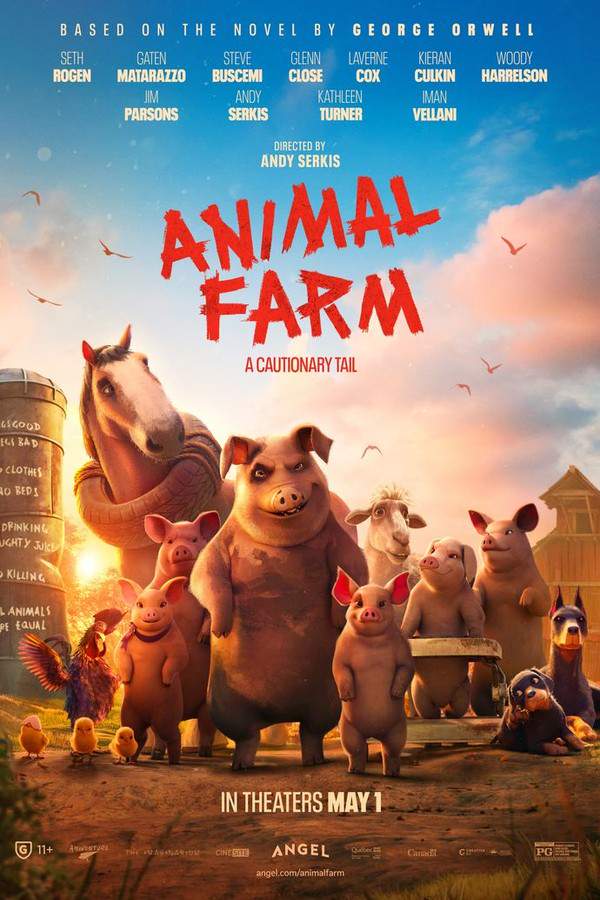
What Is Animal Farm About?
The premise of Animal Farm in 282 words, with nothing given away. The full story follows below.
Directed by Andy Serkis and featuring the voices of Seth Rogen, Gaten Matarazzo, Glenn Close, and Woody Harrelson, this film breathes new life into a timeless satirical allegory. When Farmer Jones loses Manor Farm to the bank, the livestock face a dire future under the ownership of Frieda Pilkington, a ruthless billionaire who views them as nothing more than assets to be liquidated. Facing the threat of slaughter, the animals, spurred by the intellectual sow Snowball, stage a rebellion to seize control of their destiny. They establish Animal Farm, a sanctuary built on the promise of equality and freedom from human tyranny.
The newly founded society operates on a strict code of laws designed to prevent the animals from adopting the corrupt habits of their former masters. Under Snowball’s guidance, the farm attempts to navigate the challenges of autonomy, education, and resource management. The tone deftly balances the humor of animals running a business with the weighty themes of governance and ideological struggle. As they strive to pay off the farm’s debts and prove their capability, the initial euphoria of liberation begins to settle into the hard reality of maintaining a functioning state.
However, the peaceful coexistence is fragile, threatened by internal power struggles and the seductive influence of the outside world. While Snowball envisions a future of progress and collective prosperity, his leadership is challenged by Napoleon, a pig who harbors different ambitions for the farm’s direction. As the pigs navigate their roles as leaders, the lines between revolution and exploitation begin to blur. The film sets the stage for a tense exploration of how ideals can be warped, promising a journey that is as thought-provoking as it is visually engaging.
What Happens in Animal Farm?
The complete story of Animal Farm, from the first scene to the last, in 561 words (about 2 minutes). Spoilers throughout. Names in the text link to 9 cast member pages.
Spoilers ahead
Farmer Jones, Andy Serkis, loses Manor Farm after failing to keep up with mortgage payments, and the bank repossesses the property. The farm is set to be sold to Pilkington Industries, led by ruthless billionaire Frieda Pilkington, Glenn Close, who intends to slaughter the livestock. While the animals initially believe they are being taken on vacation to a “laughterhouse,” a sow named Snowball, Laverne Cox, realizes their true fate and decides that the animals should rebel against the humans. The animals drive out their human owners and rename the place Animal Farm. Under Snowball’s watch, they establish an autonomous government with a code of laws designed to prevent them from becoming like humans, a moment that marks a hopeful, collective attempt to define their own destiny.
As the animals struggle to learn how to run the farm on their own, Boxer, Woody Harrelson, and Carl, Jim Parsons, among others, contribute muscle and voice to the early experiment, while the crafty Squealer is always nearby to interpret and adjust the message for the group. Napoleon, Seth Rogen, objects to Snowball’s plan to build a watermill and begins convincing the other animals that Snowball is hindering their freedom. The disagreement grows into a power struggle, and Napoleon uses pressure and persuasion to push Snowball out, seizing control of Animal Farm for himself.
The farm soon faces a new pressure from the human world in the shape of a loan demand: the bank requires the farm to pay $1,000 per month, an obligation the animals doubt they can meet. Yet they find a way to raise the funds by operating a market; the profits enable them to purchase goods at Pilkington’s mall, blurring the line between self-sufficiency and complicity with the humans they overthrew. Pilkington, still intent on owning the farm, begins to ally with Napoleon and the pigs, providing them with material favors that deepen the pigs’ power and privilege. With the help of his lackey Squealer, Kieran Culkin, Napoleon begins to bend the rules of Animal Farm to suit the pigs’ interests, convincing many of the animals that their memory of the original principles was flawed or exaggerated.
Life on Animal Farm grows progressively harsher for most of the animals, even as the pigs enjoy a more comfortable, human-like lifestyle. Snowball’s former protegé Lucky, Gaten Matarazzo, begins to question the regime as conditions deteriorate, while Puff leaves the farm under pressure, a concession that further shakes the animals’ faith in the leadership. Lucky’s skepticism is reinforced by the elderly donkey Benjamin, Kathleen Turner, who quietly urges resistance and reminds the others that memory and truth may still matter.
A plan to ridicule Napoleon during a visit by Pilkington’s company becomes a spark for renewed dissent. However, a catastrophic dam breaks, flooding the farm and forcing everyone to confront the fragility of their new order. Lucky and the other rebels find themselves on a water tower as the flood rages, and Napoleon confronts Lucky in a confrontation that ends with Napoleon drowning when trapped on the tower. The loss of Napoleon leaves the animals facing an uncertain future, but the survivors—led by Lucky and the steadfast Benjamin—look up toward the sky and toward each other with a cautious sense of hope, wondering what kind of life might still be possible after the fall of the regime they once believed would set them free.
Animal Farm Timeline: Every Key Event in Order
12 key events in the order they happen, from “Bank repossesses Manor Farm and sale to Pilkington Industries” to “Napoleon's demise leaves the farm hopeful”. 12 events name a place, across 4 locations.
- 1
Bank repossesses Manor Farm and sale to Pilkington Industries
After failing to keep up mortgage payments, Manor Farm is repossessed by the bank and set to be sold to Pilkington Industries. Frieda Pilkington aims to slaughter the livestock. The animals are deceived into thinking they’re being taken on vacation to a 'laughterhouse'.
When:Right after mortgage default Where:Manor Farm
- 2
Snowball discovers humans' true plan and calls for rebellion
Snowball realizes the sale is a cover for the animals' slaughter and decides they must resist. He argues for rebellion and plans to take back the farm. The revelation sets the stage for an outright uprising.
When:Soon after the sale Where:Manor Farm
- 3
The animals revolt and rename the farm
The animals drive out the owners and seize control, renaming the property Animal Farm. Snowball leads the new autonomous government with a code of laws designed to keep them from becoming like humans. The initial self-rule is marked by a determined, though fragile, idealism.
When:Immediately after the uprising Where:Animal Farm
- 4
Snowball pushes the watermill; Napoleon opposes
Snowball proposes building a watermill to improve efficiency and living conditions. Napoleon opposes the project, positioning himself to take charge and undermine Snowball. The disagreement triggers the early power struggle on the farm.
When:Early governance Where:Animal Farm
- 5
Napoleon exiles Snowball and consolidates control
Napoleon uses his influence to push Snowball out of the leadership and into exile. With Snowball removed, Napoleon consolidates power and begins to control the farm more directly. The revolution's direction shifts under his growing authority.
When:After the power struggle Where:Animal Farm
- 6
Bank debt hits; farm funds via market
The bank demands $1,000 per month from the farm, threatening foreclosure. To meet the obligation, the animals run a market to raise funds. They also start shopping at Pilkington's mall, using the extra money to buy goods for themselves.
When:As the mortgage debt comes due Where:Animal Farm
- 7
Pilkington banks alliance with Napoleon
Pilkington Industries aligns with Napoleon, providing the pigs with free goods and political leverage. Squealer helps bend and rewrite the farm's rules to favor pigs and humans alike. The regime's rhetoric begins to blur the line between liberty and privilege.
When:During the alliance Where:Animal Farm
- 8
Life grows miserable for non-pig animals
As the pigs enjoy comfort and luxury, the other animals endure worsening conditions. The ruling pigs increasingly behave like humans, adopting their habits and privileges. The dream of equality fades under the weight of privilege and hypocrisy.
When:Ongoing Where:Animal Farm
- 9
Lucky questions the regime as Puff leaves
Lucky, Snowball's former protégé, grows skeptical of Napoleon's rule as fellow pig Puff leaves due to harsh conditions. He begins to question the regime and its direction. The elderly Benjamin hints at rebellion, encouraging resistance.
When:As discontent grows Where:Animal Farm
- 10
Plan to ridicule Napoleon during Pilkington's company address
Lucky and the other animals devise a plan to ridicule Napoleon as he speaks at Pilkington's company event. The act aims to expose the regime's hypocrisy and rally others to dissent. The moment marks a bold challenge to Napoleon's authority.
When:Before the flood Where:Near Pilkington's company venue
- 11
Dam breaks; flood and water tower confrontation
A dam breaks, flooding the farm and forcing animals to take shelter on the water tower. Napoleon confronts Lucky in a clash that ends with Napoleon drowning after being trapped by the tower. The collapse abruptly shifts the power balance on the farm.
When:During the flood Where:Farm, near the water tower
- 12
Napoleon's demise leaves the farm hopeful
With Napoleon gone, Lucky and the remaining animals face an uncertain future but look to the stars with a cautious sense of hope. The regime's collapse frees the others from the immediate tyranny, allowing space for reconsideration and change.
When:After the flood Where:Animal Farm
Who Are the Main Characters in Animal Farm?
9 characters, among them Mr. Jones (Andy Serkis), Snowball (Laverne Cox) and Napoleon (Seth Rogen): who each one is and the part they play in the story. Every profile links to the actor’s page.
-
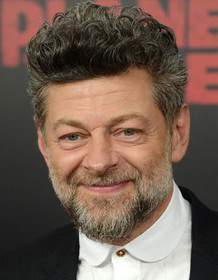
Mr. Jones (Andy Serkis)
Played by Andy Serkis
The neglectful farmer who loses control of Manor Farm when the bank repossesses the estate. His inability to keep the farm financially viable sets the stage for the animals' revolt. He represents the fragile exit point of the old social order. His fall also signals the volatility of property under financial pressure.
- 🏠 Farm owner
- 💳 Debt
- ⚖️ Power
-
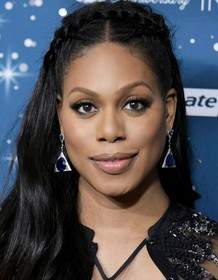
Snowball (Laverne Cox)
Played by Laverne Cox
A bold sow who leads the initial rebellion and crafts a vision of a self-governed farm. He advocates ambitious projects like a watermill and a more equal law code. Snowball's ideals clash with Napoleon's fallback to manipulation, ultimately forcing him into exile. He embodies idealism and principled leadership.
- 🐷 Pig
- 🧭 Leadership
- 🗣️ Oratory
-
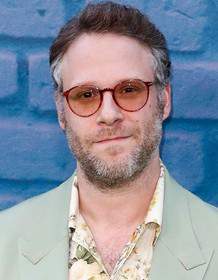
Napoleon (Seth Rogen)
Played by Seth Rogen
A power-hungry pig who seizes control of Animal Farm by sidelining Snowball and consolidating authority. He uses manipulation and propaganda to maintain dominance while preserving his own luxury. Napoleon's governance warps the original laws, ensuring pigs and their human allies prosper. He personifies the slide from revolutionary idealism to tyrannical rule.
- 🐷 Pig
- 🧠 Manipulation
- 🏛️ Authority
-
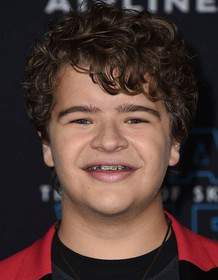
Lucky (Gaten Matarazzo)
Played by Gaten Matarazzo
An elderly donkey and Snowball's protégé who grows skeptical of the regime. He is pulled into the struggle when Napoleon targets non-pig animals for removal. Lucky's doubts fuel a late rebellion attempt, showing the cost of oppression on ordinary farm residents. He becomes a symbol of disillusioned hope.
- 🐴 Donkey
- 🌟 Idealism
- 🧭 Doubt
-
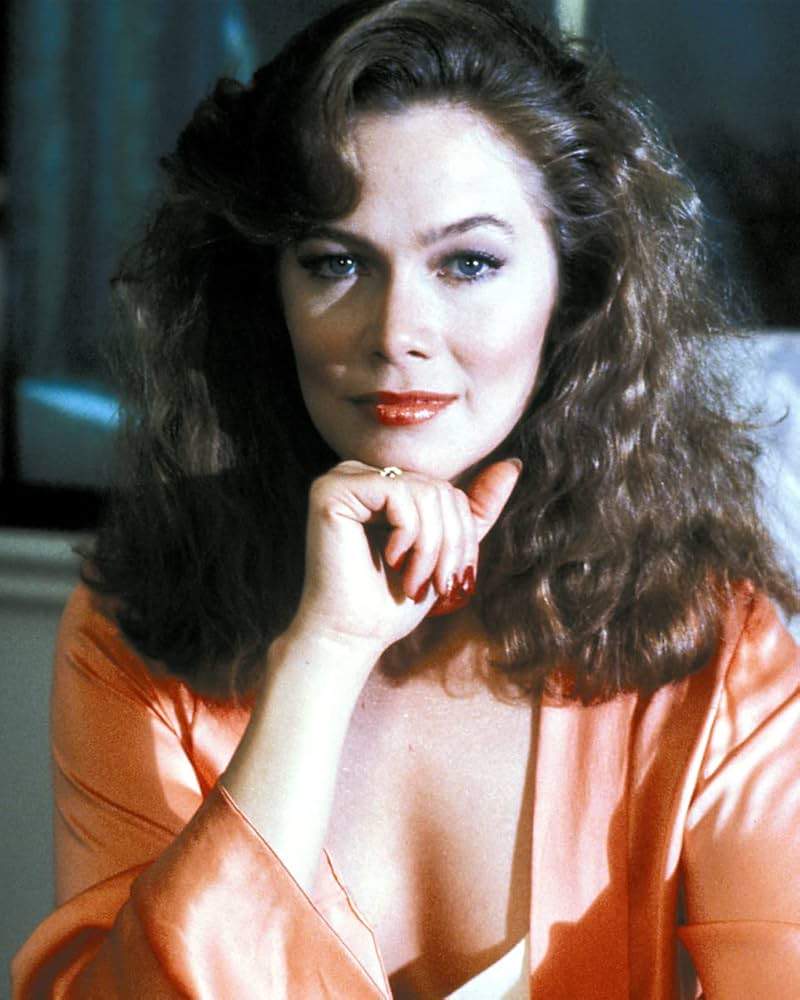
Benjamin (Kathleen Turner)
Played by Kathleen Turner
The old donkey known for his wisdom and skepticism. He quietly guides the younger animals with a wary eye on the escalating power games. Benjamin's cynical outlook adds a stabilizing moral commentary to the unrest. He helps push Lucky toward questioning Napoleon's regime.
- 🐴 Donkey
- 🧠 Skepticism
- 🕯️ Wisdom
-
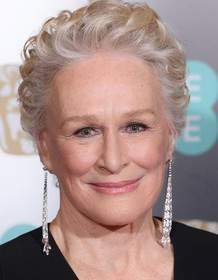
Freida Pilkington (Glenn Close)
Played by Glenn Close
A ruthless business figure allied with Napoleon who buys into the farm's future for profit. She aligns with the pigs, providing goods and support that blur the lines between human and animal governance. Her company represents external corporate pressure facilitating tyranny. Her presence underscores the trap of commodified power.
- 👩💼 Human
- 🏢 Wealth
- 🤝 Alliance
- P(
Puff (Iman Vellani)
Played by Iman Vellani
A pig who becomes disillusioned with the living conditions on the farm. Puff's departure from the regime reveals the growing discontent among the animal residents. The character's arc helps illustrate how internal dissent arises within the ruling class. Puff's presence marks the shifting loyalties among farm animals.
- 🐷 Pig
- 🌬️ Discontent
- 🧭 Change
-
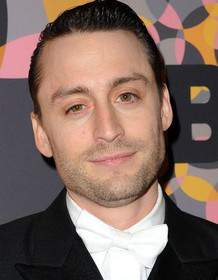
Squealer (Kieran Culkin)
Played by Kieran Culkin
The persuasive pig who twists facts to justify Napoleon's decisions. He reshapes the farm's history and present circumstances to keep the others obedient. Squealer's propaganda cements the leader's control and masks the corruption behind a veneer of unity. His role demonstrates the power of rhetoric in tyranny.
- 🐷 Pig
- 🗣️ Propaganda
- 🧠 Persuasion
-
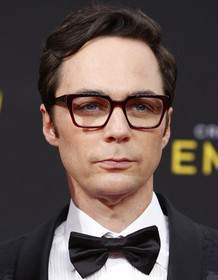
Carl, Sheep (Jim Parsons)
Played by Jim Parsons
One of the non-pig animals who contributes to the crowd dynamics. Carl and his fellow sheep embody the collective voice of the farm's ordinary residents. Their presence illustrates how the majority can be swayed or subdued by those in power. Carl stands as a representative of rural workers caught in the political machinery.
- 🐑 Sheep
- 🧠 Conformity
- 🗳️ Compliance
Where and When Is Animal Farm Set?
Animal Farm is set in Manor Farm and Animal Farm. Here is why the place matters to the story.
Where
Manor Farm, Animal Farm
Manor Farm is a rural estate whose mortgage troubles lead to its repossession and sale. After the animals seize control, the farm is renamed Animal Farm as a symbolic shift from human ownership to animal governance. The location serves as a testing ground for a self-governed community while external corporate buyers and bankers loom as continuous threats. The setting underscores how ideals can be corrupted when power is concentrated.
- 🏡 Farm
- 💳 Debt
- ⚖️ Power
What Are the Themes of Animal Farm?
4 ideas the story keeps returning to, among them Power, Rebellion and Propaganda.
-
01
Power
Napoleon's rise to leadership shows how quickly authority can corrupt a movement meant to be egalitarian. The pigs privilege themselves while enforcing rules that keep others subservient. The legal code is gradually rewritten to justify this new hierarchy. The farm's governance mirrors a tyranny that disguises itself as equality.
-
02
Rebellion
A spontaneous uprising begins when Snowball advocates a different path for their future, including plans like the watermill. The animals overthrow the human owners and establish Animal Farm, hoping for lasting autonomy. Internal cracks soon appear as expedient leadership fractures the original ideal. The rebellion's energy ultimately faces the weight of real-world challenges.
-
03
Propaganda
Squealer becomes the mouthpiece that reshapes truth to justify the pigs' growing privileges. The animals' memories and perceptions are manipulated, blurring the line between memory and myth. Rhetoric and selective information maintain Napoleon's grip on power. The manipulation reveals how language can shield domination.
-
04
Equality
The initial code of laws promises equality for all animals, but the rules are bent to reward the pigs and their human allies. The society's promise of fair treatment devolves into a new hierarchy that mirrors human oppression. The dream of a truly equal farm fades as privileges, luxury, and control concentrate at the top. The outcome questions whether any system can sustain real equality.
What Kind of Film Is Animal Farm?
Dark in tone, with steady pacing and a moderate story, going by the plot summary.
- Tone
- Dark
- Pacing
- Steady
- Story
- Moderate
- Intensity
- Medium
- Ending
- Ambiguous
A dark and oppressive animated allegory that charts the tragic descent of a hopeful revolution into a brutal dictatorship, leaving viewers with a grim but thoughtful sense of unease.
- oppressive
- satirical
- rebellious
- hopeful
- grim
- thought-provoking
- political allegory
- revolution
- corruption of power
- class struggle
Content notes: animal cruelty, psychological manipulation, brutal dictatorship.
Quiz
How well do you remember Animal Farm? Test yourself on the story.
