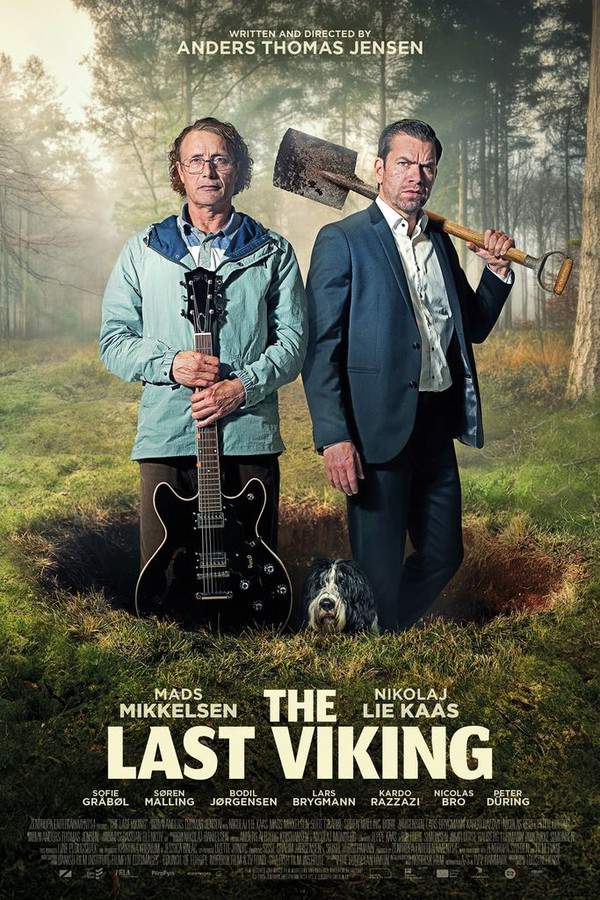
The Last Viking (2026) Reviews and Reception: Critical Consensus vs. Audience Divides – A Deep Analysis
When The Last Viking premiered on May 29, 2026, audiences and critics entered the theater expecting another entry in Scandinavian cinema’s rich tradition of dark comedy. What emerged from viewing rooms worldwide, however, was one of the most polarizing and discussed films of the year—a movie that has generated intense debate about the boundaries of humor, trauma, and cultural translation. At What’s After the Movie, we’ve analyzed the complete reception landscape for this Anders Thomas Jensen-directed feature, diving deep into both professional critical assessments and raw audience reactions to understand why this film has become such a lightning rod for controversy and acclaim.
The reception of The Last Viking represents a fascinating case study in how regional cinema travels globally, and how star power—in this case, the magnetic presence of Mads Mikkelsen—can create expectations that clash with a film’s actual tonal reality. For viewers searching for The Last Viking review insights, spoiler-free takes, or trying to determine whether this darkly comic tale aligns with their sensibilities, our comprehensive analysis breaks down exactly what critics loved, what audiences struggled with, and whether this film deserves a spot on your watchlist. From our detailed movie summaries to box office performance tracking, What’s After the Movie provides the complete picture of how this unique cinematic experience has been received across the globe.
The Last Viking Critical Reception: How Professional Critics Embraced the Dark Comedy
Professional film critics have largely rallied around The Last Viking, bestowing the film with impressive scores that position it as one of the standout releases of 2026. With ratings ranging from solid recommendations to rave reviews, the critical consensus reveals a film that critics recognize as technically accomplished, emotionally resonant, and bravely unconventional—though not without its challenging moments that test the boundaries of acceptable comedy.
Caryn James delivered one of the most effusive verdicts, awarding the film a 90/100 and declaring that “its humane message is potent even though it comes in the offbeat package of this gleeful, violent but entirely successful dark comedy.” This assessment captures the central tension that defines critical appreciation for the film: the ability to balance genuinely disturbing subject matter with what James identifies as a “humane message” beneath the violence. Critics have consistently noted that The Last Viking operates on multiple tonal registers simultaneously, requiring viewers to hold space for both laughter and discomfort—a feat that professional reviewers found intellectually stimulating and emotionally satisfying.
Nick Schager similarly praised the film’s underlying thematic architecture, describing it as “a big-hearted fable of self-actualization, tolerance, and togetherness.” This interpretation suggests that beneath the surface-level absurdity and violence lies a carefully constructed narrative about healing and human connection. Schager’s 83/100 score aligns with Christian Zilko’s identical rating, with Zilko noting how the film “elegantly juxtaposes the ludicrousness of the situation… with the trauma that underscores the ridiculousness events.” Zilko specifically highlighted the surreal subplot involving Werner’s Beatles fandom as an example of how Jensen layers comedy atop genuine psychological depth.
The performance of Mads Mikkelsen has emerged as the unanimous highlight across critical assessments. Savina Petkova’s 75/100 review offers particularly sharp insight into Mikkelsen’s characterization of Manfred/John, describing him as “a brilliant character for Mads Mikkelsen to experiment with” and noting that “it’s a role that’s not physical in a way that showcases the actor’s plasticity.” Petkova’s observation that Mikkelsen portrays “a bespectacled middle-aged man who’s timid and quiet until he’s volatile and hysterical” speaks to the range the actor displays—a “surprisingly infantile character that brings out of Mikkelsen something we’re not used to seeing.” For fans tracking actor profiles and filmographies, this performance represents a significant departure from Mikkelsen’s typically stoic, physically commanding screen presence.
Boyd van Hoeij contextualized the film within Jensen’s broader body of work, noting that the director brings “another one of his blackly comic, absurdly violent tales to the screen with enviable ease.” This placement within the Jensen canon helps explain why critics familiar with Danish cinema’s specific brand of humor—evidenced in films like Adam’s Apples and Riders of Justice—responded more enthusiastically than general audiences might. The critical consensus suggests that The Last Viking rewards viewers who understand the traditions of Scandinavian absurdist cinema, while potentially alienating those seeking more conventional narrative structures.
Mia Pflüger’s 70/100 assessment encapsulates the critical sweet spot, praising “Mads Mikkelsen and Nikolaj Lie Kaas give terrific performances” while acknowledging the film’s “wild mix of dark comedy, absurdity, and emotional moments.” Her mention of the “uniquely Scandinavian humor” provides crucial context for understanding why some viewers might find the film’s comedic beats impenetrable. For those exploring film collections of Nordic cinema or seeking to understand regional cinematic traditions, The Last Viking serves as a perfect case study in how cultural specificity influences reception.
Audience Reactions and Viewer Sentiment: The Great Divide Over The Last Viking
While professional critics have largely unified in their appreciation for The Last Viking, audience reactions have splintered dramatically, creating one of the most significant critic-viewer disparities in recent memory. User reviews range from perfect five-star declarations of masterpiece status to venomous half-star dismissals, revealing a film that demands specific sensibilities and cultural competencies that not every viewer possesses—or wants to engage with.
The negative reception often centers on fundamental misunderstandings of the film’s genre classification and tonal intentions. User “Peter F” expressed bitter disappointment with a 0.5/5 rating, stating bluntly: “Maybe I had thought it to be something else, but I didn’t find it funny and to me it was purely written. Great actors in a very bad movie, I can’t recommend it an feel like I wasted my time watching it.” This sentiment echoes across multiple low-rated reviews, suggesting a marketing or expectation problem where audiences anticipated straightforward comedy or action given Mikkelsen’s star power, only to encounter something far more disturbing and morally complex.
The most significant barrier for general audiences appears to be the film’s unflinching depiction of trauma and violence, which many viewers felt exceeded the boundaries of acceptable dark comedy. “Luis P” provided a detailed 1.5/5 star review that serves as a content warning for prospective viewers: “Didn’t like it at all. Badly scripted black comedy, too much random violence in useless places and not funny at all except for a few suicide attempts. Would need a ton of trigger warnings about suicide, child abuse, mental illness, mutilation and even a dog is killed.” This review highlights a crucial reception fault line—while critics celebrated the film’s ability to juxtapose trauma with absurdity, many viewers found the combination exploitative rather than enlightening.
“Luis P” additionally noted that “some jokes are lost in translation and you need to be from Denmark or Sweden to get them,” touching on the cultural specificity that has made The Last Viking particularly divisive in international markets. This observation raises important questions about how global cinema travels and whether certain comedic traditions require cultural fluency to appreciate. At What’s After the Movie, our movie wiki resources help contextualize these cultural nuances for viewers trying to understand if this film matches their preferences.
However, for viewers who connected with the film’s wavelength, the response has been ecstatic. “Ivan F” awarded the film a perfect 5/5 and described a conversion experience regarding Mikkelsen’s talents: “While I admired hos sinister talent, I could not have stood Mads Mikkelsen, for some reason. Now this excellent movie has changed my perspective on him as an actor who is able to play virtually anything.” This review captures the film’s ability to surprise and challenge preconceptions, with Ivan noting the genre-defying nature of the work: “I didn’t know what to make of it, it’s not really a comedy, yet it has some horror element, yet it is a thriller of sorts and also a drama.”
“Kevin L” provided a nuanced 3.5/5 star assessment that bridges the critical and audience perspectives, acknowledging the film’s quality while warning about its intensity: “This one is some dark, twisted stuff. It’s comedic, sure. But it’s only sporadically a ‘comedy’. Dark comedy at that. But w/ the child abuse, Freja getting bashed in the face repeatedly, and mental illness issues, any critic or other viewer calling this a ‘screwball comedy’ might needs psychiatric help themselves.” This review suggests that The Last Viking occupies a liminal space that resists easy categorization—a factor that has contributed to both its critical admiration and audience confusion.
The positive user reviews emphasize the film’s emotional payoff and character development. “Marco K” (5/5) praised it as “A captivating film from start to finish. Also hilarious, but with a clear deeper meaning,” while “tm11999 M” (4/5) summarized the appeal simply: “family figures out how to love one another and mads is good again. watch this it’s well worth it.” These responses suggest that viewers who engage with the film on its own terms—accepting the darkness as a pathway to the light—find the experience deeply rewarding. For those testing their tolerance for challenging cinema, What’s After the Movie offers interactive quizzes and games to help determine if this film matches your psychological thriller and dark comedy preferences.
Mads Mikkelsen’s Performance: The Critical Crown Jewel of The Last Viking
If there’s one element of The Last Viking that has achieved universal acclaim across the reception spectrum, it is Mads Mikkelsen’s transformative lead performance as Manfred/John. While opinions about the film’s overall merit vary wildly, Mikkelsen’s work has been identified as the consistent highlight—a masterclass in physical and emotional acting that showcases the Danish star’s remarkable range and willingness to subvert his established screen persona.
Critics have been particularly vocal about how this role allows Mikkelsen to break free from the typecasting that has defined his international career. Where American audiences largely know him for stoic, menacing figures—whether as Hannibal Lecter, Le Chiffre in Casino Royale, or Kaecilius in the Marvel Cinematic Universe—The Last Viking presents Mikkelsen as vulnerably human, even “infantile” as Savina Petkova noted. This dramatic pivot has resonated deeply with critics who have long admired the actor’s technical skills but craved evidence of his comedic and dramatic flexibility within a single role.
The dual nature of the character—referenced in the name Manfred/John—suggests a fractured identity that Mikkelsen navigates with what reviewers have described as “plasticity.” Rather than relying on his commanding physical presence, the actor adopts a bespectacled, middle-aged demeanor that Petkova described as “timid and quiet until he’s volatile and hysterical.” This volatility, swinging between extreme emotional states, requires precise calibration to prevent the character from becoming merely a caricature of mental illness. Critics agree that Mikkelsen threads this needle perfectly, bringing dignity and pathos to moments that could easily tip into offensive parody.
User “Ben W” captured the audience response to this performance in a glowing 5/5 review, hoping for awards recognition: “It’s a beautiful movie. Funny, weird characters who you end up loving/respecting and a rewarding story. I hope there is Oscar buzz behind this. Denmark is showing off its talent once again.” This sentiment reflects a broader desire among Mikkelsen’s fanbase to see him recognized for work that challenges the “sinister talent” (as Ivan F put it) that has dominated his Hollywood output. At What’s After the Movie, our awards tracking page follows this potential recognition closely, monitoring whether Mikkelsen’s performance in The Last Viking will translate into end-of-year accolades.
The chemistry between Mikkelsen and co-star Nikolaj Lie Kaas has also been singled out as a crucial component of the film’s success. Mia Pflüger’s praise for both actors highlights how their performances anchor the film’s more absurd elements in emotional reality. For viewers interested in exploring the filmographies and collaborative history of these Danish cinema staples, What’s After the Movie provides comprehensive profiles detailing their previous work together and individual career trajectories.
What makes Mikkelsen’s reception in The Last Viking particularly fascinating is how it has converted previous skeptics. Several user reviews indicate that viewers who previously found the actor off-putting or typecast as villains discovered new appreciation for his abilities through this role. This rehabilitation of Mikkelsen’s public image among certain demographics demonstrates the power of a well-chosen project to reshape audience perceptions of established stars. The performance serves as a reminder that even actors with extensive filmographies can surprise audiences when given material that genuinely challenges their established range.
Anders Thomas Jensen’s Direction and the Scandinavian Dark Comedy Tradition
To fully understand the polarized reception of The Last Viking, one must examine the directorial sensibilities of Anders Thomas Jensen and his place within the pantheon of Scandinavian dark comedy auteurs. Jensen, who has built a career on “blackly comic, absurdly violent tales” (as Boyd van Hoeij characterized them), brings a specific aesthetic to this project that long-time fans recognize immediately but newcomers may find jarring or inaccessible.
Jensen’s previous works—specifically Adam’s Apples (2005) and Riders of Justice (2020)—established a signature style that blends graphic violence, religious or philosophical questioning, and deadpan humor into narratives about damaged men finding redemption through unlikely community. The Last Viking continues this tradition but pushes the tonal dissonance further, creating what some critics have described as a cinematic experience that requires viewers to laugh at moments that would traditionally demand solemnity in American cinema.
Christian Zilko’s analysis of the film’s “ludicrousness of the situation” versus the “trauma that underscores the ridiculousness events” perfectly encapsulates Jensen’s directorial approach. The filmmaker creates scenarios—such as Werner’s Beatles cover band delusions—that read as pure absurdity on the surface but serve as coping mechanisms for profound psychological damage. This layering technique rewards attentive viewers while potentially alienating those seeking straightforward narrative progression or clear emotional beats.
The comparison to Jensen’s earlier films becomes crucial for user “P M,” who delivered a disappointing 1.5/5 review stating: “Probably one of anders jensen’s weakest works. Those who know his other stuff will be disappointed. Really boring story.” This assessment suggests that for viewers familiar with Jensen’s typically more propulsive plotting, The Last Viking may feel like a regression or at least a less successful execution of his established themes. However, for critics and audiences encountering Jensen’s sensibilities for the first time, the film appears fresh and audacious rather than repetitive.
The Scandinavian tradition of humor—characterized by its dryness, fatalism, and willingness to find comedy in darkness—serves as both the film’s greatest strength and its most significant barrier to entry. Mia Pflüger’s reference to “uniquely Scandinavian humor” acknowledges that this comedic tradition operates on wavelengths that don’t always translate across cultural boundaries. The deadpan delivery, the acceptance of absurdity as mundane reality, and the blurring of tragedy and comedy represent distinctly Nordic sensibilities that American and British audiences, accustomed to more clearly delineated genre boundaries, may struggle to parse.
For cinephiles exploring film collections of Scandinavian cinema or studying the evolution of Nordic dark comedy, The Last Viking represents an essential text. Jensen’s work sits at the intersection of the Dogme 95 movement’s realism and the region’s folklore traditions, creating a hybrid style that feels simultaneously grounded and mythic. At What’s After the Movie, our curated lists and movie collections help viewers contextualize this film within broader cinematic movements, understanding how Jensen carries forward the legacy of directors like Lone Scherfig and Susanne Bier while pushing into more extreme tonal territory.
Is The Last Viking Worth Watching? Analyzing the Film’s Target Audience and Final Verdicts
Determining whether The Last Viking deserves your time requires honest assessment of your cinematic preferences, psychological comfort zones, and cultural fluency. The sharply divided reception reveals not a film of objective quality or failure, but rather a work of specific taste that will profoundly satisfy some viewers while actively distressing others. For those researching whether The Last Viking is worth watching, the answer depends entirely on which side of the critic-audience divide your sensibilities align with.
The film is essential viewing for fans of Mads Mikkelsen who want to see the actor operating at the peak of his powers outside the constraints of American blockbuster cinema. If you appreciate performances that prioritize psychological complexity over plot mechanics, and if you value actors who risk audience alienation to serve challenging material, this film delivers one of the most fascinating character studies in recent Scandinavian cinema. Additionally, viewers who enjoyed Jensen’s previous works—or who appreciate the black comedy traditions of filmmakers like Yorgos Lanthimos or Ruben Östlund—will likely find The Last Viking a rewarding, if disturbing, addition to the canon.
However, prospective viewers should approach with significant caution if they are sensitive to depictions of suicide, child abuse, animal violence, or mental illness. The user reviews are not exaggerating when they warn about the film’s content; The Last Viking treats these subjects with a directness that many viewers will find triggering or exploitative. If you prefer your dark comedy to maintain a safety net of irony or distance—where the audience is assured that “it’s just a movie”—Jensen’s approach may feel too intimate and traumatic to be entertaining.
The “lost in translation” factor mentioned by multiple user reviewers suggests that viewers with knowledge of Danish culture, humor, and social dynamics will extract more value from the film than international audiences expecting universal comedy. While not mandatory, familiarity with Scandinavian cinema conventions helps contextualize the pacing, the character interactions, and the specific type of deadpan absurdity that Jensen employs. For viewers looking to test their knowledge of international cinema or explore curated movie lists that contextualize these cultural differences, What’s After the Movie provides resources to prepare viewers for this specific cinematic experience.
The ultimate verdict from the reception analysis suggests that The Last Viking functions best as a critical piece rather than entertainment—a film to be analyzed, discussed, and debated rather than simply enjoyed. It succeeds brilliantly as a showcase for Mikkelsen’s range and Jensen’s uncompromising vision, but fails for viewers seeking escapist comedy or traditional narrative satisfaction. The critical consensus of 75-90 scores reflects professional appreciation for technical achievement and thematic ambition, while the mixed user scores (ranging from 0.5 to 5 stars) indicate that ambition does not guarantee accessibility.
For your next viewing decision, consult our comprehensive summary resources and box office analysis to see how The Last Viking is performing commercially against its critical acclaim. Whether this film becomes a beloved cult favorite or a divisive misfire in your personal canon depends entirely on your willingness to embrace its particular, peculiar darkness.
Conclusion: The Last Viking’s Place in 2026’s Cinematic Landscape
As the discourse around The Last Viking continues to evolve beyond its May 29, 2026 release date, the film has secured its position as one of the year’s most talked-about and analyzed releases—not necessarily for universal acclaim, but for the intensity of the reactions it provokes. The gap between professional critics’ embrace of the film’s technical and thematic ambitions and audiences’ struggle with its tonal violence and cultural specificity offers a fascinating snapshot of contemporary cinema’s bifurcated reception landscapes.
What emerges from the aggregate of The Last Viking reviews and audience reactions is a film that refuses to compromise its vision for mass appeal, resulting in a work that will likely grow in estimation over time as viewers approach it with adjusted expectations. The performance of Mads Mikkelsen alone guarantees the film’s place in acting showcases, while Anders Thomas Jensen’s direction cements his reputation as a filmmaker unafraid to challenge comfort zones.
For What’s After the Movie users, The Last Viking exemplifies why we provide multiple angles on film reception—acknowledging that a movie can be simultaneously a masterpiece to critics and unwatchable to certain audiences, without either perspective being invalid. Whether you ultimately decide to experience this controversial entry in Scandinavian cinema or skip it in favor of less challenging fare, understanding the reception landscape helps set appropriate expectations for your viewing experience.
As you explore your next cinematic obsession, remember to utilize our full suite of resources—from detailed person profiles tracking your favorite actors’ careers to our awards coverage following potential recognition for films like The Last Viking. The conversation around this film is far from over, and we remain committed to providing the comprehensive analysis and user-generated insights that help navigate cinema’s most complex offerings.
| Resource | Link |
|---|---|
| The Last Viking Wikipedia | The Last Viking Wikipedia |
| The Last Viking Rotten Tomatoes | The Last Viking Rotten Tomatoes |
| The Last Viking Metacritic | The Last Viking Metacritic |
| The Last Viking JustWatch | The Last Viking JustWatch |
| The Last Viking Box Office Mojo | The Last Viking Box Office Mojo |