What's After the Blog?
Opinions • Reception
Mile End Kicks (2026) Review, Critics Opinions & Fan Reception – Romantic Comedy Analysis
Explore the critical reception and fan reactions to Mile End Kicks (2026), the bright romantic comedy starring Barbie Ferreira as a music critic in Montreal. We break down critic reviews, audience opinions, performances, storytelling, and its place in contemporary indie romance cinema.
April 22, 2026

Movies mentioned in this article
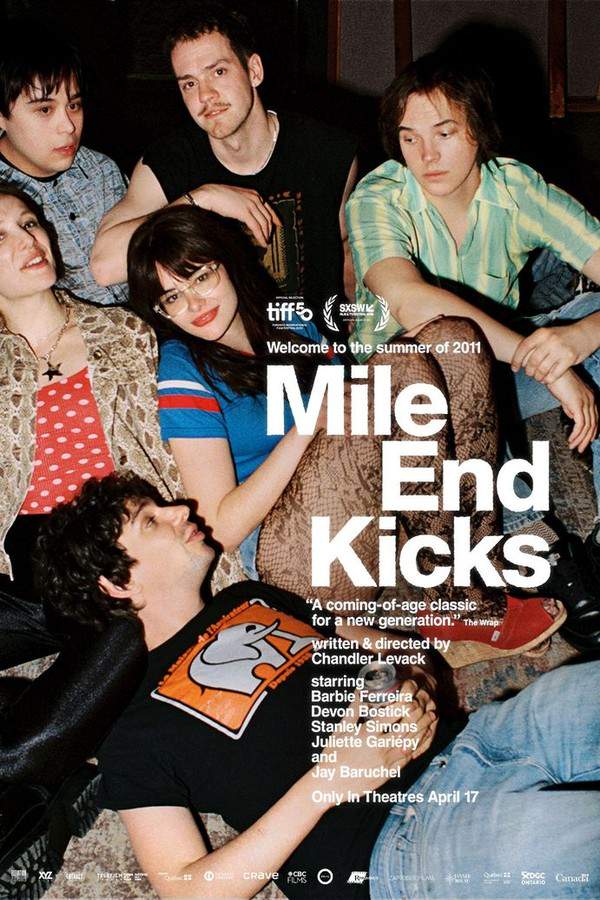
Mile End Kicks (2026) Review: Critical Consensus, Audience Reactions & Film Reception Analysis
When Mile End Kicks arrived in theaters on April 17, 2026, it carried with it the weight of expectation from a generation hungry for authentic coming-of-age narratives that diverge from traditional Hollywood formulas. As viewers searched for spoiler-free reviews and critical consensus on whether this Chandler Levack-directed feature was worth watching, the film quickly established itself as one of the most divisive yet conversation-driving indie releases of the year. Whether you’re browsing What’s After the Movie for detailed summaries or checking our box office tracking to see how Montreal-set indies perform against blockbuster competition, understanding the nuanced reception of Mile End Kicks requires diving deep into both professional critic reviews and raw audience reactions. This film reception analysis examines why Barbie Ferreira’s performance generated such varied responses, how the movie subverts genre expectations, and whether the critical consensus aligns with fan opinions regarding this portrait of creative youth in early 2010s Montreal.
Critical Reception and Professional Film Reviews
The critical response to Mile End Kicks reveals a fascinating gap between professional film criticism and general audience expectations, with most major outlets landing squarely in the “fresh” territory while acknowledging the film’s deliberate messiness. Leading the charge, RogerEbert.com awarded the film an impressive 88/100, with their critic noting it as “a movie that will soothe the hearts of every single female journalist who, on various occasions, felt pushed to the periphery while bearded dudes in plaid tossed around their self-satisfied takes.” This observation strikes at the heart of why critical reception trended positive—the film offers something rarely seen in coming-of-age cinema: an unvarnished look at gender dynamics within music journalism and creative industries.
TheWrap echoed this sentiment with an 80/100 score, praising how “the more we are taken on this journey through Grace’s early foray into adulthood, the more it earns its classic coming-of-age beats while also cutting into something deeper it can call its own.” This review highlights what many critics appreciated: while Mile End Kicks employs familiar tropes of the genre, it executes them with enough specificity and emotional authenticity to justify its existence in an oversaturated market. For readers exploring our Movie Wiki or browsing through movie collections of 2026 indie darlings, this critical consensus suggests the film transcends its familiar framework through sheer craft.
IndieWire (75/100) focused heavily on performance quality, describing Ferreira as “a believable and sympathetic protagonist, bringing a vulnerability to Grace that makes the viewer root for her even as she blows up her life for reasons even she doesn’t seem to understand.” This observation about characterization—loving a protagonist despite her self-sabotage—becomes crucial when analyzing why some viewers disconnected from the material while critics embraced it. The Playlist (75/100) delivered perhaps the most definitive statement on the lead performance: “This movie is Ferreira’s moment, and she rules.”
However, not all professional reviews were uniformly glowing.Next Best Picture (70/100) offered a more measured take, calling it “ultimately, a messy, heartfelt portrait of youth and creative ambition,” while Screen Rant (70/100) compared the viewing experience to “a new music album that is familiar yet exciting.” The Film Stage (75/100) singled out the emotional weight of Ferreira’s acting, describing it as “a devastating, relatable performance.”
For those researching critic reviews on our platform, the Metacritic aggregation and Rotten Tomatoes scores reflect this generally favorable critical consensus, though the film’s deliberate pacing and character choices clearly require specific viewer temperaments to fully appreciate.
Audience Reactions and Viewer Sentiment Analysis
While critics largely embraced Mile End Kicks as a worthy entry in the coming-of-age canon, audience reactions reveal a starkly polarized reception that speaks to mismatched marketing expectations and varying tolerance for unlikeable protagonists. User reviews on platforms like Letterboxd and IMDb range from ecstatic 5-star celebrations to walkouts and 0.5-star dismissals, creating one of the most fascinating critical/audience divides in recent indie cinema.
User Belinda B awarded the film a perfect 5/5, praising the “authenticity of the look of the movie, how they showed Montreal. Love story!” This enthusiasm mirrors critical appreciation for the film’s sense of place and cultural specificity. Similarly, Hadassa W (4.5/5) described it as “Wonderful, insightful, original coming-of-age (rather than ‘rom-com’) film” with a “Strong performance by lead actor, Barbie Ferreira (as expected).” Mark B (4/5) found it “Very enjoyable romcom and a lovely reminder of how hard life was in my 20s,” adding that it was “Well acted and captured the feel of a Montreal summer.”
However, the negative user reviews reveal specific grievances that explain the reception gap. Jamie delivered a scathing 0.5/5 assessment: “Truthfully the plot and message of the movie is lost. Theres no real character development of Grace. Her character was very contradictory throughout the whole movie. Its not a good film. I didnt feel any sort of nostalgia from 2011 despite the many efforts.” This disconnect between critics who saw intentional complexity versus viewers who saw contradiction defines much of the film’s polarized reception.
Rachel G (2.5/5) articulated a common audience complaint regarding genre expectations: “Was looking forward to it, but I thought it would be about the music scene in the early 2000s. Ah well. I also wanted it to be more about the music - but it felt like that was in the background.” She further critiqued the protagonist’s unlikeability and questionable friendship dynamics: “Barbie was great - but she wasn’t very likeable at all and was NOT a good friend. I mean thankfully there was change, but I dont really believe that she ever actually developed into someone better.”
Kenneth P (3/5) captured the middle ground perfectly: “Vibes of this movie reminds me of an early 2010s type movie. Follows a girl trying to figure out life. By the end of the movie, I was not a fan of the main character, but was glad to see she finally made some good choices in the end.” Meanwhile, user ac (1/5) simply stated: “horrible walked out before it could finish made no sense really sad because i like barbie.”
For visitors to our quizzes and games section or those browsing movie lists of divisive coming-of-age films, Mile End Kicks presents an interesting case study in how trailer marketing (potentially emphasizing the music scene over character study) can create expectation mismatches that color viewer reactions.
Barbie Ferreira’s Performance: The Critical and Fan Divide
At the center of every Mile End Kicks review—whether glowing or critical—stands Barbie Ferreira’s portrayal of Grace, a performance that seems to generate universal acknowledgment of technical skill even when viewers reject the character herself. This paradox makes Ferreira’s work the most analyzed aspect of the film’s reception, offering insights into how modern audiences navigate morally complex female protagonists.
The critical establishment nearly unanimously declared Ferreira’s performance a revelation. As noted in The Playlist’s emphatic endorsement, the film serves as Ferreira’s definitive showcase moment. IndieWire’s praise for her “vulnerability” and The Film Stage’s description of the work as “devastating” suggest a technical mastery that transcended the script’s potentially alienating elements. Adam D (4/5) in user reviews agreed, stating simply: “Barbie Ferreira is fantastic here as the lead.”
However, the user review from Rachel G reveals the complexity of this praise: despite acknowledging “Barbie was great,” the reviewer couldn’t overcome the character’s unlikeability. This creates a fascinating tension in the film’s reception—Ferreira successfully portrayed a realistically flawed young woman, but that realism alienated viewers seeking more traditionally sympathetic coming-of-age heroines. Yash B (3.5/5) captured this dynamic perfectly, noting: “I felt the movie rides heavily on the lead performance of Barbie Ferreira, who proves once again that she has serious acting chops,” while acknowledging that “I can’t totally relate to our protagonist.”
User Evan C (3.5/5) offered perhaps the most balanced take on the performance within the film’s context: “Chandler Levack so beautifully captures that feeling of leaving home for the first time in #MileEndKicks… While I can’t totally relate to our protagonist, Barbie Ferreira delivers a sincere & honest performance. Well worth a watch.”
For those exploring actor profiles on What’s After the Movie, Ferreira’s work here represents a significant career pivot—moving from ensemble work to carrying an entire film’s emotional weight. The fact that even reviewers who disliked the film (like Jamie, who gave 0.5/5) don’t blame Ferreira suggests an objective quality to the performance that transcends subjective narrative preferences. Whether you’re checking our Awards section for potential Indie Spirit recognition or simply deciding if Mile End Kicks deserves a spot on your watchlist, Ferreira’s universally acknowledged commitment to the role makes it essential viewing for performance study enthusiasts.
Genre Subversion: Coming-of-Age vs Music Scene Expectations
One of the most significant factors contributing to Mile End Kicks’ polarized reception involves its marketing and positioning within genre categories. While critics embraced the film as a character study about creative ambition and early adulthood, many audience members approached expecting a music-scene period piece or rock-and-roll nostalgia trip, leading to disappointed reactions regarding the film’s actual priorities.
Hadassa W’s review explicitly corrects this misconception, insisting the film is “coming-of-age (rather than ‘rom-com’)” despite Mark B categorizing it as a “Very enjoyable romcom.” This confusion extends to the music elements, where Rachel G’s complaint that she “wanted it to be more about the music - but it felt like that was in the background” suggests trailer editing may have emphasized the Spin Magazine and Pavement references over the actual narrative focus on Grace’s personal growth.
The film’s setting in 2011 Montreal creates specific temporal expectations that not all viewers felt were met. Jamie noted: “I didnt feel any sort of nostalgia from 2011 despite the many efforts,” while Yash B observed that it would “probably resonate more with people who are passionate about music.” This suggests that while the film uses music journalism as its backdrop, it’s not actually about music in the way that Almost Famous or High Fidelity are—it’s about a young woman using music writing as a vehicle for self-discovery, which disappointed viewers seeking deep-cut playlist nostalgia.
Kenneth P’s observation that the “Vibes of this movie reminds me of an early 2010s type movie” hints at a stylistic authenticity that some found suffocating or dated rather than evocative. For visitors to our concert films section or those browsing movie collections focused on music industry narratives, this distinction is crucial: Mile End Kicks is a coming-of-age film that happens to involve music writing, not a music film that happens to feature character growth.
The RogerEbert.com review’s focus on “what it means to pursue one’s passion for writing about the arts while being a woman” clarifies the film’s true genre: it’s workplace-adjacent coming-of-age cinema, closer to The Devil Wears Prada or Personal Shopper than School of Rock. Understanding this distinction helps explain why some viewers felt betrayed by the narrative focus while critics celebrated the specificity of its gendered workplace dynamics.
Cultural Authenticity and the Montreal Setting
Beyond performance and genre debates, Mile End Kicks generated significant discussion regarding its sense of place and cultural specificity—a rare instance of a Canadian film receiving international distribution while maintaining local authenticity. This aspect garnered consistent praise across both critical and audience reviews, emerging as the film’s most universally appreciated element.
Evan C specifically highlighted “that feeling of leaving home for the first time in #MileEndKicks, a film filled with so many great Montreal-isms.” User Adam D (4/5) similarly praised the “Canadian music and scenery,” while Belinda B loved “the authenticity of the look of the movie, how they showed Montreal.” Hadassa W added appreciation for the “Canadian vibe,” suggesting that for international audiences, the film offers a refreshing alternative to American-centric indie cinema.
This authenticity extends to the film’s temporal setting—2011 Montreal captured with what Mark B described as capturing “the feel of a Montreal summer.” For viewers using What’s After the Movie to discover international cinema or exploring our Movie Wiki for location-specific filming details, Mile End Kicks serves as an excellent example of regional filmmaking that doesn’t sanitize its setting for global appeal.
The critical appreciation for this authenticity aligns with broader trends in indie cinema, where specific geographic and cultural contexts increasingly serve as selling points rather than limitations. While some viewers like Jamie felt the 2011 setting failed to trigger nostalgia, others clearly connected with the film’s temporal and geographic specificity. This divide suggests that Mile End Kicks succeeds most strongly when viewed as a time capsule of a specific moment in Montreal’s creative scene rather than a universal coming-of-age story.
Final Verdict: Is Mile End Kicks Worth Watching?
After analyzing the full spectrum of Mile End Kicks reviews—from the 88/100 critical highs to the 0.5/5 audience walkouts—the question remains: is this film worth your time? The answer depends largely on your tolerance for unlikeable protagonists, your interest in gender dynamics within creative industries, and your expectations regarding the music scene backdrop.
For viewers who appreciated films like Frances Ha, Lady Bird, or The Worst Person in the World—stories about women making questionable decisions while pursuing artistic legitimacy—Mile End Kicks offers a worthy, if slightly messier, addition to the canon. As Next Best Picture noted, it is “ultimately, a messy, heartfelt portrait of youth and creative ambition,” and that messiness is either its greatest strength or fatal flaw depending on viewer patience.
Yash B’s 3.5/5 assessment provides perhaps the most useful roadmap for potential viewers: “Overall, it is a nice little movie with some laughs and heart, and will scratch that coming-of-age itch, but for an older audience.” The emphasis on “older audience” suggests that viewers under 25 might find Grace’s mistakes frustrating rather than relatable, while those who have survived their early twenties may recognize the painful authenticity of her stumbles.
If you’re browsing What’s After the Movie for recommendations or checking our box office data to see how indie dramas perform against franchise competition, consider your own preferences regarding character morality and pacing. Those seeking traditional rom-com structures or deep musical dives should temper expectations; those seeking a performance showcase for Ferreira and an authentic look at female journalism in the indie rock era will find much to appreciate.
Conclusion: Understanding the Polarized Reception of Mile End Kicks
As the discourse around Mile End Kicks settles into cinematic memory, its legacy appears defined by the very divisions that characterized its initial release. The film stands as a testament to the gap between critical appreciation for challenging, messy protagonists and audience desire for likable, clearly arc-driven characters. While professional reviewers celebrated Chandler Levack’s direction and Barbie Ferreira’s committed performance as Grace, viewer reactions revealed a fundamental mismatch between marketing promises (music scene nostalgia) and narrative reality (character study about creative self-sabotage).
For users exploring What’s After the Movie’s comprehensive movie database, Mile End Kicks represents an essential case study in how modern indie cinema navigates distribution and audience expectation. Whether you’re checking our quizzes and games for film trivia, browsing summaries for detailed plot breakdowns, or comparing critic scores across platforms, this film demonstrates that a 70-88 range from professional reviewers can coexist with 0.5-5 star swings from general audiences.
Ultimately, Mile End Kicks is worth watching for those who value performance over plot coherence, authenticity over comfort, and specific cultural moments over universal crowd-pleasing. It may not satisfy viewers seeking the next great music documentary or romantic comedy, but for anyone who has ever felt marginalized in creative spaces or recognized their own twenties self-sabotage on screen, Levack’s film offers a rare, unflinching mirror. Check out the full movie page on What’s After the Movie for additional context, box office tracking, and ongoing reception updates as this divisive but fascinating indie finds its audience in the streaming era.
| Site | Link |
|---|---|
| Wikipedia | Mile End Kicks Wikipedia |
| Rotten Tomatoes | Mile End Kicks Rotten Tomatoes |
| Metacritic | Mile End Kicks Metacritic |
| JustWatch | Mile End Kicks JustWatch |
| Box Office Mojo | Mile End Kicks Box Office Mojo |
| Letterboxd | Mile End Kicks Letterboxd |
Continue reading



What's After the Movie?
Not sure whether to stay after the credits? Find out!
Check out our other apps:

SAT Sphere
Build confidence for the Digital SAT.

Mori Atlas
Discover wild places worth protecting.

Luntero
Search smarter for a home in Amsterdam.

Plot Explained
Unravel movie endings and hidden clues.

Pokechamp
Dive into Pokémon data and battle logic.

Driving Theory
Get ready for your European theory test.

Movie Dust
Plan your next cinema trip with ease.

Musemap
Find art and culture as you travel.

Selkobase
Compare credentials before committing.

Local Manual
Turn an unfamiliar country into practical next steps.

Lernavi
Compare school systems before your next move.

GymRoam
Find a workout stop wherever your plans take you.
Explore Our Movie Platform
New Movie Releases (2026)
Famous Movie Actors
Top Film Production Studios
Movie Plot Summaries & Endings
Major Movie Awards & Winners
Best Concert Films & Music Documentaries
Movie Collections and Curated Lists
© 2026 What's After the Movie. All rights reserved.
Privacy Policy