What's After the Blog?
Opinions • Reception
Tuner (2026) Review, Critics Opinions & Fan Reception – Performance, Storytelling & Director Daniel Roher’s Debut
Explore how critics and fans responded to Daniel Roher’s debut, Tuner (2026), examining performance nuances, storytelling choices, and the film’s place in contemporary thriller cinema. We break down reviews, audience reactions, and what the reception means for the director’s future projects.
May 28, 2026

Movies mentioned in this article
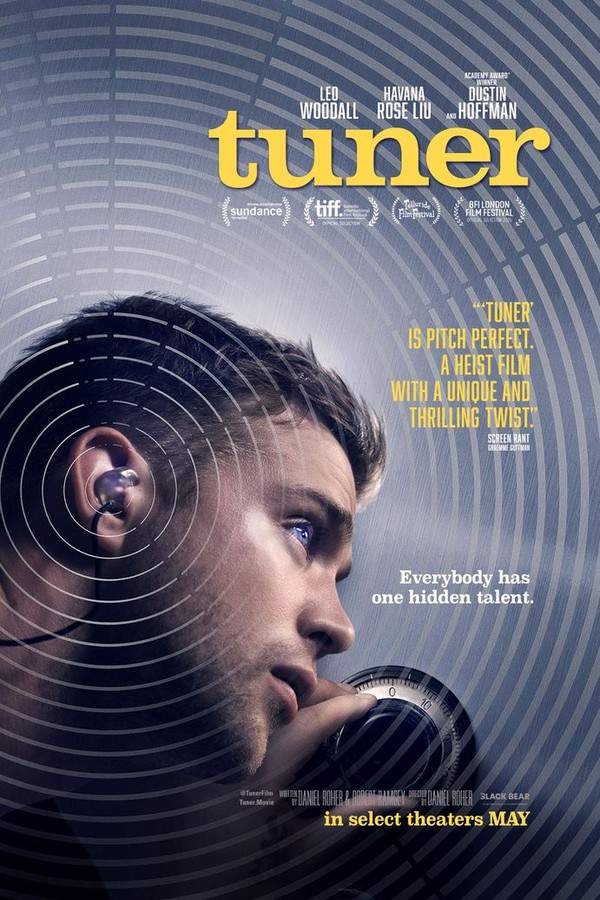
Tuner 2026 Review: Critical Consensus, Audience Reactions, and Is It Worth Watching?
When Tuner hit theaters on May 22, 2026, few expected this modestly-budgeted independent thriller to generate the kind of cross-demographic buzz that typically eludes festival circuit darlings. Yet here we are, months after its release, with film enthusiasts still actively searching for Tuner 2026 review breakdowns, spoiler-free analyses, and definitive answers to the question: is this heist-adjacent character study worth your time? The movie, directed by Daniel Roher and anchored by a star-making turn from Leo Woodall alongside screen legend Dustin Hoffman, has carved out a unique space in the year’s cinematic landscape—blending classical music motifs with crime thriller conventions while introducing one of the most distinctive sensory premises seen in recent American cinema. As reactions continue pouring in from both professional critics and everyday moviegoers, the reception landscape reveals a fascinating dichotomy between technical admiration and emotional resonance. Whether you’re consulting aggregate scores on Tuner Rotten Tomatoes or browsing through user-generated Tuner audience reactions on various platforms, one thing becomes immediately clear: this isn’t your standard caper film. For those seeking comprehensive movie summaries and detailed reception analysis, our What’s After the Movie summary page for Tuner offers additional context on how this film fits into 2026’s broader cinematic trends, while external databases like Tuner TMDB and Tuner Wikipedia provide complementary technical details.
Critical Consensus and First Impressions: How Tuner 2026 Surprised the Film Community
The critical reception for Tuner represents one of 2026’s most pleasant surprises in the thriller genre, with Tuner critic reviews ranging from strong recommendations to outright declarations of masterpiece status. Nick Schager of The Village Voice set the tone early with a definitive statement that the film is “as good as crime cinema gets, and one of 2026’s biggest surprises—and undisputed highlights.” This sentiment of unexpected excellence echoes throughout the critical corpus, suggesting that Tuner managed to subvert the jaded expectations of reviewers who had grown weary of formulaic heist narratives.
Barry Hertz of The Globe and Mail elevated the discourse further, describing the film as “a ferociously slick and rhythmically entertaining heist thriller” that functions as “a breath of fresh air not only for the independent film space, where genuinely new ideas are a bitcoin a dozen, but for a filmmaker who seems completely, utterly, blessedly incapable of sitting still.” Hertz’s observation points to a crucial element of the film’s reception: critics recognized this as a director’s showcase, with Roher’s kinetic visual style and refusal to adhere to indie-drama quietude generating significant appreciation among those monitoring emerging auteurs.
However, the consensus isn’t without its nuances. While Harry Stainer of Empire Magazine praised it as “an easy-going thriller throwback that mostly plays all the right notes,” noting its unexpectedly romantic undertones and Woodall’s fine form, Victoria Luxford offered a more measured take, suggesting that “ultimately, Tuner is an enjoyable caper with a lot of elements you’ve seen in other movies, but rarely in this order.” Luxford’s assessment highlights the film’s indebtedness to genre conventions while acknowledging its structural freshness—a tension that defines much of the critical discourse surrounding the movie.
Peter Travers of ABC News captured the charming duality that critics consistently noted, calling it “a minor crime thriller that pays major dividends in humor, heart and sweet music.” This evaluation speaks to the film’s tonal dexterity, with reviewers appreciating how Roher balances the inherent tension of his premise with genuine emotional warmth. The collaboration between Woodall and Hoffman received particular attention, with Travers noting their teamwork constitutes “an unalloyed, unexpected pleasure.”
Even critics who found structural flaws acknowledged the film’s entertainment value. Kyle Smith of The New York Post, while deducting points for “formulaic thriller trappings in its final act” and “strained coincidences,” emphasized that both halves of the film share “Mr. Woodall’s unforced charm,” predicting correctly that “he’s going to be a major player in the movies.” This pattern—where technical or narrative criticisms are immediately counterbalanced by performances or atmosphere—suggests a critical community willing to forgive conventional third-act mechanics in exchange for genuine originality in execution and character work.
For those tracking award season predictions and technical achievement categories, the critical reception positions Tuner as a potential dark horse contender, particularly given the specialized praise for its audiovisual craftsmanship. The film’s aggregate scores across major platforms like Tuner Metacritic reflect this warm embrace, with most indicators trending toward the high 70s and low 80s—territory typically associated with “must-see” recommendations for genre enthusiasts seeking alternatives to franchise blockbusters.
Leo Woodall’s Oscar-Worthy Performance: Critic and Fan Reactions to the Film’s Lead
If there’s one element of Tuner that generated universal acclaim across the critical-user divide, it’s the central performance by Leo Woodall—a turn that has dominated Tuner film reception conversations since the film’s festival debut. Woodall’s portrayal of Niki, a piano tuner with hypersensitive hearing that makes everyday sound excruciatingly painful, represents the kind of physically demanding, emotionally nuanced work that announces the arrival of a major talent, or confirms the maturation of an emerging one.
Kyle Smith’s observation that Woodall “strikes every chord like a virtuoso” barely scratches the surface of the hyperbolic praise circulating through industry circles. Glenn Kenny of The New York Times noted how Woodall navigates the film’s “sharp, engaging thriller with a novel premise,” grounding the potentially absurd concept of a sound-sensitive criminal in palpable physical reality. This embodiment of sensory disability—rendered through Woodall’s micro-expressions and bodily tension—became the gravitational center around which the entire film orbits.
The user response has been equally effusive, with Tuner viewer reactions on various platforms highlighting Woodall’s magnetism. User Bob G submitted perhaps the most enthusiastic verdict, declaring “LEO WOODALL gives a brilliant Oscar worthy performance. He is compelling in every frame of this movie. He doesnt even need dialogue - you know what he’s thinking & feeling throughout the film.” This assessment of non-verbal storytelling prowess aligns with Brandon Yu’s critical observation that watching Woodall “finally let loose then snap back into his sly and sexy cool, you can’t help but be lulled into the melody.”
The chemistry between Woodall and Dustin Hoffman emerged as another focal point for reception analysis. Peter Travers’ mention of their “unexpected pleasure” as piano tuners turned small-time crooks resonates with audience members who appreciated the intergenerational dynamic. User Richard H specifically cited the “great cast” as a primary reason for recommending the film widely, while Jill V found the performances “so very human and engaging.” This humanistic quality—contrasting with the film’s genre elements—suggests Woodall succeeded in making a potentially alienating character deeply sympathetic.
What distinguishes the critical conversation around Woodall, however, is the recognition of physical acting in an era dominated by CGI spectacle. Monica Castillo’s technical analysis in her review indirectly highlights Woodall’s contribution, noting that the sound design “weaves itself organically throughout the film and its story”—an achievement impossible without Woodall’s committed physical performance anchoring the sensory experience. The actor had to sell the premise that hearing causes “excruciating pain,” as Kenny noted, and by all accounts, he succeeded completely.
User Ana W captured this synthesis of technical and emotional achievement, praising “the classic quality of this movie- the shooting, the closed scenes, the music all together pls the super villain and violence makes this movie super close to reality!” despite noting that “even when the characters are not my favorite part of it I still like how it absorbing emotion takes you.” Even when viewers found other elements challenging, Woodall’s presence provided the necessary emotional anchor.
For those interested in exploring Woodall’s filmography or discovering similar performances, our What’s After the Movie person profiles provide comprehensive career retrospectives and casting updates. The conversation surrounding Tuner has undoubtedly elevated Woodall from television recognition (following his breakout in “The White Lotus”) to legitimate film stardom—a transition that critics unanimously agree he handles with remarkable sophistication, making this film essential viewing for acting students and fans of screen performance alike.
Sound Design as Storytelling: The Technical Brilliance Behind Tuner 2026’s Reception
While performances drive the emotional engine of Tuner, the film’s most distinctive critical accolades center on its audiovisual construction—a facet of Tuner 2026 film analysis that elevates it beyond standard genre classification. Monica Castillo’s observation that “Tuner truly shines is in the work of Oscar-winning sound designer Johnnie Burn and the film’s sound team” points to the technical mastery that critics consistently singled out as award-worthy. Burn, known for his work on “The Zone of Interest” and “Under the Skin,” brought a level of sonic precision that transformed the film’s central conceit from gimmick to genuine artistic achievement.
Castillo elaborated that the team “carefully recreate Niki’s world through the film’s engrossing soundscape,” noting that Roher’s “technically impressive approach to this element weaves itself organically throughout the film and its story, setting the crime drama apart from more typical crowdpleasers.” This distinction matters significantly for understanding why Tuner resonated with cinephile audiences while potentially challenging mainstream viewers expecting straightforward thriller mechanics. The sound design isn’t merely atmospheric; it’s narrative, conveying plot points and emotional states through auditory texture rather than exposition.
Glenn Kenny’s description of the film putting “the viewer into a world where to hear is to feel excruciating pain” underscores the immersive quality that technical achievement enabled. This sensory subjectivity—forcing audiences to experience sound as threat rather than ambiance—created a unique theatrical experience that viewers like Sandy R insisted demands big-screen viewing, with the user reviewing stating “Absolutely loved it! Must see in a theater!” The theatrical imperative stems directly from the sound design’s complexity, suggesting that home viewing might diminish the film’s primary affective strategy.
User Cyn specifically connected the technical and emotional elements, noting that “The musical score emphasized the pain Nick felt with his over sensitized hearing,” praising how the “intriguing” storyline was “surrounded by sharp dialog, classical music, and wonderful acting.” This integration of diegetic and non-diegetic sound—blurring the lines between Niki’s professional relationship with pianos and his physiological aversion to noise—represents the kind of sophisticated audio storytelling rarely attempted in American independent cinema.
The classical music component deserves particular attention in reception analysis. Unlike films that use music as background filler, Tuner treats piano tuning and musical performance as plot-essential elements. This intersection of high culture and crime thriller generated appreciation from viewers like Les L, who simply noted “Excellent acting and engaging plot,” but also from critics who recognized the film’s attempt to bridge the gap between arthouse sensibilities and genre entertainment. The film’s treatment of music recalls the concert film tradition in its reverence for performance, while maintaining the tension of a heist thriller.
However, this technical sophistication occasionally created accessibility concerns. While not explicitly criticized in the provided reviews, the density of the soundscape and the specific references to classical music tuning suggest a film that rewards attentive viewing—perhaps explaining why some audiences found it “cookie cutter” in plot (as user Ghederick E noted) while remaining “amazingly fulfilling cinema.” The fulfillment derives largely from these technical layers, which reward cine-literate viewers attuned to sound design innovations.
For those seeking deeper technical breakdowns or comparisons to other sonically innovative films, our Movie Wiki offers detailed analyses of production techniques and crew histories. The reception of Tuner suggests that in an era of franchise dominance, technical mastery in service of character-driven storytelling remains the surest path to critical distinction—a lesson evident in every carefully modulated audio cue of Roher’s film, and one that places Tuner alongside the most innovative movie collections of recent years.
Genre Blending and Narrative Pacing: Where Critic Opinions on Tuner Converge and Diverge
The question of what Tuner actually is—heist film, character study, romance, or sensory thriller—remains central to Tuner movie analysis and explains the variance in critical scoring despite generally positive sentiment. Victoria Luxford’s assessment that the film contains “a lot of elements you’ve seen in other movies, but rarely in this order” captures the reception community’s struggle to categorize Roher’s hybrid approach. This categorical ambiguity generated the most significant divergence in Tuner critic consensus, with evaluations fluctuating based on reviewers’ genre expectations and tolerance for tonal shifts.
Harry Stainer’s categorization of the film as “an easy-going thriller throwback” suggests a comfort with classical storytelling structures, while Barry Hertz’s emphasis on it being “rhythmically entertaining” points to the musical metaphor underlying the film’s pacing. Yet Kyle Smith’s criticism regarding the final act’s reliance on “strained coincidences” and “formulaic thriller trappings” indicates where the film lost some critical goodwill. Smith found the second half “more conventional and less grounded than its first,” a structural criticism echoed by Jared Mobarak’s observation that “Intent and execution might not always align.”
These pacing concerns highlight a tension between the film’s indie-cinema ambitions and its thriller obligations. The first half’s careful establishment of sensory rules and character relationships—described by Harold L as “very original story well written and executed”—reportedly gives way to more conventional crime-movie mechanics in the latter sections. User Ghederick E acknowledged this duality directly, admitting that “Even as cookie cutter as Tuner is…it’s amazingly fulfilling cinema,” suggesting that familiarity of plot beats didn’t detract from overall satisfaction for general audiences, even if it disappointed critics seeking sustained innovation.
The romantic elements mentioned by Stainer and Travers complicated genre classification further. Travers’ note of the film’s “sweet music” and “humor, heart” alongside crime elements positions Tuner within the caper-comedy tradition—think “The Sting” by way of “Children of Men” sensory dread. This tonal mixture delighted viewers like Ana W, who praised the “absorbing emotion,” but potentially confused marketing algorithms attempting to target specific demographic quadrants. The film’s refusal to settle into pure thriller mode or pure character drama likely explains its box office trajectory as word-of-mouth slowly built among audiences seeking “something different” from franchise entries.
The violence mentioned by user sharon w—who rated it 3.5/5 noting “Good movie but I really disliked the violence”—and praised by Ana W for making the film “super close to reality” indicates another tonal tightrope. The film apparently doesn’t shy away from physical stakes despite its music-focused marketing, creating a dissonance between expectation and reality that some viewers embraced and others found jarring. This violence likely contributes to the thriller classification while distinguishing it from pure heist fantasies where consequence remains bloodless.
For collectors and genre enthusiasts, Tuner presents an interesting addition to heist film collections, sitting alongside classics that prioritize character over complication. Its placement within 2026’s release calendar—positioned between franchise blockbusters—suggests a confidence in adult-oriented storytelling that critics rewarded even when the narrative mechanics faltered. The variance in scores (ranging from 67 to 90) reflects not quality inconsistency but rather the film’s refusal to be easily categorized, forcing reviewers to evaluate it against incompatible genre benchmarks and making it a fascinating subject for movie lists examining genre evolution.
Real Audience Verdicts: Viewer Reactions, Word-of-Mouth, and the Monday Mystery Movie Phenomenon
Beyond the aggregated Tuner Rotten Tomatoes critic scores lies a rich tapestry of Tuner audience reactions that reveals how the film performed with its intended viewership—particularly those discovering it through alternative exhibition models. User Harold L’s review provides crucial context: “Saw this on a Monday Mystery Movie. Hadn’t even heard of it or knew what it was about. Cool, very original story well written and executed. Really enjoyed it.” This mention of the “Monday Mystery Movie” programming—a growing trend where theaters screen unannounced films—suggests Tuner benefited enormously from low-expectation viewing environments where word-of-mouth could build organically without marketing hype backlash.
The user consensus skews significantly higher than the critical average, with ratings clustered in the 4-5 star range (or 4.5-5 in the provided samples). Jill V’s enthusiastic “Terrific in every way! So very human and engaging” encapsulates the emotional response that critics sometimes tempered with structural reservations. This gap between professional evaluation (focused on execution and innovation) and audience satisfaction (focused on emotional impact and entertainment value) illustrates the film’s broad accessibility despite its art-house affectations.
Richard H’s promise that he is “Recommending it to everyone” and Sandy R’s imperative that it’s a “Must see in a theater!” indicate strong word-of-mouth potential—the kind of organic advocacy that sustains indie releases long after opening weekend. Bob G’s detailed praise specifically citing Daniel Roher’s “direction, script & editing are perfection” alongside Woodall’s performance suggests that audiences appreciated the filmmaking craft even without specialized critical vocabulary, recognizing technical excellence intuitively.
The emotional accessibility mentioned by Cyn—“Highly recommended” for its “sharp dialog, classical music, and wonderful acting”—demonstrates how the film’s specific pleasures (musicality, performance, dialogue) translated across demographic boundaries. Unlike films that generate polarized user responses, Tuner seems to have achieved broad likeability, with even its 3.5-star reviews (like sharon w’s) acknowledging quality while noting content warnings regarding violence.
This warm audience embrace positions Tuner as a potential sleeper hit—the kind of film that builds momentum through movie lists and recommendation algorithms rather than opening weekend frenzy. For viewers seeking spoiler-free reviews before committing to theatrical tickets, the consistent user praise for originality and acting provides reliable guidance. The film appears to have succeeded in its primary goal: delivering a distinctive theatrical experience that justifies leaving home in an era of streaming dominance.
The engagement levels in user reviews—detailed paragraphs rather than simple star ratings—suggest a film that provokes thought and discussion, making it ideal for quiz and game content about plot details and character motivations. As Tuner transitions from theaters to home viewing platforms like those tracked on Tuner JustWatch, this strong audience foundation likely ensures longevity far beyond typical indie releases, cementing its status as a 2026 cult favorite in the making and generating continued interest in its Tuner Box Office Mojo performance metrics.
Final Analysis: Is Tuner 2026 Worth Watching? Understanding the Film’s Lasting Reception
Synthesizing the critical and audience responses to Tuner reveals a film that succeeds precisely where many contemporary indies fail: balancing accessibility with distinctiveness. The consensus suggests that while the film may stumble in its final act mechanics—succumbing to the thriller conventions it otherwise avoids—it more than compensates through technical audacity, particularly in Johnnie Burn’s transformative sound design, and emotional authenticity anchored by Leo Woodall’s star-making performance. For viewers asking is Tuner worth watching, the answer depends largely on priorities: those seeking flawless narrative architecture may find the third-act conveniences frustrating, while those valuing character depth, sensory innovation, and cinematic craft will discover one of 2026’s most rewarding theatrical experiences.
The divergence between critical caution (scores in the 70s emphasizing “minor” thrills) and audience enthusiasm (consistently high ratings emphasizing emotional engagement) suggests a film that improves upon reflection—a “grower” that lingers in memory beyond its runtime. The Tuner critical consensus ultimately positions it as essential viewing for fans of actor-driven cinema and technical experimentation, while remaining accessible enough for casual moviegoers seeking respite from franchise fatigue. As the film continues its journey through box office charts and eventual streaming availability, its reputation as a word-of-mouth discovery seems assured, particularly among viewers who prioritize human stories over explosive spectacle. Whether you’re updating your movie collections or simply searching for tonight’s entertainment, Tuner represents the kind of mid-budget, high-ambition filmmaking that sustains cinema as an art form—and as the user reviews confirm, sometimes that’s exactly what audiences are waiting to discover.
External Resources and Database Links
| Resource | Link |
|---|---|
| Tuner TMDB | TMDB |
| Tuner Wikipedia | Wikipedia |
| Tuner Rotten Tomatoes | Rotten Tomatoes |
| Tuner Metacritic | Metacritic |
| Tuner JustWatch | JustWatch |
| Tuner Box Office Mojo | Box Office Mojo |
Continue reading


What's After the Movie?
Not sure whether to stay after the credits? Find out!
Check out our other apps:

SAT Sphere
Build confidence for the Digital SAT.

Mori Atlas
Discover wild places worth protecting.

Luntero
Search smarter for a home in Amsterdam.

Plot Explained
Unravel movie endings and hidden clues.

Pokechamp
Dive into Pokémon data and battle logic.

Driving Theory
Get ready for your European theory test.

Movie Dust
Plan your next cinema trip with ease.

Musemap
Find art and culture as you travel.

Selkobase
Compare credentials before committing.

Local Manual
Turn an unfamiliar country into practical next steps.

Lernavi
Compare school systems before your next move.

GymRoam
Find a workout stop wherever your plans take you.
Explore Our Movie Platform
New Movie Releases (2026)
Famous Movie Actors
Top Film Production Studios
Movie Plot Summaries & Endings
Major Movie Awards & Winners
Best Concert Films & Music Documentaries
Movie Collections and Curated Lists
© 2026 What's After the Movie. All rights reserved.
Privacy Policy