What's After the Blog?
Opinions • Reception
Michael (2026) Review & Opinions: Critics, Fan Reactions, and Reception Analysis
Explore the critical reception and fan reactions to the 2026 biopic Michael, examining how critics and audiences respond to its storytelling, performances, and portrayal of the pop legend’s rise. This post delves into review highlights, opinion trends, and the film’s place within music‑biopic franchise narratives.
May 5, 2026

Movies mentioned in this article
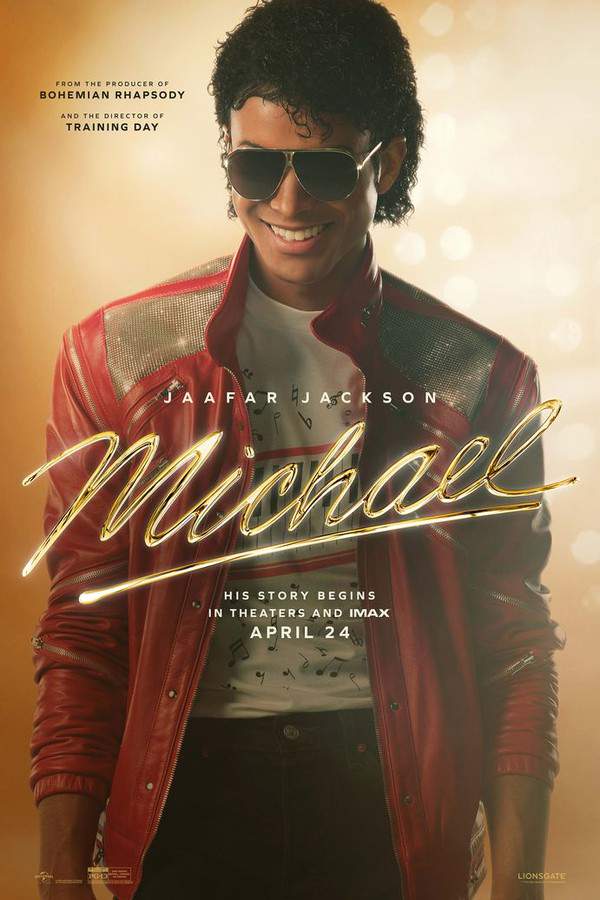
Michael (2026) Reviews and Reception: Critical Consensus, Audience Reactions, and Is the Biopic Worth Watching?
When Michael (2026) finally arrived in theaters, it carried the impossible weight of trying to capture the essence of the King of Pop while navigating the minefield of his complicated legacy. Directed by Antoine Fuqua and starring Jaafar Jackson—the late icon’s actual nephew—this musical biopic promised to deliver the definitive cinematic portrait of Michael Jackson. But as the curtain rose on this ambitious production, a fascinating and deeply polarized reception landscape emerged. Unlike typical blockbuster fare where critics and audiences often align, Michael (2026) has sparked a rare cultural phenomenon: a stark divide between professional film critics and general moviegoers that speaks to larger questions about art, legacy, and who gets to tell the story of a controversial genius.
If you’re searching for Michael movie reviews, critical consensus, or wondering is Michael worth watching, you’ve come to the right place. At What’s After the Movie, we specialize in diving deep into film reception, analyzing not just what critics say, but how real audiences react. Whether you’re looking for a Michael (2026) summary, checking Michael box office performance, or exploring our movie wiki for detailed production background, we provide comprehensive coverage of cinematic experiences. This analysis examines the Michael film reception, comparing critic reviews with viewer reactions to give you the complete picture before you buy your ticket.
The Critical Divide: Examining Michael (2026) Critic Reviews vs. Audience Sentiment
The Michael critical consensus presents a fascinating case study in how professional film evaluation can diverge dramatically from popular opinion. While cinema scores and aggregated metrics tell one story, the reality on the ground tells another entirely. Major outlets have delivered scores ranging from a dismal 20/100 to a respectable 75/100, creating a scattered landscape of Michael critic reviews that resist easy categorization. This isn’t merely a case of “mixed reviews”—it’s a fundamental disagreement about what a musical biopic owes to its subject and its audience.
Critics from prestigious publications have largely characterized the film as a sanitized, corporate product. New York Magazine (Vulture) delivered perhaps the most devastating assessment, noting that “watching it feels more like being frog-marched through a wax museum than watching a movie, each milestone restaged with an off-putting, uncanny-valley resemblance and no interiority.” This sentiment of artificiality permeates many Michael movie review pieces, with The Independent similarly criticizing that “all Michael does is recreate, in mechanical style, the most famous visuals of Jackson’s career,” asking provocatively, “Why bother to depict a human being when you can simply turn them into a product?”
The Status review crystallized this perspective into a single devastating phrase: “Michael conveys the feeling of a slickly produced licensed product.” This criticism—that the film functions as authorized hagiography rather than genuine cinema—recurs throughout professional analyses. The Reveal went further, suggesting the film banks on audience complicity with “lies, aversions, and omissions so long as it doesn’t get in the way of thinking too much about the songs they love.” For critics seeking a nuanced, warts-and-all examination of Jackson’s complex life, the film’s apparent reluctance to engage with controversy has rendered it artistically suspect.
However, this critical reception stands in stark contrast to the overwhelming enthusiasm found in Michael audience reactions. User scores have skewed heavily toward 9/10 and perfect 10/10 ratings, with viewers praising the film as a “true homage” and “work of love.” User the_divx captured this defiant sentiment perfectly: “The detachment of the critic from reality is palpable… But what do critics know about art anyway?” This disconnect raises important questions about the purpose of biographical filmmaking—whether it exists to interrogate its subject or to celebrate them, and whether critical standards for “complexity” can coexist with fan desires for tribute.
The Wall Street Journal offered a middle path, suggesting that “those too young to remember Jackson will get what they want, which is a fantastically effective introduction to the talent.” This demographic split—between those seeking critical analysis and those seeking introduction or celebration—may explain the divergence in Michael viewer reactions. At What’s After the Movie, we’ve observed similar patterns in our concert film coverage, where the line between documentary and celebration often blurs.
Jaafar Jackson’s Uncanny Portrayal: Performance Analysis in Michael (2026)
At the center of this reception storm stands Jaafar Jackson, making his acting debut by portraying his own uncle during the peak years of the King of Pop’s career. The Michael (2026) reviews universally acknowledge that casting the late singer’s biological nephew was both a masterstroke of authenticity and a potential limitation, creating what many critics have termed an “uncanny” cinematic experience that transcends traditional performance metrics.
The critical praise for Jackson’s physicality has been nearly unanimous, even among reviewers who found the film itself lacking. Film Threat noted that “Jaafar Jackson doesn’t sing a note (nor should he), but he’s got his uncle’s moves locked in cold, and there are moments where you genuinely forget you’re not watching the real thing.” This ability to suspend disbelief—to momentarily convince viewers they are witnessing the actual Michael Jackson rather than an interpretation—represents a unique achievement in biopic acting. Traditional metrics of performance evaluation almost fail here; Jackson isn’t so much acting as embodying, channeling genetic memory into physical expression.
Yet this very fidelity has become a point of contention in Michael film analysis. User RatedRex, while awarding the film only 5/10, offered a penetrating observation that distinguishes between surface imitation and emotional truth: “Jaafar Jackson had the look, voice, and moves down to a tee, but his performance didn’t have a soul. I actually thought the young Michael, played by Juliano Valdi, did a better job of conveying what was inside a person so full of talent.” This critique—that Jaafar captured the externals while missing the internals—mirrors larger criticisms of the film itself. Is perfect mimicry sufficient for great acting, or does biographical portrayal require psychological excavation that Jaafar, perhaps too close to the subject, cannot provide?
Colman Domingo’s supporting turn as Joe Jackson has generated nearly universal acclaim, transcending the film’s mixed reception. Film Threat described his performance as “flat-out frightening — the man commands every scene,” noting that the film “actually plays down how bad Joe was, which is saying something.” This suggests that where the screenplay pulls punches regarding the patriarch’s alleged abuse, Domingo’s presence restores the menace through sheer force of performance. For those exploring actor profiles or looking to understand the Michael cast, Domingo’s filmography and approach to the role of the Jackson family patriarch offer fascinating insights into how supporting performances can anchor a film even when the central narrative draws criticism.
The “uncanny valley” effect described by Vulture—that uncomfortable space where resemblance becomes too perfect yet emotionally vacant—has become the dominant framework for understanding Jaafar’s reception. However, fans reject this framework entirely. User zugurudumba insisted, “You can tell this is a work of love. Jafaar does a great job, and there were a couple of times I could have sworn I saw Michael himself on the screen.” This spiritual interpretation of performance—as mediumship rather than acting—represents a fundamentally different lens through which Michael (2026) fan opinions evaluate the work. For the faithful, Jaafar isn’t performing Michael; he’s channeling him, making traditional critical standards of “interiority” or “character development” irrelevant.
Navigating Controversy: How Michael (2026) Handles the King’s Legacy and the “Wax Museum” Criticism
Perhaps no aspect of Michael (2026) has generated more intense debate than the film’s selective approach to its subject’s biography. The Michael movie reception has been dominated by discussions of omission—what the film chooses not to show, address, or acknowledge about Jackson’s life, legal troubles, and personal controversies. This has led to the “wax museum” criticism that pervades professional reviews, suggesting that the film functions as a curated exhibition rather than a living, breathing narrative.
The Travers Take crystallized this frustration, describing the film as “a sugarcoated and sanctified biopic sees Michael Jackson as a creative musical genius with a terminal case of arrested development… an insight-free gloss on a life minus anything raw, relatable and scandal adjacent.” The phrase “scandal adjacent” captures the film’s approach—it acknowledges difficulties without engaging them, mentions controversies without exploring them, creating a narrative that exists in a sanitized bubble of musical achievement and personal victimhood (primarily at the hands of the music industry and media, rather than addressing the more troubling allegations).
This approach has led critics to question the very genre of the modern musical biopic. The New York Times lamented that “what we are left with is a string of musical set pieces, like a greatest hits album… strung together in repetitive false-note ways that are insulting both to audience and subject.” The comparison to a “greatest hits album” suggests a structural problem: the film as compilation rather than composition, hitting the expected beats (Motown audition, Thriller era, Pepsi incident) without the connective tissue of authentic human struggle. For viewers seeking Michael movie lists or comparing it to other music biopics in our movie collections, this structural choice places it closer to concert film than character study.
Yet this very criticism highlights the film’s successful execution of its apparent mission. User robayo2005 noted in Spanish that “critics wanted more morbid curiosity about the artist’s controversies and ignored the most important thing, which is the music.” This defense—that the film prioritizes art over scandal, music over melodrama—resonates with audiences tired of what they perceive as tabloid journalism masquerading as film criticism. The Chicago Tribune acknowledged this tension while maintaining critical distance: “The music is great. Jaafar Jackson is a star. But the movie itself is uncomfortably problematic in a way that’s hard to overlook.”
The portrayal of Joe Jackson as the primary antagonist serves as a substitute for more complex moral examination. By focusing on the abusive father/manager, the film provides a clear villain without implicating its subject in the moral ambiguities that defined Jackson’s later life. This narrative choice—familiar to anyone who has explored biographical films through our database—reflects the estate-approved nature of the production. The result is a film that functions simultaneously as authorized biography and brand protection, which Status identified as feeling like a “slickly produced licensed product.”
For those wondering about the Michael (2026) ending or seeking spoiler-free guidance, it’s worth noting that the film concludes prior to the most controversial periods of Jackson’s life, effectively sidestepping the 1993 and 2003 allegations entirely. This structural avoidance has led some Michael (2026) reviews to suggest the film feels incomplete, with RatedRex noting, “This should be a 4-hour-long movie or mini-series. There is so much more to tell.” The compression of a complex life into feature length, combined with selective memory, creates the “wax museum” effect that so many critics have identified.
Fan Service or Universal Appeal? Audience Reactions to Michael (2026)
While critics debate the film’s artistic merits and ethical omissions, Michael (2026) audience reactions have painted a radically different picture of the film’s impact. User reviews consistently emphasize emotional transcendence, celebratory atmosphere, and the rare theatrical experience that justifies the price of admission in an era of streaming dominance. Understanding this divergence is crucial for anyone asking is Michael worth watching or seeking Michael viewer reactions to inform their decision.
The sentiment that “this movie was made for the fans, not the skeptics” (as user Boosher articulated) captures the defensive posture of positive reviewers. There’s an acknowledged exclusivity to the film’s appeal—Boosher continued, “If you love Michael, you will love this film. If you don’t, well… you were never going to get it anyway.” This framing suggests the film functions as litmus test rather than open invitation, a piece of fan culture rather than general audience entertainment. For those exploring our quizzes and games or testing their MJ knowledge before viewing, this sentiment suggests the film rewards pre-existing investment in the subject.
The immersive quality of the theatrical experience emerges as a consistent theme in user Michael (2026) opinions. JoslinJoseph provided one of the most detailed accounts: “The movie gets your feet tapping when it starts the music and continues throughout the film until the end… Fans are always looking for a theatre experience that will justify the cost of a ticket, and this movie delivers.” This emphasis on physical response—dancing, singing, crying—suggests the film succeeds as a participatory event in ways that resist traditional critical evaluation. A film that makes you “smile, cry, dance, sing, and appreciate” may be fulfilling different criteria than those applied by reviewers seeking narrative sophistication.
The international and multilingual reception (evidenced by reviews in Portuguese and Spanish) indicates Michael’s global appeal transcends the American critical establishment. User caiohotgod wrote in Portuguese that the film “changed my perspective on life,” while barrosmflor praised it as “such a good representation about Michael and his difficulties in life.” These emotional connections suggest the film succeeds in humanizing Jackson for audiences less concerned with journalistic completeness than with empathetic connection.
Interestingly, some of the most enthusiastic Michael (2026) reviews come from viewers who acknowledge the film’s flaws but celebrate its intentions. Even the humorously critical ISuckAtSouls, who filled their review with MJ song puns (“didn’t really make me jump OFF THE WALL,” “not much of a THRILLER,” wanted to “XSCAPE the movie theatre”), still awarded the film a perfect 10/10, suggesting that for fans, ironic appreciation and genuine love can coexist. This playful engagement with the material—evident also in discussions of Michael movie cars and production details—characterizes the fan relationship with the subject.
The “delulu” accusation directed at critics by user AtotheV (“The critics are delulu!! More tens than ever but always a few ‘know it alls’ trying to ruin it”) encapsulates the hostility some fans feel toward professional evaluation. This dynamic—where expertise is viewed as elitism and enthusiasm as the only valid metric—creates a reception environment where Michael (2026) exists simultaneously as masterpiece (per audiences) and failure (per critics). For those tracking Michael awards potential or industry recognition, this polarization may predict a contentious awards season where guild votes diverge from critical consensus.
Cinematic Style and Narrative Structure: Technical Review of Michael (2026)
Beyond questions of content and performance, Michael (2026) has sparked significant debate regarding its formal qualities—its pacing, visual approach, and structural organization. These technical elements have become flashpoints in the broader Michael film reception, with critics and audiences disagreeing not just about what the film shows, but how it shows it.
The pacing has emerged as a primary concern in Michael (2026) film analysis. RatedRex’s observation that the film “never felt like a film with continuity. It felt like rehearsals… This should be a 4-hour-long movie or mini-series” suggests a compression problem. The attempt to cover Jackson’s life from childhood Motown fame through the Bad era (and beyond) in a standard runtime creates a staccato rhythm that The New York Times described as “a string of musical set pieces… strung together in repetitive false-note ways.” This episodic structure—inevitable perhaps given the estate’s involvement in determining which moments merit inclusion—prevents the accumulation of narrative momentum.
Visually, the film has been described as both spectacular and airless. The recreation of iconic music videos and performances represents the film’s strongest visual element, yet critics argue these sequences, while technically proficient, lack the danger or innovation of the originals. The New Yorker offered a nuanced take, suggesting that “setting aside the woeful omission… and considering the film outside the realm of preëxisting facts, as if it were a work of fiction about a fictitious character, ‘Michael’ still counts as only a modestly noteworthy achievement, enjoyable yet flawed.” This “modestly noteworthy” assessment—damning with faint praise—identifies the film as competent but uninspired, technically capable but artistically conservative.
The comparison to other biopics in our movie collections suggests Michael follows the “greatest hits” formula criticized in films like Bohemian Rhapsody but rejected by more adventurous works like Love & Mercy or I’m Not There. The film’s refusal to experiment with form or perspective—its insistence on linear chronology and traditional biopic beats—has led to its characterization as safe or corporate. For viewers interested in filmographies or director Antoine Fuqua’s previous work, this represents a departure from the gritty realism of his Training Day or The Equalizer franchises toward something more polished and less provocative.
The sound design and musical integration, however, receive nearly universal praise. Even critics who found the narrative lacking acknowledged the power of hearing Jackson’s catalog rendered with modern theatrical sound systems. The film functions, in many ways, as a justification for theatrical exhibition in an age of home streaming—a communal experience of shared musical nostalgia that loses power when viewed on smaller screens. This theatrical specificity may explain why Michael (2026) reviews from viewers emphasize the “experience” while critics focus on the “content.”
Final Verdict: Is Michael (2026) Worth Watching?
As we synthesize the polarized Michael (2026) reception, a complex verdict emerges that resists simple recommendations. This is not a film that can be easily categorized as “good” or “bad” in universal terms; rather, its value depends entirely on what the viewer seeks from the cinematic experience. For those asking is Michael worth watching, the answer lies in calibrating expectations against reality.
If you approach Michael seeking journalistic completeness, psychological depth, or critical interrogation of its subject’s legacy, the film will likely disappoint. The critical consensus correctly identifies the film’s avoidance of controversy, its mechanical structure, and its tendency toward hagiography. It is, as Status noted, a “slickly produced licensed product,” and viewers expecting the nuance of The Social Network or even Ray will find the film’s protective stance toward Jackson’s legacy frustratingly opaque.
However, if you seek a celebratory theatrical experience, a technically proficient showcase for Jaafar Jackson’s remarkable channeling of his uncle, or simply a feature-length immersion in Michael Jackson’s music with state-of-the-art sound and visuals, Michael (2026) delivers precisely what its audience desires. The viewer reactions—those perfect scores and emotional testimonials—cannot be dismissed as mere fan delusion; they represent a genuine transaction between film and audience, where the work succeeds in its intended purpose of tribute and celebration.
At What’s After the Movie, we maintain that understanding Michael (2026) requires acknowledging both these truths simultaneously. The film is both compromised and compelling, both artificial and affecting. Whether you consult our Michael summary page, explore related movie lists, or dive deeper into biographical film analysis, we encourage viewers to engage with the full spectrum of Michael (2026) opinions before making their decision.
Ultimately, Michael (2026) stands as a fascinating case study in the modern biopic—an embodiment of the tension between art and commerce, between honest portrayal and estate-approved mythology. It asks whether we can separate the music from the man, or whether any attempt to do so results in the “wax museum” emptiness that so many critics have identified. For Jackson’s fans, the answer is clear: the music is the man, and any film that honors the former honors the latter. For skeptics, the omissions render the celebration hollow. Whichever camp you fall into, this film demands to be discussed, debated, and experienced as a cultural event that reveals as much about our desire for untarnished icons as it does about the icon himself.
| Resource | Link |
|---|---|
| Michael (2026) Wikipedia | Wikipedia |
| Michael (2026) Rotten Tomatoes | Rotten Tomatoes |
| Michael (2026) Metacritic | Metacritic |
| Michael (2026) JustWatch | JustWatch |
| Michael (2026) Box Office Mojo | Box Office Mojo |
| Michael (2026) IMCDB | IMCDB |
Continue reading




What's After the Movie?
Not sure whether to stay after the credits? Find out!
Check out our other apps:

SAT Sphere
Build confidence for the Digital SAT.

Mori Atlas
Discover wild places worth protecting.

Luntero
Search smarter for a home in Amsterdam.

Plot Explained
Unravel movie endings and hidden clues.

Pokechamp
Dive into Pokémon data and battle logic.

Driving Theory
Get ready for your European theory test.

Movie Dust
Plan your next cinema trip with ease.

Musemap
Find art and culture as you travel.

Selkobase
Compare credentials before committing.

Local Manual
Turn an unfamiliar country into practical next steps.

Lernavi
Compare school systems before your next move.

GymRoam
Find a workout stop wherever your plans take you.
Explore Our Movie Platform
New Movie Releases (2026)
Famous Movie Actors
Top Film Production Studios
Movie Plot Summaries & Endings
Major Movie Awards & Winners
Best Concert Films & Music Documentaries
Movie Collections and Curated Lists
© 2026 What's After the Movie. All rights reserved.
Privacy Policy