
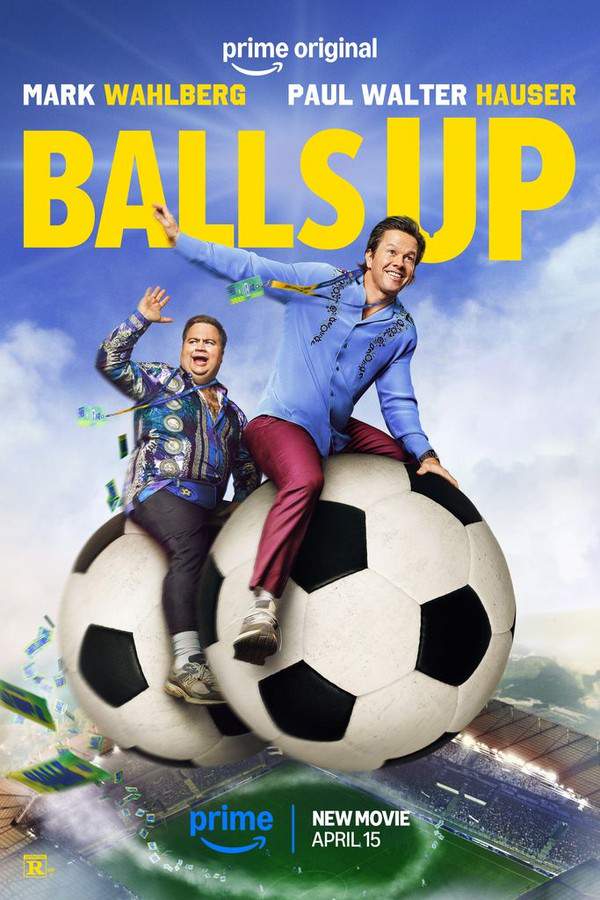
Balls Up (2026) Review: Analyzing the Polarized Critical and Audience Reception of the Mark Wahlberg Comedy
When Balls Up hit theaters on April 15, 2026, it arrived with the kind of comedic premise that immediately divides moviegoers: two bumbling condom salesmen navigate the chaos of Brazil’s soccer-obsessed culture during a crucial business pitch. As a film that proudly embraces its juvenile title and crude humor, the latest offering from director Bobby Farrelly and writers Rhett Reese and Paul Wernick has sparked one of the most contentious reception narratives of the year. For those searching for comprehensive Balls Up movie reviews, critic consensus, or wondering is Balls Up worth watching, the answer largely depends on your tolerance for lowbrow comedy and your willingness to “turn off your brain,” as numerous viewers suggest.
At What’s After the Movie, we’ve analyzed the complete spectrum of Balls Up audience reactions alongside professional film criticism to provide an in-depth reception analysis that goes beyond simple star ratings. While some viewers have hailed this as the “most joyously funny” film they’ve seen in a decade, others have dismissed it as a “complete mess” and possibly Mark Wahlberg’s career nadir. This disparity creates a fascinating case study in modern comedy reception, where spoiler-free reviews reveal not just opinions about the film’s quality, but fundamental disagreements about what constitutes entertainment value in contemporary cinema. Before diving into the specific critiques, you can explore our detailed movie page for Balls Up for cast details, plot summaries, and additional reception metrics, or check our summaries section for quick takes on this and other recent releases.
Critical Consensus vs. Audience Divide: The Reception Landscape of Balls Up (2026)
The critical consensus surrounding Balls Up (2026) presents a starkly different picture than the passionate defenses emerging from certain audience quarters, creating one of the year’s most pronounced critic-viewer divergences. Professional reviewers have largely relegated the film to the lower tiers of comedic achievement, with scores ranging from a devastating 20/100 (“The cinematic equivalent of being teabagged without your consent,” according to Empire) to a modestly generous 60/100 from The Guardian, which characterized the film as “juvenile entertainment, handled by professionals.” This 40-point spread in critical opinion, concentrated heavily in the “rotten” territory, suggests that for film critics and industry analysts tracking Balls Up reception, the movie fails to transcend its base premise.
The Hollywood Reporter encapsulates the professional disappointment, noting that “Rhett Reese and Paul Wernick, who have written much funnier scripts for the Zombieland and Deadpool films, are here working in uninspired mode. Balls Up loses comic steam the more it goes on.” This sentiment about diminishing returns appears frequently across critical reviews, with Movie Nation observing that “Farrelly’s movie, like his comic shock-shtick, gets old in a hurry.” The A.V. Club delivers perhaps the most telling structural critique, stating the film “wanders aimlessly without being driven by anything absurd or outrageous enough to conjure a Hangover-like reaction, nor anything with enough humanity to justify the occasional heart-to-heart conversations between Brad and Elijah.”
Yet contrasting sharply with these critic reviews is the vocal faction of viewers awarding perfect scores. User John B provides the most enthusiastic audience reaction, declaring: “This is simultaneously the stupidest yet most joyously funny movie I have seen in at least 10 years. I will now judge people by whether they love this movie, and if not, sayonara.” This level of passionate attachment suggests that while Balls Up may fail cinematic sophistication tests, it succeeds for viewers seeking pure escapism. Stewart L offers a middle-ground defense typical of positive viewer reactions: “This is a funny movie. Sure it’s low brow, who cares? I haven’t seen many comedies this year and we can certainly use some. This movie had my wife and I laughing plenty. The haters probably didn’t watch it.”
This divide illuminates a crucial tension in comedy film analysis: critics evaluating narrative cohesion, originality, and technical execution versus audiences prioritizing laugh density and entertainment value. The film’s Metacritic and Rotten Tomatoes scores likely reflect this schism, with professional aggregations emphasizing the “uninspired” screenplay and “aimless” pacing, while user-generated scores on platforms like IMDb (referenced in user reviews) potentially tell a different story. For those tracking box office performance and industry impact, our Box Office section provides context on how these mixed film reception patterns translate to commercial success, while our Awards page tracks any unlikely recognition this crude comedy might receive despite The New York Times’s observation that they “doubt the film’s Oscar prospects.”
Bobby Farrelly’s Return to Lowbrow Comedy: Does Balls Up (2026) Deliver the Shock Humor?
Analyzing Balls Up through the lens of Farrelly brothers comedy history reveals a film caught between nostalgic expectations for outrageous humor and contemporary sensitivities about comedic boundaries. Variety’s assessment that the film is “A mostly pretty innocuous affair — give or take some par-for-the-course ethnic stereotyping and at least one close-up involving a prosthetic glans” suggests that while the movie pushes buttons, it lacks the transgressive energy of Farrelly’s earlier work. This “neither good nor bad to any memorable degree” quality positions Balls Up as a curious entry in the 2026 comedy film landscape—not shocking enough to generate controversy, yet too crude for mainstream acceptance.
The specific viewer reactions to the film’s gross-out elements highlight this tonal confusion. CJ G’s detailed spoiler-free review catalogs the specific lowbrow gags: “If you think ball jokes, condoms used as flotation devices, urethra digging minnows or Eric Andre are funny…then Balls Up is for you.” This checklist of crude humor elements—condom-related sight gags, bodily function comedy, and sexual mishaps—forms the backbone of the film’s comedic reception. The New York Times confirms this approach, citing “slapstick foibles, sight gags about rubbers, and many, many vulgar jokes — some good for a laugh.”
However, the critical consensus suggests that Farrelly’s execution fails to elevate these elements beyond the juvenile. The comparison to The Hangover in the A.V. Club review stings precisely because Balls Up lacks that film’s escalating absurdity and structural tightness. Where The Hangover built its humor on mystery and increasing chaos, Balls Up apparently meanders through its Brazilian setting without sufficient narrative momentum. Movie Nation’s critique that “Farrelly’s movie, like his comic shock-shtick, gets old in a hurry” indicates that the film’s pacing undermines its humor, a death knell for any comedy claiming to be riotous.
For fans of crude comedy movies and lowbrow humor, the film occupies an awkward middle ground—too dependent on shock value for prestige audiences, yet insufficiently outrageous for hardcore fans of the genre. This positioning affects its long-term reception and cult status potential. While some movie analysis suggests that films embracing their stupidity can develop dedicated followings (as hinted by TheMovieSearch R’s observation that the film “fully embraces how dumb it is”), Balls Up appears to lack the distinctive voice or memorable set pieces required for midnight movie longevity. Those interested in exploring similar comedy film collections can browse our curated Movie Collections for films that better balance shock humor with narrative satisfaction, or visit our Movie Wiki for detailed production background on this and other Farrelly projects.
Mark Wahlberg and Paul Walter Hauser: Analyzing the Lead Performances in Balls Up
The acting reception in Balls Up (2026) presents one of the most lopsided critical assessments in recent memory, with Paul Walter Hauser emerging as the consensus highlight while Mark Wahlberg faces perhaps the harshest performance reviews of his career. RogerEbert.com delivers the most devastating critique of Wahlberg’s casting, stating bluntly: “Wahlberg should not be cast in any role predicated on the idea that he’s good with words and ideas.” This fundamental mismatch between actor and role—playing a condom company representative requiring verbal dexterity—appears to cripple the film’s comedic chemistry, with The Hollywood Reporter noting that “Wahlberg and Hauser… their laid-back underplaying fails to provide much juice.”
Audience reactions to Wahlberg range from disappointed to hostile. User Nancy T asks, “Did Mark W loose a bet and was forced to make this movie?” while Mindurbidniss’s review simply states: “Go away Mark. Take Kevin Hart and the Rock with you on your way out please.” Andy G connects this failure to Wahlberg’s previous comedic choices: “Cannot believe Mark Wahlberg participated in this trash, but then, he did ‘star’ in ted.” These fan opinions suggest that Wahlberg’s presence may actually deter his traditional action-drama audience while failing to convince comedy devotees of his versatility.
In stark contrast stands the critical and audience reception of Paul Walter Hauser. RogerEbert.com offers rare praise amid the negative reviews, calling him “one of the best actors in the English language” who “will escape this disaster and do more great work.” This sentiment echoes across viewer reactions, with TheMovieSearch R stating unequivocally that “Paul Walter Hauser steals the show with his unpredictable and hilarious performance. He adds a level of randomness that keeps the film entertaining even when it makes no sense.” This “randomness” appears to be Hauser’s saving grace, providing the chaotic energy that the film’s screenplay lacks.
The supporting cast generates mixed character analysis, particularly regarding Sacha Baron Cohen’s appearance as a Brazilian crime lord. CJ G identifies this as “the only shining moment,” praising Cohen’s accent work: “I swear, that man can do more with an accent than any working actor out there. The words aren’t funny, but the delivery is on-point.” This distinction between material and performance becomes crucial in Balls Up reception—the film apparently succeeds when actors transcend their scripts through sheer commitment, but founders when performances align too closely with the underwritten material.
For those interested in actor profiles and career trajectories, our Profiles section offers comprehensive filmographies for Wahlberg, Hauser, and Cohen, allowing readers to contextualize this film within their broader bodies of work. Additionally, our Movie Lists feature rankings of the best and worst performances in 2026 cinema, where these ** Balls Up performances** will certainly be debated. The disparity in acting reception ultimately underscores a key viewer recommendation: those attending for Hauser’s chaotic charisma may find value, while Wahlberg’s filmography enthusiasts should temper expectations significantly.
Narrative Structure and Pacing: Why Critics Call Balls Up (2026) “Aimless”
Beyond the performances and individual gags, Balls Up faces severe criticism regarding its storytelling quality and pacing, with multiple reviews citing structural deficiencies that prevent the comedy from cohering into a satisfying narrative. The A.V. Club’s observation that the film “wanders aimlessly without being driven by anything absurd or outrageous enough” captures the essential critic consensus about the movie’s plot development. Unlike successful road trip comedies or fish-out-of-water narratives that use their settings to generate escalating complications, Balls Up apparently squanders its Brazilian soccer-culture premise on disconnected vulgarity.
The Hollywood Reporter identifies the screenwriting issues explicitly, noting that “Rhett Reese and Paul Wernick… are here working in uninspired mode. Balls Up loses comic steam the more it goes on.” This critique from writers responsible for the tightly constructed Zombieland and Deadpool films carries particular weight—their screenplay for Balls Up lacks the narrative momentum and wit that characterize their best work. The film’s pacing problems become apparent as the condom-salesmen-in-Brazil premise, which might sustain a brisk 90-minute comedy, instead stretches into repetitive scenarios that fail to build comedic tension.
User reviews corroborate these structural criticisms while offering alternative interpretations. CJ G describes the narrative as having a “paper thin plot” where “chaos ensues” without sufficient setup, while kaenek’s movie opinion states definitively: “No story, no talent, no jokes. This isn’t your standard silly movie. There’s barely a movie in this.” However, TheMovieSearch R offers a defense that reframes these weaknesses as intentional aesthetics: “The screenplay is messy and repetitive, but that’s part of the joke. This is pure spoof comedy that isn’t meant to be taken seriously at all.”
This tension between film analysis standards and genre expectations creates the central conflict in Balls Up reception. Critics evaluating the movie as a narrative work find it wanting, with Mirza M’s audience review noting it’s “designed for audiences who enjoy turning off their brains and laughing at nonsense.” Yet for viewers willing to accept Balls Up as an absurdist comedy where logic takes a backseat to improvisation, the structural looseness becomes a feature rather than a bug. The “intentionally stupid” concept mentioned by TheMovieSearch R suggests that the film courts a specific viewer demographic—those who value crude humor and chaotic energy over storytelling coherence.
For viewers seeking film analysis tools and narrative breakdowns, our Movie Wiki provides detailed plot structures and tropes analysis for Balls Up and similar comedies. Those interested in genre expectations and how this film compares to other 2026 comedy releases can explore our Concert Films and comedy sections to understand where Balls Up fits within the current cinematic landscape. Ultimately, the pacing and narrative structure critiques suggest that Balls Up requires a specific viewing mindset—one that prioritizes moment-to-moment humor over cumulative storytelling satisfaction.
The Love It or Hate It Phenomenon: Audience Reactions and Genre Expectations for Balls Up
Perhaps no aspect of Balls Up (2026) film reception better illustrates the subjective nature of comedy than the stark polarization in audience scores and viewer reactions. The film has generated everything from 0.5/5 ratings calling it “a complete mess” (DasMii T) and “miserable shit” (Vanessa L) to perfect 5/5 declarations naming it “my favourite movie this year” (S G). This binary response pattern suggests that Balls Up functions as a litmus test for comedy tolerance, separating viewers who appreciate lowbrow humor from those who find it irredeemable.
The defenses of Balls Up consistently emphasize context and expectation management. Stewart L’s fan opinion that “Sure it’s low brow, who cares?” encapsulates the permissive attitude required to enjoy the film. Similarly, Mirza M’s review notes it’s “unapologetically low-brow comedy, designed for audiences who enjoy turning off their brains and laughing at nonsense.” This acknowledgment that the film requires cognitive dissonance—actively shutting down critical analysis to appreciate the crude gags—becomes a recurring theme in positive audience reception.
John B’s enthusiastic viewer reaction provides the most detailed defense, embracing the film’s specific quirks: “I don’t often watch crude gag laden movies about the prophylactic business juxtaposed with the fanaticism of soccer obsessed countries, but when I do, it’s ‘Balls Up’!” This celebration of the film’s absurdist premise—condom salesmen navigating Brazilian soccer culture—suggests that Balls Up succeeds when viewed as a guilty pleasure or cult comedy rather than mainstream entertainment.
Conversely, the negative audience reactions focus on missed opportunities and tastelessness. CJ G’s recommendation to “steer clear of this one, but if you HAVE to watch it, I guess try it on 4/20” implies that altered states might be necessary to appreciate the humor. The specificity of complaints—about “urethra digging minnows,” ethnic stereotyping, and the general “stupidity”—indicates that for many viewers, Balls Up crosses the line from juvenile entertainment into offensive or simply unfunny territory.
This love it or hate it dynamic creates unique viewer recommendations. TheMovieSearch R’s spoiler-free review offers the most nuanced guidance: “Overall, Balls Up is a bad movie, but it’s a fun one if you embrace the stupidity and just go along for the ride.” This distinction between objective quality and subjective enjoyment becomes crucial for potential viewers searching “is Balls Up worth watching” or seeking ** Balls Up recommendations**.
For those looking to test their own comedy preferences, our Quizzes and Games section offers interactive content to determine your movie compatibility with Balls Up and similar films. Additionally, our Movie Collections feature curated lists of polarizing comedies and cult classics that might appeal to viewers who appreciate Balls Up’s specific brand of chaotic humor. Understanding your own tolerance for lowbrow comedy, crude humor, and absurdist storytelling becomes essential before committing to this divisive 2026 release.
Final Verdict: Is Balls Up (2026) Worth Watching? Critical Takeaways and Viewer Recommendations
Synthesizing the full spectrum of Balls Up reviews, critic consensus, and audience reactions reveals a film that defies simple categorization as either unwatchable disaster or underrated gem. Instead, Balls Up (2026) occupies the uncomfortable middle ground of comedy cinema—professionally produced (as The Guardian notes, “handled by professionals”) yet creatively lacking, featuring committed performances (particularly Hauser and Cohen) yet dragged down by screenwriting that “loses comic steam” and pacing that “wanders aimlessly.”
For viewer recommendations, the data suggests a specific demographic will find value here: fans of Paul Walter Hauser’s unpredictable performance style, viewers who appreciated Farrelly brothers’ previous lowbrow comedies, and audiences specifically seeking mindless entertainment where “turning off your brain” isn’t just suggested but required. The critical consensus overwhelmingly advises against prioritizing this film, with scores clustering in the 20-40 range indicating poor critical reception and suggesting that ** Balls Up analysis** from professional perspectives finds little redeeming value.
However, the passionate 5/5 audience reactions cannot be dismissed entirely. For every viewer calling it “the worst movie ever” (Nancy T), there’s another claiming it’s the “most joyously funny” experience of the decade. This polarization indicates that Balls Up achieves its limited goals for a specific viewer mindset—those who embrace absurdist comedy, crude humor, and juvenile entertainment without requiring narrative coherence or sophisticated storytelling.
The final verdict for is Balls Up worth watching depends entirely on your comedy preferences and viewing context. If you’re seeking prestige comedy, witty dialogue, or emotional resonance, the critical reviews provide clear warning: avoid this film. However, if you’re drawn to chaotic energy, gross-out humor, and Mark Wahlberg attempting comedic roles outside his strengths (with mixed results), Balls Up might provide the guilty pleasure experience you’re seeking.
Before making your decision, visit our comprehensive movie page for Balls Up for additional reception metrics, cast information, and production details. Explore our Summaries for quick spoiler-free reviews of other 2026 releases, or check our Box Office data to see how this comedy film performs commercially despite its mixed reception. Whether you ultimately decide to embrace the stupidity or skip this cinematic experience, understanding the critical and audience divide ensures you’ll approach Balls Up with appropriate expectations.
Conclusion: Understanding the Divided Reception of Balls Up (2026)
The reception analysis of Balls Up ultimately reveals more about the current state of comedy film criticism and audience expectations than about the film’s intrinsic merits. In an era where high-concept comedies struggle to find theatrical footing, Balls Up represents a throwback to a simpler—some would say cruder—era of filmmaking, one that prioritizes immediate laughs over lasting impact. The film’s critic reviews, ranging from Empire’s visceral disgust to Variety’s resigned acceptance, reflect a critical establishment weary of juvenile humor that fails to transcend its base instincts.
Yet the audience reactions—particularly those perfect scores from viewers who found it their “favourite movie this year”—remind us that film reception remains deeply personal. For these viewers, Balls Up delivered exactly what they wanted: unapologetic stupidity, Paul Walter Hauser’s chaotic charm, and a respite from prestige cinema demands. Whether this constitutes good moviemaking or merely effective pandering depends on your philosophical stance toward entertainment value versus artistic merit.
As you navigate your own viewing decisions, remember that What’s After the Movie provides comprehensive resources for all your film analysis needs. From our Awards tracking to our Movie Lists of the best and worst 2026 releases, we’re your destination for critical consensus, audience scores, and detailed movie opinions. Whether Balls Up becomes your guilty pleasure or your cinematic regret, understanding the polarized reception ensures you’ll watch with eyes wide open to both its crude charms and its professional shortcomings.
| Site | Link |
|---|---|
| Rotten Tomatoes | Balls Up (2026) Rotten Tomatoes |
| Metacritic | Balls Up (2026) Metacritic |
| JustWatch | Balls Up (2026) JustWatch |