What's After the Blog?
Opinions • Reception
GOAT (2026) Review, Critics Opinions & Audience Reception – Performance, Storytelling & Franchise Impact
Explore fan reactions and critic reviews of GOAT (2026), analyzing the film's performance, storytelling, and its place within the emerging animal-sport franchise. This post breaks down audience reception, critical consensus, and what the movie means for future roarball tales.
February 12, 2026
Movies mentioned in this article
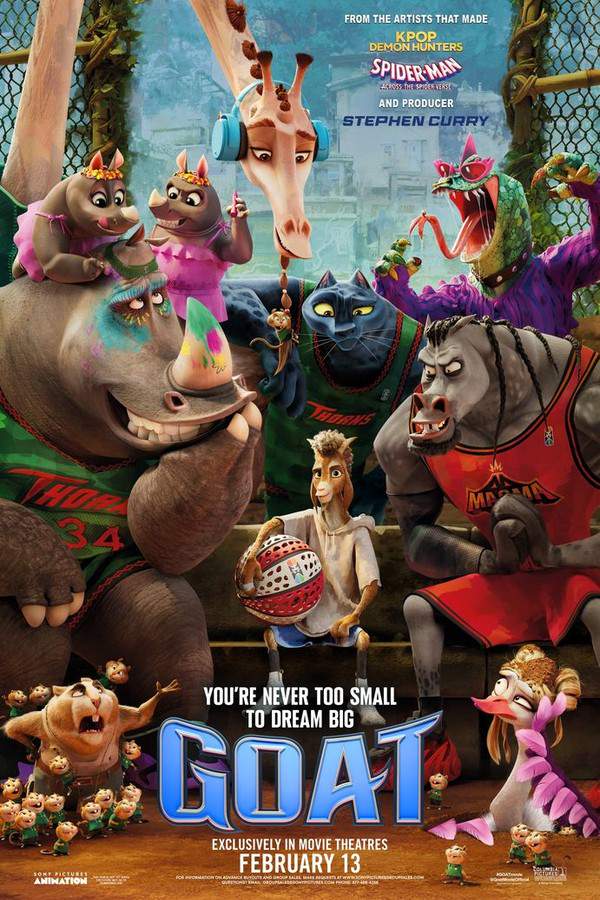
GOAT (2026) Reviews & Reception: What Critics and Audiences Are Saying About the Animated Underdog Sports Film
When searching for “GOAT 2026 review” or “is GOAT worth watching”, moviegoers are encountering one of the most polarizing animated releases of early 2026. Released on February 13, 2026, this anthropomorphic sports comedy has generated significant buzz across family audiences and animation enthusiasts, prompting widespread searches for GOAT movie critic reviews, audience reactions, and spoiler-free reception analysis. At What’s After the Movie, we specialize in helping viewers discover what to expect before and after the credits roll, offering comprehensive movie summaries, detailed cast and crew profiles, and interactive features like our movie quizzes and games to test your knowledge of the latest releases.
The reception landscape for GOAT (2026) reveals a fascinating divide between professional critics and general audiences, with scores ranging from scathing 0.5-star user reviews to glowing 80/100 critic assessments. This disparity raises essential questions about genre expectations, animation quality versus storytelling substance, and whether the film successfully distinguishes itself in an increasingly crowded marketplace of anthropomorphic animal features. As families search for “GOAT family movie review” and animation fans debate its merits on forums, the film has become a case study in how modern animated features balance visual spectacle with narrative depth. Whether you’re checking our GOAT (2026) movie page for post-credits scene details or exploring our movie wiki for production insights, understanding the critical consensus and viewer sentiment is crucial before heading to theaters.
GOAT (2026) Critical Consensus: Why Professional Reviewers Are Divided on the Animated Underdog Story
The critical reception of GOAT (2026) presents a striking spectrum of opinions that underscores the subjective nature of animated storytelling. With scores oscillating between 38/100 from The Associated Press and 80/100 from both Variety and TheWrap, the film has ignited debate about what constitutes success in contemporary family entertainment. This 80-point spread in critical assessment reveals fundamental disagreements regarding the film’s comedic efficacy, emotional authenticity, and narrative innovation.
Variety offers one of the most enthusiastic GOAT film analysis perspectives, praising the movie’s execution despite familiar foundations: “In outline, GOAT doesn’t do anything terribly unorthodox, but the joy of the film lies in its dreamscape design, in the funky cut and thrust of its patter, and in its touching off-center sincerity.” This sentiment aligns with TheWrap’s similarly high evaluation, which challenges dismissive preconceptions about the premise with the pointed observation: “Say what you will about the premise, but if you think that’s all there is to ‘Goat,’ you’re going to bleat those words.” These positive GOAT reviews emphasize that while the underdog sports narrative may follow predictable beats, the film’s aesthetic presentation and tonal sincerity elevate it beyond formulaic constraints.
Conversely, The Associated Press delivers a scathing GOAT movie opinion that directly contradicts these assessments, arguing: “It’s not as funny as it thinks it is and tiresome in its overly familiar redemption arc.” This criticism finds resonance with The Guardian’s harsh 40/100 verdict, which contends that GOAT (2026) “lacks heart and soul, and a sense of genuine emotions.” The divergence between these perspectives—where one camp celebrates the film’s “touching off-center sincerity” while another condemns its emotional vacancy—creates a challenging landscape for audiences seeking spoiler-free GOAT reviews to guide their viewing decisions.
Next Best Picture and Screen Rant occupy middle-to-positive ground, with both awarding 70/100 scores while acknowledging the film’s formulaic nature. Next Best Picture describes it as “a classic underdog story wrapped in bold animation, infectious energy, and real heart,” whereas Screen Rant frames it as “an underdog story — sorry, under-goat story — for a new generation that is ready for a new, more inclusive kind of game.” These GOAT critic reviews suggest that while the film may not revolutionize the genre, it successfully updates classic tropes for contemporary sensibilities, particularly regarding diversity and inclusion themes that resonate with modern family audiences.
The A.V. Club (67/100) and Little White Lies (60/100) offer more measured GOAT reception analysis, highlighting specific mechanical shortcomings while acknowledging broader successes. The A.V. Club notes that “the actual sports stuff feels a little sweatier, with too much clamor for each animal teammate to really pop,” though it concedes that “Goat still leaps over the worst pitfalls of big-studio kid-centric animation.” Little White Lies identifies narrative construction issues in the final act, stating: “A couple of really random and contrived twists in the fourth quarter make it hard to invest emotionally in the climactic, must-win game, though there’s just enough humour and heart to scrape a last-second win.”
For viewers researching GOAT (2026) film reception through our curated movie lists or comparing it to other releases in our movie collections, this critical division suggests that enjoyment largely depends on tolerance for familiar sports-movie structures and appreciation for stylistic execution over narrative innovation. The consensus indicates that while GOAT may not satisfy critics seeking groundbreaking storytelling, it potentially delivers sufficient animation quality and charm for less demanding viewers.
Audience Reactions and Viewer Sentiment: Is GOAT (2026) Worth Watching for Families?
While professional critics engage in nuanced GOAT film analysis, audience reactions paint a significantly more favorable picture, particularly among parents and younger viewers searching for “GOAT family movie review” or “is GOAT good for kids.” The user review landscape demonstrates a stark contrast to critical skepticism, with the majority of verified viewers awarding perfect or near-perfect scores, though notable dissenting voices highlight concerning trends in modern animation pacing and content.
Family audiences overwhelmingly report positive experiences, with reviewers like Mike S providing succinct validation: “Great film the Family loved it.” This enthusiasm extends to Steve J, who praises the film’s accessibility and messaging: “Loved this sweet film with an uplifting message, dope soundtrack and some really funny jokes. Great for kids!” These GOAT viewer reactions emphasize the film’s success in delivering age-appropriate humor and positive themes, crucial factors for parents evaluating whether GOAT is worth watching during weekend outings.
Kelly S offers particularly detailed GOAT audience reception insight from a family perspective: “So much fun and heart! My teens and I got to see a preview of this over the weekend and loved it! The animation and visual style were fantastic and the movie was a ton of fun. Great positive messages throughout the film mixed in with a fun voice cast and memorable soundtrack.” This review highlights an important demographic split—while some critics found the emotional beats contrived, multi-generational family units appear to connect with the film’s earnestness and visual appeal. Similarly, Bruno L, who attended an early screening, recommends it despite acknowledging narrative familiarity: “Real fun time at the movies despite the familiar story. Great animation, fun characters, and some emotional moments, take your family and friends to see this!”
However, GOAT (2026) opinions are not universally positive among general viewers. Jarom J delivers a scathing 1.5-star GOAT movie review that has resonated with animation purists concerned about industry trends: “It’s a ‘brain rot’ movie. The scenes are never longer than 5 seconds, and theres never more than 3 seconds without noise or motion. While I understand the goal is to keep your attention, I dont watch movies to just feel like I’ve been scrolling on tic tok for an hour, which is what this film is.” This critique of hyperactive pacing and sensory overstimulation represents a significant faction of viewer sentiment that views modern animated features as increasingly designed for distracted consumption rather than immersive storytelling. Jarom J further notes that “The plot and characters are pretty medicore or generic, what the film offers is animation, and a lot of stimulation,” suggesting that for some audiences, GOAT’s visual appeal cannot compensate for perceived narrative deficiencies.
The most extreme negative GOAT reception comes from Sullivan, who awards 0.5 stars and declares: “It’s a cringe ripoff of Zootopia.” This comparison to Disney’s 2016 hit introduces a crucial element of the GOAT film reception discourse—questions of originality and franchise fatigue within the anthropomorphic animal subgenre. For viewers exploring our GOAT (2026) movie page or researching similar titles in our movie wiki, this accusation of derivativeness may significantly impact viewing decisions, particularly for animation enthusiasts who prioritize innovation.
Alex L provides a middle-ground GOAT opinion that acknowledges surprise: “It was surprisingly good all things considered! Everyone should definitely check it out.” This sentiment of exceeded expectations appears frequently in audience reviews, suggesting that marketing may have initially undersold the film’s quality or that negative critical buzz lowered expectations sufficiently for viewers to be pleasantly surprised.
For families debating GOAT vs other animated movies or searching for “GOAT movie parent review”, the user consensus suggests that children and teens will likely enjoy the experience, particularly if they appreciate fast-paced humor and vibrant visuals, while adults seeking sophisticated storytelling may find the experience less rewarding. Our quizzes and games section offers interactive ways to engage with the film’s themes after viewing, while our summary page helps viewers track plot points they may have missed during the rapid-fire pacing some critics noted.
Animation Style vs. Narrative Substance: How GOAT (2026) Sparks Debate Among Reviewers
The technical execution of GOAT (2026) generates some of the most passionate discourse in film reception circles, with critics and audiences engaging in vigorous debate about whether visual sophistication can compensate for storytelling familiarity. This tension between animation quality and narrative depth sits at the heart of many GOAT critic reviews, creating a complex evaluative framework for potential viewers searching for “GOAT animation review” or “GOAT visual style analysis.”
Marcus H encapsulates the visual praise prevalent in audience reactions: “Solid all around story, visuals are amazing.” This emphasis on aesthetic achievement appears consistently across positive GOAT (2026) reviews, with ray offering specific commendation: “GOAT is beautifully animated and full of incredible characters. Caleb’s voice is the highlight of the film.” The recognition of voice performance alongside visual execution suggests that the film succeeds in technical craft even when narrative elements falter, a crucial consideration for viewers prioritizing production values over plot complexity.
The A.V. Club provides nuanced GOAT film analysis regarding the animation’s relationship to storytelling mechanics, noting that while the visual presentation generally succeeds, the execution of sports sequences creates cognitive overload: “The actual sports stuff feels a little sweatier, with too much clamor for each animal teammate to really pop.” This observation highlights a specific failure in character design clarity during action sequences, suggesting that the film’s ambitious visual scope occasionally undermines narrative comprehension. However, the review concludes with significant praise: “But Goat still leaps over the worst pitfalls of big-studio kid-centric animation. Where it counts, the movie knows just enough ball.” This qualified endorsement indicates that GOAT avoids the most egregious errors of corporate animation—such as cynical merchandising ploys or entirely disposable storytelling—even if it doesn’t achieve excellence in every visual category.
The ** pacing and structural editing** of GOAT (2026) receive particular scrutiny from reviewers concerned with modern animation trends. Little White Lies identifies specific third-act problems that disrupt emotional investment: “A couple of really random and contrived twists in the fourth quarter make it hard to invest emotionally in the climactic, must-win game.” This criticism of late-story revelation mechanics suggests that the film’s screenwriting may not match its visual polish, creating a dissonance that discerning viewers find problematic. However, the same review acknowledges redeeming qualities: “though there’s just enough humour and heart to scrape a last-second win,” implying that the film’s tonal execution partially salvages structural weaknesses.
For animation enthusiasts comparing GOAT to other sports movies or exploring anthropomorphic animation trends, the film represents a fascinating case study in style-over-substance dynamics. While Variety celebrates the “dreamscape design” and TheWrap defends the film against premise-based dismissal, user reviewers like Jarom J argue that rapid-fire editing creates a *“brain rot” experience akin to “scrolling on tic tok for an hour.” This generational divide in viewing preferences—between audiences who appreciate kinetic, stimulus-rich environments versus those seeking contemplative, traditionally paced narratives—defines much of the GOAT reception discourse.
The character animation and world-building receive generally positive mentions across critic and user reviews, with ray specifically highlighting “Caleb’s voice” as a standout element alongside the visual presentation. This suggests that the film succeeds in characterization even when broader plot mechanics feel familiar or contrived. For viewers researching GOAT box office performance (tracked on our box office page) or exploring potential awards consideration for animation categories (monitored on our awards page), the technical proficiency evident in character design and voice integration may position the film as a contender in craft categories even if it misses narrative accolades.
When evaluating whether GOAT is worth watching for animation students or industry professionals, the film offers substantial material for analyzing contemporary family entertainment production values, even as it potentially disappoints those seeking narrative innovation. Our movie collections featuring animated sports films provide useful comparative context for understanding where GOAT (2026) fits within the broader genre evolution.
The GOAT (2026) Soundtrack and Cultural Reception: Music as the Film’s Emotional Anchor
Beyond visual and narrative considerations, GOAT (2026) has generated significant cultural reception discussion surrounding its musical composition and soundtrack integration, with multiple reviewers identifying the music as a crucial element that elevates the overall experience. For audiences searching for “GOAT movie soundtrack review” or “GOAT 2026 music analysis,” the film’s sonic landscape appears to succeed even when other elements generate controversy, making the auditory experience a key factor in viewer recommendations.
ray delivers perhaps the most enthusiastic GOAT audience reaction regarding the musical elements: “And the soundtrack is FIRE, specially ‘Mention Me’ by CORTIS which elevates the experience to another level. Everyone give it a listen when it drops on Friday 13!!” This specific citation of CORTIS and the track “Mention Me” indicates that the film successfully integrates contemporary musical artists in ways that resonate with younger demographics, potentially creating cultural moments that extend beyond the theatrical experience. The description of the soundtrack as “FIRE” alongside praise for Caleb’s voice performance suggests that the film’s audio design may represent its most universally acclaimed component.
Steve J reinforces this positive music reception in his family-oriented review: “Loved this sweet film with an uplifting message, dope soundtrack and some really funny jokes.” The casual inclusion of “dope soundtrack” alongside narrative and comedic praise indicates that the music succeeds in appealing to both children and parents, a crucial balancing act in family film production. Similarly, Kelly S includes “memorable soundtrack” among the film’s primary virtues, suggesting that the musical elements create lasting impressions that survive the hyperactive pacing criticized by other viewers.
The relationship between soundtrack and emotional engagement becomes particularly significant given the criticisms regarding the film’s narrative contrivances. While Little White Lies found late-game twists made emotional investment difficult, the presence of a strong musical score may help bridge these narrative gaps, providing emotional cues that compensate for structural screenplay weaknesses. This phenomenon—where film music salvages otherwise problematic storytelling—represents a common saving grace in contemporary animation, and GOAT (2026) appears to benefit significantly from this dynamic.
For music enthusiasts and concert film aficionados exploring our concert film section, the GOAT soundtrack offers an interesting case study in how animated features increasingly function as music delivery vehicles, with original songs and curated playlists becoming as central to marketing as plot summaries. The specific mention of CORTIS and “Mention Me” suggests that the film successfully positions itself within contemporary musical trends, potentially attracting audiences who might otherwise skip traditional family animation.
The cultural impact of the soundtrack extends to social media engagement and post-viewing discussion, with viewers like ray actively promoting specific tracks for opening-weekend listening. This organic promotion indicates successful sonic branding that may drive long-term reception and rewatch value, particularly among teens and young adults who discover the film through its music rather than traditional animation marketing. For those tracking GOAT (2026) awards possibilities, recognition in Best Original Song or Best Score categories seems plausible based on viewer reactions, even if the film misses broader Best Animated Feature consideration.
When considering is GOAT worth watching for music lovers specifically, the soundtrack reception provides a compelling affirmative argument. The film’s ability to deliver what multiple reviewers describe as “dope,” “FIRE,” and “memorable” musical content suggests that GOAT succeeds as an auditory experience even for viewers who find the visual pacing overwhelming or the narrative familiar. Our GOAT (2026) movie page includes details on the complete track listing and composer information for those interested in exploring the musical production further, while our lists section features curated collections of films with exceptional soundtracks for comparative listening.
Genre Expectations and Comparisons: GOAT (2026) vs. Zootopia and the Anthropomorphic Animation Landscape
No analysis of GOAT (2026) reception would be complete without addressing the comparative discourse surrounding its place within the anthropomorphic animal animation subgenre, particularly the explicit comparisons to Disney’s Zootopia that have dominated user reviews and critic discussions. For viewers searching for “GOAT vs Zootopia” or “movies like GOAT 2026,” understanding how the film navigates genre expectations and originality concerns proves essential for managing viewing expectations.
Sullivan’s blunt GOAT movie opinion—“It’s a cringe ripoff of Zootopia”—represents the most extreme articulation of a concern that permeates mixed reviews of the film. This accusation of derivativeness touches on a broader anxiety within animation fandom regarding Hollywood’s reliance on anthropomorphic premises, where animals behave like humans in socially allegorical ways. For animation enthusiasts who view Zootopia (2016) as the contemporary standard for sophisticated social commentary within family entertainment, GOAT’s similar premise—featuring animal characters navigating human-like social structures and sports competitions—necessarily invites unfavorable comparisons.
However, defenders of GOAT (2026) argue that the film operates within a classic underdog sports tradition that predates and transcends any single reference point. Next Best Picture explicitly frames the film as “a classic underdog story wrapped in bold animation,” emphasizing archetypal storytelling over IP imitation. This perspective suggests that while the visual language of anthropomorphic animals may recall Zootopia, the narrative structure—sports redemption, team dynamics, inspirational coaching—derives from decades of live-action and animated sports cinema, from Hoosiers to Space Jam to DodgeBall.
Screen Rant advances this generational evolution argument, describing GOAT as “an underdog story — sorry, under-goat story — for a new generation that is ready for a new, more inclusive kind of game.” This framing positions the film not as Zootopia’s imitator but as its successor, updating the anthropomorphic allegory for contemporary conversations about inclusion and diversity in sports culture. The emphasis on “a new, more inclusive kind of game” suggests that GOAT addresses social themes similar to Zootopia’s prejudice allegory but through the specific lens of athletic competition and team dynamics rather than urban social stratification.
The “under-goat” pun employed by Screen Rant and the “bleat those words” phrase from TheWrap indicate that GOAT (2026) embraces its animal premise with a self-aware humor that distinguishes it from more serious allegorical animation. While Zootopia functioned primarily as a social issue drama disguised as family entertainment, GOAT appears to prioritize comedic energy and sports movie catharsis, potentially making it more comparable to underdog sports comedies like The Mighty Ducks or Cool Runnings—albeit with animal protagonists—rather than Zootopia’s police procedural structure.
For families and animation fans exploring similar movies through our movie lists or researching anthropomorphic film history in our movie wiki, GOAT represents an interesting test case for genre fatigue versus archetypal comfort. While Sullivan and critics like Jarom J view the premise as evidence of creative bankruptcy, reviewers like Variety celebrate the “funky cut and thrust of its patter” and “touching off-center sincerity,” suggesting that execution matters more than premise originality.
The generational divide in GOAT reception becomes particularly evident in these comparative discussions. Younger viewers encountering anthropomorphic animation primarily through Zootopia may view GOAT as derivative, while audiences with longer memories of sports movies and animal fables may appreciate the film as a fresh iteration of classic tropes. This dichotomy explains why GOAT (2026) reviews vary so dramatically between critics (who consume vast quantities of similar content) and general family audiences (who prioritize entertainment value over novelty).
When evaluating whether GOAT is worth watching for viewers specifically concerned with originality, the critical consensus suggests approaching the film as a style-heavy execution of familiar themes rather than a genre revolution. For those who found Zootopia’s social commentary compelling but are seeking something lighter and more sports-focused, GOAT may offer sufficient differentiation to justify viewing, particularly given its soundtrack strengths and animation quality. Our GOAT (2026) movie page provides links to similar films and franchise comparisons to help viewers contextualize where this release fits within their personal animation preferences.
Final Verdict: Understanding the Polarized Reception of GOAT (2026) for Different Viewer Demographics
As the critical consensus and audience reactions to GOAT (2026) coalesce into a coherent reception profile, several clear patterns emerge that can guide potential viewers in their decision-making process. The film stands as a fascinating case study in divided reception, where demographics, genre expectations, and sensory preferences prove more predictive of enjoyment than traditional quality metrics like Rotten Tomatoes scores or star ratings alone.
For families with children searching for “GOAT parent review” or “is GOAT appropriate for kids,” the overwhelming majority of user reactions suggests a safe, enjoyable theatrical experience. The repeated emphasis on “positive messages,” “uplifting” tones, and visual splendor indicates that younger viewers—particularly those unburdened by Zootopia comparisons or concerns about narrative originality—will likely find the film engaging and memorable. Parents seeking wholesome entertainment that avoids the cynicism occasionally found in modern animation will appreciate the “real heart” identified by Next Best Picture and the “sweet” quality noted by multiple family reviewers.
Conversely, animation enthusiasts and film critics approaching GOAT with expectations of narrative innovation or sophisticated world-building may encounter the “brain rot” experience described by Jarom J, where rapid editing and sensory overload replace thoughtful storytelling. These viewers should temper expectations regarding plot surprises, as the film appears to follow underdog sports conventions with minimal deviation, and should instead focus appreciation on the “dreamscape design” celebrated by Variety and the “dope soundtrack” universally acknowledged across viewer reactions.
The generational split in GOAT reception ultimately reflects broader tensions in contemporary animation between attention economy pacing (designed for TikTok-accustomed youth) and traditional cinematic rhythms (preferred by adult critics). GOAT (2026) clearly targets the former demographic, sacrificing narrative sophistication for kinetic energy and musical momentum, a choice that explains both its high user scores and mixed critical reception.
For those still uncertain about whether to watch GOAT, our recommendation depends on your viewer profile: if you prioritize family bonding, visual spectacle, and contemporary music, the film likely merits a theatrical viewing; if you seek narrative depth, original allegory, or restrained pacing, you may find greater satisfaction exploring other titles in our movie collections or curated lists of animated features.
At What’s After the Movie, we encourage viewers to explore our GOAT (2026) movie page for comprehensive details on cast and crew (accessible through our profiles section), potential awards tracking, and post-credits scene information. Whether you ultimately find GOAT to be a “cringe ripoff” or a “beautifully animated” triumph of heart over formula, our platform provides the resources to enhance your movie-going experience and post-viewing discussion. Test your knowledge of the film with our interactive quizzes, compare it to similar releases in our wiki, and join the ongoing conversation about this polarizing underdog story.
| Resource | Link |
|---|---|
| GOAT on Rotten Tomatoes | Rotten Tomatoes |
| GOAT on Metacritic | Metacritic |
| GOAT After Credits on Media Stinger | Media Stinger |
| GOAT on JustWatch | JustWatch |
| GOAT on Box Office Mojo | Box Office Mojo |
Continue reading




What's After the Movie?
Not sure whether to stay after the credits? Find out!
Check out our other apps:

SAT Sphere
Build confidence for the Digital SAT.

Mori Atlas
Discover wild places worth protecting.

Luntero
Search smarter for a home in Amsterdam.

Plot Explained
Unravel movie endings and hidden clues.

Pokechamp
Dive into Pokémon data and battle logic.

Driving Theory
Get ready for your European theory test.

Movie Dust
Plan your next cinema trip with ease.

Musemap
Find art and culture as you travel.

Selkobase
Compare credentials before committing.

Local Manual
Turn an unfamiliar country into practical next steps.

Lernavi
Compare school systems before your next move.

GymRoam
Find a workout stop wherever your plans take you.
Explore Our Movie Platform
New Movie Releases (2026)
Famous Movie Actors
Top Film Production Studios
Movie Plot Summaries & Endings
Major Movie Awards & Winners
Best Concert Films & Music Documentaries
Movie Collections and Curated Lists
© 2026 What's After the Movie. All rights reserved.
Privacy Policy