What's After the Blog?
Opinions • Reception
The Breadwinner (2026) Review, Critics Opinions & Audience Reception – Performance, Storytelling and Family Comedy Analysis
Explore fan reactions and critic reviews of The Breadwinner (2026). This analysis examines its storytelling, performances, and how the movie fits within the family comedy landscape.
June 4, 2026
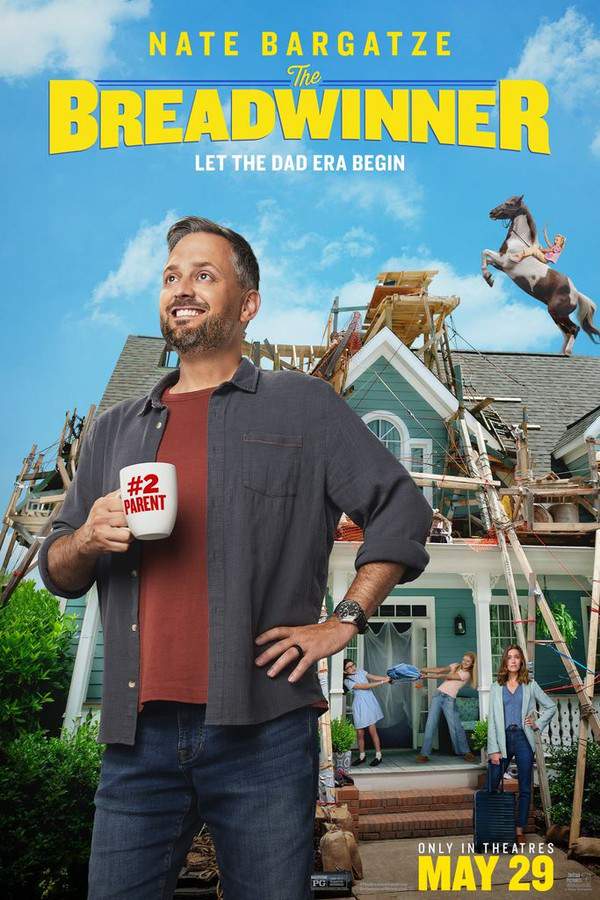
Movies mentioned in this article
The Breadwinner 2026 Review: Critical Divide and Audience Love for Nate Bargatze’s Family Comedy
When The Breadwinner hit theaters on May 29, 2026, it arrived carrying the weight of expectations built from Nate Bargatze’s reign as “standup’s comedy king of clean.” The film, which marks Bargatze’s screen acting debut, immediately sparked a fascinating dichotomy in its reception landscape that has become increasingly rare in modern cinema: while general audiences embraced the family-friendly humor with open arms, critics largely dismissed it as a stale retread of outdated tropes. This split between viewer enthusiasm and critical skepticism raises essential questions about the current state of theatrical comedy, the viability of “clean” entertainment in a raunchy comedy landscape, and whether modern audiences are hungry for nostalgic simplicity or demanding progressive innovation.
For moviegoers wondering whether The Breadwinner 2026 is worth watching, understanding this reception divide is crucial. At What’s After the Movie, we’ve analyzed the full spectrum of The Breadwinner reviews to provide you with a comprehensive look at how this film landed across different demographics. From professional critics calling it “phoned-in” to families praising it as a “refreshing alternative,” the film’s reception tells a story about cultural nostalgia, gender role representation, and the challenging transition from stand-up stage to silver screen. Visit our The Breadwinner 2026 summary page for full cast details, or check our Box Office analysis to see how this comedy performed financially against its competition.
The controversy surrounding the film isn’t merely about taste—it’s about the fundamental question of what family entertainment should look like in 2026. When Peter Travers declares that Bargatze “deserves better than this phoned-in excuse for family fun,” while simultaneously users like Luquillo celebrate “finally, a clean family movie you’re not embarrassed to take your kids to,” we’re witnessing a clash of cultural values that extends far beyond this single release. Whether you’re searching for spoiler-free reviews, critical consensus, or detailed viewer reactions, this analysis breaks down exactly why The Breadwinner 2026 became one of the most divisive comedies of the year, and whether it deserves a spot on your watchlist despite the mixed critical reception.
Critical Consensus: Why Film Critics Dismissed The Breadwinner 2026 as Outdated and Stale
The critical reception to The Breadwinner 2026 reads like a referendum on the state of modern studio comedy, with reviewers nearly unanimous in their disappointment regarding the film’s creative execution and thematic choices. Peter Travers of Rolling Stone delivered perhaps the most cutting assessment, declaring that “Standup’s comedy king of clean Nate Bargatze riffs on Mr. Mom for his screen acting debut. He deserves better than this phoned-in excuse for family fun. So do audiences.” This sentiment—that the film wastes the talent of its charismatic lead—echoed across multiple major outlets, suggesting that the problem wasn’t Bargatze himself, but rather the vehicle chosen for his cinematic introduction.
Matt Zoller Seitz took the critique further, arguing that “These sorts of movies do more damage to the culture than any bloody horror flick you can name, because they make the unforgivable adorable.” Seitz’s harsh condemnation speaks to a broader critical frustration with the film’s apparent willingness to excuse or romanticize parental incompetence through the lens of comedy. This interpretation finds support in Odie Henderson’s observation that “the biggest product this movie is selling is the outdated notion that fathers are so incompetent that they don’t know where their own kids go to school, or how to make toast, or how to do the laundry.” For critics attuned to progressive representations of domestic life, The Breadwinner represented a frustrating step backward into 1980s sitcom stereotypes.
The comparisons to 1983’s Mr. Mom, noted by Glenn Kenny who wrote that the film “will be familiar to anyone who’s heard of the 1983 film ‘Mr. Mom,’ but the accents are very 21st century,” weren’t received as homage but rather as evidence of creative bankruptcy. Brian Lowry delivered what might be the most damning contextual critique, suggesting that The Breadwinner “would have at best qualified as about the 17th-best new comedy of 1995.” This temporal displacement—the sense that the film arrived three decades late—became a recurring theme in negative film reviews.
William Bibbiani of TheWrap contributed to this narrative with his particularly vivid dismissal, stating that “‘The Breadwinner’ has more stale corny bits than a Kellogg’s factory dumpster.” The criticism extended beyond writing to execution, with Jesse Hassenger noting that despite director Eric Appel’s television comedy credentials, “in place of slick professionalism, this movie feels Scotch-taped together.” For viewers seeking film analysis and critical consensus on whether The Breadwinner 2026 lives up to contemporary comedy standards, the professional reviews present a bleak picture of a film that critics found technically sloppy and thematically regressive.
However, the critical consensus wasn’t entirely devoid of nuance. Alison Foreman of Mashable identified a specific bright spot, observing that “the cast’s strongest chemistry has little to do with the nuclear Wilcox clan. Bargatze comes more alive opposite his fellow comedians, who, appearing in various supporting roles, seem to understand the unusual frequency Appel is chasing better than the film’s star himself.” This observation suggests that the film’s failure wasn’t total—that within the mess, Bargatze demonstrated potential when paired with proper comedic sparring partners. Yet even this faint praise underscored the central critical complaint: that The Breadwinner failed to translate its star’s stand-up charisma into a coherent cinematic experience, leaving critics wondering what might have been with better material. For those tracking movie awards season prospects, this critical drubbing effectively eliminates The Breadwinner from serious contention, marking it as a commercial venture rather than an artistic achievement.
Audience Reactions and Viewer Receptions: Why Families Are Celebrating The Breadwinner’s Clean Comedy
While critics sharpened their knives, audiences responded to The Breadwinner 2026 with an enthusiasm that reveals a significant gap between critical standards and viewer desires. User reviews paint a picture of a film that, while perhaps not revolutionary cinema, delivers exactly what many moviegoers felt was missing from modern theatrical offerings: uncomplicated, clean laughter suitable for multiple generations. Davetheman captured this sentiment directly, stating simply that “The movie was good because I really like the funny humor and scenes on it so it looks very funny that it can make me laugh when I see it in theaters.” This straightforward appreciation for basic comedic function—making people laugh—stands in stark contrast to the critical demand for innovation and subversion.
The enthusiasm becomes more pronounced when examining reactions from parents and families. User 6ktpje offered a representative glowing review, calling it an “Adorable, fun, funny movie. We laughed out loud constantly and loved all the characters!” Similarly, Luquillo provided one of the most telling audience perspectives, declaring: “Finally, a clean family movie you’re not embarrassed to take your kids to. My adult son and I laughed out loud for 90 minutes! Comedy does not have to be raunchy and full of swearing. We loved it.” This review touches on a crucial market reality that critics often overlook: the scarcity of theatrical content that parents can enjoy alongside their children without cringing at inappropriate content or adult themes.
The specificity of audience appreciation extends to those familiar with Bargatze’s stand-up persona. William noted that “Everything NB touches turns to gold. Excellent blend of comedy and family messaging,” suggesting that fans of the comedian’s previous work found the film consistent with his established brand. This brand loyalty appears crucial to understanding the positive reception, as viewers like laura m confirmed: “Loved this great family comedy Movie! Nate was awesome in is this!” The disconnect between critical and audience perspectives may stem precisely from this relationship—while critics judged the film against all cinematic comedy, audiences evaluated it within the specific context of Bargatze’s oeuvre and the contemporary clean comedy landscape.
Interestingly, some audience members acknowledged the film’s conventional nature while still praising its execution. Carmel T wrote that “it was amusing. the storyline was an Oldie but a Goodie. Found Nate to be a pleasant character to build a story around,” demonstrating that viewers recognized the “Mr. Mom” similarities critics derided and simply didn’t view them as negative. Barry M offered perhaps the most comprehensive user review, explaining: “This movie was actually way better than expected! I saw the trailer 50x every time I went to the theatre, and I enjoy Nate’s stand up so I thought why not give it a shot? I’m not a dad yet but it made me feel like I would love to be a stay at home dad one day, or at least try it out at some point lol. Give this movie a chance!”
This reaction—finding inspiration rather than offense in the stay-at-home father narrative—directly contradicts critical interpretations of the film as promoting damaging stereotypes. For audiences, The Breadwinner 2026 functioned as aspirational rather than regressive, with Melanie summarizing that it was “so funny we loved it” and Ryne simply stating it was a “Great family film.” For viewers searching for spoiler-free reviews and wondering about the film’s content, these audience reactions confirm that The Breadwinner delivers exactly what it promises: accessible, non-threatening comedy that prioritizes crowd-pleasing over boundary-pushing. Check our Movie Wiki for detailed production information, or explore our Movie Lists for similar family-friendly recommendations.
Gender Politics and Domestic Comedy: Analyzing The Breadwinner’s Controversial “Incompetent Father” Trope
At the heart of The Breadwinner’s critical controversy lies a fierce debate about gender representation and the film’s apparent reliance on what Odie Henderson identified as the “outdated notion that fathers are so incompetent that they don’t know where their own kids go to school, or how to make toast, or how to do the laundry.” This critique places the film within a contentious tradition of domestic comedies that trade in parental incompetence, particularly fatherly ineptitude, for easy laughs—a tradition that critics argue has become not just tired but potentially harmful in an era of evolving family dynamics.
Matt Zoller Seitz’s assertion that the film makes “the unforgivable adorable” suggests a reading of The Breadwinner that views its comedy as excusing genuine neglect or dysfunction through the alchemy of charm and Bargatze’s inherently likable persona. This interpretation posits that by presenting a father who doesn’t know basic facts about his children’s lives as merely hapless rather than neglectful, the film inadvertently (or perhaps intentionally) validates a double standard where mothers are expected to maintain perfect household management while fathers receive applause for attempting basic domestic tasks. For critics engaged in film analysis and cultural criticism, this dynamic represents a step backward from the more equitable parenting representations seen in recent television and independent cinema.
However, the audience reception complicates this reading significantly. While critics viewed the incompetence trope as reinforcing harmful stereotypes, viewers like Barry M interpreted the same narrative as aspirational and inspiring, writing that the film made him “feel like I would love to be a stay at home dad one day.” This suggests that audiences may be receiving the film not as a commentary on inherent male incompetence, but as a fantasy of domestic discovery—similar to how 1980s audiences embraced Mr. Mom not because they believed fathers were useless, but because the genre provided a sandbox for exploring role reversals and learning curves.
The comparison to Mr. Mom, explicitly made by Glenn Kenny who noted the familiarity for “anyone who’s heard of the 1983 film,” becomes crucial here. That film emerged during a different cultural moment when stay-at-home fathers were genuinely novel and stigmatized. The Breadwinner 2026 arrives in an era where stay-at-home fatherhood, while still minority experience, carries less social stigma—raising questions about whether the film’s humor derives from genuine social tension or simply from recycling old templates. Critics like Brian Lowry, who suggested the film would have been mediocre even in 1995, argue that without genuine social stakes, the incompetence narrative becomes purely mockery without the redeeming social commentary that might have justified it four decades ago.
Alison Foreman’s observation that Bargatze “comes more alive opposite his fellow comedians” than in family scenes suggests another layer to this debate: perhaps the film’s domestic setup inherently constrains its star, forcing him into a reactive, incompetent role rather than allowing him to demonstrate competent humor. When Bargatze interacts with other comedians, he presumably operates as an equal; in family scenes, the Mr. Mom structure demands he play the overwhelmed novice. This structural requirement may explain why critics found the gender politics grating while audiences found them familiar and comforting—the film provides a recognizable template of masculine domestic discovery that, while potentially regressive, offers a narrative of growth and relatability for viewers who see their own learning curves reflected in Bargatze’s struggles. For those interested in the profiles of the cast and crew, including director Eric Appel’s previous work on “Weird: The Al Yankovic Story,” examining how comedic performers navigate these gendered expectations provides fascinating insight into contemporary comedy production.
”Faith-Based Comedy Without the Faith”: Examining The Breadwinner’s Safe Humor and Slapstick Style
Alan Ng’s curious description of The Breadwinner as “a faith-based comedy without the faith” provides perhaps the most incisive categorization of the film’s tonal peculiarities. This characterization captures the film’s position in a liminal space—adopting the moral safety and family values associated with religious cinema while stripping away the explicit spiritual messaging that typically provides such films with their narrative infrastructure. The result, according to Ng, is comedy that is “safe and slapsticky, which means it’s pretty dull,” a “family comedy for all ages” that ultimately disappoints because “it would punch down once in a while.”
This critique identifies a specific tonal challenge facing The Breadwinner 2026: the difficulty of generating genuine comedic tension within self-imposed safety constraints. Matt Schimkowitz noted that “Fans of Bargatze’s squeaky clean comedy of domestic absurdity will feel comforted by The Breadwinner’s lightly toasted humor,” confirming that the film successfully replicates Bargatze’s stand-up brand—known for its observational, profanity-free approach to everyday frustrations. However, Schimkowitz also acknowledged the limitation of this approach, suggesting that while the cast clearly enjoyed themselves (as evidenced by “clips from Bargatze’s stand-up that inspired the film’s material, which roll over the credits between shots of the cast cracking up”), this enjoyment doesn’t necessarily translate to audience satisfaction, concluding that “the audience deserves something more than what they’ve been fed before.”
The “faith-based” comparison becomes particularly apt when considering the film’s relationship to conflict and stakes. Traditional faith-based films derive their drama from spiritual crises or moral tests, while secular comedies typically rely on embarrassment, social faux pas, or edgy humor. The Breadwinner appears to reject both, opting instead for a kind of sanitized domestic chaos where nothing truly bad happens and no one is genuinely embarrassed—what might be called “prestige sitcom” humor without the sharp writing. This safety-first approach explains the divide between critics seeking film analysis that rewards innovation and audiences seeking reliable entertainment.
Jesse Hassenger’s observation that the film “feels Scotch-taped together” rather than professionally constructed suggests that the “safe” approach extended to production values as well as content. When comedy refuses to risk offense or discomfort, it often simultaneously refuses to risk formal experimentation or narrative sophistication, resulting in what critics perceived as a flat, television-quality aesthetic unworthy of theatrical presentation. This technical critique dovetails with Ng’s desire for the film to “punch down once in a while”—not because cruelty is inherently funny, but because comedy requires stakes, and stakes require the possibility of genuine failure or humiliation.
Yet for the audience members who embraced the film, this safety appears to be a feature rather than a bug. User reviews consistently emphasize the relief of “non-stop laughs” (Lindsey) without the anxiety of inappropriate content. The film operates as a kind of comedic comfort food—predictable, undemanding, and unlikely to challenge viewers’ assumptions or sensibilities. In an era where “prestige” comedy often means dark, cringe-inducing, or morally ambiguous content, The Breadwinner 2026 offers a throwback to an earlier model of theatrical comedy that prioritized universal accessibility over critical acclaim. For viewers wondering “is The Breadwinner worth watching” for a family movie night, this analysis suggests that the answer depends entirely on whether one views cinematic safety as refreshing or restrictive. Test your knowledge of clean comedy films with our quizzes and games, or explore our concert film section to see how stand-up specials compare to narrative features like The Breadwinner.
From Stand-Up Stage to Silver Screen: Assessing Nate Bargatze’s Acting Debut and Cast Chemistry
The transition from stand-up comedy to narrative film acting has historically tripped up even the most charismatic performers, and The Breadwinner 2026 serves as a case study in both the potential and pitfalls of this career trajectory. Peter Travers’s blunt assessment that Bargatze “deserves better than this phoned-in excuse for family fun” encapsulates the critical frustration: a recognition that Bargatze possesses genuine talent and screen presence that the material failed to exploit. This sentiment suggests that The Breadwinner’s failures are particularly galling because they waste a performer who, under better circumstances, might have successfully bridged the gap between comedy clubs and multiplexes.
The specific mechanics of this failed translation appear in Alison Foreman’s observation about Bargatze’s chemistry—or lack thereof—with different segments of the cast. According to Foreman, “the cast’s strongest chemistry has little to do with the nuclear Wilcox clan. Bargatze comes more alive opposite his fellow comedians, who, appearing in various supporting roles, seem to understand the unusual frequency Appel is chasing better than the film’s star himself.” This suggests a fundamental miscalculation in The Breadwinner’s casting and conception: by placing Bargatze in traditional domestic scenes with actors playing his family, the film forced him into a naturalistic mode that clashed with his stand-up persona, whereas his interactions with fellow comedians allowed him to operate within his established comedic wheelhouse of irony and understated absurdity.
Matt Schimkowitz’s review provides crucial context for understanding Bargatze’s established appeal, describing him as a practitioner of “squeaky clean comedy of domestic absurdity.” This brand—observational, deadpan, focused on the minor frustrations of everyday life—requires a specific rhythm and tone that traditional three-act film structure may inadvertently smother. Stand-up allows for digression, for finding comedy in the meandering thought process; film narrative demands forward momentum and plot servitude. Critics like Alan Ng who found the comedy “dull” may be responding less to Bargatze’s performance than to the constraints placed upon it by a screenplay requiring him to learn predictable lessons about fatherhood rather than simply observe the absurdities of domestic life.
The inclusion of “clips from Bargatze’s stand-up that inspired the film’s material, which roll over the credits between shots of the cast cracking up” (as noted by Schimkowitz) provides a fascinating meta-commentary on this tension. By showing the actual stand-up bits that generated the film’s premise, the end credits inadvertently highlight the energy and spontaneity lost in translation to scripted narrative. The sight of the cast “cracking up” suggests a fun set environment that didn’t translate to the final product, raising questions about directorial choices that failed to capture genuine chemistry or perhaps editing decisions that prioritized plot coherence over comedic looseness.
For fans searching for The Breadwinner 2026 reviews focused specifically on Bargatze’s performance, the consensus suggests that while he remains likable, the film serves as a poor introduction to his capabilities for viewers unfamiliar with his stand-up. William’s user review that “Everything NB touches turns to gold” indicates that existing fans remained satisfied, suggesting that the film functions as a brand extension rather than an artistic evolution. However, for critics hoping to see Bargatze demonstrate range or dramatic capability, The Breadwinner offered little evidence of versatility, trapping him in a role that required him to be perpetually flustered and overwhelmed rather than sharp and observational. Those interested in movie collections featuring stand-up comedians transitioning to film will find The Breadwinner an instructive, if cautionary, entry in that subgenre.
Conclusion: Navigating the Critical Divide on The Breadwinner 2026
The reception landscape for The Breadwinner 2026 reveals a film that succeeded in finding its audience while alienating the critical establishment—a phenomenon increasingly common in our fragmented media environment where “four-quadrant” family comedies and prestige cinema operate under entirely different value systems. For viewers seeking spoiler-free reviews and honest assessments of whether the film merits their time, the answer ultimately depends on their relationship to Nate Bargatze’s comedy and their appetite for nostalgic, low-stakes entertainment. If you approach The Breadwinner expecting boundary-pushing satire or progressive gender commentary, the critical consensus suggests you’ll join the camp of viewers who found it “stale” and “Scotch-taped together.” However, if you seek a harmless 90-minute diversion that prioritizes accessibility over innovation, the enthusiastic audience reactions confirm that the film delivers exactly that experience.
What emerges from this film analysis is a portrait of a film caught between eras and expectations—too traditional for critics seeking evolution, yet refreshingly familiar for audiences exhausted by edgy content. Whether The Breadwinner represents a sustainable model for theatrical comedy or a last gasp of outdated formulas remains to be seen, but its polarized reception ensures it will serve as a reference point for future discussions about the divide between critical and popular taste. For comprehensive box office tracking, award considerations, and continued coverage of films like The Breadwinner 2026, bookmark What’s After the Movie and explore our Movie Lists for curated recommendations based on your viewing preferences.
For details on vehicles featured in the film, visit our dedicated The Breadwinner 2026 cars page.
External Links and Resources
| Site | Link |
|---|---|
| The Breadwinner IMDB | IMDB Page |
| The Breadwinner TMDB | TMDB Page |
| The Breadwinner Wikipedia | Wikipedia Article |
| The Breadwinner Rotten Tomatoes | Rotten Tomatoes |
| The Breadwinner Metacritic | Metacritic |
| The Breadwinner JustWatch | JustWatch |
| The Breadwinner Box Office Mojo | Box Office Mojo |
| The Breadwinner Letterboxd | Letterboxd |
| The Breadwinner IMCDB | IMCDB |
Continue reading



What's After the Movie?
Not sure whether to stay after the credits? Find out!
Check out our other apps:

SAT Sphere
Build confidence for the Digital SAT.

Mori Atlas
Discover wild places worth protecting.

Luntero
Search smarter for a home in Amsterdam.

Plot Explained
Unravel movie endings and hidden clues.

Pokechamp
Dive into Pokémon data and battle logic.

Driving Theory
Get ready for your European theory test.

Movie Dust
Plan your next cinema trip with ease.

Musemap
Find art and culture as you travel.

Selkobase
Compare credentials before committing.

Local Manual
Turn an unfamiliar country into practical next steps.

Lernavi
Compare school systems before your next move.

GymRoam
Find a workout stop wherever your plans take you.
Explore Our Movie Platform
New Movie Releases (2026)
Famous Movie Actors
Top Film Production Studios
Movie Plot Summaries & Endings
Major Movie Awards & Winners
Best Concert Films & Music Documentaries
Movie Collections and Curated Lists
© 2026 What's After the Movie. All rights reserved.
Privacy Policy