Mortal Kombat II (2026) Reviews: Critical Consensus vs Audience Reactions & Is It Worth Watching?
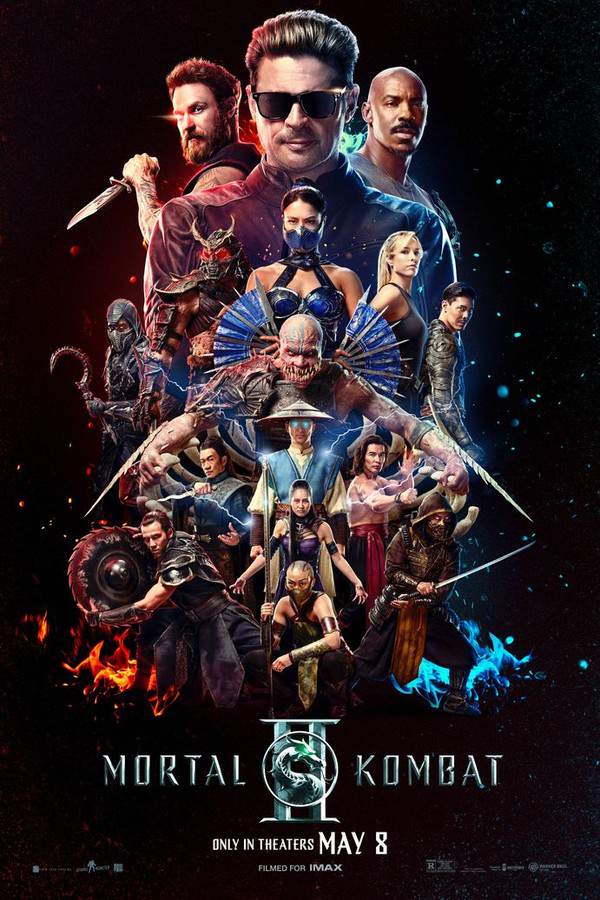
When Mortal Kombat II arrived in theaters on May 8, 2026, it carried the weight of decades of video game adaptation disappointment on its shoulders. Following the commercially successful but critically divisive 2021 reboot, fans and critics alike searched for answers to the same pressing questions: Would this sequel finally deliver the tournament structure that the franchise demands? Could Karl Urban’s Johnny Cage justify the hype? And perhaps most importantly, would Mortal Kombat II escape the dreaded “video game movie curse” that has plagued Hollywood since the 1990s? As viewers flock to search engines typing “Mortal Kombat II review,” “critic reactions,” and “is Mortal Kombat II worth watching,” the reception landscape reveals a fascinating schism between professional critics and dedicated fans. While some outlets praise the film’s phantasmagoric spectacle and self-aware humor, others dismiss it as destined for the same obscurity as Mortal Kombat: Annihilation. This deep dive into the Mortal Kombat II summary of critical and audience sentiment explores whether this R-rated brawler delivers a flawless victory or merely ekes out a narrow win in the battle for video game movie legitimacy.
Critical Reception Divided: Spectacle vs Substance in Mortal Kombat II
The critical reception for Mortal Kombat II (2026) spans a surprisingly wide spectrum, with scores ranging from a dismal 30 to a generous 75, reflecting fundamental disagreements about what constitutes success in video game adaptation. On one end, The New York Times celebrates the film’s audiovisual assault, noting that “the spectacle — its eardrum-shattering, eye-popping pyrotechnics, with the violence framed against all manner of phantasmagoric computer-generated backdrops — is its own reward.” This perspective views the film as a pure sensory experience where narrative sophistication matters less than the faithful recreation of Fatalities and arena combat. Similarly, Consequence of Sound awards the film a 75, arguing that the sequel “improves on what came before, take the piss out of itself whenever possible, and never forget, at the end of the day, the reason people want to watch movies like this in the first place.”
However, detractors argue that self-awareness cannot compensate for structural deficiencies. ReelViews contends that Mortal Kombat II falls victim to the same problems that have derailed many a game-to-movie translation: “overemphasizing fan service and spectacle over a solid narrative.” This criticism echoes throughout the negative reviews, with Time Out delivering a particularly scathing assessment: “In the mood for two hours of relentless fights, gory kills, clichéd McGuffins and unmemorable characters, all served up in a weightless CG environment? Mortal Kombat II punches a hole in all those boxes.” The phrase “weightless CG environment” becomes a recurring motif in critical discourse, suggesting that despite improved technology since the 1990s, the film struggles to ground its otherworldly combat in physical reality.
Perhaps the most devastating comparison comes from the Chicago Tribune, which draws a line between this 2026 release and the franchise’s darkest hour: “The costumes are giving Halloween, the sets and props are giving Xena: Warrior Princess and the story and performances aren’t giving anything at all. Mortal Kombat II seems destined to go the way of the ’90s sequel Mortal Kombat: Annihilation — directly into obscurity.” This reference to Annihilation—widely considered among the worst video game movies ever made—represents the ultimate critical condemnation, suggesting that despite 30 years of technological advancement and changing audience expectations, the franchise remains trapped in cheesy, disposable entertainment.
Yet even among critics, consensus emerges regarding Karl Urban’s performance. The Wall Street Journal notes that “Mr. Urban has natural swagger and he’s the best aspect here, although that’s like singling out the most fragrant part of a swamp,” while The Film Verdict praises Urban for making Johnny’s character arc “from cynical Hollywood burnout to a champion capable of self-sacrifice a believable one.” For those tracking box office performance and critical aggregates, this divergence creates a complex picture: the film fails as traditional cinema but succeeds as fan-service-driven spectacle, leaving reviewers to wrestle with whether “good for a video game movie” constitutes genuine praise or damning with faint commendation.
Fan Service and Franchise Loyalty: Character Treatment & Tournament Structure
Where critics see narrative emptiness, many fans see faithful adaptation, creating a fascinating disconnect in the Mortal Kombat II audience reactions. User reviews overwhelmingly emphasize that this sequel corrects the cardinal sin of its 2021 predecessor: the absence of an actual Mortal Kombat tournament. As user InShane enthusiastically reports, “Mortal Kombat II was a VAST improvement from the first movie… Not only do we get an actual tournament in our MK film that is packed with satisfying and exciting fight scenes, but almost every character is treated with care and is given appropriate and ample time to shine.” This sentiment permeates fan discourse, with the tournament structure serving as the primary evidence that filmmakers listened to Mortal Kombat franchise feedback.
Character-specific reactions reveal granular appreciation for fidelity to the source material. Kitana receives universal praise for authenticity, with InShane noting she “felt like the most faithful to her videogame counterpart sporting her trademark blue fans and elegant movements.” Jade emerges as a surprising favorite among viewers, described as “a prime example of handling a minor character within the story well” who delivers with her signature bō staff while maintaining narrative importance. Even Kano’s return generates goodwill despite reduced screen time, with fans appreciating his continued presence in the Mortal Kombat II wiki universe.
However, fan enthusiasm isn’t universal, revealing fault lines within the loyalist community. The handling of Cole Young’s death proves particularly divisive. While some viewers celebrated the elimination of the 2021 film’s controversial original character, user Grim-Owl offers a dissenting perspective: “Cole Young’s death? Gonna be honest to me it was nothing more than a horrible cop out… because unlike most I don’t have a childish hatred towards the character I think he’s ok at best, but killing him off was lazy and is one of the many reasons why the writing of this movie is so incompetent.” This critique suggests that even narrative choices designed to appease hardcore fans—removing the “outsider” character to focus on established lore—can backfire when execution feels like convenient housekeeping rather than meaningful storytelling.
Similarly, beloved characters suffer from inconsistent treatment. Saltyshackles, despite an overall positive 8/10 rating, joins others in lamenting that “Sindel is reduced to fight fodder, effectively undercutting and underutilizing my favorite MK character.” Meanwhile, mayriv complains that “They made my beloved Baraka a comic relief,” while criticizing the portrayal of Noob Saibot’s abilities. These specific grievances illustrate that while Mortal Kombat II quizzes and games might satisfy casual players, the film struggles to service the extensive roster adequately, leaving certain fan favorites feeling like checkboxes rather than developed personalities.
The Portuguese-speaking audience adds another dimension to the reception, with Josuehenrique declaring it “o verdadeiro filme do mortal Kombat” (the true Mortal Kombat film), suggesting that international viewers particularly appreciate the film’s fidelity to the games’ tone and visual style. This global perspective reinforces that despite writing deficiencies noted by English-language critics, the Mortal Kombat II film reception succeeds in capturing the franchise’s essence for its core demographic.
Karl Urban’s Johnny Cage: Performance Analysis & Audience Consensus
If any element of Mortal Kombat II achieves near-universal acclaim, it is Karl Urban’s portrayal of Johnny Cage, a performance that transcends the film’s otherwise divisive reception. Critics who otherwise pan the movie make exceptions for Urban’s work, creating a consensus that his involvement alone justifies the sequel’s existence. The Travers Take encapsulates this phenomenon with backhanded praise: “Jokester Karl Urban leads a cast of battling gamer brawlers against a plot that doesn’t exist. No matter. All you need to love it is blind devotion,” suggesting that Urban’s charisma papers over narrative cracks.
The character’s arc—from cynical Hollywood burnout to self-sacrificing champion—resonates across viewer demographics precisely because it mirrors the film’s own struggle for legitimacy. The Film Verdict highlights that Urban “has never been funnier, and he makes Johnny’s character arc from cynical Hollywood burnout to a champion capable of self-sacrifice a believable one,” while acknowledging the commercial reality: “Not that many people are buying tickets to Mortal Kombat II for the character arcs, granted, but Urban’s performance is a delightfully unexpected pleasure in a movie that winds up being full of them.”
This “washed up” version of Johnny Cage, as InShane describes it, allows Urban to blend “arrogance and vulnerability” in a way that serves the ensemble while stealing individual scenes. For fans of The Boys (Urban’s acclaimed television series), the casting represents perfect synergy between actor and role—an action star playing an action star, bringing meta-commentary that enriches the viewing experience. Even negative reviews concede his dominance; as one critic noted, singling him out as the best aspect is inevitable regardless of overall quality.
The contrast between Urban’s reception and the 2021 film’s Cole Young controversy proves instructive. Where Lewis Tan’s original character struggled to justify his presence in established lore, Urban’s Cage arrives with built-in narrative permission to be arrogant, flawed, and funny. User mrc2004 captures the comparative dynamic, criticizing the film’s comedy while implying Urban’s approach works better than the alternative: “Turning a deadly battle into a deadly comedy with this actor from ‘The Boys’ is a complete mistake”—yet even here, the criticism focuses on tonal choice rather than Urban’s execution.
For viewers seeking Mortal Kombat II spoiler-free reviews before purchasing tickets, the consensus is clear: Urban delivers a movie star performance that elevates material otherwise criticized as disposable. Whether this constitutes sufficient reason to endure “weightless CG” and “clichéd McGuffins” depends on individual tolerance for video game adaptation conventions, but the Mortal Kombat II movie page traffic suggests his involvement drives significant audience curiosity.
Visual Effects & Production Design: From Phantasmagoric Glory to Xena Comparisons
The technical execution of Mortal Kombat II generates perhaps the most polarized discourse in the film’s reception, with visual effects simultaneously praised as groundbreaking and derided as cheap. This dichotomy reflects the movie’s identity crisis between practical stunt work and digital world-building, between honoring 1990s aesthetics and competing with contemporary superhero spectacles.
On the positive end, The New York Times celebrates the “phantasmagoric computer-generated backdrops” that frame the violence, while fans like InShane specifically highlight Liu Kang’s fight choreography as featuring “some of the most impressive fight choreography and the coolest visual effects as well.” These moments suggest that when the VFX work aligns with character mythology—particularly regarding fire, sorcery, and otherworldly realms—the film achieves a distinctive visual identity that separates it from generic action fare.
However, the negative comparisons prove more vivid and damaging. The Chicago Tribune’s assertion that sets and props evoke “Xena: Warrior Princess” represents a specific aesthetic criticism: the film looks like mid-budget 1990s television rather than a 2026 blockbuster. When combined with the observation that “the costumes are giving Halloween,” the critique suggests a cheapness that undermines the epic scope promised by the tournament structure. User reviews corroborate these technical shortcomings, with InShane noting that “some of them are glaringly sloppy green screen rubbish,” specifically identifying “a VERY noticeable scene with Raiden” as particularly egregious.
This visual inconsistency creates a disjointed viewing experience that mirrors the narrative’s pacing issues. As imthenoob summarizes, while the film offers “better action scenes, better pacing, and more violence” than its predecessor, it remains “a good popcorn flick to shut your brain off and enjoy”—implying that the visual effects work best when not scrutinized closely. The “shut your brain off” defense appears frequently in user reviews, suggesting that Mortal Kombat II audience reactions accept technical imperfection as the price of admission for R-rated Fatalities and faithful character designs.
For those tracking box office trends and wondering about the film’s long-term reception, these visual complaints carry weight. While opening weekend crowds may forgive green screen artifacts for the novelty of seeing Sub-Zero and Scorpion’s legacy continue, streaming audiences with pause buttons may find the “weightless CG” harder to excuse. The comparison to Xena—a beloved but obviously dated television production—haunts the film’s aspiration to cinematic legitimacy, particularly when competing against the polished VFX of Marvel and DC contemporaries.
The Video Game Movie Paradox: Genre Expectations vs Cinematic Storytelling
Mortal Kombat II arrives at a pivotal moment for video game adaptations, following successful translations like The Last of Us and Fallout that have raised audience expectations for narrative sophistication. This context makes the film’s reception particularly fascinating, as critics and fans debate whether “faithful to the games” excuses minimalist plotting or represents the proper goal of adaptation.
Professional critics largely reject the notion that video game movies deserve lowered standards. Film Threat’s assessment that “For a movie like this, good is not good enough; it has to be well above average for a recommendation” reflects an insistence that the genre mature beyond fan service. Similarly, Status magazine’s prediction that “Loyalists should be there for the premiere, but after that, one suspects it’s game over” suggests limited theatrical legs due to narrow appeal. These critiques treat the film not as a successful translation of interactive fighting but as a failed cinematic experience.
Conversely, fan reviewers like InShane explicitly reject cinematic standards when evaluating the film: “While it is true that there isn’t much meaningful or emotional weight behind the Kombat in ‘Mortal Kombat II,’ I’m not sure why one would look for such a thing in a media franchise that mainly focuses on brutal fights and mayhem.” This represents a philosophical divide—should video game movies aspire to Parasite or Mad Max? For viewers searching Mortal Kombat II critical consensus, this question determines whether the film satisfies or disappoints.
The sequel’s self-aware humor complicates this debate. Consequence of Sound praises the film for taking “the piss out of itself whenever possible,” suggesting that by acknowledging its own absurdity, Mortal Kombat II sidesteps accusations of taking itself too seriously. However, mayriv’s complaint that “They didn’t catch Johny Cage vibe” indicates that even irony must be carefully calibrated; self-awareness can become grating if it feels like the film is laughing at its audience rather than with them.
Looking ahead to future installments, InShane’s mention of the upcoming Street Fighter movie introduces competitive stakes for the genre’s 2026 landscape. As video game adaptations proliferate across movie lists and collections, Mortal Kombat II serves as a test case for whether R-rated fidelity to source material violence can sustain a franchise without Oscar-worthy screenwriting. The film’s reception suggests a qualified yes—sufficient for sequels (Consequence confirms “a third movie, which is already in development”), but perhaps not sufficient for crossover mainstream acceptance.
For viewers browsing concert films and action movies alike, the verdict depends on investment in the IP. As Grim-Owl laments, “The first movie is now pointless and this second movie has just as many issues if not more than the first,” yet simultaneously acknowledges “Fighting was amazing and has funny moments.” This encapsulates the video game movie paradox: the worse it is as cinema, the better it might be as Mortal Kombat.
Final Verdict: Is Mortal Kombat II (2026) Worth Watching?
Synthesizing the divided Mortal Kombat II film reception reveals a movie that succeeds precisely where it aims low and fails when reaching for cinematic transcendence. For franchise devotees seeking tournament structures, faithful Fatalities, and Karl Urban’s scene-stealing Johnny Cage, the film delivers a “solid victory” (if not a “flawless” one) that improves meaningfully on the 2021 installment. The Mortal Kombat II reviews consensus suggests that viewer satisfaction correlates directly with willingness to accept video game logic over narrative coherence, weightless CG over practical craftsmanship, and fan service over thematic depth.
However, general audiences searching for “is Mortal Kombat II worth watching” should approach with tempered expectations. The film’s destiny may indeed mirror Annihilation—beloved by midnight movie enthusiasts and ridiculed by critics—suggesting cult status rather than blockbuster legitimacy. Whether this constitutes success depends on whether Warner Bros. prioritizes box office returns or critical respectability for future Mortal Kombat awards consideration.
Ultimately, Mortal Kombat II (2026) serves as a Rorschach test for video game adaptation philosophy. If you believe these films should embrace their ludicrous origins without shame, the phantasmagoric spectacle and self-aware humor provide satisfying entertainment. If you hoped the genre had evolved to compete with prestige television storytelling, the “Xena” comparisons and “Halloween” costumes will disappoint. For definitive answers about post-credits scenes and character fates, visit the Mortal Kombat II summary page, but know that entering the tournament requires accepting its rules—even when they’re broken.
| Resource | Link |
|---|---|
| Mortal Kombat II on TMDB | TMDB |
| Mortal Kombat II on Wikipedia | WIKIPEDIA |
| Mortal Kombat II on Rotten Tomatoes | ROTTEN_TOMATOES |
| Mortal Kombat II on Metacritic | METACRITIC |
| Mortal Kombat II Post-Credits on Media Stinger | MEDIA_STINGER |
| Mortal Kombat II on Just Watch | JUST_WATCH |
| Mortal Kombat II on Box Office Mojo | BOX_OFFICE_MOJO |