What's After the Blog?
Opinions • Reception
They Will Kill You (2026) Review, Critics Opinions & Fan Reception – Performance, Storytelling & Franchise Impact
Explore the critical and fan reception of the 2026 thriller They Will Kill You, diving into reviewer opinions, performance assessments, storytelling strengths, and how the film fits within its horror franchise context.
March 29, 2026

Movies mentioned in this article
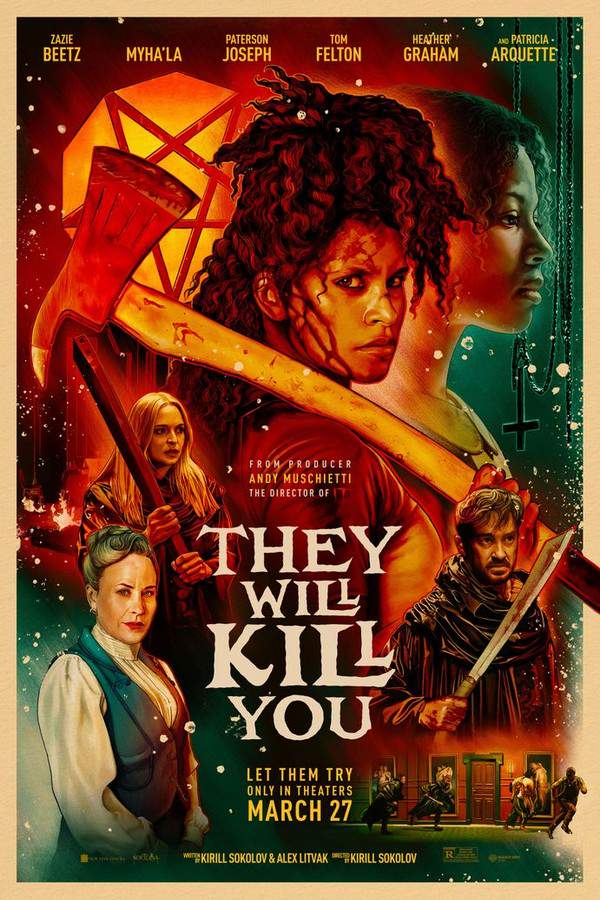
They Will Kill You (2026) Reviews: Critical Consensus, Audience Reactions & Is It Worth Watching?
When They Will Kill You splattered across theaters on March 27, 2026, it arrived with the kind of marketing buzz that typically accompanies mid-budget genre hybrids—positioned somewhere between elevated horror and schlocky action-comedy. For movie enthusiasts tracking the latest releases on What’s After the Movie, the film represented an intriguing gamble: a satanic cult thriller starring Zazie Beetz that promised to blend the class-warfare tension of Ready or Not with the hyper-violent choreography of Kill Bill. But as any seasoned film buff knows, execution matters more than elevator pitches. The reception landscape for They Will Kill You has proven remarkably bifurcated, creating a fascinating case study in how modern audiences and critics diverge when interpreting genre pastiche. Whether you’re searching for a spoiler-free review before committing your evening or analyzing the broader film reception patterns of 2026, understanding the critical consensus and real viewer reactions becomes essential. On the What’s After the Movie summary page for They Will Kill You, we’ve tracked everything from box office momentum to award season whispers, but the qualitative discourse—what people actually think about the movie—reveals a more complex narrative than aggregate scores suggest.
Critical Consensus: Decoding the Polarized Reception of They Will Kill You (2026)
The critical landscape for They Will Kill You reads like a Rorschach test for film critics, with scores ranging from a dismal 30/100 to an enthusiastic 80/100 across major publications. This 50-point spread isn’t merely statistical noise; it represents a fundamental disagreement about what constitutes successful genre filmmaking in the mid-2020s. At the high end, NME delivered an 80/100 verdict, describing the film as “a deeply unserious comedy horror that provides just enough plot to get it to the next bloodbath,” praising the “enthusiasm of all involved” in crafting a “gleefully chaotic spectacle.” This perspective views the movie as intentional camp—a feature, not a bug.
Conversely, Status landed at the opposite pole with a 30/100, labeling it “an absurdly stylized action-horror-comedy mashup that somehow makes a satanic cult, wanton violence, and buckets of blood boring.” The Travers Take echoed this fatigue, awarding 50/100 and noting that “Boring is too small a word to hold the heaps of tedium that come with relentless repetition of kill scenes where no one dies.” These critics found the film’s pacing agonizing despite—or perhaps because of—its relentless action.
The middle ground offers perhaps the most telling insights. Collider (60/100) identified the film’s central tension accurately: “They Will Kill You is an undeniably fun and berserk action film that relies on the style to make up for the lack of discernible substance.” This sentiment—that visual panache compensates for narrative thinness—recurs throughout moderate reviews. Empire (60/100) similarly noted it as “Blood-drenched and gore-splattered, anchored by a hard-as-nails performance by Beetz,” recommending it be “watched with a strong stomach” while acknowledging its “thinly plotted” nature.
Perhaps most interesting is ReelViews’s prognostication (63/100): “This has ‘future cult film’ written all over it. But, for those who are more concerned about the here and now, this is a film that delivers on its own peculiar brand of delights before wearing out its welcome.” This suggests a potential critical reevaluation down the line, positioning They Will Kill You not as immediate prestige cinema but as potential midnight movie fodder. For those tracking long-term reception trends on What’s After the Movie’s awards page, this cult potential may prove more significant than opening weekend Tomatometer scores.
New York Magazine (Vulture) (40/100) and The Guardian (40/100) represented the disappointed intelligentsia, with Vulture noting that “For all its bloodshed, the movie’s not sharp enough to land a cutting blow,” while The Guardian criticized the “boyish strain of immaturity” dominating the creative vision. Yet even these negative reviews acknowledge the film’s technical competence, suggesting that while They Will Kill You may fail as satire or social commentary for some, it rarely fails as a pure exercise in genre mechanics. When checking box office statistics, this critic-audience divergence often translates to specific demographic engagement rather than universal appeal.
Zazie Beetz’s Performance: The Critical Anchor in They Will Kill You’s Bloody Mayhem
If there’s universal consensus in the scattered landscape of They Will Kill You reviews, it centers on Zazie Beetz’s protagonist performance. Described by Empire as “hard-as-nails” and by user reviewers as someone who “‘Kill Bill’s her way through the floors,” Beetz emerges as the film’s undeniable gravitational center. In a production that Collider admits relies on “style to make up for the lack of discernible substance,” Beetz provides the human element that prevents the enterprise from collapsing into pure aesthetic exercise.
The physical demands of the role drew particular attention from critics and audiences alike. User arvind100 enthusiastically noted how Beetz “delivers some of the most creatively choreographed kills” while navigating a premise involving a maid confronting satanic cultists in an upscale apartment building. This “Kill Bill” comparison recurs frequently in the discourse, positioning Beetz as a spiritual successor to Uma Thurman’s Bride—a comparison that carries both praise and problematic expectations. While bertobellamy criticized the film as a “copy of a copy” specifically referencing Kill Bill, John Wick, Oldboy, and Evil Dead, they conceded that “Zazie Beetz demonstrates physical commitment,” even if “the script doesn’t give her the tools to make the protagonist less derivative.”
The character of Asia (the protagonist) sparked particular debate regarding representation and agency. Little White Lies awarded the film 80/100 specifically for its political dimension, reading the narrative as “a working-class Black girl confront[ing] a classist, racist establishment,” calling it “a political film, offering an allegorical display of both the claustrophobic power structures in which we live and strive, and the possibility of smashing it.” This interpretation positions Beetz’s performance as carrying symbolic weight beyond the immediate violence.
However, this reading wasn’t universal. User ALMJ critiqued the physical realism of the fights, noting: “it’s difficult to take the many fight scenes seriously when Asia is just a bada** without any meaningful explanation. It’s also a bit silly that she’s able to match strength with men who visibly have arms twice the width of hers.” This immersion-breaking critique suggests that while Beetz commits physically, the screenplay’s lack of character development undermines the performance’s grounding. For detailed cast information and filmographies, visitors can explore What’s After the Movie’s person profiles, where Beetz’s previous action credentials provide context for this physically demanding role.
Supporting performances from Patricia Arquette, Tom Felton, Heather Graham, and Myha’la received less critical attention but contributed to the “campy” atmosphere that user arvind100 praised. The ensemble functions as a gallery of targets for Beetz’s rampage, with the cast fully committing to the absurd premise. Whether this commitment represents good acting or merely enthusiastic participation in schlock remains debated, but for those browsing movie collections of cult action films, the cast dynamics here fit a specific midnight-movie mold.
Genre Deconstruction: How They Will Kill You Navigates Action-Horror-Comedy Expectations
The most contentious aspect of They Will Kill You’s reception involves its generic identity. Marketed as a horror film but executed as an action-comedy with horror elements, the movie has struggled to satisfy purists of any single genre. SamuGale99’s user review captured this dissonance perfectly in Italian: “Non fosse stato un film definito horror sarebbe stato ottimo” (If it hadn’t been defined as a horror film, it would have been excellent), suggesting that misaligned expectations drive much of the negative sentiment.
The comparisons to Ready or Not and its sequel Ready or Not 2: Here I Come dominate critical discourse. The Film Verdict (55/100) explicitly contrasted the two, noting that while They Will Kill You’s “best moments are an outlandish pleasure, far outshining the highlights of the similarly-plotted… sequel,” it fails to maintain consistency. User joeyooooooooo went further, lamenting that “The movie lost its edge when its became a nonhuman devil worshiping joke cult movie. Just like Ready or Not 2.” These comparisons reveal They Will Kill You as occupying a specific post-2019 horror niche: the “hunting the hunted” class-warfare thriller that degenerates into supernatural chaos.
Drenton’s user review identified the film’s stylistic lineage accurately: “The direction is good and repeatedly brings Tarantino to mind.” This Tarantino-esque approach—hyper-stylized violence, chapter-like structure, and irreverent tone—explains why some viewers embrace the chaos while others find it exhausting. The “unserious” nature that NME praised translates to a tonal inconsistency that The Guardian criticized as “pitched between a bloodbath and bath time.”
The “satanic cult” element proved particularly divisive. Where Status found such tropes rendered boring through over-stylization, ReelViews saw the potential for cult classic status precisely in this excess. The film’s willingness to escalate—what arvind100 described as getting “more and more ridiculous with each passing minute”—functions as either a bug or feature depending on the viewer’s appetite for camp. For those organizing movie lists of “so-bad-they’re-good” action films or genuine splatter-comedy masterpieces, They Will Kill You occupies a liminal space requiring careful categorization.
The video game potential mentioned by SamuGale99 (“un videogioco su questa storia sarebbe stato fantastico”) suggests the film’s mechanics—floor-by-floor progression, boss battles against eccentric villains, health-bar-like stamina—translate better to interactive media than passive viewing. This gamification of violence, while entertaining to some, struck ALMJ as derivative: “There are better action comedy films featuring cults and there are better horror films featuring cults.” For viewers deciding whether to stream or skip, checking the What’s After the Movie wiki for similar titles can help calibrate expectations regarding the film’s specific blend of genres.
Audience Voices: Real Viewer Reactions to They Will Kill You’s Polarizing Politics and Pacing
While critics debate the film’s artistic merits, user reviews reveal a starkly divided audience ranging from 0/10 to 7/10 scores. This spread suggests They Will Kill You isn’t merely divisive but actively polarizing, generating strong reactions that rarely settle into middling indifference. gmneku’s lukewarm 7/10 (“Some of the fights were a bit long, but I ended up liking the movie by the end”) represents the high end of generosity, while Truthhertz’s 0/10 vitriol (“Typical trash,boring plot,crap main star”) anchors the opposite extreme.
The political subtext—specifically the reading of the film as racial allegory—generated significant controversy among viewers. Truthhertz explicitly rejected Little White Lies’s interpretation, sneering: “Edgy strong black housekeeper kills the white people blah blah blah. Gotta be one big allegory for Donald Trump or something equally as pathetic.” This reaction highlights how the film’s potential social commentary lands differently across demographic and political spectra. What one viewer reads as empowering representation (“a working-class Black girl confront a classist, racist establishment”), another interprets as heavy-handed messaging or “reverse racism” rhetoric.
ALMJ offered a more measured critique of the protagonist’s construction: “A bit of a mess of a film… although it fails to deliver anything new.” Their specific complaint about physical realism—“she’s able to match strength with men who visibly have arms twice the width of hers”—reflects broader audience fatigue with “unstoppable protagonist” syndrome in action cinema, where skill occasionally surrenders to invincibility.
The pacing issues noted by gmneku (“fights were a bit long”) and The Travers Take (“heaps of tedium”) suggest the film’s 90-minute runtime feels longer to many viewers. This temporal drag contradicts the “berserk energy” praised by Collider, indicating that the film’s frantic editing and loud soundtrack don’t necessarily translate to propulsive pacing. For those seeking interactive engagement with the film’s themes, the What’s After the Movie quizzes and games offer alternative ways to explore the movie’s violent set pieces and character dynamics.
Drenton represented the satisfied casual viewer: “Of course this isn’t a film you’re supposed to take seriously, but it’s very entertaining and a lot of fun, which already puts it well ahead of most movies these days.” This “turn your brain off” endorsement, while anathema to serious film criticism, explains the moderate positive scores from viewers who approached the film with appropriate genre expectations. Conversely, joeyooooooooo’s 4/10 reflects disappointment from viewers expecting the grounded thrills of the director’s previous work (Dolly), only to encounter supernatural camp.
The “copy of a copy” criticism from bertobellamy—citing Kill Bill, John Wick, Oldboy, and Evil Dead—resonates with concerns about Hollywood’s current reliance on pastiche over originality. For film students and enthusiasts using What’s After the Movie’s concert film and documentary sections to study cinematic influences, They Will Kill You serves as a case study in homage versus derivation.
Final Verdict: Is They Will Kill You (2026) Worth Watching?
Synthesizing the critical and audience reactions to They Will Kill You reveals a film destined for niche appreciation rather than universal acclaim. The verdict depends entirely on viewer calibration: if you approach the film expecting Get Out-level social satire or John Wick-tier action choreography, you’ll likely join Status and Truthhertz in disappointment. However, if you enter seeking the specific alchemy of Ready or Not meets Evil Dead II—campy, gory, and unserious—the film delivers exactly what NME and arvind100 promise.
Zazie Beetz’s committed performance provides the primary incentive for viewing, offering a physical showcase that transcends the script’s limitations. As ReelViews predicted, the film’s “future cult film” potential seems assured; these are precisely the movies that bomb in theaters but develop obsessive fanbases through midnight screenings and streaming rediscovery. For those tracking such cult cinema trajectories on What’s After the Movie’s movie pages, They Will Kill You already shows the hallmarks of a divisive sleeper.
The “worth watching” calculation must account for stomach strength—the film’s “blood-drenched and gore-splattered” content (Empire) proves too much for casual viewers, while genre fans might find the violence cartoonish rather than disturbing. The political readings, whether celebrated by Little White Lies or rejected by Truthhertz, add a layer of discourse that makes the film culturally relevant even when technically derivative.
Ultimately, They Will Kill You (2026) succeeds as a party movie—a communal experience best enjoyed with friends who appreciate absurdity, not as a solemn artistic statement. Check the summary section for detailed content warnings and parental guidance, and visit the main What’s After the Movie portal to compare this reception against similar 2026 releases. Whether it becomes a guilty pleasure or a forgotten footnote depends on your tolerance for chaotic spectacle over narrative coherence.
Conclusion: The Lasting Reception of They Will Kill You
As the discourse around They Will Kill You settles into post-release analysis, the film stands as a testament to the volatility of modern genre reception. It is neither the disaster that its harshest critics claim nor the revolutionary horror-comedy hybrid that its defenders might wish it to be. Instead, it occupies the complicated middle ground of “fun but flawed”—a designation that often proves more interesting than unanimous praise. The divergence between critic scores (ranging 30-80) and user ratings (0-7) suggests a film that will find its audience slowly, through word-of-mouth recommendations among action-horror enthusiasts rather than broad critical consensus.
For visitors to What’s After the Movie, the film represents exactly the type of polarizing content that makes movie discussion vibrant: a technically competent, politically loaded, aesthetically aggressive piece of cinema that refuses to resolve into easy categorization. Whether you’re exploring the movie collections for similar cult classics or debating the film’s merits on the wiki pages, They Will Kill You provides ample fodder for analysis. Its greatest legacy may be proving that Zazie Beetz can carry an action franchise, even if the vehicle itself occasionally sputters. As streaming algorithms continue to serve this film to curious viewers, the question isn’t whether They Will Kill You is “good” by traditional metrics, but whether it’s the specific flavor of chaotic, blood-soaked entertainment you crave. Based on the evidence, for the right audience, the answer is a resounding yes.
| Site | Link |
|---|---|
| The Movie Database (TMDB) | They Will Kill You on TMDB |
| Wikipedia | They Will Kill You on Wikipedia |
| Rotten Tomatoes | They Will Kill You on Rotten Tomatoes |
| Metacritic | They Will Kill You on Metacritic |
| JustWatch | They Will Kill You on JustWatch |
| Box Office Mojo | They Will Kill You on Box Office Mojo |
Continue reading




What's After the Movie?
Not sure whether to stay after the credits? Find out!
Check out our other apps:

SAT Sphere
Build confidence for the Digital SAT.

Mori Atlas
Discover wild places worth protecting.

Luntero
Search smarter for a home in Amsterdam.

Plot Explained
Unravel movie endings and hidden clues.

Pokechamp
Dive into Pokémon data and battle logic.

Driving Theory
Get ready for your European theory test.

Movie Dust
Plan your next cinema trip with ease.

Musemap
Find art and culture as you travel.

Selkobase
Compare credentials before committing.

Local Manual
Turn an unfamiliar country into practical next steps.

Lernavi
Compare school systems before your next move.

GymRoam
Find a workout stop wherever your plans take you.
Explore Our Movie Platform
New Movie Releases (2026)
Famous Movie Actors
Top Film Production Studios
Movie Plot Summaries & Endings
Major Movie Awards & Winners
Best Concert Films & Music Documentaries
Movie Collections and Curated Lists
© 2026 What's After the Movie. All rights reserved.
Privacy Policy