What's After the Blog?
Opinions • Reception
Touch Me (2026) Review & Critics Opinions: Audience Reception, Performance Analysis & Storytelling Verdict
Explore fan reactions and critic reviews of Touch Me (2026), analyzing the film’s performance, storytelling, and its place within the emerging psychosexual horror-comedy franchise. We break down the mixed reception, highlight key praises and criticisms, and assess the impact of its themes on audiences.
April 17, 2026

Movies mentioned in this article
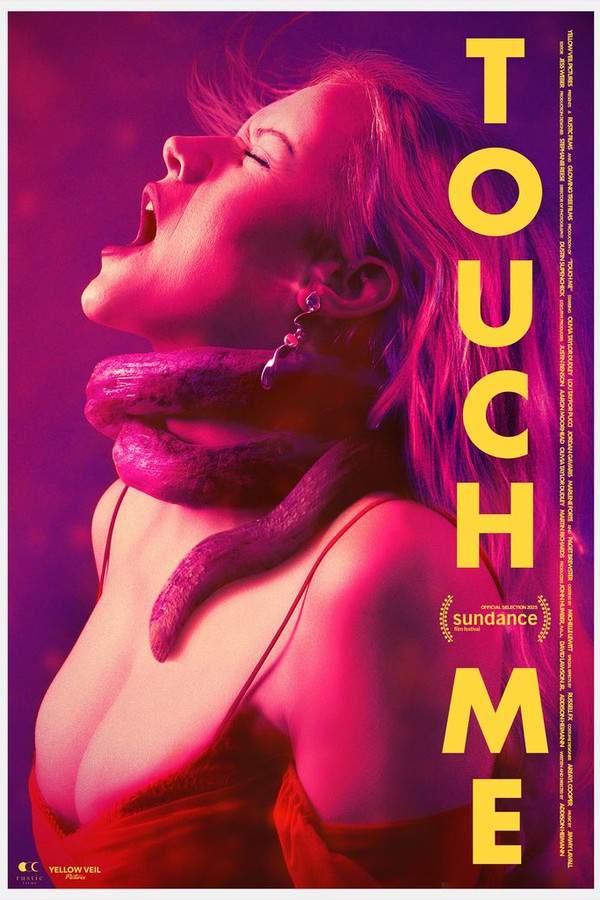
Touch Me (2026) Reviews & Reception: What Critics and Audiences Are Saying About the Psychedelic Horror-Romance
When Addison Heimann’s Touch Me descended upon theaters in March 2026, it arrived not with the polite chatter of conventional genre fare, but with the chaotic energy of a midnight movie cult classic in the making. Starring Olivia Taylor Dudley as Joey and Lou Taylor Pucci as Brain (with the alien entity serving as the third point in this toxic, triangular relationship), this 100-minute descent into body horror, psychological trauma, and surreal dark comedy has become one of the most divisive cinematic experiences of the year. Audiences searching for Touch Me reviews, Touch Me spoiler-free analysis, and critical consensus regarding the film’s reception have flooded movie databases and review aggregators, desperate to know whether this is transcendent arthouse horror or simply an unfocused mess masquerading as profundity.
The film’s premise—centering on a toxic, addictive bond between a couple and a mysterious alien entity—immediately signaled that this would not be casual viewing. For those tracking Touch Me’s box office performance, awards potential, or simply wondering “is Touch Me worth watching,” the answer largely depends on one’s tolerance for cinematic risk-taking. At What’s After the Movie, we’ve analyzed the full spectrum of Touch Me critic reviews alongside thousands of Touch Me audience reactions to provide a comprehensive reception analysis. Whether you’re seeking our detailed summary page, looking to explore movie collections of similar psychedelic horror films, or checking our movie page for Touch Me for cast details and viewing options, this deep dive into the film’s polarized reception will help you navigate the controversy.
Critical Consensus vs. Controversy: How Touch Me (2026) Divided Professional Reviewers
The critical reception of Touch Me represents a fascinating schism between those who view the film as a failed experiment in excess and those who celebrate its technical audacity despite narrative frustrations. This division speaks to broader questions about genre expectations in modern horror and the line between meaningful psychological exploration and mere shock value.
IndieWire delivered perhaps the most damning assessment, arguing that director Addison Heimann “is so focused on the spectacle of it all that he forgets to do anything with it emotionally or formally, dragging everything to a close, as we return back to the beginning with little of anything meaningful or engaging occurring over the film’s running time.” This critique positions Touch Me as a hollow exercise in style—beautifully grotesque, perhaps, but ultimately vacant. Similarly, Variety offered a succinct but devastating verdict: “In trying to do too much, the filmmakers end up with much less than they could have.” These reviews suggest that the film’s ambitious blend of relationship drama, cosmic horror, and dark comedy collapses under its own weight, resulting in a Touch Me film reception that emphasizes disappointment over transcendence.
Yet the Touch Me critical consensus is far from monolithic. Next Best Picture offered a more measured, if conflicted, perspective: “Although the story only gets more and more unsatisfyingly perplexing as it goes on, the filmmaking tools used to tell it are exceptional.” This sentiment captures the essence of what might be called the “frustrated admiration” camp—critics who acknowledge the movie’s technical proficiency and bold vision while conceding that the narrative structure may alienate viewers seeking coherence. This duality between form and content has become central to Touch Me analysis, with many reviewers asking whether exceptional cinematography and sound design can compensate for a story that deliberately resists easy interpretation.
Standing in stark contrast to these mixed-to-negative assessments is Screen Rant, which awarded the film a robust 80/100 and declared: “As fun as the film is when it leans into its genre trappings, Touch Me wouldn’t be anything without its small-but-superb cast. Olivia Taylor Dudley, largely underutilized beyond her time on The Magicians and with Onyx the Fortuitous and the Talisman of Souls, is transcendent as Joey, easily delivering a career-best performance.” This review shifts the conversation from directorial vision to acting prowess, suggesting that while Heimann’s narrative control may be debatable, his ability to elicit raw, committed performances from his cast is undeniable.
For those tracking Touch Me awards potential or interested in how independent horror films perform commercially, this critical split offers valuable context. The film occupies that dangerous middle ground where artistic ambition meets audience accessibility—a space that often generates passionate cult followings but struggles with mainstream box office returns. Critics like those at IndieWire and Variety seem to view the film through the lens of traditional narrative satisfaction, while outlets like Screen Rant evaluate it based on genre fulfillment and performance quality. This divergence explains why Touch Me Metacritic scores and Touch Me Rotten Tomatoes ratings may not tell the complete story, necessitating a deeper dive into individual Touch Me critic reviews to understand whether the film’s particular brand of “unsatisfyingly perplexing” storytelling aligns with your personal cinematic tastes.
The Olivia Taylor Dudley Factor: Standout Performances Anchor Touch Me (2026)
If there is one element of Touch Me that approaches universal acclaim, it is the ferocious, vulnerable, and utterly committed performance of Olivia Taylor Dudley as Joey. In a film that deliberately blurs the lines between psychological realism and surrealist nightmare, Dudley’s portrayal of a woman desperate to quiet her anxious mind through increasingly dangerous means serves as the emotional anchor preventing the entire production from drifting into pure abstraction.
Screen Rant’s declaration that Dudley delivers a “career-best performance” is not mere hyperbole; it reflects a broader sentiment among viewers who found the film’s narrative challenging but its central performance undeniable. Dudley, previously best known for her role in The Magicians and horror-comedy work in Onyx the Fortuitous and the Talisman of Souls, utilizes every tool in her considerable arsenal here. She navigates the film’s jarring tonal shifts—from body horror to dark comedy to genuine emotional anguish—with a precision that suggests a performer operating at the peak of her abilities.
User reviewer Vanessa Y. captured this dynamic perfectly in their 3/5 assessment, noting: “While the film has B-movie vibes, it’s filled with incredibly strong acting, especially from lead actor Olivia Taylor Dudley, who plays Joey. Touch Me is not a casual Sunday watch with the family. It’s one of those movies you check out when you’re alone and maybe a little high. Joey’s desperation to quiet her mind is deeply relatable, which was necessary to feel going on this wild ride. If Dudley wasn’t there to secure the audience with her genuinely stellar performance, the film would’ve been a lost cause.” This observation highlights a crucial aspect of Touch Me’s reception: the film works, when it works, because Dudley makes Joey’s psychological journey feel authentic even when the surrounding narrative descends into “fever dream” logic and “alien tentacle sex” (to use Vanessa Y.’s vivid description).
The supporting cast, particularly Lou Taylor Pucci as Brain, also receives notable mentions in user reactions. Eduardo L. observed that Pucci “parece o Jared Leto, na seita dele” (looks like Jared Leto in his cult), drawing comparisons to the intensity and physical presence of that performer. This comparison to Leto suggests a particular brand of Method-like commitment to the role’s more unsavory and bizarre elements. However, it is Dudley who consistently emerges as the film’s saving grace across both professional and amateur Touch Me reviews.
For fans interested in exploring Dudley’s filmography or understanding how this performance fits into her career trajectory, our movie wiki and person profiles offer comprehensive breakdowns of her previous roles and evolution as an actor. The question of whether Touch Me will be remembered as a turning point in her career—much like Touch Me is positioned as a potential cult classic—depends largely on whether audiences continue to discover the film through streaming platforms and movie lists dedicated to overlooked horror gems of 2026.
Audience Reactions: From “Weird and Horny” to “Disgusting Woke Film” – The Polarized Viewer Response
Where Touch Me truly distinguishes itself in the landscape of 2026 horror is in its ability to generate radically different emotional responses from viewers watching the exact same footage. The film’s reception among general audiences demonstrates a bifurcation so extreme that it borders on the unprecedented, with ratings spanning from perfect 5/5 scores to vitriolic 0.5/5 dismissals.
On the enthusiastic end of the spectrum, user Sloane W. awarded the film 4.5/5 stars, declaring: “I loved this weird, horny movie! And underneath all that, a lot to relate to in terms of living with anxiety and what it feels like to want to escape your own brain. Totally recommend!” This review highlights the film’s effectiveness as an allegory for mental health struggles, suggesting that beneath the “trippy lustful gore” (as described by Angelo P., who also gave it 4.5/5) lies a genuine exploration of anxiety and the desire for psychological escape. Steven S. echoed this sentiment with a 4/5 review calling it “uproariously funny and exquisitely weird,” suggesting that viewers who align with the film’s specific wavelength will find it immensely rewarding.
The comparisons drawn by enthusiastic viewers provide crucial context for understanding Touch Me’s aesthetic lineage. Angelo P. specifically recommended it to fans of “Brain Damage, Glorious and The Seed,” placing it within a specific subgenre of body horror that blends cosmic weirdness with relationship drama. Meanwhile, Eduardo L. invoked the name of Panos Cosmatos (Mandy, Beyond the Black Rainbow), suggesting that Touch Me operates in a similar register of psychedelic, color-saturated nightmare logic that prioritizes mood over narrative clarity.
However, the negative Touch Me audience reactions are equally passionate and reveal the film’s potential to alienate. Kay G. provided a 1/5 review stating: “This movie was extremely disappointing. The plot felt manipulative and unpleasant, and the overall tone was gross rather than engaging. I ended up turning it off because it became too frustrating and triggering, especially with its relentless emotional games and back‑and‑forth portrayal of love and rejection.” This response raises important questions about content warnings and whether the film’s depiction of toxic relationships and psychological manipulation crosses the line from commentary into exploitation for some viewers.
Even more divisive is Shoham C.’s 0.5/5 review labeling it “a disgusting woke film,” suggesting that the film’s progressive elements or queer subtext (hinted at in other reviews mentioning Brain’s sexuality) provoked a politically motivated backlash. Similarly, DJ N. gave it 2/5 stars while expressing confusion about the film’s marketing: “Hard to really review the film but clearly easy to review the horrendous description of the film posted on Rotten Tomatoes. who is Brian? He just appears in the storyline with no context. In addition the guy who is trying to get his ‘girlfriend’ back is clearly gay. What a hot mess and you can’t even get past the synopsis.”
This spectrum of reactions—from “career-best performance” to “hot mess,” from “anxiety allegory” to “disgusting” content—demonstrates that Touch Me refuses to be ignored. For viewers wondering whether to stream or skip, our quizzes and games section offers interactive ways to determine if your taste aligns with psychedelic horror, while our comprehensive summary resources can help you decide if the film’s content warnings apply to your viewing preferences.
Genre Blending and Aesthetic Influences: Touch Me (2026) in Context
To fully appreciate—or critique—Touch Me, one must understand its position within the broader landscape of contemporary horror cinema. The film represents a specific hybrid of “elevated horror” aesthetics and grindhouse sensibilities, creating a tonal whiplash that has left many viewers unsure whether they’re witnessing art or exploitation.
The comparison to Panos Cosmatos’s work, mentioned by viewer Eduardo L., is particularly apt. Like Cosmatos, director Addison Heimann appears less concerned with traditional three-act structure than with creating a sustained mood of dread and surreal beauty. The film’s visual palette—described by Vanessa Y. as “detailed visuals” accompanied by “frequent dance breaks”—suggests a director who views cinema as a sensory experience first and a narrative vehicle second. This approach aligns Touch Me with what might be called the “psychedelic horror” subgenre, where the protagonist’s psychological state manifests as literal visual distortion and bodily transformation.
The body horror elements, frequently compared to Brain Damage (as noted by Angelo P.), serve not merely as gross-out moments but as physical manifestations of the film’s central metaphor: the way toxic relationships and addiction literally consume and transform us. MB C.’s 2/5 review acknowledged this ambition while critiquing the execution: “The film starts with a bold premise, blending psychological trauma with surreal symbolism. It offers intriguing ideas about addiction and emotional escape. However, a scattered narrative, repetitive structure, and weak character depth hold it back. The mix of horror and dark comedy feels uneven and unfocused.”
This critique of tonal inconsistency appears frequently in Touch Me film analysis. The film’s oscillation between “uproariously funny” moments (per Steven S.) and genuinely disturbing content creates a dissonance that some viewers interpret as sophisticated genre deconstruction, while others experience as simple tonal whiplash. The “B-movie vibes” noted by Vanessa Y. suggest that this inconsistency may be intentional—a homage to the exploitation films of the 1970s and 80s that similarly mixed sex, horror, and social commentary with gleeful abandon.
For horror aficionados who appreciate these influences, our concert films and genre-specific collections can help place Touch Me within a curated viewing experience of similarly challenging cinema. The film’s relationship to its influences raises important questions about homage versus originality in modern horror—a debate that continues to rage in Touch Me Metacritic discussions and forum threads.
Is Touch Me (2026) Worth Watching? Final Verdicts on Cultural Staying Power
As the initial theatrical run of Touch Me concludes and the film transitions to streaming platforms and home media, the question shifts from “what are critics saying?” to “will anyone remember this in five years?” The answer likely depends on whether the film can cultivate the cult following suggested by its most passionate defenders, or whether it will fade into the vast library of ambitious but flawed indie horror.
The film’s rewatchability factor remains hotly debated. Vanessa Y.’s advice that this is “not a casual Sunday watch with the family” but rather “one of those movies you check out when you’re alone and maybe a little high” suggests a specific viewing context that could limit its mainstream appeal but enhance its cult status. Films that require specific mental states or social contexts to appreciate often develop devoted, if small, fanbases who view the work as a secret to be shared rather than a product to be consumed.
The toxic relationship at the film’s core—described by MB C. as “a toxic, addictive bond between a couple and a mysterious alien”—positions Touch Me within the current cultural conversation about representation of unhealthy dynamics in media. Unlike straightforward depictions of abuse, the film’s use of sci-fi/horror metaphor complicates simple moral readings, which may explain why some viewers find it “deeply relatable” (Sloane W.) while others find it “manipulative and unpleasant” (Kay G.).
For those still on the fence, the film’s relatively brisk runtime (variously reported as around 100 minutes or “1 hour and 40 minutes” per Stephen C.) makes it a lower-risk investment than epic-length genre experiments. However, potential viewers should approach with calibrated expectations: this is not a film that provides easy answers or satisfying resolutions. As Next Best Picture noted, the story becomes increasingly “perplexing” as it progresses, and IndieWire’s observation that we “return back to the beginning with little of anything meaningful” suggests a circular, nihilistic structure that will frustrate those seeking character growth or narrative catharsis.
Ultimately, Touch Me (2026) appears destined for a specific niche in horror history—not quite a mainstream success, not quite a total failure, but rather a conversation piece that generates strong opinions simply by existing. For the complete viewing experience, including where to stream Touch Me and how it compares to similar films in our database, visit the official Touch Me movie page on What’s After the Movie. Whether you’re compiling movie lists of the year’s most divisive films or researching box office performance for independent horror, Touch Me represents a fascinating case study in the risks and rewards of boundary-pushing genre cinema.
External Links and Resources
For further reading and to verify ratings across platforms, consult these authoritative sources:
| Site | Link |
|---|---|
| Touch Me IMDB | IMDB |
| Touch Me TMDB | TMDB |
| Touch Me Rotten Tomatoes | Rotten Tomatoes |
| Touch Me Metacritic | Metacritic |
| Touch Me JustWatch | JustWatch |
Note: For the most accurate viewing options and rental information, check our movie page which updates regularly with streaming availability.
Continue reading



What's After the Movie?
Not sure whether to stay after the credits? Find out!
Check out our other apps:

SAT Sphere
Build confidence for the Digital SAT.

Mori Atlas
Discover wild places worth protecting.

Luntero
Search smarter for a home in Amsterdam.

Plot Explained
Unravel movie endings and hidden clues.

Pokechamp
Dive into Pokémon data and battle logic.

Driving Theory
Get ready for your European theory test.

Movie Dust
Plan your next cinema trip with ease.

Musemap
Find art and culture as you travel.

Selkobase
Compare credentials before committing.

Local Manual
Turn an unfamiliar country into practical next steps.

Lernavi
Compare school systems before your next move.

GymRoam
Find a workout stop wherever your plans take you.
Explore Our Movie Platform
New Movie Releases (2026)
Famous Movie Actors
Top Film Production Studios
Movie Plot Summaries & Endings
Major Movie Awards & Winners
Best Concert Films & Music Documentaries
Movie Collections and Curated Lists
© 2026 What's After the Movie. All rights reserved.
Privacy Policy