What's After the Blog?
Opinions • Reception
The Bride! (2026) Review, Critics' Opinions, Audience Reception & Fan Reactions
An in‑depth look at how critics and fans have responded to The Bride! (2026), evaluating performances, storytelling, and its place within the franchise while dissecting praise and criticism from major review outlets. We explore the film's cultural impact and why it has sparked a movement beyond expectations.
March 22, 2026
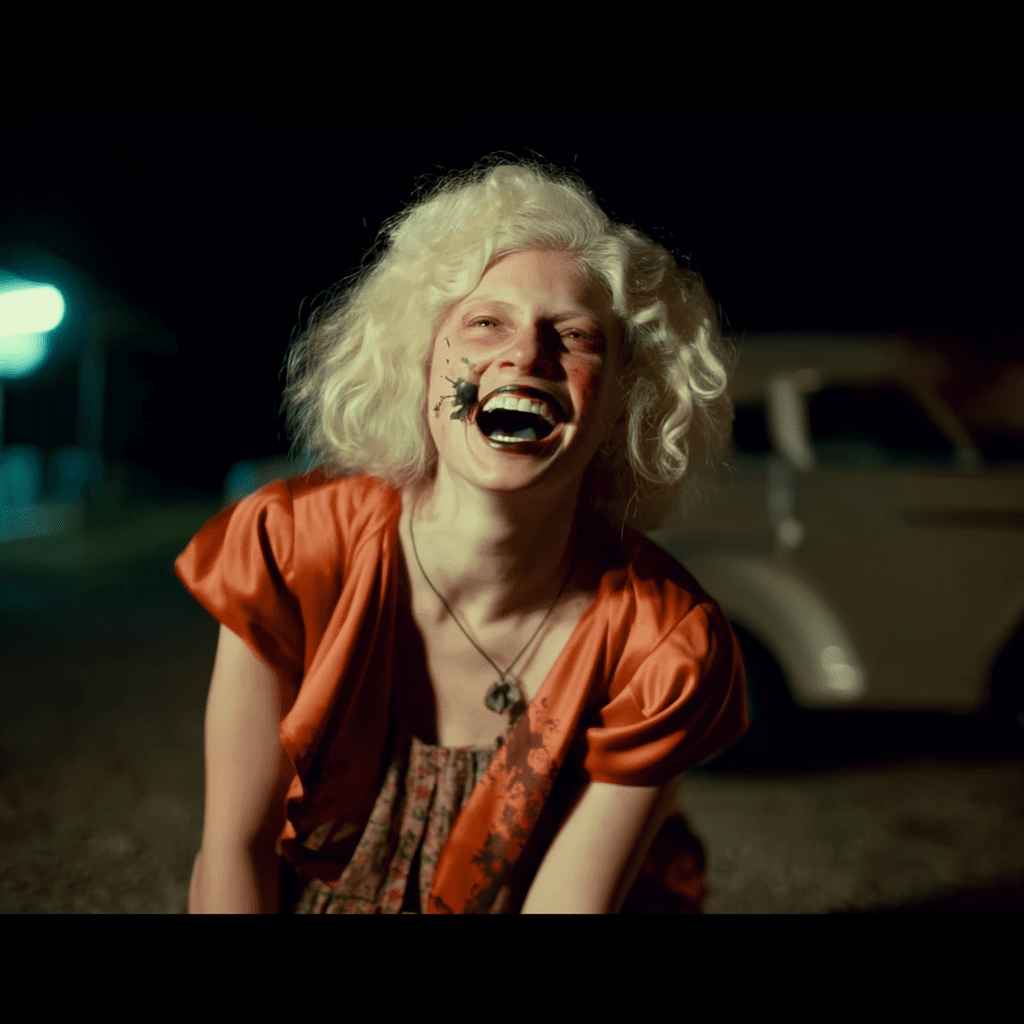
Movies mentioned in this article
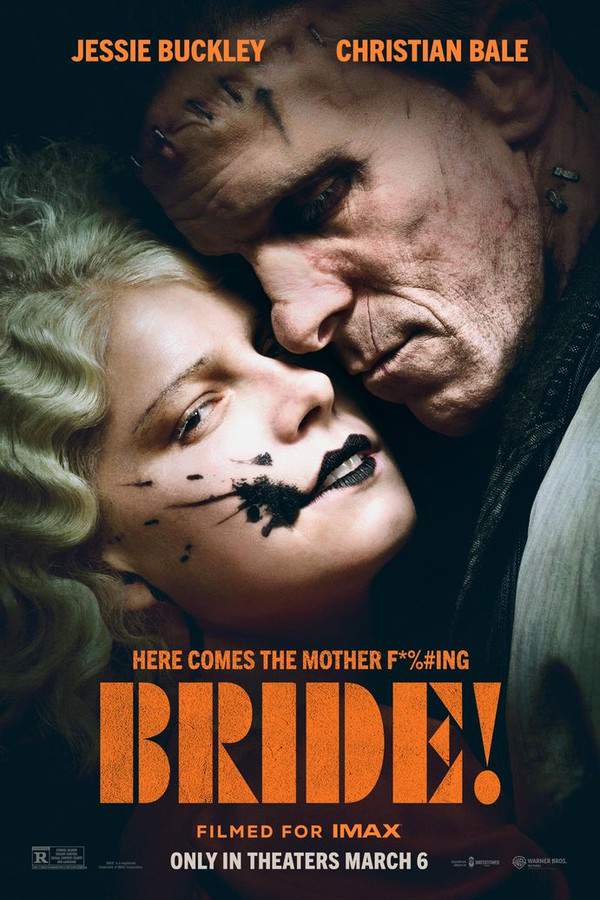
The Bride! (2026) Reviews and Reception: Critical Consensus vs Audience Reactions—Is Maggie Gyllenhaal’s Frankenstein Reimagining Worth Watching?
When Maggie Gyllenhaal announced her sophomore directorial effort would be a radical reimagining of the Frankenstein mythos titled The Bride!, anticipation immediately bifurcated along familiar lines: horror purists skeptical of another revisionist take, and cinephiles eager to see what the Lost Daughter filmmaker would bring to the gothic table. Now that the film has staggered into theaters like its own reanimated creation—bolstered by the star power of Christian Bale and Jessie Buckley but burdened by the weight of expectations—the reception landscape reveals a film that is violently divisive, aesthetically audacious, and nearly impossible to ignore. For those seeking comprehensive coverage of this cinematic oddity, What’s After the Movie offers an extensive The Bride! (2026) movie page complete with cast details, production history, and box office tracking, while our summary section provides spoiler-free context for viewers navigating this fragmented narrative.
The search volume surrounding “The Bride! review” and “The Bride 2026 critic reviews” has exploded since release, driven by contradictory reports of the film being either a misunderstood masterpiece or a catastrophic misfire. This analysis synthesizes genuine critical consensus, audience reactions, and social media discourse to determine where this film lands in the pantheon of Frankenstein adaptations—and more importantly, whether you should spend your time with it. From Rotten Tomatoes percentages to Letterboxd diatribes, we examine the polarized film reception without resorting to plot spoilers, focusing instead on the experiential quality that has viewers either enthralled or enraged.
Critical Consensus on The Bride! (2026): From Cult Classic Potential to “Hot, Unholy Mess”
The critical response to The Bride! resembles the film’s own stitched-together aesthetic—disparate parts sewn together with varying degrees of success, creating a creature that some find fascinating and others find grotesque. Review aggregator scores reflect this schizophrenia, with outlets ranging from The Atlantic (25/100) declaring the film has “too many appendages sewn on for it to make any coherent sense,” to Film Threat (90/100) hailing it as “a delightfully insane romp” filled with “glorious mayhem.” This 65-point spread between critics encapsulates the central debate: is Gyllenhaal’s film a bold, Kubrick-esque artistic risk, or merely a “bizarre disconnection from reality” as Little White Lies (40/100) characterized it?
The critical consensus largely acknowledges that The Bride! is not designed for mainstream palates. ReelViews (50/100) perhaps most accurately predicted the film’s legacy, noting it has “cult classic written all over it,” possessing “very little mainstream appeal—it is simply too weird and outlandish for the average moviegoer—but there are enough flashes of brilliance to fascinate a niche audience in years to come.” This sentiment echoes across moderate reviews, suggesting the film’s long-term reception may improve as it distances from opening weekend expectations. Rolling Stone (70/100) praised the director’s commitment, stating, “You can’t say that Gyllenhaal hasn’t gone for broke with The Bride!,” while emphasizing the “perversely over-the-top but personal” nature of the central performances.
However, detractors focus on the film’s structural integrity. Movie Nation (38/100) criticized the narrative flow, noting that “whatever random ‘madness’ envelopes The Bride’s mind, Gyllenhaal gives us a jumbled peek at her stream of consciousness.” This complaint about storytelling quality and pacing recurs throughout negative critic reviews, with Status (40/100) concluding that “the stitched-together concept proves too bizarre and disjointed to catch lightning in a bottle.” The Travers Take (50/100) delivered perhaps the most quotable mixed verdict: “Despite Christian Bale and a wow Jessie Buckley as Frankenstein and his missus, Maggie Gyllenhaal’s big swing at remaking a horror classic is a hot, unholy mess. One caveat: no one who still values artistic risk should dream of missing it.”
What emerges from this cacophony of film analysis is a recognition that The Bride! defies easy categorization. Slate (70/100) offered the memorable assessment: “Like the monsters at its center, it’s built from parts that don’t always fit together, but dammit: It’s alive.” This Frankenstein metaphor applied to the film’s own construction suggests that the very qualities critics debate—its tonal shifts, its genre expectations subversions, its visual excess—are intentional features rather than bugs. For viewers seeking detailed movie information about the cast and crew, our Movie Wiki provides comprehensive profiles of the creative team behind this divisive production.
Audience Reactions to The Bride!: From Kubrick Comparisons to Walkouts
If critical response to The Bride! is fragmented, audience reactions are outright belligerent, creating one of the most polarized viewer reactions landscapes of 2026. User scores swing wildly from perfect 10s to abysmal 1s, with little middle ground. This binary response speaks to the film’s challenging nature—it either clicks with your sensibilities or actively repulses you, leaving minimal room for passive enjoyment.
The most fervent supporters draw ambitious comparisons to cinema’s greatest auteurs. User digiorgio23 awarded the film a perfect score, declaring: “This movie is basically a Stanley Kubrick film, more a film that you feel and empathize with and experience viscerally than a film you think about.” This Kubrick comparison surfaces repeatedly among defenders, who argue that the film requires surrendering intellectual analysis for emotional immersion. As digiorgio23 elaborated, “To understand this story requires that you empathize with the monsters on screen… This is a film you experience, not a film you think about.” Similarly, thinkfaster (8/10) described it as “jangled, energetic, visceral, personal, and a version of ‘The Bride’ that needed telling,” praising its feminist undertones and “Bonnie and Clyde adventure” structure.
Conversely, detractors employ equally hyperbolic language to express their revulsion. Rondyr delivered perhaps the most scathing audience review, calling it “the single worst movie ever made; it is every bit as terrible as ‘Plan 9 From Outer Space’” and advising viewers to “Avoid like the bubonic plague.” Spiralus (1/10) reported physical discomfort: “If you can survive the opening couple of scenes without choking down vomit, then I guess you might like it?” noting that despite “great” performances, the result represents “how popularity politics lead to production money getting wasted on talentless teams.” ALMJ (2/10) summarized simply: “The real monster was the movie all along.”
The middle ground offers more nuanced film reception analysis. CalvinCrack (7/10) praised the “awe dropping visuals” and lead performances but admitted “the messy final stretch leaves a sour taste in the mouth.” MatePolcz (4/10) acknowledged technical excellence—“one of the most beautiful digitally shot films of the past few years”—while finding the narrative approach alienating. FlashTommy96 (3/10) criticized the pacing specifically, noting the film starts with “rhythm more rápido” before becoming so slow it felt like “não estar indo a lugar nenhum” (going nowhere), with musical scenes that caused stress rather than entertainment.
This division suggests The Bride! suffers from mismatched genre expectations. Viewers anticipating traditional horror or gothic romance encounter instead a musically-inflected, surrealist tone piece that prioritizes visuals and acting over conventional storytelling quality. For those testing their compatibility with challenging cinema, our quiz page offers interactive ways to discover if this film matches your tastes, while our movie collections can guide you toward similar Frankenstein adaptations or Gyllenhaal’s earlier work.
Jessie Buckley and Christian Bale: Performance Analysis in The Bride!
Amid the chaos of The Bride!‘s reception, one element generates rare critical consensus: the central performances of Jessie Buckley and Christian Bale transcend the material, delivering work that multiple reviewers cite as the primary reason to endure the film’s excesses. In film analysis focused on acting, the leads emerge as the film’s anchoring grace, providing emotional coherence even when the narrative threatens to spiral into incomprehensibility.
Looper (70/100) specifically highlighted the “go-for-broke performances from the always compelling Christian Bale and Jessie Buckley, both of whom can be safely relied upon to bring the weird when asked.” This reliability proves crucial in a film that demands complete commitment to outlandish premises. Buckley’s portrayal of the titular Bride generates particular fascination—user arvind100 (6/10) praised her “loud, reactive” performance that serves as “polar opposite to the calmness that she brought to her role in Hamnet,” while thinkfaster noted she crafts “a character unlike any we’ve quite seen before.”
Bale’s interpretation of Frankenstein’s Monster (or “Frankie,” as the character is called here) receives equal praise for its unexpected warmth. CalvinCrack described him as “sympathetic, funny, at times fierce and… human,” while Domo (9/10) called him “a charmer, slow to anger, dapper, and gentlemanly, but lethal.” This characterization—moving away from traditional monster portrayals toward something resembling romantic lead material—appears central to the film’s thematic concerns about ostracization and companionship. As arvind100 noted, Bale plays “the image of a person who is lonely and would go to any extent to get a companion,” a reading supported by the actor’s physical transformation and vocal choices.
Supporting performances generate more mixed opinions. Jake Gyllenhaal as a matinee idol inspiration receives brief but positive mentions (Domo: “perfect”), while Penélope Cruz and Peter Sarsgaard as “plucky gumshoes” add texture that some appreciate and others find distracting. Annette Bening as Dr. Euphronious and Jeanie Berlin as the housemaid provide eccentric flavor that Domo particularly admired, noting Berlin’s “ability to portray an emaciated version of Anjelica Huston.”
The critic reviews consistently return to the leads as salvational elements. Even The Travers Take, while calling the overall film a “hot mess,” singled out Buckley for “wow” praise. This suggests that regardless of viewer reactions to the film’s stylistic choices, the acting provides undeniable craft worth studying. For detailed cast information and filmographies of these performers, visit our profiles section, where you can explore how The Bride! fits into Buckley’s increasingly adventurous career trajectory and Bale’s pattern of physically transformative roles.
Maggie Gyllenhaal’s Vision: Style, Tone, and Narrative Ambition in The Bride!
To discuss The Bride! without addressing Maggie Gyllenhaal’s directorial choices would be to ignore the film’s primary conversation piece. The film reception largely frames this as a tone piece—a “style over substance” accusation from detractors, or a “pure cinema” defense from supporters. Gyllenhaal’s decision to transplant the Frankenstein myth into a 1930s Chicago setting, incorporate musical elements, and employ a narrative device involving Mary Shelley’s ghost possessing the Bride creates a franchise context that bears little resemblance to Universal’s classic monster movies or Kenneth Branagh’s faithful adaptation.
The visuals generate some of the most passionate audience reactions. MatePolcz called it “gorgeous” and “one of the most beautiful digitally shot films of the past few years,” while CalvinCrack cited “period scenes in New York etc that were transporting enough to make my heart soar. All on a super tall IMAX screen.” This commitment to aesthetic immersion—1930s production design, choreographed dance sequences, elaborate makeup effects—represents where the film unquestionably succeeds. Even FlashTommy96, who otherwise panned the film, admitted appreciation for the “ambientação 1930’s.”
However, the storytelling quality of these visual choices proves contentious. The film’s feminist themes, articulated through the Mary Shelley possession device (wherein the author’s spirit empowers the Bride to seek safety and agency for women), strike many as heavy-handed. ALMJ criticized this as an “over the top” feminist push “with the subtlety of a wrecking ball,” while finding the possession concept “ridiculous and a bit of an insult” to Shelley’s legacy. Conversely, arvind100 viewed this as a “notable change to the narrative” that “brings out a different side to the character, one that is empowered,” suggesting the genre expectations of horror fans may conflict with the film’s actual goals as a gender commentary.
The musical sequences generate particularly divisive opinions. FlashTommy96 “estressei” (stressed) during these scenes, feeling they made “não fizeram o mínimo sentido” (no sense), while CalvinCrack found they “worked for me.” The inclusion of Fever Ray on the soundtrack, noted by Domo, indicates Gyllenhaal’s commitment to a specific atmospheric tone that prioritizes mood over narrative momentum. This aligns with Slate’s observation that the film is “built from parts that don’t always fit together”—the musical numbers, violent action sequences, and romantic interludes create a Frankenstein’s monster of pacing that some find exhilarating and others find exhausting.
Movie Nation’s criticism of the “jumbled peek at her stream of consciousness” suggests the film’s narrative follows a surreal, subjective logic that rejects traditional three-act structure. For viewers seeking to unpack these narrative choices without sitting through the film’s challenging runtime, our summary resources provide detailed breakdowns of complex films, while our movie lists can guide you toward other experimental horror films that similarly prioritize visuals and tone over conventional storytelling.
Is The Bride! Worth Watching? Final Reception Analysis and Viewer Guide
After synthesizing critic reviews, audience reactions, and detailed film analysis, the question remains: is The Bride! worth watching? The answer depends entirely on your cinematic tolerance for risk, your patience with pacing that prioritizes atmosphere over plot, and your appetite for Kubrick-esque visual experiences over coherent storytelling quality.
For horror traditionalists seeking genre expectations fulfillment—atmospheric dread, monster movie conventions, or faithful literary adaptation—The Bride! appears to offer little satisfaction. Spiralus’s comparison to Plan 9 and Rondyr’s plague warnings suggest that viewers wanting straightforward narratives will find Gyllenhaal’s experiment torturous. The critical consensus from negative reviews emphasizes that the film is “not for everyone”—a phrase that here serves as genuine content warning rather than casual dismissal.
However, for viewers who value artistic risk, acting showcases, and cult classic potential, the film reception offers compelling reasons to engage. Film Threat’s 90/100 score and Domo’s enthusiastic 9/10 suggest that when the film connects, it connects deeply. The critical consensus among supporters emphasizes the “personal” nature of Gyllenhaal’s vision—Rolling Stone’s observation that you’re watching something “not just perversely over-the-top but personal” indicates that the film succeeds as auteur cinema even when it fails as conventional entertainment.
The comparison to other recent Frankenstein adaptations—particularly noting that The Bride! arrived just three months after another Frankenstein film, as arvind100 mentioned—positions Gyllenhaal’s take as specifically concerned with “how women are ostracised from society” rather than “the science.” This thematic focus, combined with the Bonnie and Clyde structure noted by multiple reviewers, distinguishes it from traditional entries in the franchise context.
Ultimately, The Bride! (2026) demands a specific viewing mindset: one that approaches cinema as experiential art rather than narrative delivery system. If you can “shut your brain up and just let yourself feel it” (digiorgio23), the film offers “glorious mayhem” (Film Threat) and “transporting” visuals (CalvinCrack). If you require logical coherence and traditional pacing, the “hot, unholy mess” (The Travers Take) awaits to frustrate you.
For definitive movie ratings, box office performance data, and ongoing updates to The Bride!‘s long-term reception, bookmark the What’s After the Movie main page. Whether this film eventually achieves the cult classic status predicted by ReelViews or fades as a noble failure, it represents exactly the kind of ambitious, divisive cinema that generates passionate discourse—and for that alone, it may be worth experiencing to form your own opinion.
Conclusion: The Divisive Legacy of The Bride! and What It Means for Modern Horror
As the dust settles on The Bride!‘s theatrical run, the film reception solidifies around a central truth: Maggie Gyllenhaal has created a work that refuses to be ignored, even by those who despise it. In an era of algorithm-friendly content designed to minimize negative audience reactions, the film’s commitment to being “too weird and outlandish for the average moviegoer” (ReelViews) feels almost rebellious—a multi-million dollar studio film that embraces the “delightfully insane” (Film Threat) over the safe and marketable.
The lasting impact of The Bride! will likely depend on its afterlife in streaming and repertory screenings, where cult classic films traditionally find their audiences. The disparity between critic reviews and viewer reactions—with professionals generally more forgiving than general audiences, or vice versa depending on the platform—suggests this is a film that benefits from contextualization and repeat viewing, even if initial exposure proves alienating. For those still undecided, our ending explained resources and concert film comparisons can help set appropriate expectations for the film’s unique rhythms.
What The Bride! ultimately contributes to the horror franchise context is a reminder that Frankenstein’s monster remains our most durable metaphor for artistic creation itself—stitched together from disparate influences, shocked into life through sheer will, and potentially rejected by the society that demanded its existence. Whether Gyllenhaal’s creation achieves the immortality of its subject or fades like so many forgotten experiments, the passionate opinions it generates prove that cinema still has the power to divide, provoke, and inspire fierce loyalty.
For comprehensive coverage of The Bride! and thousands of other films, visit What’s After the Movie. Our Movie Wiki, quiz games, and detailed movie pages provide everything you need to navigate the increasingly complex landscape of modern film reception and discover your next favorite—or passionately hated—movie.
| Site | Link |
|---|---|
| The Bride! TMDB | The Movie Database |
| The Bride! Wikipedia | Wikipedia |
| The Bride! Rotten Tomatoes | Rotten Tomatoes |
| The Bride! Metacritic | Metacritic |
| The Bride! JustWatch | JustWatch |
| The Bride! Box Office Mojo | Box Office Mojo |
Continue reading



What's After the Movie?
Not sure whether to stay after the credits? Find out!
Check out our other apps:

SAT Sphere
Build confidence for the Digital SAT.

Mori Atlas
Discover wild places worth protecting.

Luntero
Search smarter for a home in Amsterdam.

Plot Explained
Unravel movie endings and hidden clues.

Pokechamp
Dive into Pokémon data and battle logic.

Driving Theory
Get ready for your European theory test.

Movie Dust
Plan your next cinema trip with ease.

Musemap
Find art and culture as you travel.

Selkobase
Compare credentials before committing.

Local Manual
Turn an unfamiliar country into practical next steps.

Lernavi
Compare school systems before your next move.

GymRoam
Find a workout stop wherever your plans take you.
Explore Our Movie Platform
New Movie Releases (2026)
Famous Movie Actors
Top Film Production Studios
Movie Plot Summaries & Endings
Major Movie Awards & Winners
Best Concert Films & Music Documentaries
Movie Collections and Curated Lists
© 2026 What's After the Movie. All rights reserved.
Privacy Policy