What's After the Blog?
Opinions • Reception
The Drama (2026) Review & Reception: Critics' Opinions, Fan Reactions, and Performance Analysis
Explore how critics and fans responded to The Drama (2026), analyzing its storytelling, performances, and emotional impact within the romantic drama genre. This post breaks down the critical reception, fan reactions, and how the film fits into the broader franchise context.
April 4, 2026

Movies mentioned in this article
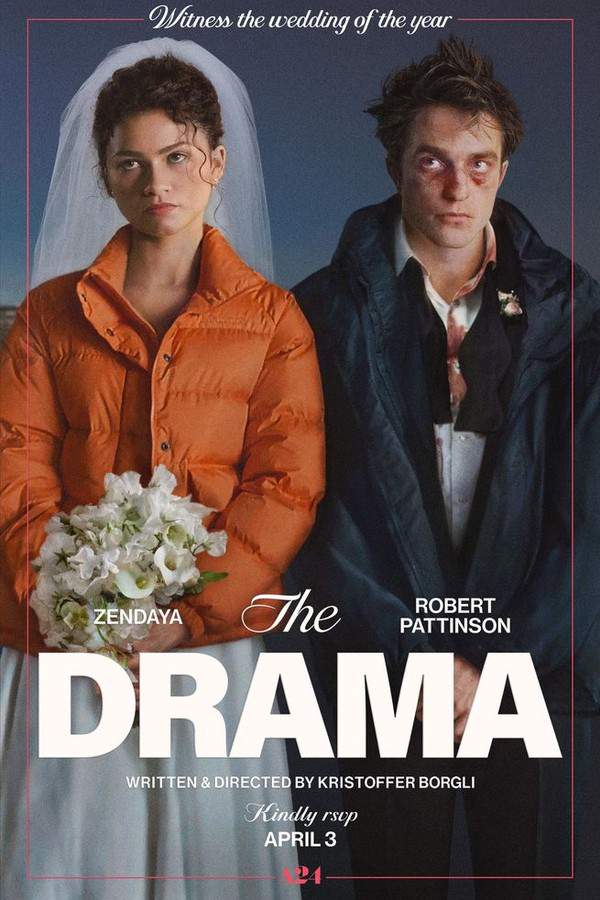
The Drama 2026 Review: Critical Consensus vs Audience Reactions & In-Depth Film Reception Analysis
When The Drama premiered on April 3, 2026, moviegoers entered theaters expecting a conventional romantic narrative given its high-wattage casting of Robert Pattinson and Zendaya. Instead, audiences were plunged into what critics and viewers alike have described as a “productively excruciating” cinematic experience that deliberately weaponizes discomfort and subverts genre expectations. The film’s arrival sparked immediate polarization across the critical landscape, generating everything from outright dismissal to perfect-score acclaim. Whether you’re searching for a spoiler-free review of The Drama 2026, curious about viewer reactions, or trying to determine is The Drama worth watching, the reception landscape reveals a fascinating disconnect between mainstream critical consensus and passionate audience engagement. At What’s After the Movie, we’ve analyzed the complete spectrum of film reception data—from professional critics at major outlets to verified user ratings—to provide comprehensive insight into why this movie became one of the most divisive releases of 2026. Our movie page for The Drama offers additional context on cast details and production information, while this deep-dive explores the substantive critical reviews and fan opinions that define the conversation surrounding this controversial release.
The Drama 2026 Critical Reception: Divisive Reviews and Polarizing Film Analysis
The critical consensus surrounding The Drama 2026 reads like a cinematic Rorschach test, with professional reviewers fundamentally disagreeing on nearly every aspect of the film’s execution and intent. Scores range from a scathing 30/100 dismissal to a rare perfect 100/100 celebration, creating one of the widest critical spreads in recent memory. This divergence speaks to the movie’s challenging nature—The Drama refuses to provide easy answers or comfortable viewing experiences, instead demanding that critics and audiences alike confront their own biases and expectations regarding relationship narratives.
At the negative end of the spectrum, the Wall Street Journal delivered perhaps the most brutal assessment, declaring the film “toxically misconceived” and arguing that while it “wants to be wicked and outrageous, it’s really just dismal and depressing.” This sentiment found echoes in the Chicago Tribune’s measured critique, which noted that while the film is “thought-provoking, to be sure,” the director “does he finish the thought, or just provoke it?” Meanwhile, The Seattle Times criticized the narrative’s thematic hollowness, suggesting that “The Drama doesn’t have much to say about its central questions, and its ending feels inevitable but also unearned.” These reviews suggest that for certain critics, the film’s provocations ring hollow—aesthetic shocks without substantive backing.
Conversely, Original-Cin awarded the film a rare perfect score, describing it as “an exceedingly black comedy threaded through with intense drama that completely deconstructs the rom-com, casting it as both a shiny and sinister thing… and one frequently inducing vomiting.” This enthusiastic embrace of the film’s transgressive qualities found support in IGN’s glowing 90/100 review, which praised the film as “one of the most delightfully nerve-wracking rabbit holes you’re likely to tumble down this year,” specifically citing “immaculate performances” from the lead cast. The Austin Chronicle offered perhaps the most perceptive framing, calling The Drama “a Rorschach test of a movie that reveals more about the audience than the characters onscreen,” adding that the film “doesn’t just invite judgment; it’s coded in its DNA.”
The middle ground proves equally telling. Slate (40/100) criticized the film for narrative exhaustion, noting that it “runs out of big ideas—and, seemingly, compassion for its characters—before the audience has had a chance to develop our own rooting interest in, well, the drama.” Yet The Reveal (70/100) found value in this very discomfort, arguing that “though it always feels like Emma and Charlie (and the movie) are one productive conversation away from putting the entire matter to bed, The Drama doesn’t let anyone off the line until the last possible moment. It’s a productively excruciating experience.” For viewers seeking additional summaries and detailed breakdowns of similar controversial films, our database provides comprehensive analysis tools to compare reception patterns across challenging cinema.
Audience Reactions vs Critic Consensus: Understanding The Drama 2026 Viewer Sentiment
While critics grappled with The Drama 2026’s artistic merits and moral ambiguities, audience reactions reveal a fascinating trend: viewers appear significantly more receptive to the film’s confrontational style than the aggregated critical reviews might suggest. This gap between professional assessment and fan opinions highlights how The Drama operates as a niche experience—one that resonates deeply with viewers who appreciate boundary-pushing cinema while alienating those seeking traditional romantic storytelling. The disparity raises important questions about film analysis standards and whether mainstream critical frameworks adequately capture movies designed to provoke visceral rather than intellectual responses.
User reviewer Alexandre C captured the intense physical reaction many audiences reported, stating, “I left the theater completely tensed. From start to end you’re absolutely into the story and you kinda start doubting your own morals.” This engagement with the film’s ethical complexity stands in stark contrast to critics who found the movie thematically empty. Similarly, Henry O awarded the film a perfect score, calling it “an incredible, original, thought-provoking film. Exactly the kind of movies I enjoy the most.” These viewer reactions suggest that for a specific demographic of filmgoers—those who seek out uncomfortable, challenging narratives—The Drama delivers exactly the kind of morally ambiguous, boundary-testing content they crave.
However, the audience reception isn’t uniformly positive. User Matt L provided a nuanced 3/5 star assessment that acknowledged both the film’s strengths and its narrative unevenness: “A strange but intriguing watch, The Drama leans into discomfort in a way that at least keeps you engaged throughout… There are moments where the film feels like it’s trying a bit too hard to land a deeper moral meaning, and the script can come across as scattered and uneven at times.” This middle-ground perspective mirrors many critics’ concerns about the film’s structural coherence. Camila F’s 3.5/5 review struck a similar balance, noting, “It was SHOCKING! It brought up a very sensitive subject for the sake of humor and…I’m not gonna lie…it was hilarious and uncomfortable. Guess that was the point, but beware. It’s not trying to say something important about that matter.”
What emerges from analyzing these movie reviews collectively is a portrait of The Drama as a deliberately divisive text—one that prioritizes emotional impact over narrative tidiness. Hank L’s enthusiastic 5/5 praise for the technical execution (“flawlessly edited and expertly paced, with a perfect balance of tension and comedic moments”) contrasts with Giovanni P’s more straightforward appreciation (“Great movie, Zendaya is fantastic!”), suggesting the film succeeds on multiple levels depending on viewer expectations. For those interested in exploring how this film reception compares to other controversial releases, our movie collections feature curated lists of divisive cinema that sparked similar debates between critics and audiences.
Robert Pattinson and Zendaya Performances: Acting Analysis in The Drama 2026
Central to any discussion of The Drama 2026’s reception is the complex critical assessment of its lead performances. The film pairs two of contemporary cinema’s most compelling stars—Robert Pattinson and Zendaya—yet critical reviews diverged sharply on whether the screenplay adequately served their talents. This performance analysis reveals much about the movie’s gender dynamics and narrative priorities, with several critics arguing that the film’s structural imbalances mirror the very relationship dynamics it seeks to critique.
The New York Times offered the most pointed critique of the casting balance, observing that “Zendaya and Pattinson are both enjoyable to watch, but she’s given too little to do and he’s given too much.” This assessment suggests a fundamental problem with the screenplay’s distribution of agency and screen time—a criticism that potentially undermines the film’s exploration of relationship power dynamics. If the narrative gives Pattinson’s character narrative dominance while sidelining Zendaya’s perspective, does it inadvertently replicate the very imbalances it seeks to satirize? This question has fueled much of the film analysis surrounding The Drama’s gender politics.
However, other outlets found transcendence in the performances despite (or because of) these constraints. IGN’s praise for “immaculate performances” aligns with user reviews like Giovanni P’s simple declaration that “Zendaya is fantastic,” suggesting that both leads elevate material that might otherwise collapse under its own ambition. User Matt L specifically noted that “Robert Pattinson and Zendaya both deliver strong performances, bringing depth to a story that doesn’t always give them much to work with,” while highlighting Alana Haim as “the emotional core, really shining as the upset friend.” This recognition of Haim’s supporting turn adds another layer to the reception narrative, suggesting that the film’s most resonant emotional beats may occur outside the central couple.
The disparity in how critics versus audiences view the acting reveals broader tensions about star power in challenging indie films. Pattinson’s post-Twilight career has been defined by risky, auteur-driven projects, making his involvement in The Drama consistent with his brand of unconventional stardom. Zendaya, meanwhile, brings massive mainstream appeal that may have attracted viewers expecting different material. For detailed cast profiles and filmographies of these performers, our database tracks their complete career trajectories and box office histories. Whether the performances ultimately salvage a problematic script or exemplify wasted potential remains a key question in determining is The Drama worth watching for viewers who prioritize acting over plot coherence.
Tone and Genre Subversion: Is The Drama 2026 a Black Comedy or Something Else?
Perhaps no aspect of The Drama 2026’s film reception has generated more debate than its unstable tonal register and ambiguous genre positioning. The movie resists easy categorization, operating simultaneously as relationship drama, psychological thriller, and—according to several key reviews—a brutal deconstruction of romantic comedy conventions. Understanding how the film balances (or fails to balance) these competing modes is essential for viewers trying to calibrate their expectations and for critics attempting to assess its artistic success.
Original-Cin’s perfect-score review positioned the film explicitly as “an exceedingly black comedy threaded through with intense drama that completely deconstructs the rom-com,” suggesting that the movie’s discomfort is entirely intentional—a systematic dismantling of the genre’s comforting lies. This reading finds support in NME’s 60/100 assessment, which noted that “The discomfort that’s baked into the premise of The Drama is amplified by disconcerting camera moves, cuts and audio choices, as well as Daniel Pemberton’s unsettling score. But despite all that, [the director] successfully plays things primarily for laughs.” The technical elements mentioned here—unstable cinematography, jarring editing, and discordant scoring—serve the comedy rather than undermining it, creating a queasy laughter that challenges the audience’s moral compass.
However, user Camila F’s review raises crucial ethical questions about this approach: “It brought up a very sensitive subject for the sake of humor… It’s not trying to say something important about that matter.” This critique—that the film uses serious material as fodder for shock comedy without substantive commentary—echoes concerns raised by Slate regarding the film’s intellectual exhaustion. The Austin Chronicle’s description of the movie as a “Rorschach test” proves particularly apt here; depending on the viewer’s tolerance for transgressive humor and their interpretation of the characters’ actions, The Drama either reads as a brilliant satire of toxic relationship dynamics or as an exploitative wallowing in human misery.
The film’s manipulation of viewer reactions through tone extends to its pacing and tension-building. The Reveal described the experience as “productively excruciating,” suggesting that the movie’s refusal to resolve its central conflict represents a formal choice designed to replicate the anxiety of the characters’ situation. For those who appreciate cinema that challenges genre conventions, our movie wiki provides extensive context on similar boundary-pushing films, while our quizzes and games offer interactive ways to test knowledge of challenging cinema history.
Pacing, Direction, and Technical Craft: The Film’s Uneasy Atmosphere Analyzed
Beyond performances and thematic content, The Drama 2026’s reception has been significantly shaped by its technical execution—specifically the directorial choices regarding pacing, sound design, and visual composition that create what many reviews describe as an oppressively tense atmosphere. These elements prove crucial in understanding why some viewers found the film “nerve-wracking” while others deemed it merely tedious or depressing.
User Hank L’s enthusiastic praise for the film being “flawlessly edited and expertly paced, with a perfect balance of tension and comedic moments” stands in opposition to The Seattle Times’ criticism that the “ending feels inevitable but also unearned.” This contradiction suggests that the film’s temporal manipulation—its stretching of narrative tension across runtime—works effectively for viewers attuned to its rhythms while frustrating those seeking more conventional plot progression. The editing, praised by Hank L as creating that crucial tension-comedy balance, apparently succeeds at a granular level even when the macro-structure falters.
NME’s detailed analysis of the technical craft highlights how specifically the film achieves its disorienting effects: “The discomfort… is amplified by disconcerting camera moves, cuts and audio choices, as well as Daniel Pemberton’s unsettling score.” Alexandre C’s user review corroborates this, noting, “I loved the music that made every scene even more intense.” The sound design and scoring thus emerge as consensus strengths—elements that even critics who disliked the film’s narrative generally acknowledge as effective. This technical competence may explain why audience reactions skew more positive than critic reviews; even viewers who find the story problematic or the characters unsympathetic may appreciate the sensory experience of the filmmaking.
The Reveal’s description of the film as “productively excruciating” ties these technical elements to the viewer’s physical experience: the movie doesn’t just depict uncomfortable situations but uses cinematic language—prolonged takes, invasive close-ups, discordant audio—to make the audience feel that discomfort somatically. However, Slate’s criticism that the film “runs out of big ideas… before the audience has had a chance to develop our own rooting interest” suggests that these technical strategies may ultimately serve a hollow narrative. For viewers interested in tracking how The Drama’s box office performance correlates with its challenging technical approach, our box office data pages provide real-time tracking of its commercial trajectory despite (or because of) its divisive reception.
Final Verdict: Is The Drama 2026 Worth Watching?
Synthesizing the diverse landscape of critic reviews and audience reactions to The Drama 2026, we find a film that defies simple recommendation. The critical consensus reveals a movie that is technically accomplished but narratively and thematically divisive—brilliant in moments, exhausting in others, and consistently challenging to conventional taste. For viewers asking is The Drama worth watching, the answer depends largely on your tolerance for discomfort and your appetite for cinema that prioritizes provocation over pleasure.
The film reception patterns suggest that The Drama succeeds best with audiences who approach it as an experiential piece rather than a traditional narrative. If you value immaculate performances (as praised by IGN), boundary-pushing black comedy (as celebrated by Original-Cin), and technically audacious filmmaking (noted by NME and user reviewers alike), this film offers substantial rewards. However, if you require sympathetic characters, clear thematic resolution, or the romantic satisfaction promised by the casting, the Wall Street Journal’s dismissal as “dismal and depressing” may prove more predictive of your experience.
Ultimately, The Drama 2026 stands as a testament to the gap between critical and popular film analysis—a movie that some will find “thought-provoking” and others will find “toxically misconceived.” For the complete reception data, cast information, and to explore similar titles, visit the What’s After the Movie main page for The Drama. You can also browse our movie lists for curated collections of challenging cinema, check awards potential for this and other 2026 releases, or explore our concert film section for completely different viewing experiences. Whether you ultimately love or loathe The Drama, it undeniably generates the kind of passionate discourse that makes cinema culture vital—providing ample material for spoiler-free reviews, heated debates, and continued viewer reactions long after the credits roll.
External Resources and Related Links
| Site | Link |
|---|---|
| The Drama on The Movie Database (TMDB) | TMDB |
| The Drama on Wikipedia | Wikipedia |
| The Drama on Rotten Tomatoes | Rotten Tomatoes |
| The Drama on Metacritic | Metacritic |
| The Drama on JustWatch | JustWatch |
| The Drama Box Office on Box Office Mojo | Box Office Mojo |
Continue reading




What's After the Movie?
Not sure whether to stay after the credits? Find out!
Check out our other apps:

SAT Sphere
Build confidence for the Digital SAT.

Mori Atlas
Discover wild places worth protecting.

Luntero
Search smarter for a home in Amsterdam.

Plot Explained
Unravel movie endings and hidden clues.

Pokechamp
Dive into Pokémon data and battle logic.

Driving Theory
Get ready for your European theory test.

Movie Dust
Plan your next cinema trip with ease.

Musemap
Find art and culture as you travel.

Selkobase
Compare credentials before committing.

Local Manual
Turn an unfamiliar country into practical next steps.

Lernavi
Compare school systems before your next move.

GymRoam
Find a workout stop wherever your plans take you.
Explore Our Movie Platform
New Movie Releases (2026)
Famous Movie Actors
Top Film Production Studios
Movie Plot Summaries & Endings
Major Movie Awards & Winners
Best Concert Films & Music Documentaries
Movie Collections and Curated Lists
© 2026 What's After the Movie. All rights reserved.
Privacy Policy