
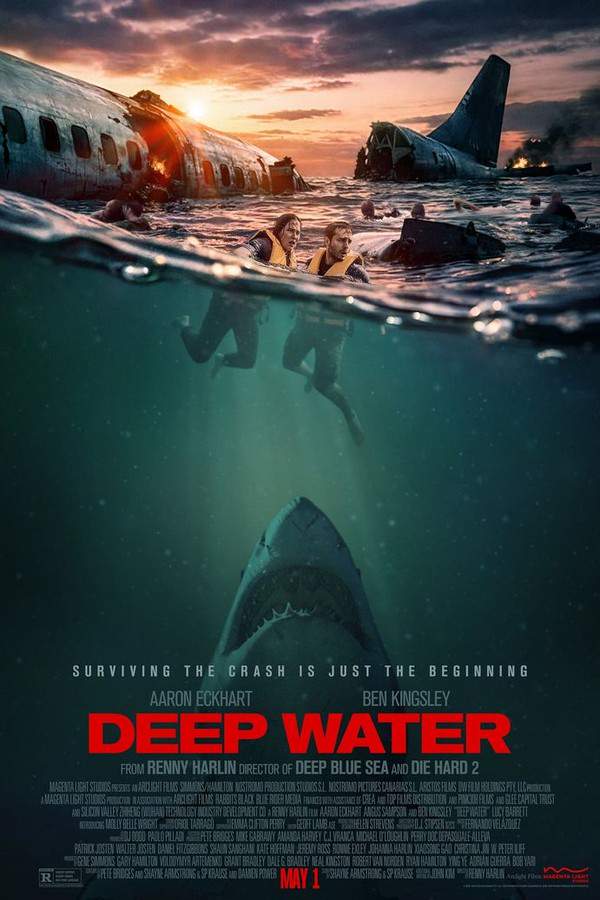
Deep Water 2026 Reviews: Critical Consensus vs Audience Reactions to the Shark Thriller
When Renny Harlin returned to aquatic terror with Deep Water (2026), expectations were understandably mixed. The director who once defined the shark thriller genre with Deep Blue Sea was now tackling a survival disaster film that promised to blend airborne catastrophe with oceanic predator terror. As audiences flocked to theaters searching for spoiler-free reviews and honest opinions about whether this high-concept thriller was worth watching, a fascinating divide emerged between critical consensus and genuine viewer reactions. While film critics scrutinized the movie’s narrative familiarity and genre callbacks, everyday moviegoers discovered a surprisingly entertaining B-movie experience that delivered exactly what the marketing promised: tense survival sequences, bloody shark attacks, and Aaron Eckhart exuding serious paternal energy amidst the chaos.
For those seeking comprehensive movie information and detailed summaries before diving into this review analysis, What’s After the Movie provides extensive coverage of Deep Water’s production details, cast profiles, and box office performance data. The film’s reception landscape reveals a complex tapestry of opinions that challenge simple categorization as either “good” or “bad” cinema. Instead, Deep Water 2026 occupies that fascinating middle ground where professional film criticism meets audience entertainment expectations, creating a discourse that says as much about modern genre film consumption as it does about the movie itself. Whether you’re researching Deep Water critic reviews or trying to gauge if this shark thriller deserves your time, understanding this reception dichotomy is essential.
Deep Water 2026 Critical Reception: Critics Debate Whether Familiar Tropes Sink or Swim
The critical response to Deep Water reveals a fascinating tension between genre appreciation and originality demands, with review scores spanning from a scathing 38/100 to a respectable 72/100 across major outlets. This wide critical spectrum suggests a film that refuses easy categorization, instead serving as a Rorschach test for critics’ patience with homage-driven cinema. RogerEbert.com delivered perhaps the most devastating assessment, arguing that “the problem with ‘Deep Water’ is not that it is a bad movie (which it is), but it’s a gratingly familiar one that doesn’t have a single point of interest to call its own.” This sentiment echoes through several critical evaluations that viewed the film as a mechanical recombination of superior shark movies and 1970s disaster epics.
However, contrasting voices emerged that found merit in the film’s unapologetic embrace of its influences. The Reveal offered a counterpoint that many genre enthusiasts appreciated: “There might not be anything in Deep Water that hasn’t been done better in other movies, but that doesn’t mean it isn’t done well here.” This defense of competent execution over innovation became a recurring theme in positive critical assessments. Critics who appreciated the film acknowledged its “conspicuous acts of homage,” noting that watching Deep Water sometimes felt like experiencing “three or four different movies at the same time”—a feature that some found exhausting while others found nostalgically satisfying.
The Hollywood Reporter specifically praised the film’s opening disaster sequence, identifying it as the moment when “high-stakes action specialist Harlin is most firmly in his sweet spot.” This technical appreciation for the plane crash sequence—from initial turbulence through catastrophic Pacific Ocean landing—suggests that even critics who found the overall narrative lacking couldn’t deny Harlin’s craftsmanship when operating within his established wheelhouse. TheWrap similarly found redemption in the film’s middle act, declaring that “it’s easy to forgive cheap aesthetics and a rushed finale when the middle of the flick, the sharktastic bloodletting where no character is safe, is such a hoot.”
Yet the criticism of “assembly line product,” as The Travers Take described it, highlights a fundamental question about contemporary genre filmmaking: does efficiency and technical competence outweigh the need for narrative innovation? Next Best Picture crystallized this disappointment, noting that “the potential for a much more engrossing venture is sadly bypassed for a merely passable showcase.” For viewers seeking in-depth film analysis and groundbreaking storytelling, these critiques serve as fair warning that Deep Water prioritizes genre satisfaction over artistic ambition. The Globe and Mail perhaps best summarized the critical ambivalence, stating, “It’s not half-bad. I mean, don’t get too excited – this is still a bad movie. But it is the kind of better-than-it-should-be bad instead of merely bad-bad”—a distinction that perfectly captures the film’s polarizing nature.
Audience Reactions to Deep Water: Viewer Reviews Reveal the Entertainment Factor
While critics debated the film’s artistic merits and originality, audience reactions to Deep Water painted a decidedly more positive picture, with user scores consistently outpacing critical assessments across major platforms. This divergence between professional criticism and viewer satisfaction tells a compelling story about expectation management and genre film literacy. User Tom B succinctly captured the film’s appeal with the memorable comparison: “Jaws meets Miracle on the Hudson, except (spoiler alert) a LOT more people die.” This pithy summary highlights exactly what casual viewers appreciated—a high-concept hybrid that delivered exactly the thrills promised in the trailer without pretension.
The emotional engagement reported by viewers like Vanae C, who noted being “hooked, intrigued, upset, happy & all kinds of emotions,” suggests that the film succeeded in its primary goal of delivering a visceral theatrical experience. For audiences seeking entertaining movie experiences and straightforward thrills, Deep Water apparently delivered in ways that transcended critical nitpicking. This gap between critical analysis and audience enjoyment isn’t new in genre cinema, but the intensity of positive user reactions—many awarding the film 4 or 5 stars—indicates that Deep Water found its target demographic despite mixed critical reception.
User niewind b provided a particularly nuanced perspective that acknowledged both the film’s limitations and its successes: “Just saw Deep Water and was pleasantly surprised when it was a low budget thriller. Started off strong with a strong storyline but then changed to as much explosions and shark attacks to compete against Sharknado. The CGI was good and not too low budget. Overall acting was good and had good character development.” This review captures the essential bargain that Deep Water offers viewers—accepting narrative predictability in exchange for competent technical execution and genuine entertainment value.
The satisfaction derived from character development emerged as a surprising theme in user feedback. Mitchell S noted, “It’s not the most surprising story, and I waited forever for a particular character to die. But I’m glad it focuses on the characters, and we see them develop.” This appreciation for character work over plot mechanics suggests that the film’s cast performances resonated more strongly with general audiences than critics acknowledged. Bruce H drew explicit comparisons to classic disaster cinema, stating it “reminded me a bit of the Poseiden Adventure with sharks…mostly predictable but visually well done and plenty of characters to follow.”
Perhaps most telling were the reviews that acknowledged cheesiness while celebrating enjoyment. Salli B’s enthusiastic declaration that “We liked it and was fun, action and humorous. Its been a while since we enjoyed a good movie!” speaks to the film’s success as escapist entertainment. Even viewers who recognized flaws, like Colton L who called out “some of the worst written characters I’ve seen in a movie this year,” still described it as “A fun shark movie,” suggesting that Deep Water achieved the difficult balance of being self-aware enough to entertain without descending into complete parody. For those tracking box office trends and audience sentiment, this disconnect between critical scores and viewer satisfaction provides crucial context for understanding the film’s commercial performance.
Aaron Eckhart’s Performance Anchors Deep Water: Acting Analysis in Disaster Cinema
In the turbulent waters of mixed reviews and CGI shark attacks, Aaron Eckhart’s performance emerged as the critical consensus favorite—a stabilizing force that elevated the material beyond its derivative elements. The A.V. Club specifically highlighted this dynamic, noting that “Eckhart exudes the sort of unselfconscious paternal energy that’s needed to keep things moving in between the familiar, but well-executed disaster movie story beats.” This assessment reveals how a committed lead performance can salvage even the most formulaic genre exercises, providing the emotional anchor that allows audiences to invest in increasingly improbable survival scenarios.
Eckhart’s ability to “almost single-handedly make Deep Water a better-than-average genre exercise,” as the review suggested, speaks to a specific type of acting excellence often overlooked in blockbuster filmmaking: the capacity to ground spectacle in human emotion. While critics debated the film’s storytelling quality and pacing issues, Eckhart’s portrayal apparently succeeded in making viewers care about the survival stakes, transforming what could have been disposable disaster porn into something approaching genuine tension. This performance quality becomes particularly crucial in shark movies, where the human characters often serve merely as shark food rather than protagonists worthy of emotional investment.
The “paternal energy” noted by critics suggests that Eckhart brought a specific gravitas to the role—perhaps that of a father figure or authority figure protecting survivors—that resonated with both action movie expectations and deeper emotional beats. In disaster cinema, the lead actor’s ability to project competence and empathy simultaneously often determines whether the film crosses from “so bad it’s good” territory into “genuinely affecting thriller” status. User reviews consistently noted good character development and acting quality, suggesting that Eckhart and the supporting cast succeeded in creating memorable human drama amidst the aquatic chaos.
For those interested in actor filmographies and career analysis, Eckhart’s work in Deep Water represents an interesting addition to his diverse resume, bridging his dramatic capabilities with action-hero requirements. The film’s reliance on his performance also highlights a broader trend in mid-budget disaster films, where a recognizable, committed lead actor becomes the primary selling point when special effects budgets can’t compete with Hollywood blockbusters. This “back-to-basics” approach to casting, focusing on established screen presence rather than flashy star power, apparently paid dividends in making Deep Water feel more substantial than its premise might suggest.
The critical appreciation for Eckhart also underscores how acting quality can mitigate other filmmaking deficiencies. While reviewers criticized the screenplay’s familiarity and the film’s pacing issues, the consensus that the “bloody shark attacks and corny banter don’t hurt either”—when combined with Eckhart’s grounded performance—created a viewing experience that satisfied genre requirements. This suggests that for viewers deciding whether Deep Water is worth watching, the quality of the central performance should weigh heavily in their calculations, potentially outweighing concerns about narrative originality or CGI limitations.
Genre Homage or Retread? Deep Water’s Place in Shark Movie History
The question of whether Deep Water represents a loving homage to 1970s disaster cinema or a tired retread of superior films dominated much of the critical discourse surrounding the movie. The Film Stage identified this tension explicitly, describing the film as “a back-to-basics homage to disaster pictures of the 1970s” with “modest charm, elevated by Harlin’s brisk direction, even if there is little that makes a lasting impression.” This assessment captures the delicate balance the film attempts between nostalgia and novelty—a balance that critics and audiences evaluated differently based on their relationship with genre history.
Renny Harlin’s directorial approach became a focal point for these discussions, with The Travers Take noting that he was “merely spitpolishing his same old bag of shark tricks” while acknowledging that “the dude knows how to deliver assembly line product like nobody’s business.” This backhanded compliment speaks to a career spent perfecting the mechanics of genre filmmaking, from Cliffhanger to Deep Blue Sea. For Harlin, Deep Water represented a return to familiar territory—survival horror set against aquatic backdrops—raising questions about whether a director should evolve beyond their established style or perfect their specific niche.
The comparisons to The Poseidon Adventure and Jaws weren’t merely critical observations but intentional reference points that the film actively invoked. User Bruce H’s comparison to “Poseiden Adventure with sharks” suggests that viewers recognized and appreciated these callbacks to classic disaster storytelling structures—the ensemble cast of strangers forced to cooperate, the escalating series of obstacles, the survival-of-the-fittest character dynamics. However, RogerEbert.com’s criticism that the film spends “two hours rehashing elements that even newbies to shark-based cinema will find devoid of any real inspiration” indicates that for some, these homages crossed the line from tribute into redundancy.
The New York Times positioned the film carefully within the shark movie hierarchy, noting that “this picture is not as ridiculous as a ‘Sharknado’ movie — Harlin is out to make a genuine nail-biter, and he largely succeeds.” This distinction between earnest genre filmmaking and self-aware camp proved crucial to understanding Deep Water’s reception. Unlike the Sharknado franchise, which embraced absurdity, or The Meg, which balanced spectacle with humor, Deep Water apparently aimed for old-fashioned suspense—a choice that earned respect even from critics who found the execution lacking. The film’s maintenance of interest “even as the two-hour mark approaches” suggests that Harlin succeeded in crafting genuine tension, even if he couldn’t overcome the sense that viewers had experienced these thrills before.
For genre enthusiasts and those who appreciate movie collections and lists of disaster films, Deep Water occupies an interesting middle ground in 2020s shark cinema—more serious than SyFy channel offerings but less ambitious than prestige horror. Its commitment to practical tension over ironic detachment may explain why audiences responded more positively than critics; viewers seeking genuine shark movie thrills found them here, while critics seeking innovation found only competent execution of familiar beats. The film’s reception ultimately hinges on whether one views genre conventions as comforting pleasures or creative constraints—a divide that separates casual moviegoers from professional critics.
Technical Execution and Visuals: CGI, Pacing, and the Shark Attack Sequences
Beyond narrative concerns and performance evaluations, the technical craftsmanship of Deep Water generated significant discussion among reviewers, particularly regarding the balance between practical effects and CGI, pacing decisions, and the staging of the film’s centerpiece shark attacks. TheWrap’s enthusiastic description of the “middle of the flick, the sharktastic bloodletting where no character is safe” as “such a hoot” highlights how technical execution in genre films can forgive other deficiencies. When a film delivers visceral, well-staged action sequences, audiences and critics alike often adopt a more forgiving stance toward narrative shortcuts or aesthetic limitations.
The opening plane crash sequence received particular attention as a showcase of Harlin’s action direction capabilities. The Hollywood Reporter’s praise for this set piece—from “initial turbulence through to catastrophic Pacific Ocean landing”—suggests that the film’s high-budget moments delivered the scope and intensity that disaster film fans crave. This technical competence in staging large-scale destruction apparently contrasted with the “cheap aesthetics” noted by TheWrap, indicating an uneven visual quality where major set pieces received careful attention while connective tissue scenes suffered from budget constraints.
User reviews revealed mixed but generally positive reactions to the CGI quality, with niewind b noting it was “good and not too low budget,” while Jo found “the shark scenes were very cheesy of course.” This divergence in perception—between “good CGI” and “cheesy shark scenes”—suggests that Deep Water employed digital effects selectively, perhaps prioritizing the plane crash realism over shark authenticity. The mention of cheesiness wasn’t necessarily a condemnation; as user Salli B noted, the film balanced “fun, action and humorous” elements, suggesting that some visual artificiality contributed to the entertainment value rather than detracting from it.
The film’s two-hour runtime became a point of contention in reviews, with The New York Times noting that Harlin maintained interest despite the length, while other critics implied that the pacing sagged under the weight of familiar story beats. This runtime decision—unusual for modern B-movies that typically clock in at 90 minutes—suggests ambitions beyond disposable entertainment, an attempt to develop character relationships and survival stakes that required extended screen time. Whether this extended pacing served the narrative or merely stretched thin material remained a matter of critical debate.
For those analyzing film awards and technical achievements, Deep Water likely won’t compete in major categories, but its technical execution speaks to the evolving standards of mid-budget genre filmmaking. The film’s ability to create “nail-biter” tension despite limited resources demonstrates how direction and editing can compensate for budgetary limitations. The “brisk direction” noted by The Film Stage suggests that Harlin’s experience in the genre allowed him to maximize every dollar of the production budget, creating a film that feels more expensive and polished than its actual cost might indicate.
The visual comparisons to Sharknado—specifically user niewind b’s concern that the film changed to “as much explosions and shark attacks to compete against Sharknado”—reveal anxiety about where Deep Water positioned itself on the seriousness spectrum. However, the consensus that the film avoided full camp while acknowledging its B-movie status suggests a successful navigation of these waters, delivering spectacle without descending into parody. For viewers seeking concert films and cinematic experiences that prioritize visceral thrills, the technical execution of Deep Water’s attack sequences apparently satisfied expectations for big-screen entertainment.
Conclusion: Navigating the Divided Waters of Deep Water’s Reception
The reception landscape for Deep Water (2026) ultimately reveals a film that succeeded in its primary mission—delivering shark-infested disaster thrills—while failing to convince critics of its artistic necessity. This divide between critical consensus and audience satisfaction isn’t a failure of the film but rather a testament to its specific appeal. For viewers seeking movie recommendations and lists of entertaining survival thrillers, the user reviews suggest that Deep Water delivers exactly the kind of escapist entertainment that theatrical experiences were made for, provided one enters with appropriate expectations.
Aaron Eckhart’s committed performance emerges as the film’s saving grace across both critical and audience evaluations, proving that strong acting can elevate material regardless of budget or narrative familiarity. The technical competence of the action sequences, particularly the opening crash and the “sharktastic bloodletting” middle act, demonstrates that director Renny Harlin remains capable of orchestrating genuine tension even when working with derivative material. Whether this return to familiar waters represents a director playing to his strengths or retreading exhausted territory depends largely on the viewer’s patience for genre conventions.
For those debating whether Deep Water is worth watching, the answer appears to hinge on your relationship with disaster cinema and shark movies specifically. If you approach the film seeking innovation or groundbreaking storytelling, the critical consensus suggests you’ll find the derivative elements frustrating. However, if you seek a competently executed throwback to 1970s disaster films with modern sensibilities and genuine moments of tension, the audience reactions indicate you’ll find satisfying entertainment. The film’s “better-than-it-should-be” quality, as The Globe and Mail described it, makes it perfect for genre fans who appreciate when a movie knows exactly what it is and executes that vision with confidence.
As you explore comprehensive movie information and decide whether to dive into Deep Water, remember that modern film criticism often undervalues straightforward entertainment in favor of innovation. Sometimes a movie’s willingness to deliver exactly what it promises—shark attacks, survival tension, and Aaron Eckhart being a dependable screen presence—is its own kind of integrity. Whether you’re tracking box office performance, reading spoiler-free reviews, or simply looking for your next weekend watch, Deep Water stands as a fascinating case study in the gap between critical standards and audience desires—a film that reminds us that not every movie needs to reinvent the wheel to keep it rolling.
| Resource | Link |
|---|---|
| Deep Water TMDB | TMDB |
| Deep Water Wikipedia | Wikipedia |
| Deep Water Rotten Tomatoes | Rotten Tomatoes |
| Deep Water Metacritic | Metacritic |
| Deep Water JustWatch | JustWatch |
| Deep Water Letterboxd | Letterboxd |