What's After the Blog?
Opinions • Reception
Outcome (2026) Review, Opinions & Reception: Critics and Fans Analyze Jonah Hill’s Dark Comedy
Explore fan reactions and critic reviews of Outcome (2026), delving into the film’s performance, storytelling, and Jonah Hill’s direction within the dark comedy genre. This post breaks down audience sentiment, critical reception, and the movie’s place in contemporary cinema.
April 15, 2026

Movies mentioned in this article
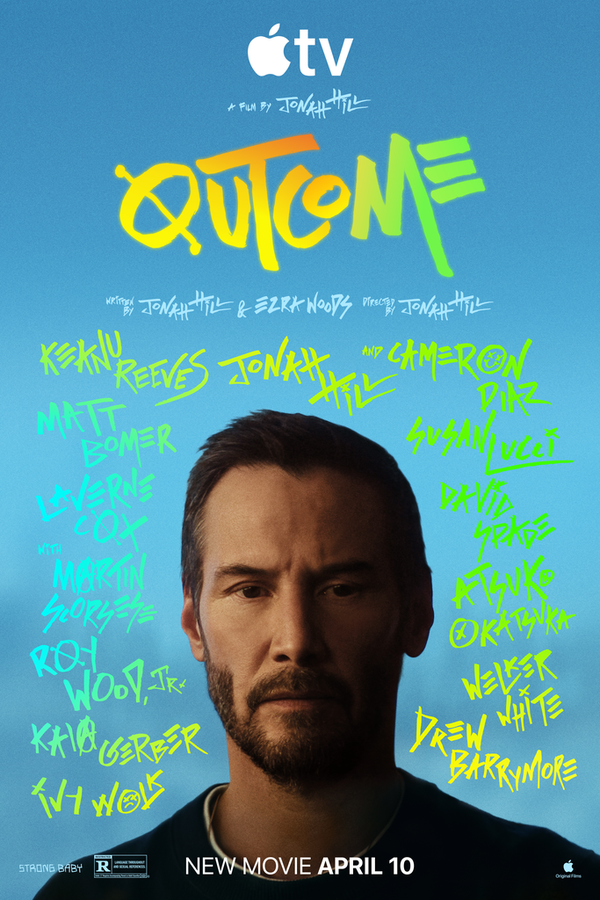
Outcome (2026) Movie Review: Critical Consensus, Audience Reactions & Is It Worth Watching?
When Jonah Hill announced his sophomore directorial effort Outcome (2026), expectations were cautiously optimistic. Following the authentic, street-level poignancy of Mid90s, Hill seemed poised to cement his reputation as a serious filmmaker with something to say about modern celebrity culture. Add Keanu Reeves—cinema’s most beloved zen action star—to the mix, alongside a premise targeting Hollywood’s relationship with cancel culture and privilege, and you had the recipe for a biting, timely satire. Yet as the film hit screens on April 10, 2026, the reception landscape shifted dramatically from anticipation to consternation. Critics and audiences alike found themselves grappling with a film that appears to collapse into the very pathology it attempts to critique, leaving viewers wondering whether this ambitious misfire represents a temporary stumble or a fundamental misunderstanding of its subject matter. At What’s After the Movie, we’ve analyzed the full spectrum of Outcome reviews, from scathing takedowns to hesitant defenses, to determine whether this polarizing entry deserves your time. Before diving into the analysis, explore our comprehensive movie page for Outcome for cast details, streaming updates, and our exclusive viewer quizzes, or browse our Movie Wiki for background on Hill’s directorial evolution.
Critical Consensus on Outcome (2026): A Satire That Collapses Under Its Own Weight
The critical reception for Outcome (2026) represents one of the most decisive negative consensuses in recent satirical cinema, with reviewers united not merely in disappointment, but in a specific diagnosis of tonal and thematic failure. RogerEbert.com offered perhaps the most charitable reading, noting that “There’s no denying Hill’s instinct for identifying the heart of a dramatic scene and turning the volume of the storytelling down low enough for us to hear it beating.” Yet even this faint praise serves primarily to illuminate the surrounding critical hostility, as most outlets found the film’s dramatic instincts buried beneath layers of solipsistic Hollywood navel-gazing. Time Magazine delivered a particularly devastating assessment regarding Keanu Reeves’ involvement, observing that “Reeves’ presence in any movie tends to be a sort of salve; even with bad material, he generally coasts by on his laid-back radiance. But not even Reeves can put an adequate shine on Outcome, a satire that takes one spindly premise and grinds it down to a nub.”
This sentiment—that the film wastes its considerable talent on material unworthy of its cast—echoes throughout the critical ecosystem. The Hollywood Reporter lamented the absence of “the authentic fondness for his characters that illuminated Hill’s directing debut, Mid90s,” instead characterizing the film as “just a load of solipsistic L.A. brain rot trying to pass for satire.” This comparison to Hill’s previous work became a recurring motif in critical discourse, with many reviewers treating Outcome not merely as a standalone disappointment but as a regression from the promise shown in his debut. Where Mid90s captured specific cultural textures with empathy and verisimilitude, Outcome allegedly traffics in broad, disconnected observations about celebrity privilege that feel manufactured rather than observed.
The A.V. Club identified perhaps the most damning structural flaw in Hill’s approach, criticizing the film’s messaging about amends-making as “patronizing” and concluding with the memorable barb: “In the end, it’s the audience that deserves an apology.” This reaction speaks to a broader critical frustration with the film’s moral architecture—its inability to distinguish between genuine introspection and performative guilt. When analyzing the Outcome critic reviews and film reception, one detects a consensus that Hill’s script confuses self-critique with self-absolution, creating a viewing experience that feels less like satirical commentary and more like an elaborate therapy session imposed upon the audience.
Screen Rant provided a more analytically detached breakdown of the film’s technical failures, noting that “As dark comedy, Outcome feels underbaked; as drama, it lacks sufficient introspection to have earned its emotional catharsis.” Their observation regarding the film’s brevity—running under 90 minutes yet feeling “choppy and out of breath”—offers insight into the structural compromises that plague the narrative. Critics consistently identified a fundamental indecisiveness in Hill’s storytelling approach, with The Playlist describing the film as “erratic, petulant, and shot with a humor-killing hyper-saturation.” The reference to cinematographer Benoît Debie’s work on films like Climax and Enter the Void suggests that Hill’s visual ambitions may have actively undermined his comedic timing, smothering the Apatowian improv rhythms under what IndieWire called “the sickly patina of a Gaspar Noé drug trip.”
For readers interested in how this critical reception compares to other controversial satires, visit our Awards page to see how films with divided receptions have fared during Oscar season, or check our Box Office breakdowns to understand whether critical drubbings correlate with commercial performance.
Audience Reactions and Fan Opinions: Divided But Mostly Disappointed
While professional critics reached a rare unanimity in their assessment of Outcome (2026), the audience reception presents a more fragmented, though still predominantly negative, picture. User reviews reveal a stark divide between viewers who appreciate the film’s “artsy” ambitions and those who view it as an unforgivable waste of talent and resources. This polarization makes Outcome a fascinating case study in viewer expectations versus artistic execution, particularly for fans of Reeves’ action pedigree who found themselves confronting a talky, introspective dramedy instead of the charismatic star vehicle they anticipated.
User reviewer Iamcritical86 offered one of the few positive defenses, noting that “I don’t think this was as bad as what a lot of people are saying. It has sort of an ‘artsy’ undertone to it and I kinda liked that.” However, even this tentative endorsement carries significant caveats, as the same reviewer acknowledged that “the performances seemed flat, like each character and scene never truly met its full potential.” This observation—that the film’s aesthetic intentions outpace its execution—resonates across the user review spectrum. Even defenders seem to qualify their praise with admissions that the film never quite coheres into the experience it promises.
The negative user reactions, however, lack such equivocation. Bertobellamy delivered a scathing critique of Hill’s thematic intentions, writing: “Jonah Hill pretending to be a victim of ‘cancel culture’ and making a deeply unfunny movie about it’s a new low for him. So sad that the guy responsible for ‘Mid90s’ ended up like this.” This review touches upon a specific backlash unique to the audience reception: the perception that Hill, as a wealthy, successful Hollywood figure, lacks the moral authority to satirize celebrity privilege and cancel culture without appearing hypocritical. Where critics noted this collapse into the pathology being critiqued, audiences often expressed outright anger at what they perceived as tone-deaf self-victimization.
Thomasamarkel’s review captures the specific betrayal felt by Reeves’ fanbase: “Horrible movie and I love the Matrix and John Wick movies! Jonah Hill used to be funny now he’s a rich **** now clueless!” The profanity-laced disappointment here underscores a crucial marketing failure—Outcome positioned itself to attract Reeves’ substantial action-film following, only to deliver a slow-burn character study that neither satisfies genre expectations nor transcends them. This disconnect between audience expectations and delivered content explains some of the more vitriolic user scores found on platforms like Rotten Tomatoes and Metacritic.
Perhaps the most analytically sophisticated user review came from Nerdcall, who articulated the film’s structural indecision: “Jonah Hill had everything going for him: a timely topic, a strong cast, and Keanu Reeves clearly willing to poke fun at his own image. And yet, nothing [works]. The film tries to be a satire, tries to be a drama, tries to be relevant… and ends up being nothing but indecisive.” This assessment mirrors professional criticism while adding the crucial perspective of viewer fatigue—the sense that despite its short runtime, “you’re more tired than engaged” by the conclusion. LegendaryLass succinctly summarized this sentiment with the dismissive characterization “navel-gazing vanity project,” suggesting that the film serves Hill’s ego more than its audience.
For viewers trying to determine whether their taste aligns with the film’s defenders or detractors, we recommend taking our movie quizzes and games to test your knowledge of Reeves’ filmography and Hill’s directorial style, or exploring our Movie Lists for curated collections of successful Hollywood satires that managed to thread the needle Outcome misses.
Tone, Pacing, and Visual Style: Where Outcome (2026) Loses Its Way
The aesthetic execution of Outcome (2026) represents perhaps the most thoroughly dissected aspect of its negative reception, with critics and audiences converging on the assessment that Hill’s directorial choices actively sabotage the material. The film’s visual palette, lensed by acclaimed cinematographer Benoît Debie, became a particular flashpoint for criticism—a case where high-art credentials produced low-yield results. IndieWire’s observation that the film suffers from “humor-killing hyper-saturation” points to a fundamental miscalculation in the marriage of form and content, as the garish, hallucinatory lighting schemes that served Gaspar Noé’s transgressive cinema prove lethally incompatible with the subtle, conversational comedy Hill attempts to stage.
This visual discordance creates what The Playlist identified as the film’s most memorable, albeit unintentional, quality: “the queasy way the movie keeps collapsing into the very pathology it thinks it is exposing. It wants to mock the famous for living inside a bubble of privilege, paranoia, and vanity, yet it ends up sounding like it was made from inside that bubble.” The cinematography serves as the primary vessel for this collapse—the hyper-stylized artificiality of the lighting and composition suggesting a filmmaker more enamored with the aesthetic signifiers of “serious cinema” than with the messy human realities his script purports to examine. When a film about Hollywood phoniness looks phonier than the culture it critiques, the satirical mechanism breaks down completely.
The pacing of Outcome generated similarly universal consternation. Despite clocking in at under 90 minutes—a runtime that typically suggests economic storytelling—the film manages to feel simultaneously rushed and interminable. Screen Rant’s analysis that the film is “sometimes choppy and out of breath” while simultaneously dragging suggests a screenplay that underwent aggressive editing without resolving its underlying structural deficiencies. The narrative lurches between set pieces without establishing the causal logic or emotional through-lines necessary to make these transitions feel meaningful, leaving viewers disoriented rather than engaged.
This choppiness undermines the film’s dramatic ambitions, particularly regarding the protagonist’s arc of redemption. RogerEbert.com’s generous assessment regarding Hill’s ability to locate the “heart of a dramatic scene” becomes difficult to reconcile with The A.V. Club’s observation that “the life lessons Reef learns aren’t meaningful, and the movie’s message about making amends is patronizing.” The disconnect stems from the film’s inability to modulate between its comedic and dramatic registers—a tonal whiplash that prevents either mode from accumulating sufficient force. Scenes that should land as poignant character moments arrive without proper setup, while comedic beats feel shoehorned into dramatic sequences, creating an experience that The New York Times characterized as “awkward where it wants to be acerbic and clumsily maudlin where it wants to be meaningful.”
The technical execution extends to the film’s use of digital effects, with The Playlist noting “bad scenes shot behind obvious blue screen and fake, manufactured sunsets.” For a film positioning itself as a grounded character study, these visible artifices further erode the authenticity that might have redeemed its more self-indulgent tendencies. When viewers can see the seams of the production, the illusion of privileged Hollywood realism shatters, leaving only the unflattering spectacle of wealthy actors pretending to grapple with consequences they’ll never actually face.
Film students and visual cinema enthusiasts might find value in comparing these choices to other works in our Concert Films section, where cinematographic experimentation often serves rather than undermines the material, or explore our Summaries section for spoiler-free breakdowns of films that successfully balance style with substance.
Keanu Reeves and Cast Performances: Can Star Power Salvage a Flawed Script?
In the taxonomy of cinematic disasters, Outcome (2026) occupies the peculiar position of being a film that wastes extraordinary talent rather than suffering from its absence. The casting of Keanu Reeves as Reef, a Hollywood figure navigating the fallout from personal and professional scandals, represented a meta-textual coup—an opportunity for the famously private, universally beloved star to engage with his own iconography while displaying his underutilized comic chops. Yet the critical consensus suggests that Reeves’ characteristic “laid-back radiance” (as Time described it) proves insufficient armor against the script’s structural deficiencies.
Reeves’ performance exists in a quantum state of competence—he executes the material as written without ever transcending it, leaving fans of his Matrix and John Wick franchises particularly aggrieved. User reviewer thomasamarkel’s exasperated declaration—“Horrible movie and I love the Matrix and John Wick movies!”—captures the specific disappointment of viewers who followed Reeves into what they assumed would be another charismatic star vehicle, only to find him muted by Hill’s directorial choices. The film asks Reeves to play against his strengths—his physical grace, his stoic intensity, his reluctant-hero nobility—instead trapping him in rooms for talky, improv-heavy scenes that require a different, more abrasively comic energy than Reeves naturally generates.
As for Hill himself, the reception to his dual role as director and actor reveals the dangers of creative auteurism unchecked by external feedback. Movie Nation’s observation that “soaking up the one-liners and Hill’s antic but comically winded patter makes one wonder if even recasting the lead would have helped” suggests that the film’s problems originate at the screenplay level and permeate every aspect of the performance. Hill’s Reef comes across as neither sympathetic enough to earn audience investment nor reprehensible enough to function as an effective satirical target. Instead, he occupies a mushy middle ground of semi-repentant privilege that generates neither cathartic laughter nor genuine pathos.
The supporting cast, featuring recognizable faces throughout, fares no better under Hill’s direction. The Travers Take noted that Hill “sinks Keanu Reeves and an all-star cast in a muddle of jokes creaky enough to qualify for assisted living,” implying that the film’s comedic failures represent a systemic collapse rather than individual poor performances. When talented actors deliver “flat” performances (as user Iamcritical86 observed), the responsibility typically lies with direction and editing—areas where Hill’s sophomore effort shows alarming regression from the controlled naturalism of Mid90s.
Screen Rant’s criticism that Hill is “far too inclined to let his lead off the hook” speaks to a broader failure in the film’s moral architecture. Rather than rigorously examining the consequences of Reef’s actions, the script appears to circle the wagons around its protagonist, confusing the exposure of Hollywood hypocrisy with the indulgence of it. This protective instinct toward the main character prevents the cast from exploring the darker, more genuinely funny territory that a truly ruthless satire would require. The actors seem trapped in a bubble of narrative privilege that mirrors the Hollywood bubble the film allegedly critiques, unable to break free into the transgressive, dangerous comedy that might have redeemed the premise.
For detailed information about the cast’s previous work and how Outcome fits into their filmographies, visit our Profiles page to explore their career trajectories, or check our Movie Collections for curated groupings of their best-received collaborations.
Is Outcome (2026) Worth Watching? Final Verdict and Streaming Considerations
Synthesizing the diverse but predominantly negative reception of Outcome (2026) requires acknowledging the film’s narrow potential audience while warning general viewers away from a frustrating experience. The question “Is Outcome worth watching?” yields different answers depending on one’s relationship to cinematic failure and industry satire. For completionists tracking Keanu Reeves’ filmography or Jonah Hill’s directorial evolution, the film possesses a certain train-wreck fascination—the opportunity to witness exactly where ambitious intentions derail into solipsistic chaos. Film students analyzing unsuccessful satire might find value in dissecting how Outcome collapses into the very privilege it attempts to critique, offering a textbook example of tonal dissonance and visual overreach.
However, for viewers seeking entertainment, emotional engagement, or coherent storytelling, the critical consensus and audience reactions align in a rare unanimity: this is a film to approach with extreme caution, if at all. The user who described it as an “interesting idea lost in the middle of a script that doesn’t know where it’s going” perhaps best summarizes the charitable view—Outcome contains the seeds of compelling commentary on celebrity, cancel culture, and redemption, but those seeds never germinate into anything nourishing. Instead, viewers are left with what The Hollywood Reporter termed “solipsistic L.A. brain rot”—a viewing experience that feels less like cultural commentary and more like being trapped in an interminable Hollywood party where the host won’t stop apologizing for things he’s not actually sorry about.
The film’s reception raises interesting questions about the sustainability of the “insider Hollywood satire” genre. When even the charisma of Reeves cannot salvage the material, and when Hill’s insider perspective proves too myopic to generate meaningful critique, audiences may reasonably conclude that this particular vein of self-referential cinema has been thoroughly mined. Compared to successful entries in the genre—films that manage to balance affectionate parody with genuine insight—Outcome stands as a cautionary tale about the dangers of unchecked creative control and the importance of external editorial voices.
For those still curious despite these warnings, Outcome is available across major streaming platforms. You can find current availability on our movie page for Outcome, or check JustWatch for real-time streaming options in your region. Before committing to the full runtime, consider exploring our Summaries section for a detailed breakdown of the film’s narrative arc, or test your knowledge with our movie quizzes to see if you can predict the plot twists that critics found so unsatisfying.
Conclusion: The Legacy of Outcome (2026) in the Landscape of Modern Satire
As the dust settles on the theatrical and streaming release of Outcome (2026), the film’s reception solidifies into a cautionary narrative about the perils of Hollywood self-regard. The overwhelming consensus—from prestigious outlets like The New York Times and Time to passionate fans on user review platforms—suggests that Jonah Hill’s sophomore feature represents a significant misstep in an otherwise promising directorial career. By conflating genuine satirical bite with self-indulgent navel-gazing, and by sacrificing narrative coherence for visual excess, Outcome serves as a case study in how even the most timely topics and talented casts cannot overcome fundamental screenplay and tonal deficiencies.
The film’s reception also highlights the evolving standards by which audiences judge celebrity-culture commentary. In an era of increased media literacy regarding power dynamics and privilege, viewers have grown increasingly skeptical of wealthy Hollywood figures critiquing their own industry without sufficient self-awareness or structural insight. Outcome fails this test repeatedly, generating not the intended cathartic laughter or thoughtful reflection, but instead the uncomfortable sensation of watching someone attempt to apologize without admitting fault—a dynamic that leaves audiences feeling, as The A.V. Club noted, that they deserve the apology rather than the characters.
Yet even in failure, Outcome contributes to the ongoing conversation about cinema’s role in examining its own excesses. The film’s negative reception may ultimately prove more instructive than a bland success would have been, forcing discussions about creative accountability, the responsibilities of satire, and the dangers of directorial solipsism. For those seeking to understand the current state of Hollywood self-reflection, or simply to witness how quickly goodwill can evaporate when talent overreaches, Outcome remains a fascinating, if deeply flawed, artifact.
At What’s After the Movie, we remain committed to guiding you through cinema’s triumphs and tribulations alike. Whether you’re researching Outcome for an academic project, deciding whether to stream it on a quiet evening, or simply keeping tabs on Keanu Reeves’ evolving career choices, our comprehensive resources—from Box Office analysis to Awards tracking—provide the context you need to navigate modern cinema’s complex landscape.
| Site | Link |
|---|---|
| Outcome Wikipedia | Wikipedia |
| Outcome Rotten Tomatoes | Rotten Tomatoes |
| Outcome Metacritic | Metacritic |
| Outcome JustWatch | JustWatch |
Continue reading




What's After the Movie?
Not sure whether to stay after the credits? Find out!
Check out our other apps:

SAT Sphere
Build confidence for the Digital SAT.

Mori Atlas
Discover wild places worth protecting.

Luntero
Search smarter for a home in Amsterdam.

Plot Explained
Unravel movie endings and hidden clues.

Pokechamp
Dive into Pokémon data and battle logic.

Driving Theory
Get ready for your European theory test.

Movie Dust
Plan your next cinema trip with ease.

Musemap
Find art and culture as you travel.

Selkobase
Compare credentials before committing.

Local Manual
Turn an unfamiliar country into practical next steps.

Lernavi
Compare school systems before your next move.

GymRoam
Find a workout stop wherever your plans take you.
Explore Our Movie Platform
New Movie Releases (2026)
Famous Movie Actors
Top Film Production Studios
Movie Plot Summaries & Endings
Major Movie Awards & Winners
Best Concert Films & Music Documentaries
Movie Collections and Curated Lists
© 2026 What's After the Movie. All rights reserved.
Privacy Policy