What's After the Blog?
Opinions • Reception
The Devil Wears Prada 2 (2026) Review & Critics Opinions – Audience Reception, Performance & Storytelling Analysis
Explore fan reactions and critic reviews of The Devil Wears Prada 2 (2026) as the iconic cast returns to Runway Magazine. This post examines the film's performances, storytelling, and its place within the beloved franchise, highlighting key reception trends.
May 5, 2026
Movies mentioned in this article
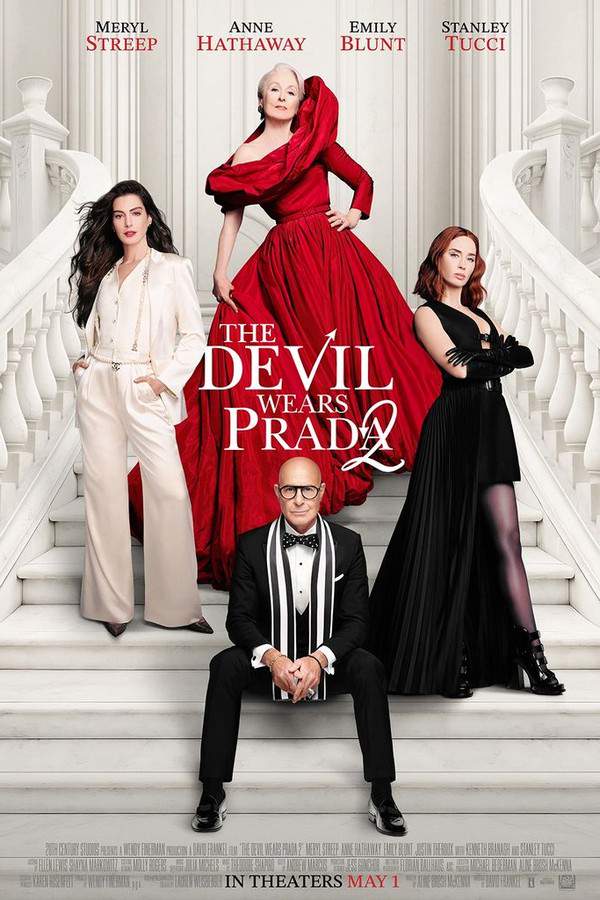
The Devil Wears Prada 2 Reviews: Critical Consensus, Audience Reactions, and Is the 2026 Sequel Worth Watching?
Twenty years after Miranda Priestly first uttered those devastatingly quiet words about the importance of “cerulean,” the fashion world has collapsed and reconstructed itself multiple times over, making the arrival of The Devil Wears Prada 2 one of the most anticipated yet questioned legacy sequels in recent memory. When a film achieves genuine cultural penetration—becoming shorthand for toxic workplace dynamics, haute couture aspiration, and the impossible standards of the publishing industry—any return to that universe carries the burden of justification. Does this 2026 follow-up merely trade on nostalgia, or does it meaningfully engage with how journalism, fast fashion, and power dynamics have mutated since 2006? For moviegoers searching for comprehensive The Devil Wears Prada 2 reviews, spoiler-free analysis, and viewer reactions to determine whether this reunion merits a theatrical excursion or streaming consideration, What’s After the Movie provides an in-depth examination of the critical consensus and fan reception landscape.
The sequel arrives into a radically different media ecosystem than its predecessor. Where the original film chronicled Andy Sachs’ survival at Runway magazine during print journalism’s final golden gasp, this installment must navigate an era where digital disruption has dismantled traditional publishing, influencer culture has democratized fashion criticism, and the very concept of “assistant” has transformed into a gig-economy nightmare. Critics and audiences alike have approached The Devil Wears Prada 2 with skepticism tempered by genuine affection for Meryl Streep’s iconic portrayal of Miranda Priestly and the ensemble chemistry that made the original a rewatchable classic. Our analysis synthesizes perspectives from major film outlets, independent critics, and verified audience reactions to deliver a definitive reception report. For those seeking immediate context on the film’s commercial performance and industry impact, visit our dedicated box office analysis section, or explore the complete movie page for The Devil Wears Prada 2 here at What’s After the Movie.
Critical Consensus and Metacritic Reception: Analyzing The Devil Wears Prada 2 Reviews
The critical reception for The Devil Wears Prada 2 presents a fascinating study in sequel evaluation, with scores ranging from a lukewarm 50/100 to an enthusiastic 88/100, landing the film in the “mixed to positive” territory that often characterizes legacy follow-ups attempting to serve dual masters. The Metacritic rating and Rotten Tomatoes critic score reflect this ambivalence, suggesting that while the film fails to achieve the unanimous praise of its predecessor, it succeeds in providing sufficient pleasures for invested viewers willing to accept certain compromises inherent to decades-later continuations.
The Chicago Tribune delivered one of the most effusive assessments, awarding the film an 88/100 and declaring that “Streep once again unnecessarily proves she’s the best in the business with her performance, delivering more in a single quiet line delivery than most actors can achieve.” This sentiment echoes across multiple critic reviews, suggesting that regardless of narrative misgivings, Streep’s return serves as the primary justification for the film’s existence. Conversely, ReelViews offered a more skeptical 50/100, positing that the film “exists more as an afterthought than a legitimate continuation of a story that was fully told twenty years ago after the first 105 minutes.” This divide between those viewing the sequel as unnecessary brand extension versus welcome reunion defines the critical conversation.
Film Threat (75/100) found middle ground by praising the creative team’s restraint, noting that “David Frankel trusts his cast and Aline Brosh McKenna’s script to handle both nostalgia and modern complications without preaching to the audience.” This observation touches upon a recurring theme in film analysis of the sequel: its attempt to acknowledge contemporary issues without sacrificing the escapist entertainment value that defined the original. The Travers Take similarly awarded 75/100, acknowledging structural flaws (“it does like to repeat itself”) while emphasizing that “Meryl Streep, Anne Hathaway, Emily Blunt and Stanley Tucci are comic virtuosos not to be resisted.”
The New York Times (70/100) characterized the experience as “a sleek diversion with brittle and sharp laughs, truckloads of couture threads and lashings of light drama,” positioning the film within the tradition of sophisticated studio comedies that prioritize star wattage over narrative innovation. Slate (70/100) specifically addressed the nostalgia factor, suggesting that “if you are a big enough fan of the first Devil Wears Prada to have ever texted a friend… that viral video of Bowen Yang flawlessly lip-synching the ‘cerulean’ speech, this sparkly sequel provides a satisfying balance between nostalgic callbacks and intelligent updates.” This spoiler-free review insight highlights how the film courts audiences familiar with the original’s cultural footprint while attempting to justify its 2026 release date through contemporary relevance.
However, Original-Cin (67/100) identified significant structural weaknesses, describing the film as “overstuffed and meanders,” suffering from “self-consciousness” regarding celebrity cameos that turn the proceedings into “self-congratulatory mush.” The Reveal (60/100) offered perhaps the most nuanced take, arguing that “the more Frankel and McKenna acknowledge that their fresh-out-of-college heroine is now a seasoned editor in her 40s, the better The Devil Wears Prada 2 gets,” while noting the film occasionally struggles to balance realistic character evolution with the “upscale fantasies” audiences expect. For those interested in exploring how this reception compares to other legacy sequels in our database, check out our curated movie collections and film lists at What’s After the Movie.
Nostalgia vs. Reality: How The Devil Wears Prada 2 (2026) Updates the Fashion Film for a New Era
Perhaps the most intellectually engaging aspect of The Devil Wears Prada 2 reviews involves the film’s negotiation between 2006 sensibilities and 2026 realities, particularly regarding the implosion of traditional journalism and the rise of fast fashion conglomerates. LarsenOnFilm (63/100) described the sequel as “Still a fantasy, though a less mealymouthed one than The Devil Wears Prada,” praising how it “nods to the real world in interesting ways—fast fashion, corporate restructuring, the implosion of journalism—while still remaining charmingly light on its Gucci-clad feet.” This observation captures the tightrope the film attempts to walk: acknowledging that the glossy magazine world of the original has fundamentally deteriorated without becoming a depressing treatise on media decline.
The film reception suggests that this updating strategy yields mixed results depending on viewer expectations. User reviewer Nerdcall (7/10) noted that the film “arrives with the delicate task of justifying its own existence after two decades—and, surprisingly, it succeeds. Instead of relying solely on nostalgia, the film attempts to update its perspective, bringing up discussions about journalism, technology, and new trends in fashion, all wrapped in a more mature [context].” This audience reaction aligns with Slate’s observation about the “contemporary, if sadder, media landscape,” suggesting that viewers attuned to industry changes appreciate the sequel’s engagement with digital disruption.
However, the modernization efforts have not satisfied all corners of the viewer reactions spectrum. User Maurita delivered a scathing 0/10 review, stating simply: “Think the Netflix version of the original. Ironic due to the first one hammering the point about knockoffs.” This critique speaks to a broader anxiety among fans that the sequel represents a dilution of the original’s specific magic, transforming theatrical-grade entertainment into algorithm-friendly content. JustinMcGill (7/10) partially concurred, noting that “the film’s opening leans a bit too heavily on nostalgia and strays into streaming movie territory,” though they ultimately found redemption once the narrative “finds its stride.”
The comparison to streaming content proves particularly damaging in film criticism contexts, with bertobellamy (4/10) suggesting the film “Could’ve easily been released on Disney+,” while dharma2 (7/10) contextualized the film against its competition: “it’s thunder has been taken by so many series such as ‘Emily in Paris’, ‘Sex and the City’ and the like that its potency was a bit lost.” This observation regarding genre expectations highlights how the fashion-film landscape has saturated since 2006, potentially diminishing the sequel’s impact for younger audiences discovering the franchise through What’s After the Movie’s summary pages.
The tension between then and now manifests most clearly in the film’s treatment of its central characters’ aging. The Reveal astutely observed that the narrative improves when acknowledging that Anne Hathaway’s Andy is no longer a naive twenty-something but a seasoned editor navigating middle age. This maturation allows the film to explore different power dynamics than the original’s assistant-versus-boss paradigm, though some user reviews like CoolSun (4/10) found Hathaway’s evolution into “more beautiful and annoyingly neurotic” territory off-putting rather than evolutionarily compelling. For detailed character analysis and actor filmographies, visit our person profiles section.
Cast Chemistry and Star Power: Meryl Streep, Anne Hathaway, and Emily Blunt Drive Reception
If narrative coherence and thematic depth generate debate among The Devil Wears Prada 2 critic reviews, the consensus regarding the cast’s collective magnetism approaches unanimity, providing the primary driver for positive audience sentiment and film reception metrics. The return of Streep, Hathaway, Blunt, and Tucci creates a gravitational pull that seemingly overrides script deficiencies, with multiple reviews suggesting that the performers’ comfort with one another and their iconic roles justifies the sequel’s existence regardless of plotting concerns.
Status (72/100) encapsulated this dynamic perfectly, noting that “Those involved are smart enough to recognize what people really want is the warm tidings of a stylish reunion, and in terms of navigating that narrow runway, the movie mostly delivers.” This “reunion” framing appears repeatedly across viewer reactions, with JustinMcGill describing the experience as “like catching up with old friends on a stylish new adventure.” The chemistry between the leads—particularly the fraught yet fascinating relationship between Miranda and Andy—remains the film’s primary selling point for audiences determining is The Devil Wears Prada 2 worth watching.
Streep’s performance generates the most consistent praise across critical consensus measurements. Beyond the Chicago Tribune’s superlative assessment, bertobellamy—despite disliking the film overall—conceded that “Meryl Streep steals the spotlight with her performance,” while The Travers Take emphasized the quartet’s status as “comic virtuosos.” This emphasis on Streep’s ability to convey volumes through “a single quiet line delivery” suggests that the sequel understands its greatest asset and deploys it strategically throughout the narrative.
However, Hathaway’s return proves more divisive among audience reactions and certain critical quarters. Mongeese (6/10) offered a particularly pointed critique: “Four main characters. Three of them are fun to watch. Then there’s the stammering, stuttering, but oh-so sincere Anne Hathaway. Your opinion of this film may well correspond to how long you can tolerate her act.” This sentiment finds resonance in CoolSun’s complaint that Hathaway plays Andy as “annoyingly neurotic,” suggesting that the character’s evolution from eager assistant to seasoned professional has not aligned with all viewers’ expectations. Conversely, thatallatom (7/10) declared succinctly: “I just want to say, this movie is absolutely so fabulous,” indicating that Hathaway’s committed performance style still finds appreciative audiences.
The supporting cast, particularly Blunt and Tucci, receive uniformly positive notices for providing the film’s most reliable comic relief and emotional grounding. Their presence helps mitigate what Original-Cin identified as the film’s tendency toward “self-congratulatory mush” when handling celebrity cameos. For fans interested in testing their knowledge of the cast’s extensive filmographies, What’s After the Movie offers interactive quizzes and games to explore actor connections and career trajectories.
Audience Reviews and Viewer Reactions: Is The Devil Wears Prada 2 Worth Your Time?
Moving beyond aggregated critical scores to individual audience reviews reveals a complex tapestry of viewer reactions that largely bifurcate along lines of expectation management and franchise investment. The user review landscape suggests that The Devil Wears Prada 2 functions primarily as fan service—deeply satisfying for those already invested in these characters’ lives, potentially underwhelming for casual viewers seeking standalone entertainment comparable to the original’s sleeper-hit impact.
SDmikel (6/10) provided a telling spoiler-free review caveat: “Perhaps my expectations were set a bit too high. Full disclosure, I saw it for free, would have been disappointed if I’d paid for it.” This economic consideration regarding film reception highlights a crucial metric for potential audiences—the value proposition of theatrical viewing versus eventual streaming availability. The sentiment that the film works better as complimentary entertainment than premium content appears in bertobellamy’s observation that it feels like “Just another sequel without a soul that lives on from the grace of the previous one,” suggesting that financial investment correlates strongly with satisfaction levels.
Spanish-language reviewer soyjosenieves (7/10) offered a nuanced international perspective, noting that the film “Pudo ser un desastre, pero no: es entretenida y agradable de ver. Mantiene la esencia de la original, con momentos memorables y el nostálgico reencuentro, aunque se siente más descafeinada, menos mordaz e icónica” (It could have been a disaster, but it isn’t: it’s entertaining and pleasant to watch. It maintains the essence of the original, with memorable moments and the nostalgic reunion, although it feels more decaffeinated, less biting and iconic). This “decaffeinated” characterization echoes across multiple film analysis pieces, suggesting that the sequel’s lighter touch—whether regarding humor or social commentary—disappoints viewers seeking the original’s sharper edges.
The comparison to contemporary fashion media remains unavoidable in audience sentiment analysis. dharma2’s observation about The Devil Wears Prada 2 losing potency to shows like “Emily in Paris” speaks to a generational divide in genre expectations. Younger viewers accustomed to the heightened, romanticized portrayal of fashion industry work in streaming series may find the sequel’s attempted realism either refreshing or confusingly muted, depending on their media literacy regarding 2000s workplace culture. For comprehensive context on how this film fits within broader industry trends, consult the What’s After the Movie Wiki.
Nerdcall’s detailed 7/10 assessment perhaps best captures the qualified enthusiasm defining critical consensus and viewer reactions alike: “The reunion with the cast is where everything comes to life, with a chemistry that carries much of the film even when the script decides to embrace more ideas than it can [handle].” This acknowledgment that the film “gets lost in layers that don’t always move the story forward” while still remaining engaging through sheer star power provides the most accurate spoiler-free review summary for undecided viewers. The film works, but works differently than the original—less as a tight narrative and more as a hangout movie for established fans.
Fashion Industry Commentary and Thematic Depth: Beyond the Surface Level Glitz
Beneath the montages of couture and the sharp-tongued one-liners, The Devil Wears Prada 2 reviews frequently grapple with the film’s attempted engagement with substantive issues facing contemporary fashion and journalism industries. The original film’s legacy rests partly on its unexpectedly trenchant observation about labor exploitation hidden beneath luxury aesthetics—the “cerulean” speech functioning as both joke and genuine critique of invisible supply chains. The sequel faces the challenge of updating this commentary for an era of fast fashion dominance, digital media disruption, and corporate consolidation.
LarsenOnFilm praised the film for acknowledging “fast fashion, corporate restructuring, the implosion of journalism” within its fantasy framework, while Slate emphasized the “intelligent updates to suit a more contemporary, if sadder, media landscape.” These critic reviews suggest that the creative team recognized the necessity of evolving beyond the original’s relatively straightforward workplace dynamics to address how Miranda Priestly’s world has been fundamentally altered by technological disruption and economic precarity.
However, the sincerity and effectiveness of these updates generate significant debate within film analysis circles. bertobellamy delivered a harsh assessment of the film’s political engagement, stating that “it is false that criticism of excessive capitalism and unfair corporate practices is felt. A superficial and boring film whose cynicism is not graceful.” This critique suggests that where the original balanced escapism with genuine insight about power and labor, the sequel’s commentary on contemporary capitalism registers as perfunctory or aesthetically incoherent.
The contrast between audience reactions and critic reviews regarding thematic depth proves instructive. While professional critics tend to evaluate the film’s engagement with journalism’s collapse and fashion’s environmental impact as necessary narrative scaffolding, many user reviews focus exclusively on character interactions and emotional beats. soyjosenieves noted the humor feels “más tonto y actual” (sillier and more current), suggesting that the film prioritizes entertainment over the satirical bite that originally distinguished the franchise.
This tension between substantive commentary and light entertainment defines the sequel’s reception among viewers seeking more than nostalgic callbacks. The film’s treatment of Andy’s matured perspective—now presumably capable of recognizing and resisting the systemic exploitation she once endured—offers rich territory for film criticism, yet Original-Cin’s complaint about the film becoming “self-congratulatory mush” when handling celebrity culture suggests that the critique may turn inward, targeting easy targets rather than structural issues.
For those interested in exploring how The Devil Wears Prada 2 compares to other films addressing workplace culture and industry critique, What’s After the Movie offers extensive movie lists categorizing films by theme and reception. Additionally, our awards tracking section monitors whether this sequel garners recognition for its performances or production design during the upcoming awards season.
Conclusion: The Devil Wears Prada 2 Reception and Final Verdict
Synthesizing the breadth of The Devil Wears Prada 2 reviews, critic consensus, and audience reactions reveals a sequel that succeeds through the sheer gravitational force of its cast while struggling to justify its narrative existence beyond the commercial imperative of reunion. The film occupies a specific niche in the legacy sequel landscape: unlikely to convert skeptics who found the original overrated, but providing sufficient pleasures for established fans to justify a viewing, preferably with tempered expectations regarding its thematic ambition and structural coherence.
The critical reception suggests that The Devil Wears Prada 2 (2026) functions best as a vehicle for Streep, Hathaway, Blunt, and Tucci to inhabit familiar rhythms, generating warmth and occasional sparks of genuine insight about aging, media evolution, and professional compromise. The Metacritic rating and Rotten Tomatoes aggregation reflect this serviceable competence—nethern disaster nor masterpiece, but a pleasant diversion that occasionally transcends its streaming-movie aesthetic through star power alone. For viewers asking is The Devil Wears Prada 2 worth watching, the answer depends entirely on investment in these specific performers and characters; the film offers little for those seeking standalone brilliance independent of franchise nostalgia.
Ultimately, the film reception underscores the difficulty of capturing lightning twice, particularly when the cultural moment that produced the original—a specific confluence of print media dominance, pre-recession luxury, and workplace comedies—has irrevocably passed. The sequel’s attempts to engage with “fast fashion, corporate restructuring, the implosion of journalism” provide intellectual cover for what remains fundamentally an exercise in comfort viewing, a chance to spend time with beloved fictional figures grown older alongside their audience.
For comprehensive coverage of this and other major releases, including detailed summaries, box office tracking, and interactive features, visit the What’s After the Movie summary page for The Devil Wears Prada 2. Explore our complete database of film summaries, concert film documentation, and detailed movie information to enhance your viewing decisions and cinematic knowledge.
| Resource | Link |
|---|---|
| The Devil Wears Prada 2 Wikipedia | Wikipedia |
| The Devil Wears Prada 2 Rotten Tomatoes | Rotten Tomatoes |
| The Devil Wears Prada 2 Metacritic | Metacritic |
| The Devil Wears Prada 2 JustWatch | JustWatch |
| The Devil Wears Prada 2 Box Office Mojo | Box Office Mojo |
Continue reading

What's After the Movie?
Not sure whether to stay after the credits? Find out!
Check out our other apps:

SAT Sphere
Build confidence for the Digital SAT.

Mori Atlas
Discover wild places worth protecting.

Luntero
Search smarter for a home in Amsterdam.

Plot Explained
Unravel movie endings and hidden clues.

Pokechamp
Dive into Pokémon data and battle logic.

Driving Theory
Get ready for your European theory test.

Movie Dust
Plan your next cinema trip with ease.

Musemap
Find art and culture as you travel.

Selkobase
Compare credentials before committing.

Local Manual
Turn an unfamiliar country into practical next steps.

Lernavi
Compare school systems before your next move.

GymRoam
Find a workout stop wherever your plans take you.
Explore Our Movie Platform
New Movie Releases (2026)
Famous Movie Actors
Top Film Production Studios
Movie Plot Summaries & Endings
Major Movie Awards & Winners
Best Concert Films & Music Documentaries
Movie Collections and Curated Lists
© 2026 What's After the Movie. All rights reserved.
Privacy Policy