What's After the Blog?
Opinions • Reception
A Great Awakening (2026) Review, Critics Opinions & Audience Reception – Historical Drama Analysis
Explore fan reactions and critic reviews of A Great Awakening (2026), examining performances, storytelling, and its place in the historical drama franchise. The post breaks down the film’s reception, from audience applause to critical analysis of its portrayal of early American history.
April 18, 2026

Movies mentioned in this article
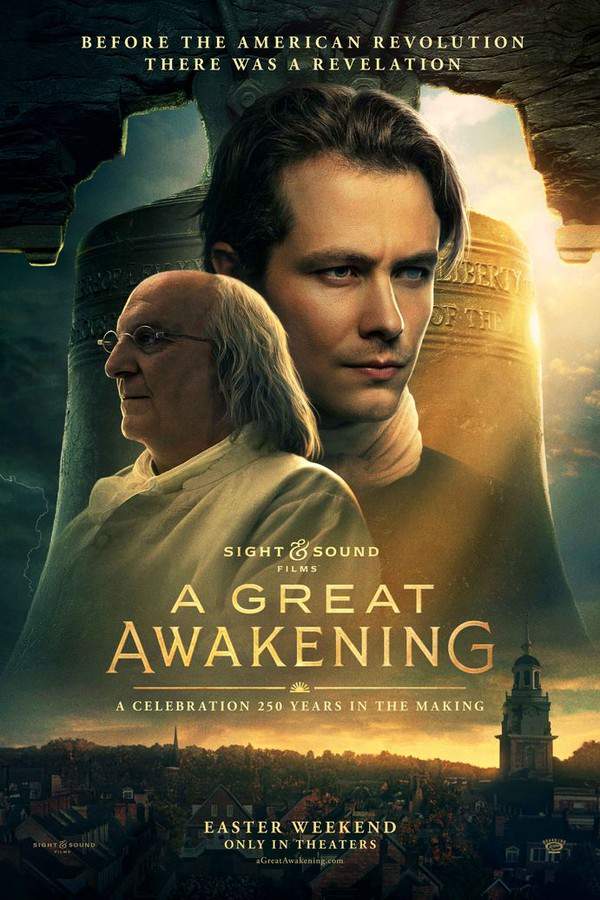
A Great Awakening (2026) Reviews & Reception: Critical Consensus vs Audience Reactions
When A Great Awakening premiered on April 3, 2026, it arrived amidst an increasingly polarized cultural landscape where faith-based historical dramas face intense scrutiny from both secular critics and religious audiences. The film, which explores the relationship between evangelical preacher George Whitefield and founding father Benjamin Franklin during America’s formative years, has generated one of the most divisive reception landscapes of the year. Whether you’re searching for spoiler-free reviews, critic consensus, or wondering “is A Great Awakening worth watching,” the answer largely depends on your perspective regarding historical accuracy, religious messaging, and narrative pacing preferences.
At What’s After the Movie, we specialize in cutting through the noise to provide comprehensive reception analysis that helps viewers make informed decisions. Our movie database offers detailed summaries, cast information, and box office tracking, while our dedicated movie page for A Great Awakening provides real-time updates on viewer reactions and critical scores. This analysis dives deep into the fractured reception of this controversial historical drama, examining everything from accusations of religious propaganda to praise for its educational value and performances. Before you decide whether to stream or skip, let’s explore what critics and audiences are actually saying about this provocative 2026 release.
Critical Reception: Critics Weigh In on A Great Awakening (2026)
Professional film criticism regarding A Great Awakening reveals a fascinating schism between traditional critical metrics and specialized historical evaluation. Roger Ebert’s successor outlets and mainstream entertainment journalists have approached the film with measured skepticism, while religious and historical publications have embraced it with considerably more enthusiasm. This divergence creates a complex critical landscape that defies simple Rotten Tomatoes score interpretations.
Movie Nation delivered one of the more measured critical assessments, noting that “an imposing and impressive lead performance somewhat atones for an awkwardly structured script and a charisma-starved supporting cast in A Great Awakening.” This observation highlights a recurring theme across professional reviews: the central performance—presumably portraying George Whitefield given the historical context—carries significant dramatic weight, yet struggles against screenplay limitations and uneven ensemble work. The phrase “charisma-starved supporting cast” suggests that while the film’s spiritual message may resonate with target demographics, the cinematic craft of performance distribution remains problematic.
Conversely, The New York Times approached the material with historical rather than purely entertainment-focused criticism, describing it as “an earnest account of a religious movement that still resonates — Whitefield’s practice was instrumental in the growth of the Methodist church, and his sermons and lectures are still in print today.” This distinction matters significantly for viewers seeking film analysis that contextualizes the movie within actual historical discourse rather than purely aesthetic evaluation. The Times’ emphasis on Whitefield’s continuing legacy suggests the film succeeds as educational material, even if it may stumble as pure cinema.
The critical consensus appears fragmented when comparing these major outlets. Where Movie Nation identifies structural screenplay deficiencies and supporting cast weaknesses, The New York Times validates the historical substance and earnest approach. This dichotomy reflects broader industry tensions regarding faith-based historical dramas—films that serve dual purposes as entertainment and ministry often face criticism from secular outlets for prioritizing message over craft, while religious critics frequently overlook technical shortcomings in favor of ideological alignment.
For viewers consulting Metacritic scores or seeking “A Great Awakening critic reviews,” this split creates a challenging decision matrix. The film apparently delivers sufficient historical authenticity to satisfy scholars of American religious history, yet potentially frustrates cinephiles seeking polished dialogue and dynamic supporting performances. Critics specializing in Christian cinema have largely praised the production values compared to lower-budget religious films, suggesting A Great Awakening represents a tier above typical faith-based productions in terms of production quality, even if narrative structure remains contentious.
Religious Propaganda or Historical Authenticity? Analyzing Polarized Viewer Reactions
Perhaps no aspect of A Great Awakening reception generates more heated debate than accusations of religious propaganda versus defenses of historical documentation. User reviews on platforms like IMDb and social media reveal a stark divide between viewers who perceive the film as manipulative indoctrination and those who celebrate it as necessary spiritual education.
User jaredwallace91 articulated the skeptical position with considerable force: “There’s way too much output of Christian Nationalist slop lately. This film lacks good storytelling or historical accuracy, so it’s main purpose must be to manipulate easily gullible audiences with whatever naive or nefarious intentions it has.” This review reflects a growing cynicism among secular viewers regarding faith-based historical films, suggesting that A Great Awakening functions primarily as ideological recruitment rather than artistic expression. The use of charged language like “slop” and “manipulate” indicates that for some audience segments, the film triggers immediate political and cultural resistance regardless of cinematic merit.
Similarly, user drzardoz expressed profound disappointment bordering on anger: “This movie was a complete rip off. I went, expecting to see an exciting movie regarding a pivotal moment in the history of the United States. Instead, I went to a religious propaganda movie funded by people who think they are very clever and can trick people into being more religious. But worse than that, the movie was was incredibly BORING.” The repetition of “on and on and on” emphasizes pacing frustrations, while the admission of walking out—“only about the third movie I have ever done that”—signals genuine viewer alienation. User Danny P echoed this sentiment succinctly: “It seemed like it might be good but a ways into it I realized it was religious propaganda.”
However, the counter-narrative from religious viewers proves equally passionate and numerically significant. User Tracey offered a starkly different interpretation: “Moving presentation of the hand of God on the birth of the USA.” Similarly, Lillian praised it as “Great production. Wonderful enlightening story of the beginning of our country,” while Larry P declared it “Excellent and very inspiring!”
The most theologically substantive positive review came from Martha S, who provided detailed historical validation: “I know this historical period well & it is a highly accurate historical film covering some events that influenced the founding of our nation, including Christian events & thinking that influenced the people of that time… It shows how Franklin, through Whitefield’s influence shifted from identifying as a Deist, meaning he believed in the existence of God but not a God who answers prayer or has a personal relationship with people, to an understanding of God as one who answers prayer & cares for people.”
This polarization creates a challenging environment for potential viewers consulting audience reactions. The film apparently succeeds magnificently for viewers seeking confirmation of America’s Christian heritage and spiritual inspiration, while failing catastrophically for those suspicious of religious messaging in entertainment. For our movie quiz enthusiasts, this makes A Great Awakening a fascinating case study in audience segmentation—rarely does a film generate such diametrically opposed interpretations of its fundamental purpose and quality.
Acting Performances and Character Dynamics: What Reviewers Are Saying About the Cast
The dramatic core of A Great Awakening centers on the historical friendship between George Whitefield and Benjamin Franklin, a relationship that reviewers treat with varying degrees of appreciation depending on their engagement with the material. The acting reception follows patterns established in the critical consensus: praise for central performances coupled with reservations about supporting depth.
Macon B provided nuanced performance analysis in their 4.5-star review: “Great account on the life, journey, and relationship between two of America’s most important early heroes: George Whitfield and Benjamin Franklin. A bit slow paced at times but extremely powerful and engaging in others.” This assessment suggests the lead actors successfully convey the complex dynamic between the theatrical evangelist and the pragmatic inventor-statesman. The reference to “early heroes” indicates that viewers familiar with American history appreciate the casting choices and character chemistry, even if the pacing occasionally undermines dramatic momentum.
Martha S expanded on this chemistry with specific praise: “The acting was excellent; the characters came to life. You see the friendship that between two historical characters who really were friends, Rev. George Whitefield & Ben Franklin. I experienced an emotional connection to the movie.” Her emphasis on “emotional connection” suggests the lead performers successfully transcend the screenplay’s structural limitations noted by professional critics. When amateur reviewers specifically cite emotional resonance despite historical distance, it indicates successful performance calibration that makes 18th-century figures accessible to modern audiences.
However, the Movie Nation critique regarding “charisma-starved supporting cast” raises important questions about ensemble depth. Historical dramas often succeed or fail based on their ability to populate their worlds with compelling secondary characters who ground the central relationship in social context. If A Great Awakening suffers from supporting cast deficiencies, this might explain why some viewers find the film “boring” or “propaganda-like”—thin secondary characters can make ideological dialogue feel didactic rather than organic.
User Belinda T offered a different performance angle entirely: “Loved the heart and humor!” This brief but significant observation suggests that despite the film’s heavy historical and theological subject matter, the performers successfully inject warmth and levity into the proceedings. The presence of humor in a film about 18th-century religious revivalism indicates sophisticated performance choices that prevent the material from becoming overly solemn or preachy.
For viewers researching cast information and wondering about performance quality, the reception suggests the leads carry the film effectively enough to satisfy history enthusiasts and faith-based audiences, even if acting aficionados might find the supporting ensemble lacking. The Franklin-Whitefield relationship appears to provide sufficient dramatic anchor to sustain viewer investment, particularly for those already interested in the historical figures portrayed.
Pacing and Narrative Structure: Is A Great Awakening (2026) Too Slow or Deliberately Layered?
The temporal experience of watching A Great Awakening generates perhaps the most substantive debate regarding cinematic craft versus viewing preferences. Reviews diverge dramatically on whether the film’s pacing represents artistic restraint or simply poor editing, creating a fascinating case study in how audience expectation shapes perception of narrative rhythm.
User manan11 provided the most eloquent defense of the film’s temporal approach: “Not every film wakes you up. This one refuses to let you go back to sleep. A Great Awakening doesn’t chase easy emotions or surface-level storytelling. It builds its narrative with intent—slow, layered, and quietly powerful. The kind of film that doesn’t shout its message, but makes sure you feel it.” This poetic description positions the film within the tradition of contemplative cinema, where deliberate pacing serves thematic depth rather than indicating technical failure. The reviewer acknowledges potential accessibility issues—“The pacing can feel a bit restrained at times, almost holding back when it could’ve pushed further”—but ultimately validates these choices as “confidence” that “pays off.”
This perspective contrasts sharply with drzardoz’s experience of the same structural elements: “Every propaganda scene just went on and on and on and on and on. And on.” Where manan11 experiences “intent” and “weight,” drzardoz experiences tedium and repetition. The divergence here may stem from engagement with the subject matter—viewers invested in theological or historical details likely experience scenes as “layered” and “deliberate,” while those resistant to the messaging perceive identical scenes as “going on and on.”
Macon B attempted synthesis by acknowledging both perspectives: “A bit slow paced at times but extremely powerful and engaging in others.” This balanced view suggests A Great Awakening employs variable pacing that occasionally miscalculates viewer patience but ultimately delivers sufficient dramatic payoff to justify the slower sections. The “at times” qualification indicates that pacing issues aren’t consistent throughout but rather affect specific sequences or acts.
For potential viewers consulting spoiler-free reviews or wondering about the film’s entertainment value, this pacing debate proves crucial. The movie apparently requires viewer patience and tolerance for historical detail that action-oriented audiences might find taxing. However, for viewers seeking inspirational movies or educational content that respects their intelligence, the deliberate pacing likely enhances rather than diminishes the experience.
The structural criticism from Movie Nation regarding “awkwardly structured script” adds another dimension, suggesting that beyond mere pacing, the film may suffer from organizational issues regarding scene placement or narrative flow. When combined with user complaints about scenes that drag, this indicates A Great Awakening may struggle with the transition from historical account to cinematic narrative, a common challenge in biographical films that prioritize chronological accuracy over dramatic economy.
Historical Accuracy and Educational Value: Does A Great Awakening (2026) Get It Right?
Beyond questions of entertainment and ideology, A Great Awakening has sparked significant discussion regarding its value as historical documentation and educational resource. For viewers interested in American history films or seeking accurate portrayals of the First Great Awakening, the reviews provide substantial material for evaluation.
Martha S offered the most detailed historical validation, asserting: “I know this historical period well & it is a highly accurate historical film covering some events that influenced the founding of our nation, including Christian events & thinking that influenced the people of that time. You don’t have to be a historian to appreciate it, but it really is true.” Her specific reference to Franklin’s theological evolution—from Deism to a more personal faith—suggests the film engages with complex historical nuances rather than presenting simplistic hagiography. The claim that Franklin’s 1787 Constitutional Convention speech was “100% accurate” indicates that filmmakers prioritized documentary precision in key moments.
Keith reinforced this educational angle: “A wonderful inspirational movie, and much needed today,” suggesting the film serves contemporary educational needs regarding America’s religious heritage. Debra similarly noted appreciating “the history,” while Macon B described it as “excellent for a history loving Christian.”
However, the accuracy claims face challenges from skeptical viewers. jaredwallace91 specifically contested the film’s relationship with historical truth: “This film lacks good storytelling or historical accuracy,” implying that the movie sacrifices factual integrity for ideological messaging. This accusation—that the film invents or exaggerates religious influence on the founding—represents a significant historiographical debate that extends beyond cinema into academic discussions about secular vs. providential interpretations of American history.
For educators and parents considering A Great Awakening as supplementary historical material, these conflicting assessments create uncertainty. The film appears to accurately depict specific documented interactions between Whitefield and Franklin, including theological developments in Franklin’s later life. However, critics might argue that the film selectively emphasizes religious influence while minimizing secular Enlightenment philosophy’s role in founding-era thought.
Viewers seeking comprehensive movie information should note that A Great Awakening seems to function effectively as an introduction to the Great Awakening’s cultural impact, particularly regarding print culture and public discourse in colonial America. Whether it qualifies as objective history or interpretive narrative depends largely on the viewer’s existing historical framework and openness to religious explanations for historical events.
Conclusion: Navigating the Divided Reception of A Great Awakening (2026)
As A Great Awakening continues its theatrical run and moves toward streaming availability, its reception legacy appears cemented as one of 2026’s most polarizing releases. The film succeeds magnificently for its target demographic—viewers seeking faith-affirming historical drama that validates America’s Christian heritage—while alienating secular audiences who perceive evangelistic intent behind the entertainment. This division reflects broader cultural tensions regarding the role of religion in public life and historical interpretation, making the film more than mere entertainment but rather a cultural flashpoint.
For viewers asking “is A Great Awakening worth watching,” the answer requires honest self-assessment of your viewing priorities. If you value inspirational stories, appreciate deliberate pacing that allows for contemplation, and seek historical films about religious figures, this movie delivers exactly what you’re seeking. The performances, particularly the lead portrayals of Whitefield and Franklin, provide sufficient emotional anchor to sustain investment even through slower sections. However, if you prefer fast-paced narratives, are sensitive to religious messaging in cinema, or seek purely secular historical analysis, the film will likely frustrate your expectations.
At What’s After the Movie, we believe every film deserves consideration within its intended context. A Great Awakening clearly knows its audience and serves them effectively, even if it fails to convert skeptical viewers. Whether you’re tracking box office performance, researching award potential, or simply looking for your next weekend viewing, our comprehensive database provides the context you need. Visit our dedicated A Great Awakening movie page for updated viewer ratings, detailed summaries, and connections to similar films in our movie collections.
The ultimate verdict? A Great Awakening is a film that knows exactly what it wants to be, and for that specific vision, it largely succeeds. Whether that vision aligns with your viewing preferences determines whether you’ll find it “excellent and inspiring” or “incredibly boring.” In an era of algorithm-driven content designed to offend no one, perhaps there’s value in cinema that dares to take a stand—even if that stand ensures it will never achieve universal acclaim.
| Platform | Link |
|---|---|
| The Movie Database (TMDB) | A Great Awakening on TMDB |
| Rotten Tomatoes | A Great Awakening on Rotten Tomatoes |
| Metacritic | A Great Awakening on Metacritic |
| JustWatch | A Great Awakening on JustWatch |
| Box Office Mojo | A Great Awakening on Box Office Mojo |
Continue reading



What's After the Movie?
Not sure whether to stay after the credits? Find out!
Check out our other apps:

SAT Sphere
Build confidence for the Digital SAT.

Mori Atlas
Discover wild places worth protecting.

Luntero
Search smarter for a home in Amsterdam.

Plot Explained
Unravel movie endings and hidden clues.

Pokechamp
Dive into Pokémon data and battle logic.

Driving Theory
Get ready for your European theory test.

Movie Dust
Plan your next cinema trip with ease.

Musemap
Find art and culture as you travel.

Selkobase
Compare credentials before committing.

Local Manual
Turn an unfamiliar country into practical next steps.

Lernavi
Compare school systems before your next move.

GymRoam
Find a workout stop wherever your plans take you.
Explore Our Movie Platform
New Movie Releases (2026)
Famous Movie Actors
Top Film Production Studios
Movie Plot Summaries & Endings
Major Movie Awards & Winners
Best Concert Films & Music Documentaries
Movie Collections and Curated Lists
© 2026 What's After the Movie. All rights reserved.
Privacy Policy