What's After the Blog?
news • Streaming • analysis
Daredevil Born Again Season 2 Finale Subverts Iconic Fight Tradition
The Season 2 finale of Daredevil Born Again breaks from the franchise's celebrated one-take action tradition by placing Wilson Fisk at the center of a brutal mob confrontation. The episode concludes with major status quo shifts for both Matt Murdock and Kingpin, though narrative choices regarding Fisk's legal consequences have drawn scrutiny.
May 8, 2026
Daredevil Born Again Season 2 Finale Subverts Iconic Fight Tradition
The Marvel Television series Daredevil Born Again has concluded its sophomore season with a finale that fundamentally reimagines one of the franchise’s most celebrated visual signatures. While the episode “The Southern Cross” delivers the visceral, sustained combat sequences that fans anticipate, it subverts the long-standing tradition of the “oner” by shifting the focus from Matt Murdock to his arch-nemesis Wilson Fisk. The season closer introduces significant status quo changes for both characters, culminating in a narrative role reversal that places the vigilante behind bars while the Kingpin negotiates his freedom, creating a provocative conclusion that has sparked debate regarding its internal logic.
Since the character’s return to the screen, the production has maintained specific storytelling devices inherited from its Netflix predecessor. The creative team has continued the once-per-season tradition of elaborate, long-take action sequences that showcase physical endurance and brutal choreography. These scenes have historically served as benchmarks for the franchise’s commitment to grounded, visceral superhero combat.
The Hallway Fight Legacy
The one-take fight tradition originated in the initial Netflix iteration of the character, establishing itself immediately as a series hallmark. The sequence structure evolved across multiple seasons, with each installment attempting to escalate the technical complexity and physical demands of the set pieces:
- Season 1, Episode 2 (“Cut Man”): The original hallway fight that generated critical praise and established the visual signature, featuring Daredevil fighting through a corridor of enemies
- Season 2, Episode 3 (“New York’s Finest”): The stairwell confrontation featuring the Dogs of Hell biker gang in another sustained combat sequence
- Season 3, Episode 4 (“Blindsided”): An over ten-minute single-take prison riot sequence widely considered among Marvel’s best action filmmaking
- Born Again Season 1: Continued the tradition immediately in the series premiere
- Born Again Season 2, Episode 3 (“The Scales & the Sword”): Featured Matt liberating one of Fisk’s prison camps in a brief but intense continuous shot
These sequences consistently emphasize the protagonist’s brutality and his capacity to recover from punishment, serving as visceral metaphors for psychological persistence and physical resilience. The staging and set pieces grew increasingly ambitious while maintaining the core concept of Daredevil beating back streams of adversaries to demonstrate his stubborn refusal to remain down.
Kingpin’s Turn in the Spotlight
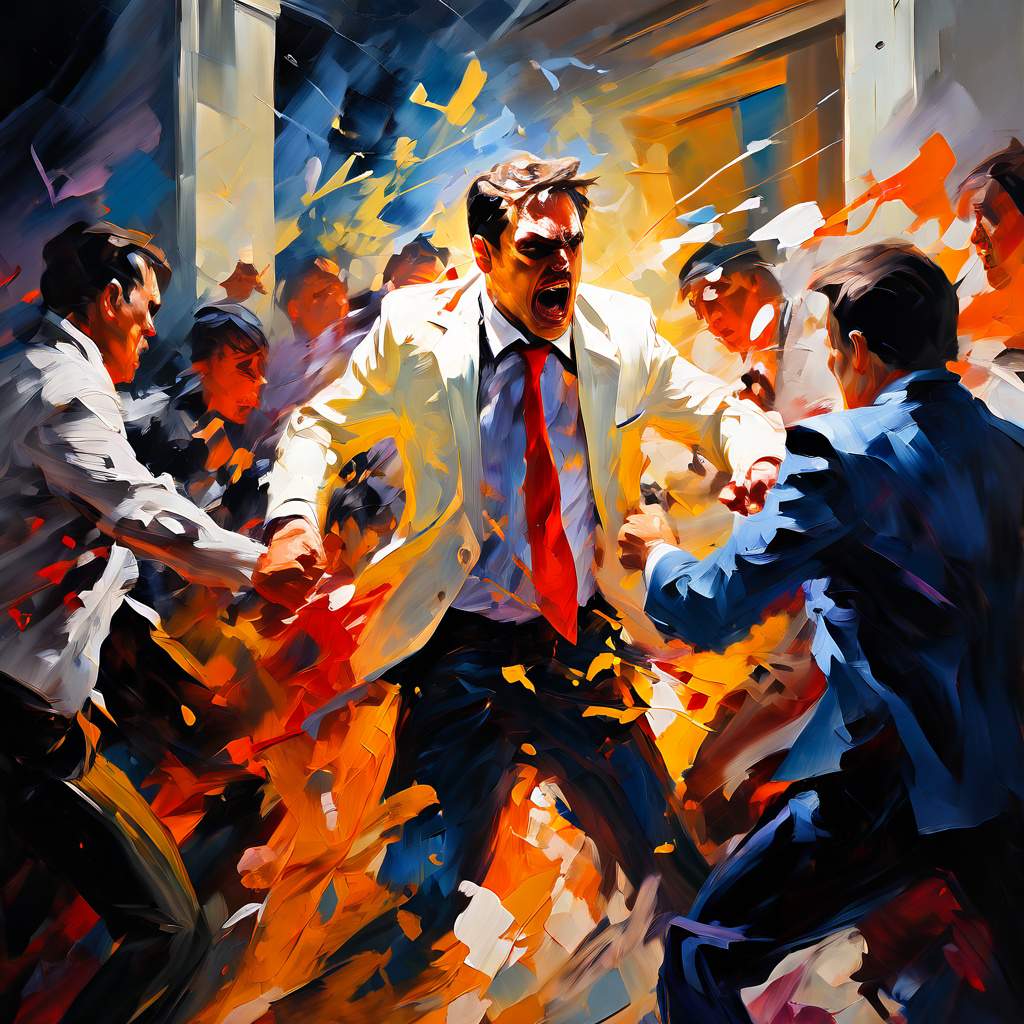
The Season 2 finale, however, deploys a significant structural twist on this established formula. After five seasons of television where Daredevil exclusively commanded these showcase combat sequences, the finale grants Wilson Fisk his own mob confrontation. When a crowd of New Yorkers rises up and storms the New York State Supreme Court Building, where Fisk has barricaded himself, the mayor responds not by seeking safety but by charging directly into the throng.
The sequence presents Fisk brutalizing multiple attackers as he forces his way through the building’s interior. Unlike its predecessors, this scene does not utilize the single-take aesthetic. Instead, the editing crosscuts between Fisk’s rampage and concurrent action showing Daredevil and Jessica Jones fighting through Fisk’s private army of corrupt police officers. This editorial choice distinguishes the sequence from the franchise’s previous oners while maintaining the claustrophobic intensity of confined-space combat.
The staging deliberately echoes the visual language of earlier installments, particularly the prison riot from the Netflix era. Rather than confining the action to a single hallway or stairwell, the entire building serves as the battleground, with Fisk moving through swarming crowds who seek to overwhelm him. The violence reaches extreme levels, with the first victim of Fisk’s assault sent flying into a wall from the impact of a single punch, followed by a close-up of the deceased man’s eyes. By the time Fisk reaches the lobby, his signature white suit bears extensive bloodstains, marking a visual transformation that signals his reversion to the Kingpin of Crime persona.
Narrative Consequences and Character Arcs
Beyond its technical innovations, the finale implements dramatic reversals that fundamentally alter both protagonists’ circumstances. The episode concludes with Fisk resigning his position as mayor of New York City and accepting a plea deal that grants him immunity from prosecution contingent upon his permanent departure from the city. This legal resolution arrives despite the public nature of his violent outburst, which occurred before numerous witnesses and cameras.
In direct contrast, Matt Murdock embraces martyrdom over secrecy. To ensure Fisk cannot escape accountability entirely, Murdock publicly reveals his secret identity as Daredevil, sacrificing his civilian life to expose the mayor’s criminal enterprises. This confession leads directly to Matt accepting a prison sentence, removing the vigilante from the streets he protected.
The closing imagery deliberately mirrors the series’ history. The final shot depicts Matt seated alone in a prison cell, a visual composition that directly recalls the conclusion of the original series’ first season, which featured Wilson Fisk in similar solitary confinement. This parallel construction emphasizes the complete inversion of their positions: where once the Kingpin sat imprisoned while the lawyer walked free, now the vigilante occupies the cell while the crime lord negotiates his freedom.
Story Logic and Critical Reception
The finale’s narrative choices have generated significant discussion regarding plot consistency and thematic coherence. Critics and viewers have identified a central tension between the episode’s political ambitions and its narrative resolution. The depiction of a populist uprising and riot carries explicit contemporary resonance, yet the conclusion requires accepting that Fisk faces minimal consequences for multiple homicides committed in public view.
The visual evidence of Fisk’s guilt appears indisputable within the text. Witnesses observe him killing several crowd members, and the blood saturating his clothing provides physical proof of his participation in the violence. Despite this, his plea deal allows him to avoid prosecution for these deaths, creating a narrative dissonance that undermines the episode’s stated themes of accountability and justice. This leniency represents the lightest legal consequence Fisk has faced across his appearances, occurring paradoxically when his criminal activities have received the most public exposure.
Daredevil Born Again remains available for streaming exclusively on Disney+, where viewers can assess the season’s controversial conclusion and its implications for the future of both characters.
What’s After the Movie?
Looking for more insights on your favorite series and where the story goes next? What’s After the Movie offers comprehensive coverage of film and television news, from season finale breakdowns to box office analysis and ending explanations. Explore our detailed movie summaries for spoiler-free recaps, check the latest industry news, or browse our complete database to discover what to watch next. Whether you’re tracking streaming releases or looking for detailed franchise breakdowns, we provide the context you need to stay informed about the entertainment industry.
Continue reading




What's After the Movie?
Not sure whether to stay after the credits? Find out!
Check out our other apps:

SAT Sphere
Build confidence for the Digital SAT.

Mori Atlas
Discover wild places worth protecting.

Luntero
Search smarter for a home in Amsterdam.

Plot Explained
Unravel movie endings and hidden clues.

Pokechamp
Dive into Pokémon data and battle logic.

Driving Theory
Get ready for your European theory test.

Movie Dust
Plan your next cinema trip with ease.

Musemap
Find art and culture as you travel.

Selkobase
Compare credentials before committing.

Local Manual
Turn an unfamiliar country into practical next steps.

Lernavi
Compare school systems before your next move.

GymRoam
Find a workout stop wherever your plans take you.
Explore Our Movie Platform
New Movie Releases (2026)
Famous Movie Actors
Top Film Production Studios
Movie Plot Summaries & Endings
Major Movie Awards & Winners
Best Concert Films & Music Documentaries
Movie Collections and Curated Lists
© 2026 What's After the Movie. All rights reserved.
Privacy Policy