What's After the Blog?
Opinions • Reception
All You Need Is Kill (2026) Review, Critics Opinions & Audience Reception – In-Depth Analysis
Explore fan reactions and critic reviews of All You Need Is Kill (2026), examining performances, storytelling, and its place within the franchise. This post breaks down audience reception, critic scores, and the film's impact on the sci‑fi action genre.
February 11, 2026

Movies mentioned in this article
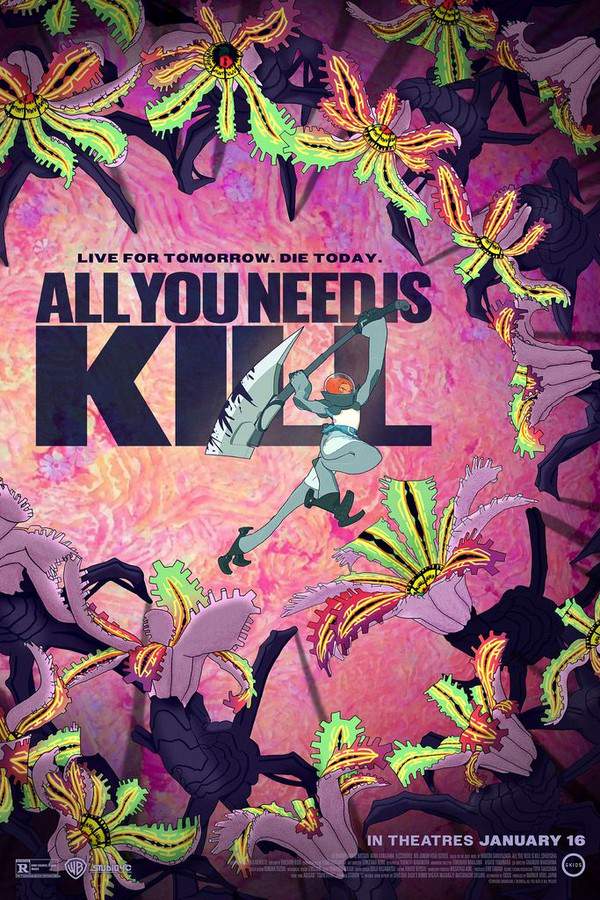
All You Need Is Kill 2025 Review: Critic & Audience Reactions to the Anime Adaptation
When Studio 4°C announced their animated adaptation of All You Need Is Kill, audiences immediately questioned whether the world needed another retelling of Hiroshi Sakurazaka’s time-loop sci-fi story. After Doug Liman’s 2014 blockbuster Edge of Tomorrow (loosely based on the same light novel) cemented itself as a cult classic among Tom Cruise action vehicles, the 2025 anime film faced an uphill battle distinguishing itself from both the Hollywood version and the original manga. Yet as viewers search for “All You Need Is Kill review” and “Is All You Need Is Kill 2025 worth watching?” they discover a film that deliberately subverts expectations by prioritizing intimate character psychology over bombastic spectacle.
At What’s After the Movie, we’ve analyzed the critical consensus, audience sentiment, and comparative reception across major review aggregators to determine whether this anime adaptation successfully carves its own identity or merely exists in the shadow of its predecessors. Unlike traditional plot summaries you might find on our summary page, this analysis focuses exclusively on the film’s reception landscape—the polarizing reactions from professional critics, the enthusiastic but occasionally confused fan responses on Letterboxd, and how the movie performs against genre expectations for time-loop thrillers. Whether you’re seeking spoiler-free critical takes or detailed film analysis comparing this version to the Cruise vehicle, this comprehensive review breakdown provides the reception data you need before streaming.
Critical Consensus and Metacritic Reception: Parsing the Polarized Professional Reviews
The critical reception for All You Need Is Kill (2025) reveals a fascinating divergence in opinion that defies simple categorization as either “fresh” or “rotten” on review aggregators. With scores ranging from a scathing 50/100 from The New York Times to a rapturous 90/100 from TheWrap, the film sits at a Metacritic score that suggests qualified admiration rather than universal acclaim. This 40-point spread between the most negative and positive professional reviews indicates a movie that takes significant creative risks—risks that profoundly resonate with some critics while alienating others who approach the material with specific expectations about time-loop narratives.
TheWrap’s effusive praise stands as the critical high watermark, describing the film as “one of the best, most deeply felt and most gorgeously animated features of the year. On this or any other planet.” This sentiment aligns with RogerEbert.com’s 75/100 assessment, which specifically highlights “Studio 4°C’s sumptuous animation and sound design” as elements that make the film “a vivid and worthwhile do-over.” These reviewers appreciate the anime not as a replacement for Edge of Tomorrow but as a distinct artistic vision that leverages the medium’s capacity for emotional abstraction and visual poetry that live-action cannot replicate.
Conversely, The New York Times’ 50/100 critique focuses on narrative compression, arguing that “by narrowing the scope and condensing the logic of the action, this film undermines the excitement of the story, so even the day of an alien apocalypse starts to get tedious.” The Film Stage echoes this concern with a 58/100 score, noting that “retaining its narrow action-mechanical focus, the film struggles to paint a convincing interpersonal relationship.” These criticisms suggest that critics approaching All You Need Is Kill as a traditional action film found its middle section—where protagonist Rita trains in isolation across multiple time loops—too static for blockbuster pacing expectations.
The median critical voice emerges from outlets like Polygon (63/100) and The A.V. Club (67/100), which acknowledge the film’s visual achievements while tempering enthusiasm about narrative execution. Polygon specifically notes that “All You Need Is Kill isn’t as tight or fun a film as Edge of Tomorrow, but the visuals are stunning, and the moody tone makes it easy to get immersed in the world, even when the story doesn’t fully deliver on the premise.” This establishes the critical consensus framework: the film succeeds as an atmospheric, character-driven piece but potentially disappoints viewers seeking the propulsive momentum of its live-action predecessor.
IGN’s 80/100 review occupies an interesting middle ground, praising the “killer video game-like time loop with striking imagery” while conceding that “the adaptation stumbles in its third act.” This third-act criticism appears as a recurring motif across otherwise positive reviews, suggesting that while Studio 4°C’s All You Need Is Kill maintains engagement through its first two-thirds via Rita’s lonely repetition and eventual partnership with Keiji, the resolution fails to satisfyingly synthesize the emotional and action elements built throughout the runtime.
For readers tracking box office performance alongside critical reception to determine commercial viability, our box office analysis page provides additional context on how anime features perform against live-action blockbusters. Meanwhile, those interested in the voice cast and production team can explore detailed person profiles on our platform to understand the talent behind this divisive but visually arresting adaptation.
Audience Reactions and Viewer Sentiment: Fan Opinions vs. Critic Scores
While professional critics debate the film’s narrative efficiency, audience reactions to All You Need Is Kill (2025) reveal an even more fragmented reception landscape that highlights the subjective nature of time-loop storytelling. User reviews on aggregator sites and social platforms demonstrate a stark polarization: viewers either embrace the anime’s melancholic tone and visual experimentation wholeheartedly or reject it for deviating too significantly from both the original light novel and the Edge of Tomorrow template they expected.
The most enthusiastic audience responses celebrate the film as superior to its Hollywood counterpart. User NoEden delivers a perfect 10/10 verdict, declaring it “Much better than Edge of tomorrow, movie keeps itself fresh and unique compared to the 2014 film. The colors and visual art style are great along with the story.” This sentiment aligns with davidlovesfilm’s detailed 8/10 review, which argues that switching protagonists from Keiji to Rita “strengthens the romance that always felt a little shoehorned in the original novel and Hollywood film,” making “the emotional climax all the more powerful.” These viewers appreciate the anime not despite its differences from previous versions, but precisely because it offers an alternative perspective on the source material.
However, the film’s structural changes generate significant confusion among other viewers. gmneku’s 6/10 review captures this dissonance: “I didn’t like the film by the end. Probably because I was expecting more from it. The ending left me confused, so I guess I have to do some reading.” This reaction suggests that the third-act narrative choices that critics found stumbling blocks (as noted in IGN’s review) actively alienate viewers seeking clear resolution mechanics in their sci-fi thrillers. The confusion regarding the ending indicates that the film’s thematic focus on companionship and trauma may obscure the explanatory exposition that traditional genre audiences expect from time-loop narratives.
The comparison to Edge of Tomorrow dominates user discourse, with Miranda G noting they “love the tom cruise version but love getting the Manga animated!!!” while K T describes the anime as feeling “like a prequel to Edge of Tomorrow more than a retelling. Rita’s side.” This “Rita’s side” framing proves crucial for understanding audience reception—viewers who approach the film expecting a standalone replacement for the Cruise vehicle often express disappointment, while those who contextualize it as a companion piece or alternative timeline report higher satisfaction. The film’s success correlates directly with audience willingness to accept a protagonist shift from the familiar male soldier archetype to Rita’s more introspective, isolated perspective.
Some reactions defy easy categorization, such as ghimk’s cryptic 3.5/10 observation that “The massive alien flower tastes so good” and Flockdown f’s paradoxical 4/10 description of the film as “Really a disaster but its kinda good.” These fragmented responses suggest that All You Need Is Kill generates strong visceral reactions—positive or negative—that resist measured critique. The film’s specific visual choices, including the “Scavengers Reign”-esque monster designs mentioned across reviews, clearly imprint themselves on viewers regardless of overall enjoyment.
For those seeking to test their knowledge of time-loop cinema or discover similar films after watching, our movie quiz and game section offers interactive ways to engage with the genre. Additionally, our comprehensive movie page for All You Need Is Kill tracks real-time audience scores alongside critic metrics to provide a holistic reception picture as more viewers discover this contentious adaptation.
Visual Storytelling and Studio 4°C’s Animation: Artistic Reception and Aesthetic Analysis
The one aspect of All You Need Is Kill (2025) that generates near-universal praise across both critical and audience reviews involves Studio 4°C’s distinctive visual approach and the animation house’s commitment to artistic risk-taking. Unlike conventional anime productions that might default to gritty, desaturated palettes for alien invasion narratives, this adaptation embraces vibrant color theory and deliberately “imperfect” character design that prioritizes emotional resonance over conventional beauty standards—a choice that significantly impacts how viewers receive the story’s traumatic repetition mechanics.
Polygon’s observation that “the visuals are stunning” merely scratches the surface of the aesthetic discourse surrounding the film. The studio’s pedigree—having produced avant-garde works like Masaaki Yuasa’s Mind Game and Michael Arias’ Tekkonkinkreet—informs an approach where, as user davidlovesfilm describes, “characters feel loosely drawn and shaggy, with limbs a little too long and faces a little too wide, making them feel imperfect, and thus, a little more human.” This intentional shagginess serves the narrative’s themes of isolation and mundanity; by rendering Rita and Keiji as visually unpolished figures, the animation reinforces their status as ordinary volunteers rather than super-soldiers, grounding the sci-fi premise in relatable physicality.
The alien entity “Darol” and its monstrous spawn receive particular attention for their biomechanical design philosophy. Described as looking like they’ve “stepped straight out of Scavengers Reign,” the flower-shaped monsters utilize a floral aesthetic that contrasts sharply with the insectoid Mimics of Edge of Tomorrow. This visual distinction proves crucial for establishing the anime’s separate identity; rather than competing with the live-action film’s creature design, Studio 4°C opts for surreal, organic horror that feels simultaneously beautiful and threatening. IGN specifically praises this approach in their assessment of the “killer video game-like time loop with striking imagery,” suggesting the creature designs enhance the repetitive gameplay structure inherent to the source material.
RogerEbert.com’s emphasis on “sumptuous animation and sound design” highlights the synesthetic experience of the film’s action sequences. Where The New York Times criticizes the narrowing of scope, viewers immersed in the visual experience describe the temporal repetition as hypnotic rather than tedious. The sonic elements—particularly the “strange sonic blast” that triggers Rita’s time loop—apparently receive meticulous attention in the audio mix, creating a sensory hook that makes each death feel physically impactful despite the audience’s knowledge that time will reset.
Collider’s 70/100 review notes that while the film may not match the impact of previous versions, “it does make some intriguing choices that will absolutely be worthwhile for fans of these other versions to check out,” specifically citing the animation’s ability to visualize psychological states that live-action struggles to convey. The dreamlike quality of Rita’s isolation—rendered through surreal background textures and deeply saturated color palettes—communicates her mental deterioration without requiring expository dialogue, demonstrating how the medium of animation solves storytelling challenges that plagued the novel’s adaptation into blockbuster cinema.
For animation enthusiasts seeking to explore Studio 4°C’s broader catalog or similar visually experimental sci-fi films, our movie collections feature curated lists of anime features and independent animation. Technical details about the production process and animation techniques can be found in our movie wiki, which documents the specific visual development of All You Need Is Kill alongside other recent anime theatrical releases.
Narrative Adaptation Choices: Character Perspective Shifts and Thematic Reception
The most contentious aspect of All You Need Is Kill’s reception stems not from its animation quality or action staging, but from director Kenichiro Akimoto’s decision to fundamentally restructure the narrative’s protagonist and thematic focus. By elevating Rita from supporting character to central perspective and reconceptualizing Keiji as a cowardly companion rather than a hardened soldier, the adaptation invites comparisons to its source material that significantly influence critical and audience interpretation of its success as a retelling.
The A.V. Club’s observation that the film is “a rare retelling that finds its own tenor” acknowledges the risk inherent in this protagonist swap. Where Hiroshi Sakurazaka’s original light novel and the subsequent Edge of Tomorrow film focused on Keiji’s (or William Cage’s) military transformation from coward to hero, the anime utilizes Rita’s pre-existing isolation as a volunteer to explore loneliness as the primary emotional terrain. Austin Chronicle notes this grounded approach in their 67/100 review: “Kido’s rewriting of Rita and Kaiji as just ordinary people stuck in extraordinary circumstances is grounded in their mundanity.” This mundanity resonates with some viewers as refreshing realism but frustrates others seeking the power-fantasy progression typical of the genre.
The romantic subplot receives particularly nuanced critical attention across reviews. Where Edge of Tomorrow faced criticism for developing romance under extreme circumstances, the anime’s extended focus on Rita’s solitary suffering reportedly makes the eventual partnership with Keiji feel earned rather than obligatory. User davidlovesfilm’s extensive analysis highlights this improvement: “This focus on Rita’s loneliness and the shared bond that she develops with Keiji strengthens the romance that always felt a little shoehorned in the original novel and Hollywood film.” However, The Film Stage’s criticism that the film “struggles to paint a convincing interpersonal relationship” suggests that not all critics found the emotional payoff successful, indicating a split in how audiences receive the slowed-down, character-focused middle act.
Screen Rant’s 60/100 review identifies the thematic directness as both strength and limitation: “ALL YOU NEED IS KILL is not a film that’ll have you scratching your head for meaning. It wears its empathy and its plea for life on its sleeve like a badge of honor. Admirable though that is, that directness does translate into threadbare writing.” This assessment captures the reception tension between viewers who appreciate the film’s emotional transparency and those who find its messaging too explicit, lacking the subtextual ambiguity that often characterizes acclaimed sci-fi. The “plea for life” that Screen Rant identifies manifests through Rita’s repeated deaths and rebirths, a cycle that some reviewers find moving in its insistence on human connection as the escape from nihilistic repetition.
IGN’s critique of the third act stumbles proves particularly relevant when examining how the narrative adaptation handles its resolution. The shift from intimate character study to action climax apparently creates tonal whiplash for some viewers, with the carefully established emotional rhythms giving way to conventional set-pieces. This structural criticism appears across multiple reviews, suggesting that while the protagonist change successfully differentiates the anime from previous versions, the screenplay struggles to resolve the new narrative threads in a manner satisfying to audiences trained on three-act blockbuster structures.
For viewers interested in how this adaptation compares to other alternative-perspective retellings in cinema history, our curated movie lists feature films that similarly reimagine familiar narratives through different character eyes. Detailed box office comparisons between this anime and the 2014 Edge of Tomorrow performance can illuminate how audience appetite for alternative adaptations translates to commercial metrics on our box office tracking page.
The Edge of Tomorrow Comparison: Franchise Context and Freshness Factor
No analysis of All You Need Is Kill’s reception can avoid the gravitational pull of Doug Liman’s 2014 film Edge of Tomorrow, the Tom Cruise and Emily Blunt vehicle that introduced the time-loop concept to mainstream Western audiences. The 2025 anime exists in a unique intertextual space—marketed as the “true” adaptation using the original novel’s title while necessarily functioning as a response to the blockbuster that preceded it. This franchise context creates specific reception dynamics where viewers constantly measure the anime against their memories (or recent re-watches) of the Cruise version, resulting in evaluation criteria that privilege difference over fidelity.
Collider directly addresses this comparison in their 70/100 assessment: “All You Need Is Kill might not be as impactful as the Takeuchi / Obata manga, or Tom Cruise’s live-action update, but it does make some intriguing choices that will absolutely be worthwhile for fans of these other versions to check out.” This framing suggests the anime functions best as a comparative study—a “what if” scenario for audiences already invested in the IP rather than an entry point for newcomers. The “intriguing choices” referenced include not only the protagonist swap but the tonal shift from military science fiction to intimate psychological drama, a pivot that Polygon describes as making the film less “tight or fun” but more “moody” and immersive.
Audience reviews reveal a schism in how this comparison resolves. NoEden’s declaration that it’s “Much better than Edge of tomorrow” represents the anti-blockbuster contingent who find the anime’s smaller scale more emotionally authentic than the Cruise film’s action spectacle. Conversely, Miranda G’s enjoyment of “getting the Manga animated!!!” while still loving the Tom Cruise version suggests a capacity for parallel appreciation that some critics argue the film doesn’t sufficiently earn. K T’s perception of the anime as a “prequel to Edge of Tomorrow more than a retelling” offers a productive framework for reconciling the two versions—viewing the 2025 film as Rita’s origin story rather than competing narrative.
The “freshness” that NoEden and others praise stems from the anime’s willingness to explore the time-loop concept through different genre expectations. Where Edge of Tomorrow operated as a sci-fi action comedy with romantic elements, All You Need Is Kill (2025) embraces the melancholy inherent in infinite repetition. TheWrap’s description of it as “one of the best… most deeply felt” films of the year hinges on this emotional differentiation; by refusing to replicate the Cruise vehicle’s crowd-pleasing beats, Studio 4°C’s version offers a counter-narrative that validates the source material’s darker implications about trauma and isolation.
However, this differentiation cuts both ways in reception analysis. The New York Times’ criticism that the narrowed scope “undermines the excitement of the story” implicitly prefers the propulsive energy of the 2014 film, while IGN’s praise for the “killer video game-like time loop” acknowledges the anime’s successful translation of the original novel’s gaming-inspired structure. The comparison ultimately reveals that All You Need Is Kill (2025) serves different audience needs than its predecessor—it satisfies viewers seeking atmospheric, character-driven science fiction while potentially disappointing those seeking the adrenaline rush of Edge of Tomorrow’s exoskeleton combat sequences.
For franchise enthusiasts tracking how both films performed critically and commercially, our detailed movie page for All You Need Is Kill includes comparative metrics and reception timelines. Those interested in award season recognition for animated features versus live-action blockbusters can explore nomination histories on our awards tracking page, which contextualizes how anime adaptations compete against major studio productions in critical circles.
Final Verdict: Is All You Need Is Kill 2025 Worth Watching?
Synthesizing the critical consensus, audience polarization, and comparative franchise analysis, All You Need Is Kill (2025) emerges as a worthwhile but specifically targeted viewing experience that rewards particular temperaments while alienating others. The film succeeds most profoundly as a visual and emotional experience—Studio 4°C’s animation provides a sensory richness that justifies the theatrical experience for animation enthusiasts, while the protagonist shift to Rita offers a fresh perspective on time-loop mechanics that die-hard fans of the source material will appreciate as a corrective to previous adaptations.
However, prospective viewers should calibrate expectations accordingly. If you approach this film seeking the propulsive action and clear narrative resolution of Edge of Tomorrow, the slower, more contemplative middle section and reportedly stumbling third act may prove frustrating. The film demands acceptance of its “shaggy” character designs and occasionally threadbare dialogue in exchange for emotional authenticity and visual inventiveness. For audiences wondering “Is All You Need Is Kill worth watching?” the answer depends entirely on whether you prioritize atmosphere over plot mechanics, and character psychology over action set-pieces.
The reception landscape suggests this anime functions best as a companion piece rather than a replacement—an alternative timeline that explores the loneliness inherent in infinite repetition rather than the power-fantasy aspects. Critical scores ranging from 50 to 90 indicate that your enjoyment will correlate strongly with your tolerance for ambiguous endings and your appreciation for animation as an art form distinct from live-action storytelling.
At What’s After the Movie, we maintain ongoing coverage of how this film’s reputation evolves as it reaches wider streaming audiences beyond theatrical release. Check our comprehensive movie database for updated viewer reactions, box office performance metrics, and detailed production information. Whether you’re conducting spoiler-free research before watching or seeking detailed film analysis after viewing, our platform provides the reception data and contextual comparisons necessary to navigate the complex critical landscape surrounding this contentious but visually arresting adaptation.
| Platform | Link |
|---|---|
| All You Need Is Kill Rotten Tomatoes | View Scores |
| All You Need Is Kill Metacritic | Read Reviews |
| All You Need Is Kill JustWatch | Find Streaming |
| All You Need Is Kill Box Office Mojo | View Financials |
| All You Need Is Kill Letterboxd | Audience Reviews |
Continue reading



What's After the Movie?
Not sure whether to stay after the credits? Find out!
Check out our other apps:

SAT Sphere
Build confidence for the Digital SAT.

Mori Atlas
Discover wild places worth protecting.

Luntero
Search smarter for a home in Amsterdam.

Plot Explained
Unravel movie endings and hidden clues.

Pokechamp
Dive into Pokémon data and battle logic.

Driving Theory
Get ready for your European theory test.

Movie Dust
Plan your next cinema trip with ease.

Musemap
Find art and culture as you travel.

Selkobase
Compare credentials before committing.

Local Manual
Turn an unfamiliar country into practical next steps.

Lernavi
Compare school systems before your next move.

GymRoam
Find a workout stop wherever your plans take you.
Explore Our Movie Platform
New Movie Releases (2026)
Famous Movie Actors
Top Film Production Studios
Movie Plot Summaries & Endings
Major Movie Awards & Winners
Best Concert Films & Music Documentaries
Movie Collections and Curated Lists
© 2026 What's After the Movie. All rights reserved.
Privacy Policy