
Scarlet 2025 Reviews and Reception: What Critics and Audiences Are Saying About Mamoru Hosoda’s Ambitious Anime Epic
When Mamoru Hosoda’s Scarlet (also referenced in some release schedules as Scarlet 2026, though widely distributed as a 2025 film) premiered, it arrived with the weight of enormous expectation. As the latest feature from the director of Belle and Mirai, this gender-swapped anime adaptation of Shakespeare’s Hamlet positioned itself as one of the most narratively daring animated releases of the year. At What’s After the Movie, we’ve been tracking the Scarlet 2025 film reception closely, analyzing how this warrior princess revenge epic has resonated with both professional critics and everyday viewers. Whether you’re searching for a spoiler-free review of Scarlet, curious about audience reactions to Scarlet 2025, or trying to determine if Scarlet is worth watching in IMAX versus standard formats, our comprehensive analysis breaks down the critical consensus and fan sentiment surrounding this visually stunning but narratively divisive entry in Hosoda’s filmography.
For those seeking immediate context about the cast, crew, and production details, visit our dedicated Scarlet 2025 movie page, where you’ll find detailed information complementing this reception analysis. Additionally, our movie summaries section provides companion pieces for those interested in how this adaptation compares to other Shakespearean retellings in animation.
Critical Consensus and Divisions: How Reviewers Interpreted Scarlet 2025’s Shakespearean Adaptation
The critical reception of Scarlet 2025 reveals a fascinating schism that makes this film a textbook example of ambitious auteurism meeting mixed execution. With scores ranging from a dismissive 40/100 to an enthusiastic 92/100 across major outlets, the Scarlet critic reviews demonstrate that Hosoda’s adaptation has become one of the most polarizing anime releases in recent memory, particularly regarding its narrative construction and thematic weight.
At the highest end of the spectrum, TheWrap delivered a glowing 92/100 assessment, declaring that “Scarlet might be [Mamoru Hosoda]‘s most narratively ambitious work to date, adapting and warping one of the most famous tales ever told, adding new layers of complexity, and centuries of new, invaluable context.” This perspective celebrates the film as a bold reinterpretation that successfully transplants Elizabethan tragedy into a contemporary anime framework, suggesting that viewers seeking film analysis of ambitious adaptation strategies will find much to appreciate. Similarly, Screen Daily awarded a 90/100 score, emphasizing that “what makes this adult animation so affecting is the writer-director’s commitment to fortifying his spectacle with a deep emotional undercurrent.”
Conversely, the Wall Street Journal offered a scathing 40/100 critique, labeling the film “ponderous and pretentious” despite acknowledging its unusual ambition as an existential pacifist revenge parable. The reviewer noted that the film contains “lots of instances of its heroine stopping to wonder what everything means,” a criticism echoed by The Associated Press (50/100), which compared the adaptation unfavorably to Hosoda’s previous work on Belle. The AP specifically noted that while Hosoda successfully grafted “Beauty and the Beast” into Belle to mixed but illuminating effect, in Scarlet 2025, “he struggles to bridge ‘Hamlet’ to today. It’s a big swing, the kind filmmakers as talented as Hosoda should be taking, but it doesn’t pay off.”
RogerEbert.com (50/100) reinforced this narrative disappointment, stating that the film is “inspired but overwrought,” beginning with “stunning style before falling off a major cliff.” Meanwhile, IndieWire (58/100) characterized the movie as “a frustrating waste of animating and directorial skill for the price of an excessively ordinary story.” These Scarlet 2025 critical reviews suggest that while Hosoda’s technical prowess remains undisputed, his screenplay has become the primary battleground for critical debate.
However, middle-ground perspectives offer the most nuanced film reception analysis. Film Threat (70/100) observed that “Scarlet is at its best when it is simply moving and letting the visuals, the fights, and the bond between Scarlet and Hijiri do the heavy lifting,” adding that “even when the destination feels obvious, the ride is so gorgeously constructed that it’s hard not to admire how confidently Hosoda brings it home.” The Los Angeles Times (70/100) similarly praised the film’s “genuine call for compassion,” highlighting that “Scarlet’s final encounter with Claudius radiates with the complicated poignancy expected of real, difficult catharsis.” For readers interested in tracking how these critical scores aggregate across the industry, our box office and awards tracking pages provide ongoing updates about the film’s commercial performance relative to its mixed critical reception.
Visual Mastery and Animation Quality: Why Scarlet 2025 Is Being Hailed as an Aesthetic Triumph
If there exists universal consensus within Scarlet 2025 viewer reactions, it centers unequivocally on the film’s visual presentation. Across the entire spectrum of audience reactions to Scarlet—from disappointed 6/10 ratings to enthusiastic 5/5 celebrations—the animation quality and aesthetic design receive nearly unqualified praise, making the Scarlet IMAX experience a particularly recommended viewing option for cinephiles prioritizing technical craft over narrative complexity.
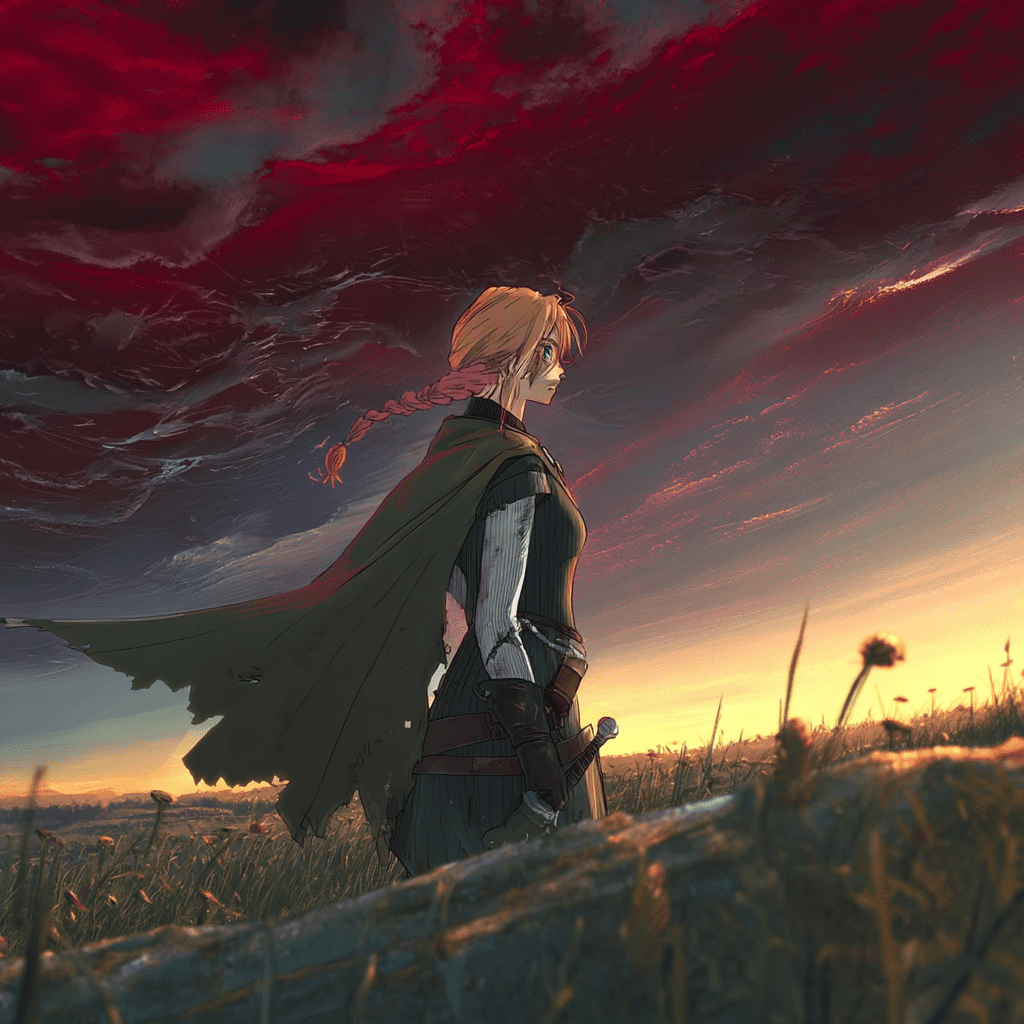
User reviewer Sedale S provided one of the most detailed Scarlet 2025 opinions regarding the visual execution, describing how “the animation is killer when it wants to be, the landscape literally looks like they took pictures with high aperture and just plopped it on the storyboards. The weather, the lightning, the action, the sadness, it all is outstanding and seeing this in Imax was definitely a privilege.” This sentiment aligns perfectly with The Travers Take’s observation that “the visuals dazzle,” even as the plotting falters. The user further noted the cinematographic ambition, stating that “there are scenes that are LOTR-esque and makes you feel like you’re in a helicopter right above the action,” suggesting that Hosoda’s team successfully translated epic fantasy live-action conventions into animated storytelling.
Film Threat’s critic similarly emphasized this visual storytelling priority, noting that the film succeeds “when it is simply moving and letting the visuals, the fights, and the bond between Scarlet and Hijiri do the heavy lifting.” This technique—allowing action and imagery to convey emotional beats rather than expository dialogue—appears to be Hosoda’s primary successful strategy for overcoming the screenplay’s structural challenges. The Original-Cin review (83/100) captured this achievement through character animation specifically, observing that “for an animated character, Scarlet feels remarkably real,” a testament to the nuanced facial animation and body language employed throughout the production.
However, even within the visual praise, certain fan opinions reveal uneven quality distribution. User Jeffrey (3.5/5) noted that “the animation also strays from greatness when not focusing on Scarlet, some of the character models and movements felt like uninspired plastic to me.” This creates an interesting dichotomy where the protagonist’s sequences receive premium animation treatment—likely due to Mana Ashida’s vocal performance demanding visual equivalency—while supporting characters occasionally suffer from less detailed rendering. Additionally, Sedale S questioned the visual integration of certain fantasy elements, specifically noting that while “there’s a dragon and it’s frighteningly beautiful… what does it do besides be relevant when the plot needs it to be?”
The musical and auditory visual accompaniment also generated significant praise. Sedale S highlighted that “the score by Taisei Iwasaki goes so hard, original songs included, the whole movie showcases such strong emotion and Iwasaki rises to the occasion to make you feel.” This synthesis of visual spectacle and audio design positions Scarlet 2025 as a prime candidate for our concert films and visual spectacle collection, where we curate cinema experiences prioritizing sensory immersion. For those compiling movie lists of the most visually impressive animated features of 2025, this title appears consistently in ranking discussions despite narrative reservations.
Character Analysis and Voice Performance: Mana Ashida’s Scarlet vs. the Supporting Cast
The Scarlet 2025 character reception presents a fascinating disparity between the protagonist’s portrayal and the surrounding ensemble, with voice acting quality serving as the primary differentiator between the film’s most compelling and its least successful elements. This division offers crucial insight for viewers wondering is Scarlet worth watching for performance quality alone.
At the center of acclaim stands Mana Ashida’s portrayal of the titular character. User Sedale S delivered extensive praise for the young actress, noting that “Mana Ashida as the titular character is a force as Scarlet. I don’t see anything stating otherwise but she voices Scarlet at all ages and her raw emotion and strength SHINE. Ashida wreaks of protagonist energy.” This observation suggests a vocal performance of remarkable range, successfully conveying the character’s evolution across different life stages—a crucial requirement for any Hamlet adaptation dealing with themes of maturation and delayed vengeance. The Original-Cin critic’s comment that “for an animated character, Scarlet feels remarkably real” likely derives substantially from Ashida’s grounded, emotionally vulnerable delivery.
However, this excellence creates an uneven ensemble dynamic that several Scarlet 2025 reviews identify as problematic. Sedale S noted that “while the film showcases Scarlet in a grand way, the rest of the movie around her is surface level. The rest of the voice cast is ok and not as strong as Ashida, outside a violent outburst at the climax by Koji Yakusho’s portrayal of Claudius.” This suggests that while Claudius (the film’s antagonist equivalent) receives at least one moment of dramatic intensity worthy of the Shakespearean source material, the supporting characters lack the developmental depth and vocal nuance granted to the protagonist.
User Jeffrey’s Scarlet movie opinion reinforces this imbalance from a narrative perspective, stating that “Scarlet as a character falls flat but strangely the supporting characters get closure and growth.” This creates a peculiar inversion where the audience may find themselves more invested in secondary arcs than the primary revenge narrative, potentially undermining the film’s structural integrity. Meanwhile, user Mary B (4/5) noted that the film is “a little heavy handed with the overarching theme,” suggesting that the character dialogue occasionally prioritizes thematic exposition over organic interaction.
The emotional impact on viewers appears directly correlated to these performance qualities. User Ainsley (4/5) shared that the film “made me cry, hit too close to home,” while Nick W (5/5) described “a story of love, life, death, and forgiveness” that proved “simply amazing and beautifully stunning from start to finish.” These viewer reactions suggest that when the character work connects—likely during Ashida’s most vulnerable moments—the film achieves the profound emotional resonance Hosoda intended. For those interested in exploring the careers of the voice cast and director, our person profiles and filmographies provide comprehensive career retrospectives and future project tracking.
Narrative Structure and Pacing: The Hamlet Connection and Scarlet 2025’s Controversial Ending
Perhaps no aspect of Scarlet 2025 film analysis generates more debate than the movie’s adaptation of Shakespearean structure and its pacing decisions, particularly regarding the third act and finale. For audiences familiar with the source material—or those simply seeking coherent narrative progression—these elements represent the primary determinants of satisfaction, creating distinct camps of audience reception ranging from appreciation of bold reinterpretation to frustration with structural incoherence.
The gender-swapped Hamlet premise—transforming the Prince of Denmark into a warrior princess—immediately established Scarlet as a text demanding comparison to its literary ancestor. The Travers Take characterized this approach as a “gender-switched take on ‘Hamlet’ as a warrior princess revenge epic,” while noting that despite dazzling visuals, the “plotting not so much” achieved similar success. This adaptation strategy required Hosoda to translate Elizabethan theatrical conventions—specifically the play’s famous delays and philosophical soliloquies—into animated action cinema, a translation that The Associated Press argues fails to bridge the historical gap, noting that “in ‘Scarlet,’ he struggles to bridge ‘Hamlet’ to today.”
User Jeffrey’s critique cuts directly to these structural concerns, observing that “what the movie fails to do is tell a compelling story with Scarlet as the protagonist. The ending doesn’t feel right as if it rushes the conclusion to fit what strange narrative the story is trying to portray.” This spoiler-free review observation about the ending’s rushed quality finds corroboration in user MS’s cryptic but telling comment: “If the film ended 5min before the actual ending, it would be the perfect ending for me.” These fan opinions suggest that the film’s final minutes introduce narrative choices or tonal shifts that undermine the preceding two hours, a common risk in ambitious adaptations attempting to modernize classical tragedy.
However, defenders of the narrative approach highlight the emotional catharsis achieved despite—or perhaps because of—these structural risks. The Los Angeles Times specifically praised “Scarlet’s final encounter with Claudius” for radiating “with the complicated poignancy expected of real, difficult catharsis,” suggesting that the finale successfully navigates the compassion themes established throughout the runtime. This interpretation views the potentially controversial ending not as a failure of pacing but as a deliberate choice to prioritize emotional truth over plot mechanics.
The pacing debates extend to the film’s middle section, where RogerEbert.com noted the film “begins with stunning style before falling off a major cliff,” while IndieWire described the overall story as “excessively ordinary” despite the skilled direction. These critical reviews of Scarlet 2025 indicate that the adaptation may lose narrative momentum precisely when it should accelerate toward its revenge climax—a peculiar choice for a film marketed as an epic action narrative. For viewers interested in testing their knowledge of the film’s plot structure and Shakespearean references, our movie quizzes and games section offers interactive content exploring these adaptation choices, while our movie wiki provides detailed scene-by-scene breakdowns for analytical deep dives.
Audience Reactions and Viewer Sentiment: Is Scarlet 2025 Worth Watching for Anime and Shakespeare Fans?
Determining whether Scarlet is worth watching requires synthesizing the diverse spectrum of audience reactions to Scarlet 2025, which range from ecstatic 5/5 celebrations to disappointed 6/10 assessments that suggest unmet expectations. This variance largely depends on viewer priorities—those seeking visual spectacle and emotional resonance report high satisfaction, while those expecting narrative cohesion or faithful Shakespearean adaptation express reservations.
The enthusiast camp produces some of the most passionate viewer reactions captured in user reviews. Anthony P’s succinct “OH. MY. GOD” and Anime t’s declaration that it’s “Fantastic movie and moving, all I can say is see this movie and love it all the time” demonstrate the profound impact the film achieves for receptive audiences. Nick W (5/5) specifically recommended the IMAX format, stating “Everything about this movie was simply amazing and beautifully stunning from start to finish. A story of love, life, death, and forgiveness. Worth seeing in IMAX!” These responses suggest that viewers who connect with the film’s wavelength—likely those prioritizing emotional experience over plot logic—find Scarlet 2025 among the year’s most rewarding theatrical experiences.
Conversely, the disappointment camp often cites expectation mismatch as the primary factor. gmneku (6/10) explicitly noted, “I was expecting a lot from this film, maybe it’s why I didn’t like it in the end. Visuals were great, but the story wasn’t as great.” This Scarlet review pattern—great visuals, weak story—recurs across mixed ratings, suggesting that marketing emphasizing the Hamlet connection may have misled literary purists expecting tighter narrative construction. User Jeffrey (3.5/5) similarly praised the beauty while criticizing the protagonist’s flat characterization, indicating that even generous viewers recognize significant flaws.
The middle-ground reactions offer perhaps the most valuable guidance for undecided viewers. ToonBen (4.5/5) described it as “Hosoda at his most ambitious in one of the mind blowing and biggest animated epic that must be seen to be believed,” acknowledging the spectacle while implicitly accepting narrative messiness. Grace L (4/5) noted “Strong character development” despite the aforementioned unevenness, while Mary B (4/5) found it “Visually stunning” with “interesting plot” but “a little heavy handed with the overarching theme.” These film reception patterns suggest that Scarlet 2025 functions best as an experiential animation showcase rather than a tightly plotted drama.
For Shakespeare aficionados specifically, the film offers a fascinating but potentially frustrating film analysis opportunity. The modernized warrior princess framework strips away the original’s political intrigue in favor of personal catharsis, creating a more intimate but less complex narrative. Animation fans, however, will find substantial value in the technical achievements regardless of story reservations.
At What’s After the Movie, we’ve curated movie collections and lists featuring Scarlet 2025 alongside other ambitious anime adaptations, allowing viewers to contextualize its reception within the broader landscape of adult animation. Whether you ultimately decide to experience this film in theaters or await streaming availability, our comprehensive movie page for Scarlet remains your destination for updated audience reactions, critic consensus scores, and box office performance tracking as the film continues its theatrical run.
Conclusion: The Lasting Reception of Scarlet 2025 and Its Place in Mamoru Hosoda’s Filmography
As Scarlet 2025 completes its initial theatrical rollout and transitions into the long-term film reception phase, its legacy appears cemented as a divisive but undeniably significant entry in Mamoru Hosoda’s evolving filmography. The critical consensus reveals a film of remarkable visual ambition and emotional sincerity undermined by narrative overreach—a “big swing” that, depending on the viewer, either misses spectacularly or connects with profound impact. For What’s After the Movie users tracking the year’s most discussed releases, this title represents essential viewing not necessarily for universal acclaim, but for the vibrant debate it generates between critic reviews and fan opinions.
The dichotomy between aesthetic triumph and storytelling struggle positions Scarlet as a text requiring specific viewing conditions. Those seeking spoiler-free recommendations should know: if you prioritize animation quality, voice performance (specifically Mana Ashida’s remarkable lead), and emotional catharsis over tight plotting, this film delivers exceptional value—particularly in IMAX presentations. Conversely, viewers demanding narrative cohesion or faithful Shakespearean adaptation may find the Scarlet movie opinions of disappointment aligning with their experience. The film’s exploration of compassion, as highlighted by the Los Angeles Times, and its “gorgeously constructed” visual journey, per Film Threat, ensure it remains worthy of discussion even when the plotting frustrates.
Moving forward, Scarlet 2025 will likely serve as a case study in adaptation theory and animation production, demonstrating both the possibilities and pitfalls of transposing classical theater into contemporary anime. As awards season approaches, track its recognition potential through our dedicated awards page, and explore how its box office performance compares to Hosoda’s previous hits via our financial tracking tools. Whether you engage with our interactive quizzes testing your knowledge of the film’s Shakespearean references, or browse our wiki entries for detailed production history, What’s After the Movie remains your comprehensive resource for understanding this complex, beautiful, and ultimately polarizing cinematic experience.
| Resource | Link |
|---|---|
| Scarlet on TMDB | The Movie Database |
| Scarlet on Wikipedia | Wikipedia |
| Scarlet on Rotten Tomatoes | Rotten Tomatoes |
| Scarlet on Metacritic | Metacritic |
| Scarlet on JustWatch | JustWatch |
| Scarlet on Box Office Mojo | Box Office Mojo |
| Scarlet on Letterboxd | Letterboxd |