
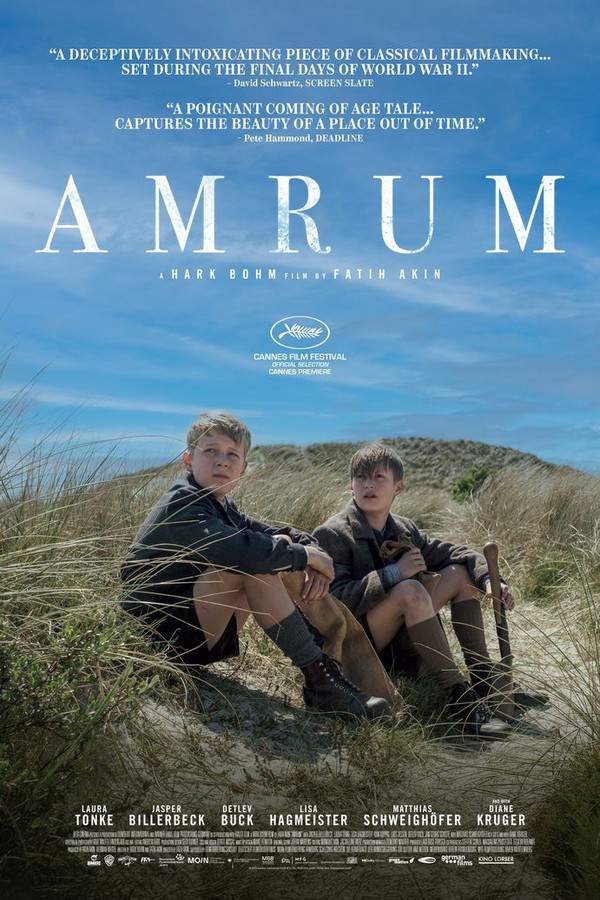
Amrum (2026) Review: Critical Consensus, Audience Reactions & Is It Worth Watching?
When Fatih Akin’s Amrum quietly entered the cinematic landscape in April 2026, it carried with it the weight of expectation that accompanies any film from an acclaimed director tackling the Third Reich through a child’s eyes. The Turkish-German filmmaker’s latest work—a delicate, 93-minute meditation on indoctrination, identity, and moral awakening—has generated one of the most polarized reception landscapes of the year. Unlike blockbuster franchise entries that dominate opening weekend discourse, Amrum (2026) has sparked a slower-burning conversation, one that pits critical admiration against audience ambivalence, and festival circuit omissions against passionate defender testimonials.
For visitors to What’s After the Movie seeking clarity on whether this historical drama deserves their time, the answer remains frustratingly complex. With scores ranging from a concerning 63 to a sterling 83 across major critical aggregators, and user reactions swinging from five-star raptures to one-star dismissals, Amrum represents the kind of challenging cinema that refuses easy categorization. Is it a “precision miniature” of devastating simplicity, as some critics claim? Or is it the “weak film” that awards bodies allegedly ignored, as disgruntled viewers suggest? Our Amrum summary page provides the essential details, but here we dive deep into the reception—analyzing what critics, audiences, and industry insiders are actually saying about this controversial entry in Akin’s filmography. Whether you’re searching for spoiler-free reviews or wondering about the Amrum Rotten Tomatoes consensus, this analysis breaks down the film’s divisive journey through the cultural conversation.
Navigating the Critical Divide: How Reviewers Received Amrum (2026)
The critical reception of Amrum presents a fascinating case study in how narrative restraint can be interpreted as either profound subtlety or frustrating under-execution. With scores clustering between 63 and 83 across major publications, the film has avoided universal acclaim while nonetheless earning vigorous defenders in prestigious outlets. This 20-point spread on the critical spectrum reveals fundamental disagreements about directorial intent, narrative responsibility, and the ethics of depicting childhood complicity without melodrama.
The Case for Restraint: Praise for Akin’s Approach
At the higher end of the critical spectrum, TheWrap delivered an 83/100 assessment that encapsulates the film’s strengths according to its champions: “There’s nothing showy about Amrum, but it can leave an audience shaken. Akin has fashioned a rare film that relies on the power of simplicity to tell a story that is anything but simple.” This sentiment echoes across multiple positive reviews, suggesting that the film’s value lies precisely in its rejection of spectacle. Screen Daily (80/100) characterized the work as “something of a departure for Akin, the kind of precision miniature work that can be achieved on a smaller canvas,” implying that longtime followers of the director—known for more sprawling narratives—might find this chamber piece unexpectedly affecting.
Peter Travers at The Travers Take (80/100) perhaps best captured the film’s tonal achievement with his provocative framing: “Can a brainwashed boy in Hitler Youth learn to stop worrying and love being a Nazi hater? Beautifully directed by Turkish-German filmmaker Fatih Akin, this unexpectedly tender mesmerizer has an answer you won’t see coming.” This quote highlights a crucial element of the critical consensus: even reviewers with reservations about the film’s pacing or narrative construction tend to acknowledge Akin’s directorial craft. The Wall Street Journal (80/100) reinforced this by calling it “a stirring example of how childhood reminiscence can stand for so much more,” positioning the film within the tradition of serious European cinema that trusts visual metaphor over expository dialogue.
The Underwhelmed: Critics Who Found Amrum Lacking
However, the lower scores reveal significant critical reservations that potential viewers should consider. RogerEbert.com’s 63/100 rating came with the pointed observation that “It’s a film whose tranquility and humility sometimes work against it, even in those moments where it overcorrects with didacticism.” This criticism—that Amrum simultaneously risks boredom and heavy-handedness—represents perhaps the most devastating possible critique for a film aiming for moral complexity. If the film fails to maintain engagement through its quiet moments and then betrays its subtlety with overt messaging, what remains?
Slant Magazine (63/100) offered similarly qualified praise, describing Amrum as “a delicate coming-of-age parable tracking national identity and violence to their most intimate origin points during the waning days of the Third Reich,” while The Hollywood Reporter (70/100) noted that despite its “commendable tenderness,” it remains “a conventional narrative drama” at its core. Perhaps most tellingly, Screen Rant (70/100) concluded that “Amrum doesn’t fully confront all the questions it poses, instead serving as a meditation on the ways a child might respond to a world he doesn’t fully understand.”
The New York Times (70/100) provided perhaps the most nuanced critique, offering the backhanded comparison that “To Akin’s credit, the film isn’t tastelessly sentimental (see ‘Jojo Rabbit’), and it depicts Nanning’s awakening with the kind of subtlety and restraint that suggests his moral education will continue evolving after the end of the movie.” While praising the film’s avoidance of mawkishness, the parenthetical reference to Taika Waititi’s Oscar-winning film positions Amrum within a crowded subgenre of “Nazi youth” narratives, suggesting that Akin’s restraint might actually render his film less memorable than more provocative treatments of similar material.
For those tracking award season predictions or wondering how this might affect Akin’s reputation, these mixed critical signals suggest a film that will likely feature on year-end lists for cinematography and direction, but may struggle to secure the major narrative prizes that require unanimous critical passion.
Audience Reception vs. Critical Acclaim: The Polarized Viewer Reactions to Amrum
Where the critical establishment offered measured, if divided, appreciation, the audience response to Amrum has bifurcated into starkly opposing camps. This divergence between professional reviewers and general moviegoers creates a challenging decision matrix for potential viewers: should you trust the aggregated critical consensus, or do the passionate negative reactions signal deeper flaws that critics are predisposed to overlook?
The Enthusiasts: Finding Beauty in Brevity
The five-star user reviews reveal a cohort of viewers who found exactly what the film’s defenders promised. User Stephen C offered perhaps the most succinct endorsement: “Success in 1 hour and 33 minutes. All ages admitted.” This brief commendation highlights an aspect largely missing from critical discourse—the film’s accessibility and runtime efficiency. In an era of bloated prestige television and three-hour Oscar bait, Amrum’s 93-minute duration represents a significant selling point for audiences seeking substantive cinema without temporal commitment.
Runa R’s enthusiasm focused on specific aesthetic elements: “What a phenomenal film, with a phenomenal young actor, set in phenomenal landscapes.” This review aligns closely with Screen Daily’s appreciation for the film as “precision miniature,” suggesting that audiences attuned to visual storytelling and performance nuance may find rewards that viewers seeking plot-driven narratives miss. Similarly, William E’s simple declaration—“A truly beautiful movie”—indicates that for some portion of the audience, the film achieves exactly what it sets out to do, even if that goal remains somewhat abstract in description.
The Detractors: When Restraint Reads as Deficiency
However, the negative user reviews contain specific grievances that deserve serious consideration. Hank D’s two-star critique cuts to the heart of the film’s potential weakness: “This was a very mediocre story with a lot of not very convincing acting. I don’t understand it’s high rating at all. The lead character is a quite unbelievably noble and flawless boy that gets bullied by almost everyone else in the film. The acting and mise en scene is often so bad it made me laugh out loud in the theatre.”
This criticism is particularly damning because it contradicts both the critical consensus about the film’s acting and its moral complexity. If the protagonist indeed comes across as “unbelievably noble and flawless” rather than authentically conflicted, the film’s entire project of depicting moral awakening collapses. Hank D’s mention of laughing at the “mise en scene” suggests that the visual restraint praised by critics as “nothing showy” may register for general audiences as amateurish or unconvincing—a fatal flaw for a film relying entirely on atmospheric immersion.
Perhaps most damaging to the film’s reputation is Trixie B’s one-star assessment: “I now understand why this weak film was ignored at Cannes and not chosen as the German Oscar submission.” This observation, whether factually accurate or not, introduces a meta-narrative about industry validation that colors perception. If Amrum indeed failed to secure festival premieres or national submission status, audiences may question why they should invest emotional energy in a film that institutions apparently rejected.
For visitors to What’s After the Movie wondering whether to prioritize critic scores or user reactions, our movie lists featuring similar historical dramas might help calibrate expectations. If you typically align with critics who value “tranquility and humility,” Amrum may satisfy; if you find yourself agreeing with user complaints about pacing and characterization, this may be one to skip. You can also test your knowledge of Akin’s filmography in our quiz section to see if his stylistic tendencies match your preferences.
Visual Storytelling and Direction: Fatih Akin’s Departure in Amrum
Fatih Akin’s reputation as a filmmaker has traditionally rested on energetic, multicultural narratives that traverse geographical and emotional borders. Amrum (2026) represents a calculated departure from this established mode, and much of the critical discourse surrounding the film centers on whether this stylistic pivot succeeds or stagnates. Understanding Akin’s directional choices provides crucial context for interpreting the film’s mixed reception, particularly regarding its visual language and narrative pacing.
The “Precision Miniature” Aesthetic
Screen Daily’s observation that Amrum constitutes “precision miniature work” offers a framework for understanding why the film has divided audiences accustomed to Akin’s previous scope. This approach—pared down, intimate, visually modest—requires viewers to adjust their expectations. Where the director’s previous works might have used the full canvas of European cities or cross-border journeys, Amrum apparently focuses tightly on its young protagonist’s immediate environment, creating a claustrophobic intensity that some find suffocating and others find hypnotic.
IndieWire (75/100) noted that “the bones of the narrative and how it’s shot are deliberately pared down,” while emphasizing that “there’s no outright preaching, no plea to condemn or sympathize either way. What unfolds is far more complex, morally speaking.” This technical restraint serves the film’s thematic goals, forcing viewers to sit with ambiguity rather than receiving clear narrative signals about whom to support. For audiences seeking the catharsis of clear moral victory—particularly in Holocaust-adjacent cinema—this approach may feel frustratingly opaque. For those who appreciate cinema that respects viewer intelligence, it represents sophisticated filmmaking.
Landscape as Character
User Runa R’s mention of “phenomenal landscapes” combined with the critical emphasis on “childhood reminiscence” suggests that Amrum utilizes its setting—the island of Amrum in the North Sea, presumably—as more than mere backdrop. The isolation of the location likely mirrors the protagonist’s psychological isolation, creating a visual metaphor for the insularity of Nazi indoctrination. This use of environment to reflect internal states represents the kind of “show, don’t tell” filmmaking that critics celebrate but that requires patient viewing.
The comparison to Jojo Rabbit mentioned in the New York Times review becomes particularly relevant here. Where Waititi’s film used heightened visual comedy and anachronistic style to process historical trauma, Akin appears to have chosen the opposite strategy: muted naturalism, historical authenticity, and visual humility. Neither approach is inherently superior, but they appeal to vastly different sensibilities. Viewers expecting the former may find Amrum “mediocre,” as user Hank D suggested, while those prepared for the latter may find it “truly beautiful,” per William E.
For collectors interested in how Amrum fits into broader cinematic movements, our movie collections feature curated selections of European historical dramas. Those interested in the visual aspects of concert documentation might also explore our concert film section to compare how different directors handle visual intimacy across genres.
Moral Ambiguity and Historical Weight: Thematic Analysis of Amrum’s Reception
At the heart of the Amrum reception debate lies a fundamental question about how cinema should handle childhood complicity in historical atrocity. The film’s setting during “the waning days of the Third Reich” and its focus on a Hitler Youth member’s moral education place it within a sensitive cinematic tradition that includes everything from The Tin Drum to Come and Back Again. Critics and audiences alike have grappled with whether Akin’s approach to this material respects the gravity of history while avoiding exploitative sentimentality.
The Anti-Preaching Paradox
IndieWire’s observation that the film contains “no outright preaching” initially seems like universal praise—who wants to be lectured by their cinema? Yet paired with RogerEbert.com’s criticism that the film occasionally “overcorrects with didacticism,” we see the tightrope Amrum attempts to walk. The film apparently strives for moral complexity but risks falling into either pole: either becoming too subtle for its own good (losing the audience in ambiguity) or becoming too explicit (losing the audience in pedagogy).
The Travers Take’s provocative summary—“Can a brainwashed boy in Hitler Youth learn to stop worrying and love being a Nazi hater?”—suggests that the film does eventually arrive at clear moral positions, but perhaps through indirection rather than declaration. The phrase “beautifully directed” implies that the journey toward moral clarity provides the film’s aesthetic pleasures, even if the destination remains troubling. This creates a challenging viewing experience: audiences must commit to the protagonist’s journey without knowing whether the film will ultimately validate or condemn him, or simply observe his evolution with anthropological detachment.
Identity Formation and Ideological Collapse
The Hollywood Reporter focused its analysis on the psychological mechanics of the story: “What does it mean to lose faith in one’s role models and form an identity outside their ideological purview?” This framing positions Amrum as fundamentally a coming-of-age story rather than a war film or historical document. The critical consensus suggests that the film’s most successful moments occur when it focuses on this universal human experience of disillusionment, filtered through the specific horror of Nazi Germany.
However, Screen Rant’s criticism that the film “doesn’t fully confront all the questions it poses” suggests that this coming-of-age framing may also function as evasion. By focusing on the child’s limited understanding, does the film absolve itself of the responsibility to address the full weight of the Holocaust? Or does it, as Slant Magazine suggested, successfully track “national identity and violence to their most intimate origin points”?
This tension between individual growth and historical responsibility may explain the user polarization. Viewers like Hank D who found the protagonist “unbelievably noble” may be reacting against a film that seems to prioritize redemptive narrative arcs over historical truth—a legitimate concern when dealing with this period. Conversely, viewers like Runa R who praised the “phenomenal young actor” may have responded to the specific, intimate truth of the performance, accepting the film’s scope as appropriately limited to one child’s comprehension.
For deeper context on how films navigate these historical responsibilities, visit our Movie Wiki for background on the Third Reich in cinema, or check our box office data to see how other historical dramas have performed with audiences.
Characterization and Performance: Debating Amrum’s Protagonist
The分歧 over Amrum’s quality crystallizes most sharply in assessments of its central performance and character writing. While critics and some audience members celebrate the young actor’s work as “phenomenal” and the characterization as appropriately complex, detractors have identified the protagonist as the film’s fatal flaw—a “noble and flawless” figure whose innocence strains credulity and whose victimization feels unearned.
The Saintly Boy Problem
Hank D’s critique that the lead character constitutes “a quite unbelievably noble and flawless boy that gets bullied by almost everyone else in the film” raises serious questions about narrative balance. If the protagonist indeed reads as too perfect—too resistant to the ideology surrounding him, too quick to recognize the humanity in the marginalized—then the film risks creating a false history where Nazism was merely an external imposition on naturally good souls, rather than a seductive ideology that corrupted willing participants.
This “flawless” characterization would contradict The Travers Take’s premise of a “brainwashed boy” who must undergo genuine transformation. Brainwashing implies successful indoctrination; if the boy never truly believed, or if his resistance comes too easily, the film’s stakes collapse. The New York Times reference to “Nanning’s awakening” suggests the character does undergo a process, but user Hank D’s laughter at the “mise en scene” indicates that for some viewers, this awakening plays as melodrama rather than authentic psychology.
The Defense of Restraint
Conversely, those who praise the performance likely see something different: not perfection, but the specific numbness of trauma. Screen Daily’s “precision miniature” description suggests controlled, detailed work—perhaps the kind of internalized performance that reads as flat to some viewers but profound to others. The Wall Street Journal’s emphasis on “childhood reminiscence” implies that the film may be filtering events through memory’s softening lens, which would explain any nobility as retrospective romanticization rather than present-tense documentation.
Screen Rant’s observation that the film serves as “a meditation on the ways a child might respond to a world he doesn’t fully understand” provides the most charitable reading of the characterization. Children often do appear as “noble” or “flawless” to themselves in memory, and their moral categories remain black-and-white longer than adults’. If Amrum captures this developmental reality—showing a child who resists not through heroic insight but through basic human instinct—the performance may be more sophisticated than detractors recognize.
For those interested in performance analysis, our person profiles offer information on the cast and crew, allowing viewers to contextualize this young actor’s work within broader career trajectories.
Festival Circuits and Industry Reception: The Cannes Controversy and Oscar Implications
No discussion of Amrum’s reception would be complete without addressing the institutional cold shoulder that user Trixie B claims the film received: “I now understand why this weak film was ignored at Cannes and not chosen as the German Oscar submission.” While festival programming decisions involve countless factors beyond quality—politics, timing, distribution deals—this perceived rejection has colored the film’s reception, creating a narrative of disappointment that influences how subsequent viewers approach the material.
The Smaller Canvas Theory
Screen Daily’s characterization of Amrum as “precision miniature work” offers one explanation for its potential festival struggles. Cannes and other major festivals often prioritize bold, formally adventurous statements over quiet character studies. Akin’s film, by design, offers “nothing showy” (TheWrap). In a festival environment where films compete for attention through aggressive stylistics or provocative subject matter, Amrum’s humility might have rendered it invisible to programmers seeking headlines.
If indeed the film bypassed Cannes, this exclusion may actually validate its artistic approach rather than condemn it. The history of cinema includes countless masterpieces ignored by festivals initially. However, for general audiences, festival validation serves as a shortcut for quality assessment. The absence of a Cannes pedigree or Oscar submission status—whether accurate or perceived—signals to viewers like Trixie B that the film lacks the institutional confidence that accompanies major award contenders.
The German Cinema Context
The specific mention of the German Oscar submission carries particular weight. Germany has produced some of the most rigorous and self-critical cinema regarding its Nazi past, from Downfall to The Lives of Others. For Amrum to be passed over for Germany’s official entry suggests that national selectors may have viewed it as either too conventional (The Hollywood Reporter’s criticism) or insufficiently substantial to represent German cinema on the world stage.
Yet this institutional hesitation contrasts with the critical enthusiasm from outlets like TheWrap and Screen Daily. This disconnect between festival programmers and critical writers creates the confusing landscape potential viewers now navigate: is Amrum a misunderstood gem or a justly overlooked mediocrity?
For industry watchers and those tracking award season narratives, Amrum represents a fascinating case study in how reception coalesces—or fails to coalesce—around quiet cinema in a loud media environment. While it may not dominate year-end lists or awards ceremonies, its defenders suggest it offers something rarer: the genuine article of artistic conviction, unbothered by institutional validation.
Conclusion: Who Should Watch Amrum (2026) and Final Verdict
As the discourse around Amrum (2026) settles into the archives of cinematic reception, what emerges is not a clear verdict but a question of compatibility. This is not a film for viewers seeking the cathartic clarity of traditional Holocaust cinema or the narrative propulsion of thriller-paced historical dramas. It is, instead, a work for audiences who value the “power of simplicity” praised by TheWrap, who can sit with the “tranquility and humility” that RogerEbert.com found occasionally excessive but others find meditative.
The critical consensus suggests that Fatih Akin has created a “precision miniature”—a film that sacrifices broad appeal for specific truth, that risks didacticism in pursuit of moral clarity, and that asks viewers to trust the “phenomenal young actor” mentioned by users like Runa R even when the characterization reads as “unbelievably noble” to skeptics like Hank D. Whether you find yourself aligned with the five-star enthusiasts or the one-star detractors likely depends on your tolerance for cinematic quietude and your willingness to engage with difficult history through a child’s limited but piercing perspective.
For those still uncertain, we recommend visiting our Amrum movie page for additional context, or exploring similar films in our curated collections. If you’ve already seen the film, test your recall with our movie quizzes and games. Ultimately, Amrum demands the kind of patient, charitable viewing that has become rare in contemporary cinema—a commitment that, for the right viewer, yields the “truly beautiful” experience promised by its defenders, even as it confirms the “weak film” diagnosis for its detractors. The divided reception is not a bug but a feature: this is cinema that requires you to meet it on its own terms, and not every viewer will make that journey.
| Resource | Link |
|---|---|
| Amrum Wikipedia | Wikipedia |
| Amrum Rotten Tomatoes | Rotten Tomatoes |
| Amrum Metacritic | Metacritic |
| Amrum JustWatch | JustWatch |
| Amrum Box Office Mojo | Box Office Mojo |