Peaky Blinders: The Immortal Man (2026) Review – Critical Consensus, Audience Reactions & Film Reception Analysis
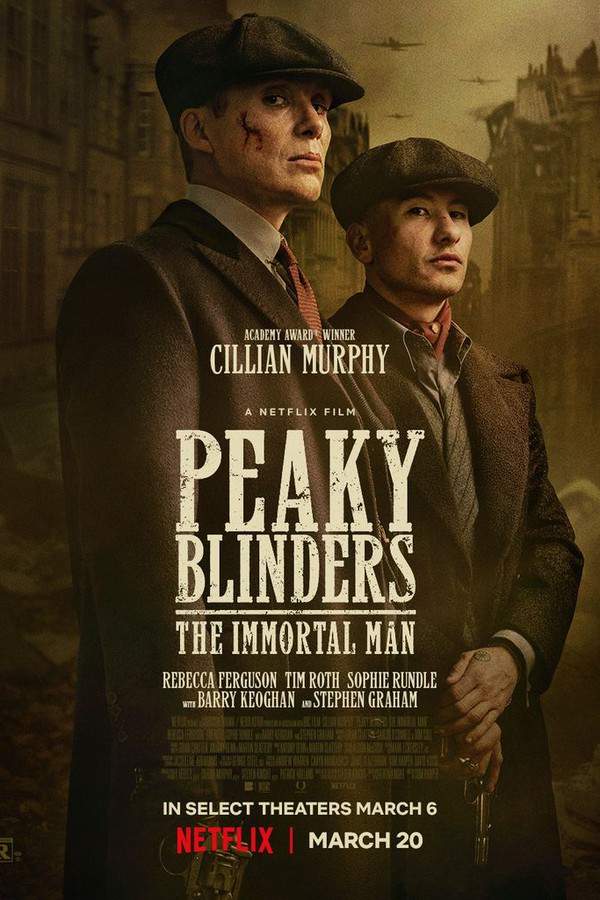
When Peaky Blinders: The Immortal Man arrived in theaters on March 6, 2026, it carried the crushing weight of nearly a decade of television legacy on its shoulders. As the cinematic continuation of Steven Knight’s beloved British crime saga, this standalone feature promised to deliver the final word on Tommy Shelby’s storied career—or perhaps open new doors for the franchise’s future. For fans seeking definitive answers about whether this big-screen transition honors its small-screen origins, the reception landscape presents a fascinatingly divided picture that demands careful analysis. Whether you’re searching for a spoiler-free review, wondering is Peaky Blinders: The Immortal Man worth watching, or simply seeking the critical consensus surrounding this highly anticipated release, understanding the spectrum of critic reviews and audience reactions becomes essential before purchasing your ticket.
At What’s After the Movie, we specialize in dissecting exactly these kinds of cultural moments, offering comprehensive resources beyond simple star ratings. Our dedicated movie page for Peaky Blinders: The Immortal Man provides detailed production information, while our summaries section helps contextualize where this film fits within the broader Shelby saga. As we dive deep into the film reception and viewer reactions, we’ll explore why this particular release has generated such polarizing discourse among both professional critics and dedicated fans, examining whether this ambitious extension of the Peaky Blinders universe serves as a worthy film analysis subject or represents a cautionary tale about franchise extension.
Critical Reception and Professional Critic Reviews of Peaky Blinders: The Immortal Man
The critic reviews for Peaky Blinders: The Immortal Man reveal a starkly polarized critical landscape, with scores ranging from a disappointing 50/100 to an enthusiastic 88/100 across major publications. This 38-point spread speaks volumes about the film’s divisive nature among professional reviewers, many of whom struggled to reconcile their admiration for the source material with their assessment of this cinematic coda. The critical consensus ultimately settles into a complicated middle ground, acknowledging the film’s technical merits and central performance while questioning its fundamental necessity as a narrative extension.
The New York Times delivered one of the more biting assessments, noting that “in its quest to give us a little bit of everything, it finally delivers not nearly enough of anything.” This sentiment captures a recurring theme among detractors who found the film’s narrative scope simultaneously overstuffed and undernourished. Similarly, The Travers Take articulated the concerns of purists who felt the television series had already achieved perfect closure, stating that “Cillian Murphy’s gangster icon Tommy Shelby makes his big-screen debut in a standalone film that can’t stand up against the great series that spawned it. For all its entertaining fan service, it’s an unnecessary coda to an unforgettable TV classic.” The Wall Street Journal echoed these structural concerns, observing that “straightforward storytelling was never the strong suit of the show,” while questioning the franchise’s future trajectory given apparent plans for Murphy-less sequels.
However, contrasting these skeptical voices, several major outlets celebrated the film as a triumphant farewell. The Daily Beast offered perhaps the most glowing film reception, declaring it “a rousing elegy to an underworld saga par excellence and, in particular, to a ruthless and tormented gangster whom, in Murphy’s expert hands, stands as an undisputed crime-fiction icon.” This perspective found support in RogerEbert.com’s measured appreciation: “If this flawed final outing is, indeed, the last we see of Tommy Shelby, it’s still a heck of a note for the man who plays him to ride out on.” TheWrap similarly concluded that “while neither Tommy nor the film itself was ever likely to be immortal, the closing frames prove to be a fitting sendoff for him as well as his long, sad saga.”
Time Out and Consequence of Sound occupied the critical middle ground, acknowledging the film’s atmospheric successes while noting its accessibility issues. Consequence specifically warned that The Immortal Man is “very much not a jumping-on point for newcomers to the Shelby gang,” a crucial consideration for viewers seeking standalone entertainment rather than franchise continuation. The San Francisco Chronicle perhaps best summarized the philosophical divide among critics, distinguishing between “extending a story and deepening it,” suggesting that while the film proves “thoughtful and stirring, it doesn’t exactly improve upon the elegant finality the series granted Tommy Shelby four years ago.” For those tracking film reception metrics and critical trends, our box office analysis pages provide additional context about how these reviews correlate with commercial performance.
Audience Reactions and Fan Opinions – Is Peaky Blinders: The Immortal Man Worth Watching?
While critics debated the film’s artistic merit, audience reactions painted an even more complex picture of polarization, with user scores ranging from a devastating 0/10 to perfect 10/10 ratings. This extreme variance suggests that Peaky Blinders: The Immortal Man functions as something of a Rorschach test for franchise fans, with individual enjoyment heavily dependent on expectations regarding closure, character development, and narrative fidelity to the original series’ conclusion.
User “decatur555,” representing the satisfied faction of the viewership, provided a nuanced spoiler-free review that many fans found relatable: “It’s very good, but for me it doesn’t reach the level of the series. You can still feel almost everything that made Peaky Blinders great: presence, style, darkness, tension, weighty dialogue, and that world of mud, smoke, and gunpowder it built so well.” This perspective acknowledges the film’s successful atmospheric continuation while recognizing its limitations as a cinematic experience. The reviewer importantly notes that the film “works more as a continuation and a farewell than as a completely standalone film,” advising potential viewers that “if you liked Peaky Blinders, it’s hard not to like this.”
Conversely, disgruntled fans expressed betrayal regarding narrative choices and production quality. User “barillas” delivered a scathing critique that resonated with disappointed viewers: “Immortal Man is basically a 2 hour ad for the sequel series. Tim Roth villain is trash, no motivation at all, could be anyone. Rebecca Ferguson character makes no sense, who even is she?? Arthur dies OFF SCREEN and they barely mention it.” This viewer reaction highlights specific grievances regarding character utilization and narrative coherence that plagued the film’s reception among purists. Similarly, “Mattsuri7” argued that the film “retroactively ruins the tv show, especially the tv shows ending - would have been better if it was never made,” while “shazbot_nz” lamented that “the 1st hour barely anything happened and the little bit of action in the second half wasn’t enough to rescue a bore fest.”
The fan opinions also reveal interesting divisions regarding performance quality versus scripting weaknesses. “RatedRex” encapsulated this tension, noting “A decent movie. Kind of strange. Unrealistic plot twists. Horrible musical score. Lots of blood… Rebecca Ferguson was good as always. Cillian Murphy played his usual solemn self.” Meanwhile, “Fleyrix” delivered the millennial verdict of ambivalence: “I don’t like it and I don’t hate it, it is just kinda mid compared to the amazing series it was supposed to conclude.” For viewers seeking to test their knowledge before watching, our movie quizzes and games offer engaging ways to revisit the series’ complex mythology, while our movie collections help organize the franchise chronology for optimal viewing experiences.
Cillian Murphy’s Performance and Character Legacy in Peaky Blinders: The Immortal Man
If there’s one element of Peaky Blinders: The Immortal Man that generated near-universal acclaim across both critic reviews and audience reactions, it remains Cillian Murphy’s embodiment of Tommy Shelby. The film analysis of Murphy’s work reveals a masterclass in sustained character inhabitation, with the actor reportedly slipping back into the role with the “effortless authority” that defined the series’ six-season run. For those interested in exploring Murphy’s broader filmography and career trajectory, our person profiles provide comprehensive career retrospectives and performance highlights.
RogerEbert.com’s observation that this represents “a heck of a note for the man who plays him to ride out on” captures the sentiment that Murphy elevates material that occasionally struggles to match his commitment. User “decatur555” articulated this dynamic perfectly: “Cillian Murphy remains the center of everything. That does not change. Tommy Shelby still carries that mix of exhaustion, menace, intelligence, and sadness that made him such a huge character, and Murphy slips back into him with effortless authority. Even when the material doesn’t always match the series, he absolutely does.” This disparity between performance quality and narrative substance became a recurring theme in viewer reactions, with many fans suggesting that Murphy’s presence alone justifies the film’s existence despite its structural flaws.
The supporting cast received more mixed assessments, highlighting the challenges of transitioning from ensemble television to focused feature filmmaking. While Barry Keoghan earned praise from Next Best Picture for fitting “right into the world,” other casting choices generated significant controversy. The aforementioned criticism of Tim Roth’s villain and Rebecca Ferguson’s character by user “barillas” represents a broader dissatisfaction with how the film integrated new faces into an established mythology. Sophie Rundle’s return as Ada Shelby received acknowledgment from the Wall Street Journal, though some fans felt the film underutilized the series’ rich ensemble in favor of Murphy’s singular presence.
From a film reception standpoint, Murphy’s performance serves as the primary anchor preventing the film from drifting into complete irrelevance. The Daily Beast’s declaration that Murphy renders Tommy “an undisputed crime-fiction icon” speaks to the meta-textual weight the actor brings to the role after nearly a decade of development. For viewers conducting their is Peaky Blinders: The Immortal Man worth watching calculus, Murphy’s involvement appears to be the decisive factor, with even harsh critics conceding that his work provides sufficient reason for fans to engage with the material. Those seeking deeper insights into character development arcs can explore our movie wiki for detailed character histories and thematic explorations.
Storytelling Quality and Narrative Reception – Does Peaky Blinders: The Immortal Man Honor the Series?
The film reception regarding Peaky Blinders: The Immortal Man’s narrative architecture reveals profound anxiety about the difference between extending a story and concluding it meaningfully. Critics and audiences alike grappled with whether this cinematic entry deepened the Shelby saga or merely prolonged it for commercial purposes, a question central to any film analysis of franchise extensions.
The San Francisco Chronicle’s distinction between “extending a story and deepening it” cuts to the heart of the critical controversy. While the film proves “thoughtful and stirring,” the review suggests that “it doesn’t exactly improve upon the elegant finality the series granted Tommy Shelby four years ago.” This sentiment found amplification in user reviews, particularly “Mattsuri7“‘s assertion that the film “retroactively ruins the tv show.” The accusation that the narrative serves as “basically a 2 hour ad for the sequel series” (barillas) suggests that the storytelling quality suffered from corporate mandates rather than organic creative impulses.
Pacing emerged as another significant concern across critic reviews and viewer reactions. User “shazbot_nz” complained that “the 1st hour barely anything happened,” while The New York Times criticized the film for delivering “not nearly enough of anything” despite attempting to provide “a little bit of everything.” This structural imbalance—simultaneously too much and too little—plagued the critical consensus, with many reviewers suggesting that the film’s runtime failed to justify its existence as a standalone theatrical experience.
However, defenders of the narrative approach praised its thematic consistency. Consequence of Sound appreciated how the film captured “what made the original series so watchable: The grand scope of history as seen from the ground, the daily grind of crime in sharp contrast to world events, and the everyday men and women just trying to survive it all.” User “decatur555” valued that “it doesn’t try to break away from what came before or reinvent something that already had such a clear identity. It works more as an emotional epilogue, as a return to a deeply familiar world.”
The controversial decision regarding Arthur Shelby’s off-screen demise (referenced in user complaints) exemplifies the narrative risks that alienated portions of the fanbase. Such choices suggest a film uncertain about its own legacy status, simultaneously attempting to provide definitive closure while leaving doors ajar for future installments. For viewers seeking curated viewing experiences that respect narrative cohesion, our movie lists offer chronological and thematic ordering suggestions that contextualize where this film fits within the broader Peaky Blinders experience.
Visual Style, Cinematography, and Production Value Reception
Beyond narrative content, Peaky Blinders: The Immortal Man generated significant discourse regarding its visual style and production aesthetics, with audience reactions particularly divided on whether the film successfully translated the series’ distinctive atmosphere to the cinematic medium. The transition from BBC television production to feature film budgeting theoretically offered expanded visual possibilities, though reviews suggest mixed success in capitalizing on these opportunities.
Positive viewer reactions frequently cited the cinematography as a highlight. User “tmnx1987” declared “Cinematography is stunning!” while others praised the maintenance of the series’ signature aesthetic—the “world of mud, smoke, and gunpowder” that user “decatur555” noted as essential to the Peaky Blinders experience. This atmospheric consistency provided comfort to fans seeking the familiar visual language of Steven Knight’s Birmingham, even when narrative elements disappointed.
However, technical criticisms emerged regarding specific production elements that undermined immersion. User “deck” delivered a comprehensive condemnation of the craft: “Almost nothing about this film works. Story, dialogue, costumes, CGI, music, and even the big names can’t make it even remotely exciting or believable. This utter mess, where nothing fits together…” The specific mention of “CGI” and “costumes” suggests that certain viewers found the production values uneven, with theatrical expectations unmet by the practical realities of the film’s execution. Similarly, “RatedRex” singled out the “horrible musical score” as a particular detriment, contrasting with the series’ celebrated soundtrack curation.
The critical consensus regarding visual elements remained somewhat muted compared to performance discussions, suggesting that while the film maintained aesthetic competence, it rarely achieved the transcendent visual artistry that might have justified its theatrical existence. Time Out’s observation that the film proves “often enthralling… though rarely explosive” extends beyond narrative pacing to encompass the visual and auditory experience. TheWrap’s reference to Murphy and Tommy Shelby burning “bright” in the closing frames suggests that when the film succeeded visually, it did so through character-focused intimacy rather than grand cinematic spectacle.
For viewers interested in how Peaky Blinders: The Immortal Man compares to other visually ambitious crime dramas or period pieces, our concert films and cinematic experiences section provides comparisons to other productions that prioritize atmospheric immersion. Additionally, those tracking industry recognition for technical achievements can monitor our awards pages for updates on potential cinematography or production design nominations.
Final Verdict – Should You Watch Peaky Blinders: The Immortal Man?
Synthesizing the critical consensus, audience reactions, and detailed film analysis of Peaky Blinders: The Immortal Man, the ultimate verdict depends heavily on viewer expectations and relationship with the source material. This is not a film that stands confidently on its own merits as a crime thriller; rather, it functions as an extension of television mythology that requires substantial emotional and narrative investment to appreciate. For fans wondering is Peaky Blinders The Immortal Man worth watching, the answer lies in whether you prioritize Cillian Murphy’s performance—a universally acknowledged highlight—or narrative closure that respects the series’ previous conclusion.
The viewer reactions suggest that those approaching the film as a mandatory epilogue to the Shelby saga, willing to accept fan service and familiar atmosphere over innovative storytelling, will likely find sufficient value in the experience. However, viewers seeking a transcendent cinematic crime drama that justifies its theatrical release beyond franchise loyalty may find the film reception warnings valid. The disconnect between professional critic reviews—which generally acknowledge Murphy’s mastery while questioning necessity—and fan opinions—which range from devotion to betrayal—indicates a work that serves specific audiences while alienating others.
Ultimately, Peaky Blinders: The Immortal Man represents a fascinating case study in franchise extension, illustrating the challenges of providing satisfying conclusions while maintaining commercial viability. Whether viewed as a “rousing elegy” (Daily Beast) or an “unnecessary coda” (The Travers Take), the film generates the kind of passionate discourse that keeps cultural conversations alive. For your next steps, visit our dedicated movie page for Peaky Blinders: The Immortal Man for updated reception metrics, streaming availability information, and community discussion forums where you can share your own spoiler-free review or full film analysis with fellow enthusiasts.
| Site | Link |
|---|---|
| The Movie Database (TMDB) | Peaky Blinders: The Immortal Man on TMDB |
| Wikipedia | Peaky Blinders: The Immortal Man Wikipedia |
| Rotten Tomatoes | Peaky Blinders: The Immortal Man Rotten Tomatoes |
| Metacritic | Peaky Blinders: The Immortal Man Metacritic |
| JustWatch | Peaky Blinders: The Immortal Man JustWatch |