What's After the Blog?
Opinions • Reception
Two Prosecutors (2026) Review & Critic Opinions – Audience Reception, Storytelling & Performance Analysis
Explore the spectrum of fan reactions and critic reviews for the 2026 drama Two Prosecutors, examining its powerful performances, gripping storytelling, and its place within the historical thriller genre. This analysis delves into audience reception, critical consensus, and the film’s impact on the legacy of Soviet-era narratives.
April 6, 2026
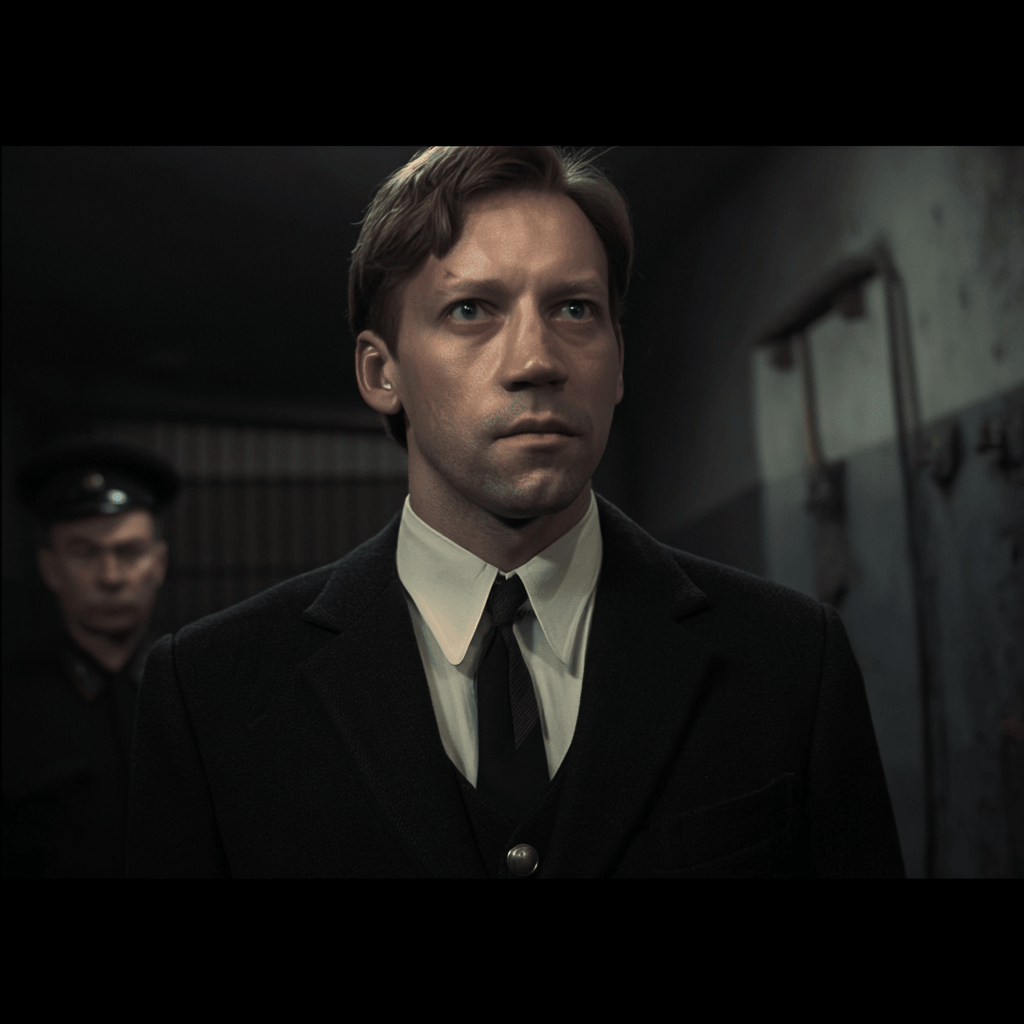
Movies mentioned in this article
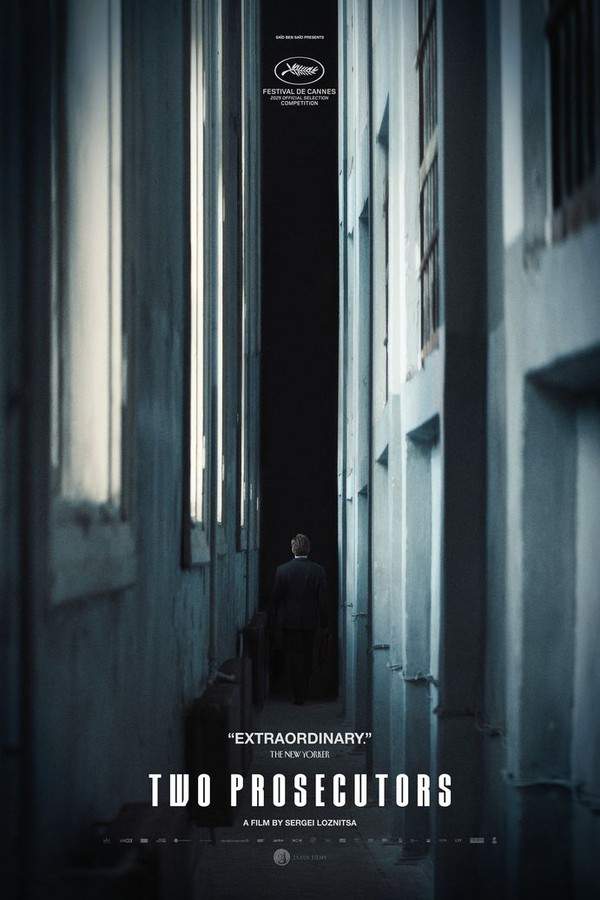
Two Prosecutors (2026) Reviews: Critical Consensus, Audience Reactions & Film Reception Analysis
When Sergei Loznitsa’s Two Prosecutors arrived in theaters on March 20, 2026, it brought with it the weight of historical memory and the immediacy of contemporary political anxiety. This meticulously crafted period drama, examining the machinery of Soviet-era justice in 1937, quickly became one of the most discussed and divisive releases of the year, prompting cinephiles and casual viewers alike to search for comprehensive Two Prosecutors reviews, Two Prosecutors 2026 critic consensus, and spoiler-free takes on whether the film warrants its demanding runtime. The reception landscape reveals a fascinating tension between critical adoration and audience polarization—a pattern that speaks to the film’s uncompromising artistic vision and its uncomfortable relevance to modern bureaucratic overreach.
For those seeking detailed context beyond critical scores, the Two Prosecutors summary page on What’s After the Movie provides essential background on this challenging work. As we delve into the Two Prosecutors film reception, it becomes clear that Loznitsa has created something that functions simultaneously as historical document, absurdist parable, and cautionary tale. The film follows an idealistic prosecutor navigating the treacherous waters of Stalinist Russia, but as reviewers have noted, its implications stretch far beyond its specific historical moment. Whether you’re researching Two Prosecutors viewer reactions to determine if this heavy drama deserves your attention, or you’re analyzing how contemporary political cinema resonates with modern audiences, this comprehensive breakdown examines every facet of the discourse surrounding one of 2026’s most provocative releases.
Critical Consensus: How Reviewers Analyzed Two Prosecutors’ Deliberate Pacing and Thematic Weight
The critical response to Two Prosecutors (2026) represents a remarkable show of unity among major publications, with most major outlets delivering scores in the high 80s and 90s, creating a Two Prosecutors critical consensus that positions the film as essential viewing for serious cinema enthusiasts. The Los Angeles Times awarded the film a sterling 90/100, praising its “penetrating depiction of a society being slowly poisoned,” while noting that the film “might be too much to bear if it wasn’t so brilliantly conceived and executed.” This sentiment captures the delicate balance Loznitsa strikes between aesthetic pleasure and existential dread—a combination that has defined much of the Two Prosecutors critic reviews landscape.
What distinguishes the critical reception is the specific vocabulary reviewers employed to describe the film’s temporal mechanics. The Austin Chronicle’s 78/100 review observed that the film “moves at a slow and deliberate pace, much like the wheels of justice,” creating a sensation where “viewers come to feel ensnarled in the grip of bureaucratic entanglement.” This metaphor of entrapment recurs throughout professional assessments, with the Wall Street Journal similarly praising the movie’s “elegant, almost symmetrical narrative economy,” describing it as “at once orderly and disorienting, as though following a plan drawn by M.C. Escher.” Such architectural precision speaks to Loznitsa’s documentary background—visible in his approach to framing and spatial relationships—and has become a central talking point in discussions about the Two Prosecutors film analysis.
However, the critical consensus wasn’t without dissent or reservation. Little White Lies offered a more qualified 60/100 assessment, calling it “a supremely well-made piece of work whose function and message never quite manage to transcend the prosaic.” This critique—that technical mastery doesn’t automatically translate into transcendent meaning—represents the minority report among professional critics, though it introduces a crucial question for potential viewers: does Two Prosecutors offer insights beyond its obvious historical warnings, or does it remain trapped in the very bureaucratic repetition it depicts? The publication suggested that “in the strange times we’re currently living through, maybe it’s worth sounding that necessary siren one more time for luck,” acknowledging the film’s timeliness while questioning its originality.
The New York Times and New York Magazine (Vulture) both awarded 90/100 scores, with the latter specifically highlighting how “Loznitsa subtly colors in [the protagonist’s] journey through the halls of power.” This focus on the micro-politics of authoritarian systems—how individual actors navigate impossible institutional constraints—has emerged as a dominant thread in Two Prosecutors review discourse. The Associated Press echoed this interpretation, awarding 88/100 and describing the film as possessing “the neatness and timelessness of a parable, one that Gogol might have written, and one that could resonate in any era where the naively courageous challenge fascism.” For readers interested in exploring how such politically charged cinema fits within broader film history, the Movie Collections and Movie Lists sections of What’s After the Movie offer curated selections of similar works.
The most enthusiastic endorsement came from Original-Cin, which delivered a perfect 100/100 score with the ominous observation that “historical hindsight lets us predict where this kind of train ride inevitably ends.” This fatalism—suggesting that the film’s power lies not in suspense but in the inevitability of its tragedy—has become central to understanding why critics have embraced Two Prosecutors while some audiences have struggled with its measured tempo. The critical community seems united in viewing the film as a mature work from an established auteur, one that demands patience but rewards viewers with what The Irish Times (80/100) described as “a timeless nowhere that is both drawn from history and independent of it”—an absurdist achievement that transcends mere historical recreation.
Audience Reactions: Real Viewer Opinions and the Two Prosecutors Word-of-Mouth Divide
While professional critics largely championed Two Prosecutors (2026), the Two Prosecutors audience reactions reveal a more complicated and polarized reception that highlights the gap between critical appreciation and mainstream entertainment expectations. User reviews on platforms like Rotten Tomatoes and Metacritic demonstrate a stark bifurcation: viewers either embrace the film’s meditative pacing as essential to its moral weight, or reject it as tedious cinematic masochism. Understanding this split is crucial for anyone researching Two Prosecutors viewer opinions or wondering “is Two Prosecutors worth watching” for their specific tastes.
User “Lon W” captured this ambivalence perfectly in a three-star review that paradoxically praised the film’s effectiveness while warning potential viewers: “SLOW AND STEADY LIKE CHINESE WATER TORTURE. STARTS OUT LIKE WE ARE IN PRISON AND EACH SHOT BEAUTIFULLY FRAMED. THE PAYOFF AT END MADE IT ALL WORK SO WELL.” This caps-lock confession of suffering-turned-satisfaction encapsulates the film’s demanding nature—it requires endurance, but converts that discomfort into moral and aesthetic revelation. The reference to prison speaks to the film’s immersive quality, suggesting that Two Prosecutors doesn’t just depict entrapment but induces it, making viewers complicit in the protagonist’s claustrophobic journey through institutional corruption.
Conversely, user “dlma1 M” attended the AFI Film Festival screening and offered a more critical three-star assessment, noting that while “period recreations of the USSR at the time are very good along with atmosphere of despair,” the narrative ultimately provides “a tense drama, but with a predictable conclusion that I saw coming from a mile away.” This critique—that historical inevitability sacrifices narrative surprise—represents the primary barrier for general audiences seeking conventional thriller elements. For viewers who prefer interactive engagement with cinema, the Quizzes and Games section of What’s After the Movie offers alternative ways to explore film content that might better suit those seeking lighter entertainment.
However, the five-star user reviews demonstrate the profound impact the film has on viewers who align with its wavelength. “Robert M” declared it “a really excellent film, full of drama, very well acted and directed,” emphasizing its contemporary relevance: “A powerful evocation of what life was like in Stalin’s Russia and a warning to us all about the future. This is a must-see film which will be one of the films of the year.” This alignment between historical reflection and present-day warning echoes the critical consensus, suggesting that viewers who approach Two Prosecutors as a meditation rather than entertainment find it deeply rewarding. The Movie Wiki on our site provides additional historical context for viewers looking to deepen their understanding of the era depicted.
Perhaps the most evocative user response came from “Thomas S,” writing in French, who described the film as revealing “sadistic faces” with an intensity that is “almost disturbing.” The review notes: “There is something, in this dark and relentless universe, that resonates deeply within me. A work that marks and questions.” This emotional resonance—feeling marked and questioned by the cinematic experience—represents the high-water mark for Two Prosecutors reception. It suggests that for receptive viewers, the film transcends its historical setting to become a universal meditation on complicity, power, and moral courage.
User “Barbara” offered the concise but telling verdict: “Trenchant and riveting.” This economy of praise suggests that while the film demands patience, it ultimately delivers the sharp social commentary promised by its premise. For those tracking how Two Prosecutors performs commercially alongside its critical reputation, our Box Office section provides real-time data on the film’s theatrical run, while the Awards page tracks its recognition during the current season.
Contemporary Parallels: Why Two Prosecutors Reviews Highlight Modern Political Resonance
One of the most striking aspects of the Two Prosecutors (2026) reception is the frequency with which reviewers drew explicit connections between the film’s 1937 setting and contemporary political realities—a phenomenon that has elevated the film from historical drama to urgent cultural artifact. IONCINEMA.com’s 60/100 review crystallized this interpretation with its provocative observation: “At a point in time, a film like Two Prosecutors would seem like an old fashioned recapitulation of a dark, disastrous period we’d safely moved away from. However, it’s difficult not to see crystal clear parallels, on an operational level at the least, with NKVD, an agency operating with complete autonomy, and something like the newly minted monstrosity DOGE in the US.” This specific geopolitical reading demonstrates how Two Prosecutors critic reviews have positioned the film as not merely retrospective but prophetically diagnostic.
This interpretive lens has significant implications for understanding Two Prosecutors film reception among politically engaged viewers. The film has become a Rorschach test for anxieties about bureaucratic overreach, institutional capture, and the erosion of due process in contemporary democracies. The Associated Press recognized this universality, describing the work as possessing “the neatness and timelessness of a parable… that could resonate in any era where the naively courageous challenge fascism.” By invoking Gogol while simultaneously acknowledging modern relevance, reviewers suggest that Loznitsa has tapped into archetypal patterns of authoritarian behavior that transcend specific historical moments.
The Irish Times offered a more philosophical take on this temporal ambiguity, arguing that “it would be a mistake to seek too many lessons from the film. Its great achievement is in the creation of a timeless nowhere that is both drawn from history and independent of it. That is the absurdist ideal.” This reading complicates the straightforward “warning from history” interpretation, suggesting instead that Two Prosecutors operates in the tradition of Kafka or Beckett—a landscape where bureaucracy becomes its own logic, detached from ideological justification or human empathy. For viewers interested in exploring how absurdist cinema intersects with political critique, the Concert Films and experimental cinema collections on What’s After the Movie provide additional viewing options that explore similar thematic territory.
The New York Times emphasized the “mordantly comedic” undertones that prevent the film from becoming merely a slog through historical atrocity, noting that it “makes a tightly conceived addition to Loznitsa’s work, which rides deep into the long, dark nights of Russian history with fiction, observational documentary and immersions in the Soviet archives.” This hybrid approach—merging documentary rigor with fictional narrative—explains why the film resonates differently than standard historical dramas. It carries the weight of archival truth while maintaining the aesthetic distance necessary for artistic interpretation.
User “Robert M” reinforced this interpretive framework in his audience review, explicitly calling the film “a warning to us all about the future.” The convergence between professional critics and engaged viewers regarding the film’s contemporary relevance suggests that Two Prosecutors has successfully transcended its period setting to become a meditation on eternal questions of power and morality. For those researching how political cinema evolves across decades, our Profiles section offers biographical information on director Sergei Loznitsa and his contemporaries working in similar modes.
The danger of such immediate political reading, of course, is that it might reduce the film’s complex aesthetic achievements to mere allegory. However, most Two Prosecutors reviews successfully navigate this tension, acknowledging the film’s specific historical texture while recognizing its broader implications. This dual consciousness—past and present, specific and universal—has become the defining characteristic of the film’s critical discourse, making it essential viewing for anyone concerned with the relationship between cinema and civic engagement.
Craft and Execution: Cinematography, Pacing, and Performance in Two Prosecutors
Beyond the thematic and political readings that dominate Two Prosecutors (2026) discourse, a significant portion of the Two Prosecutors review landscape focuses on the film’s technical execution—particularly its visual composition, temporal structure, and acting choices. These formal elements have generated considerable debate among both critics and audiences, with opinions diverging on whether the film’s slow cinema aesthetics constitute artistic necessity or self-indulgence. For viewers researching Two Prosecutors spoiler-free review content to gauge the viewing experience, understanding these craft discussions is essential.
The visual strategy of Two Prosecutors received nearly unanimous praise across the critical spectrum. User “Lon W” noted that despite the film’s punishing pacing, “EACH SHOT [is] BEAUTIFULLY FRAMED,” while festival attendee “dlma1 M” specifically highlighted the “period recreations of the USSR at the time” as “very good.” This attention to visual detail reflects Loznitsa’s background in documentary filmmaking, where location authenticity and atmospheric accuracy serve as foundations for narrative credibility. The Summaries section of What’s After the Movie provides additional insights into how production design contributes to the immersive quality of historical cinema.
The pacing, however, remains the most divisive aspect of the film’s construction. The Austin Chronicle’s observation that the film moves “at a slow and deliberate pace, much like the wheels of justice” represents the charitable interpretation—that the temporal experience mirrors the thematic content. This technique, often associated with the “slow cinema” movement, asks viewers to sit with discomfort rather than consume it efficiently. The Wall Street Journal’s comparison to “a plan drawn by M.C. Escher” suggests that the disorientation arises not from chaos but from too much order—from systems that fold back on themselves in endless loops of bureaucratic procedure.
New York Magazine (Vulture) provided crucial insight into how this pacing serves character development, noting that “what distinguishes Two Prosecutors is not its overall narrative trajectory (which reads more like a bitter cosmic joke than anything else) but rather how Loznitsa subtly colors in [the protagonist’s] journey through the halls of power.” This suggests that the film’s temporal dilation allows for micro-observations of institutional behavior—the small gestures of power, the hesitation before signing a document, the glance exchanged in a corridor—that would be lost in a more conventional narrative rhythm.
The acting has similarly drawn praise for its restraint. User “Thomas S” marveled at the casting of “sadistic faces,” wondering “where did they find them?” This observation points to a casting strategy that prioritizes physiognomy and presence over theatrical display—a documentary approach to fiction casting that enhances the film’s unsettling realism. The performances avoid the melodramatic excess often associated with historical drama, instead opting for a flat affect that mirrors the deadening impact of totalitarian systems on individual expression.
For those tracking how these artistic choices translate to commercial performance, the Box Office data reveals how specialty cinema audiences receive such demanding works. Meanwhile, the Movie Page on our site offers comprehensive details on cast and crew for readers interested in exploring the performers’ other works.
The technical precision extends to the film’s sound design and editing, which critics have noted create a claustrophobic atmosphere that physically affects viewers. Original-Cin’s perfect score suggests that for viewers attuned to formal excellence, these elements coalesce into an overwhelming aesthetic experience. However, the three-star user reviews indicate that for general audiences, these same elements may register as opacity or tedium—a reminder that Two Prosecutors makes specific demands on its audience that not all viewers are prepared to meet.
Comparative Context: Two Prosecutors Within the Landscape of Political Cinema
To fully appreciate the Two Prosecutors (2026) reception, one must situate the film within broader conversations about political cinema, historical representation, and the ethics of depicting authoritarian violence. The Two Prosecutors film analysis emerging from major publications positions Loznitsa’s work within a continuum of Eastern European cinema that grapples with Soviet legacy, while also distinguishing it from more conventional Hollywood treatments of similar themes. For viewers searching “is Two Prosecutors worth watching” compared to other recent political dramas, this contextualization proves invaluable.
The Los Angeles Times’ assertion that “there are many ways to portray authoritarianism, but Two Prosecutors is penetrating in its depiction of a society being slowly poisoned” implicitly contrasts the film with more sensational or action-oriented treatments of totalitarianism. Unlike thriller narratives that focus on escape or resistance, Two Prosecutors immerses viewers in the mundane machinery of repression—the paperwork, the office politics, the banal evil that Hannah Arendt identified. This approach aligns it more closely with the work of filmmakers like Cristi Puiu or the Dardenne Brothers than with commercial historical epics.
Little White Lies’ qualified praise—that the film is “supremely well-made” but struggles to “transcend the prosaic”—raises important questions about the limitations of realism in political cinema. If the film successfully recreates the oppressive atmosphere of 1937, does it risk replicating that oppression for viewers without offering transcendence or hope? This critique suggests that Two Prosecutors may function better as historical witness than as political intervention—a document rather than a call to action. However, the IONCINEMA.com review’s explicit connection to contemporary American politics challenges this interpretation, arguing that the film’s very prosaic quality—its focus on bureaucratic procedure over ideology—makes it urgently relevant to current debates about institutional decay.
The New York Times’ description of the film as “mordantly comedic” places it within the tradition of gallows humor that characterizes much of Russian literature and cinema. This tonal complexity—finding dark humor in hopelessness—distinguishes Two Prosecutors from more earnest historical dramas. The comparison to Gogol by The Associated Press reinforces this literary lineage, suggesting that Loznitsa is working in a specifically Eastern European mode of absurdist satire that uses comedy to sharpen rather than dilute tragedy.
For audiences interested in exploring similar works, the Movie Collections feature on What’s After the Movie offers curated lists of Soviet-era dramas and contemporary Eastern European cinema. These collections help viewers understand how Two Prosecutors fits into broader cinematic traditions of bearing witness to historical trauma.
The film’s reception also reflects changing audience appetites for difficult cinema in an era of streaming content and attention fragmentation. User reviews suggesting the film is “slow and steady like Chinese water torture” indicate that even festival-going audiences—typically more tolerant of challenging work—find Two Prosecutors demanding. This creates a paradox: the film’s very effectiveness in communicating the grinding nature of bureaucratic oppression makes it a tough sell for viewers seeking entertainment or even conventional edification.
Ultimately, the comparative analysis reveals Two Prosecutors as a work that respects its audience’s intelligence while demanding their endurance. It refuses to sanitize history or provide comforting resolutions, instead offering what The Irish Times called “the absurdist ideal”—a vision of institutional logic run amok that remains terrifyingly applicable across decades and regimes. For those seeking to explore these themes further, the Two Prosecutors summary page provides detailed plot information, while our Movie Lists section recommends complementary films for a deeper dive into political cinema.
Final Verdict: Understanding Two Prosecutors’ Legacy in 2026 and Beyond
As the discourse surrounding Two Prosecutors (2026) continues to evolve, the film stands as a testament to the power of cinema to interrogate historical trauma while illuminating present-day crises. The Two Prosecutors critical consensus clearly positions the film as a major work from an accomplished director, with the majority of professional reviewers celebrating its formal precision, historical authenticity, and unsettling relevance. Yet the divided Two Prosecutors audience reactions remind us that challenging art inevitably excludes some viewers while deeply affecting others.
What emerges from the synthesis of Two Prosecutors reviews is a portrait of cinema as moral witness—demanding, unflinching, and necessary. Whether approached as a historical document, a political warning, or an aesthetic achievement, the film rewards those willing to submit to its rhythms and confront its uncomfortable implications. For viewers still wondering “is Two Prosecutors worth watching,” the answer depends largely on your tolerance for slow-burn cinema and your interest in the mechanics of institutional power.
We encourage you to explore the Two Prosecutors page on What’s After the Movie for comprehensive details, box office tracking, and connections to similar films. Whether you’re a film scholar analyzing the intersection of documentary and fiction techniques, or a casual viewer seeking meaningful cinema, our platform provides the resources to deepen your understanding of this provocative work. The conversation around Two Prosecutors is far from over, and as global political situations continue to evolve, the film’s insights into bureaucracy, complicity, and courage will only grow more vital.
| Site | Link |
|---|---|
| Two Prosecutors Wikipedia | https://en.wikipedia.org/wiki/Two_Prosecutors |
| Two Prosecutors Rotten Tomatoes | https://www.rottentomatoes.com/m/two_prosecutors |
| Two Prosecutors Metacritic | https://www.metacritic.com/movie/two-prosecutors/ |
| Two Prosecutors Box Office Mojo | https://www.boxofficemojo.com/title/tt35521200/?ref_=bo_se_r_1 |
Continue reading



What's After the Movie?
Not sure whether to stay after the credits? Find out!
Check out our other apps:

SAT Sphere
Build confidence for the Digital SAT.

Mori Atlas
Discover wild places worth protecting.

Luntero
Search smarter for a home in Amsterdam.

Plot Explained
Unravel movie endings and hidden clues.

Pokechamp
Dive into Pokémon data and battle logic.

Driving Theory
Get ready for your European theory test.

Movie Dust
Plan your next cinema trip with ease.

Musemap
Find art and culture as you travel.

Selkobase
Compare credentials before committing.

Local Manual
Turn an unfamiliar country into practical next steps.

Lernavi
Compare school systems before your next move.

GymRoam
Find a workout stop wherever your plans take you.
Explore Our Movie Platform
New Movie Releases (2026)
Famous Movie Actors
Top Film Production Studios
Movie Plot Summaries & Endings
Major Movie Awards & Winners
Best Concert Films & Music Documentaries
Movie Collections and Curated Lists
© 2026 What's After the Movie. All rights reserved.
Privacy Policy