What's After the Blog?
Opinions • Reception
I Swear (2026) Review & Critic Opinions – Audience Reception, Performance & Storytelling Analysis
Explore fan reactions and critic reviews of I Swear (2026), examining the film’s powerful performances, nuanced storytelling, and its impact on the portrayal of Tourette's Syndrome within the broader cinematic landscape. We break down how audiences and reviewers respond to its depiction of a misunderstood condition and its place in contemporary biopic cinema.
April 21, 2026

Movies mentioned in this article
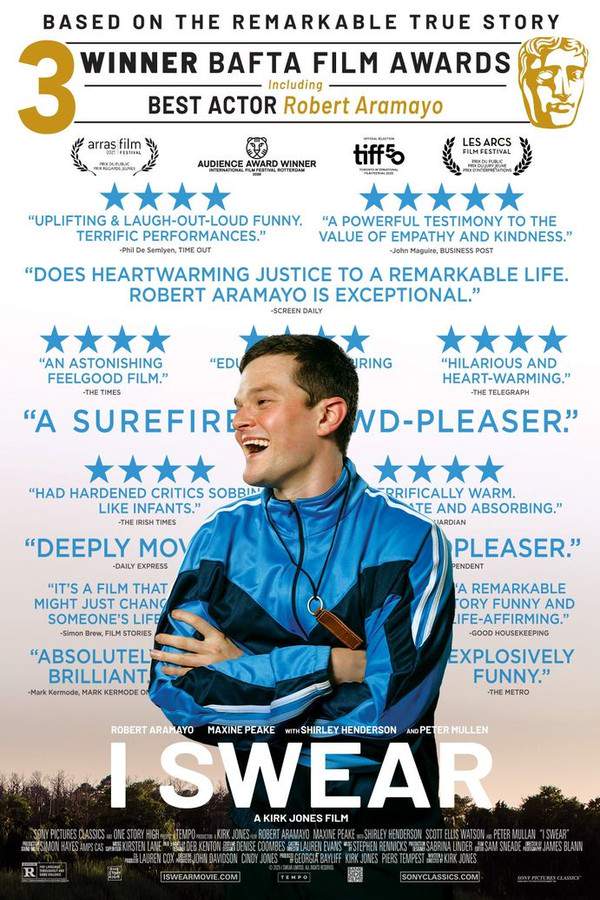
I Swear (2026) Review: Critical Reception, Audience Reactions & Is It Worth Watching?
When searching for I Swear (2026) review content online, viewers are encountering a fascinating divide between clinical critical analysis and raw emotional audience testimony. This Kirk Jones-directed biographical drama, chronicling the life of John Davidson and his journey with Tourette’s Syndrome, has emerged as one of the most discussed disability representation films in recent memory. Whether you’re looking for critic reviews, wondering about I Swear audience reactions, or simply trying to determine if I Swear is worth watching, the reception landscape offers a complex tapestry of opinions that reward deeper examination.
At What’s After the Movie, we specialize in dissecting exactly these kinds of cinematic moments—where film reception meets cultural significance. Our movie wiki and comprehensive summaries help contextualize why certain films generate specific viewer responses. For those tracking I Swear’s journey through awards season or box office performance, our dedicated awards page and box office tracker provide real-time updates on this Robert Aramayo-led drama.
The search volume surrounding I Swear 2026 spoilers, viewer reactions, and critical consensus suggests audiences aren’t just looking for plot breakdowns—they’re seeking validation for the emotional responses this film triggers. With reviews ranging from measured 60/100 scores to exuberant 85/100 endorsements, understanding the variance in film analysis requires examining not just what critics said, but how they approached the movie’s delicate balancing act between humor and pathos. Is this a “disease of the week” melodrama, or something more nuanced? Let’s dive into the critical reception, fan opinions, and detailed I Swear film analysis to uncover why this particular release has generated such passionate discourse.
Critical Consensus: How Reviewers Graded I Swear’s Cinematic Merit
The Metacritic and Rotten Tomatoes aggregates for I Swear (2026) reveal a film that critics respect but don’t universally adore, with scores clustering between 60 and 85 out of 100. This 25-point spread tells a story of qualified praise—reviewers acknowledge the film’s technical accomplishments and social importance while questioning certain narrative choices. For those conducting I Swear critic research, understanding this spectrum is crucial for setting appropriate expectations before viewing.
The Hollywood Reporter (60/100) offered a measured assessment, noting that “Davidson’s essential likability shines through, thanks in part to Aramayo’s endearing, guileless performance and in part to writer-director Kirk Jones’ machine-tooled script, clearly fact-checked and vetted by the film’s exec producer, the actual John Davidson himself.” This observation highlights a recurring theme in I Swear reception: the tension between authenticity and cinematic manipulation. Critics appreciate the vetting process and real-world consultation but question whether the narrative feels too constructed, too “machine-tooled” for maximum emotional impact.
Conversely, The Telegraph (80/100) embraced the film’s entertainment value without reservation, declaring: “The film is inescapably hilarious too, though – such is the weird power of swearing when the swearer can’t keep a lid on it.” This quote encapsulates the critical consensus around the film’s riskiest creative decision—using profanity (involuntary in the context of Tourette’s) as both comedic release and educational tool. Variety (70/100) wrestled with this same duality, noting that the film “wrestles enthusiastically and mostly successfully with the potential pitfalls of making a funny yet respectful project about a condition that sometimes lends itself to laughter, even as it wreaks havoc with Davidson’s life in serious ways.”
Collider (80/100) delivered perhaps the most emotionally resonant spoiler-free review, promising potential viewers: “It will make you cry, it will make you uncomfortable, but at the end of the film’s runtime, it will leave you with a feeling of profound satisfaction that even the most heartfelt movies struggle to replicate.” This speaks to the viewer reactions documented across platforms—discomfort followed by catharsis.
However, The New Yorker (60/100) raised sophisticated concerns about narrative ethics: “For me, the possible false note lay not in Aramayo’s performance but in the script. At times, it seems that Jones’s film, far from being strictly diagnostic, might in fact be egging John on, for the sake of our entertainment, toward perverse new heights of verbal invention.” This critique introduces a vital dimension to I Swear film analysis—the question of whether the film exploits Davidson’s condition for laughs under the guise of education. It’s a tension that elevates the discourse beyond standard disability drama reviews into questions of cinematic ethics.
Screen Daily (80/100) and Next Best Picture (80/100) both acknowledged conventional plotting while praising execution. Next Best Picture specifically noted: “The story, while unique enough in its presentation of Tourette’s, follows the same patterns as any number of other feel-good disability dramas, but all the actors are so believably in touch with their humanity, in all its messiness, that they make the material sing.” This observation is crucial for anyone asking “Is I Swear original?” or searching for disability representation comparisons. The film operates within established genre parameters but transcends them through performance quality.
For those interested in exploring similar films or building watchlists around this genre, our movie collections and curated movie lists offer extensive resources. You can also test your knowledge of cinema with our quizzes and games after viewing.
Robert Aramayo’s Transformative Performance: Awards Buzz and Acting Analysis
If I Swear (2026) achieves lasting recognition beyond its initial release, credit will undoubtedly belong to Robert Aramayo’s physically demanding, technically precise embodiment of John Davidson. Across the critic reviews and user reactions alike, Aramayo’s work generates the most unified praise, with multiple outlets suggesting awards consideration is warranted. For those searching “Robert Aramayo I Swear review” or “I Swear acting analysis”, the testimony approaches unanimous acclaim.
The Times (80/100) delivered perhaps the most effusive praise for the central performance: “There’s a hint of repetition in the mid-section and a schmaltzy third act courtroom scene. But all flaws are overcome by Aramayo’s technically precise and heart-rending turn. It’s astonishing.” Note the critical weight here—structural weaknesses in the screenplay are forgiven because the lead performance carries such authenticity and emotional truth. This is the definition of an awards-caliber turn, the kind that dominates film reception conversations during Oscar season. Viewers tracking I Swear awards potential should bookmark our awards page for ongoing updates on Aramayo’s campaign.
Film Threat (85/100) contextualized the performance within broader disability cinema discourse: “I Swear is not looking for pity. It’s looking for empathy and understanding, as if to say there is no such thing as good or bad disabilities.” Aramayo’s achievement lies in this balancing act—he manifests tics and verbal outbursts without reducing Davidson to a caricature or saint. The performance invites empathetic viewing rather than voyeuristic observation, a distinction crucial to the film’s audience reception.
User reviewer Andrew L succinctly captured the grassroots fan opinions driving the film’s reputation: “Fantastic and thought provoking. I’m amazed by Robert Aramayo’s performance, he desrves all the awards coming to him.” This aligns with Alaina G’s declaration that “Robert Amarayos portrayal of John is the best acting I’ve ever seen. Hat’s off to everyone involved. This is now my favourite movie of all time.” When viewer reactions reach this level of hyperbole—“best acting I’ve ever seen”—they signal that Aramayo has transcended mere impersonation to achieve something viscerally affecting.
The technical challenge cannot be overstated. Unlike portrayals of physical disability or psychological conditions that allow for between-take recovery, Aramayo had to maintain the exhausting physicality of Tourette’s throughout shooting. Wayne K’s detailed user review noted: “Robert Aramayo gives a performance that’s completely believable and lived-in, looking like the tics and outburst are really hurting him. His character arc is the emotional core of the film, going from a promising young lad blighted by a stigmatised condition to a confident adult who still suffers with it but has channelled his pain into doing something beneficial for others.”
This observation about the character arc highlights why I Swear reviews frequently reference “transformation” rather than just “portrayal.” Aramayo doesn’t simply mimic symptoms; he charts a psychological evolution from shame to advocacy. For those interested in the real John Davidson’s story versus the cinematic adaptation, our movie wiki and profiles sections provide biographical context and cast information.
The BAFTA mention in user J G’s review—“Only the uneducated ignorant people would think he said what he said at the baftas as his own choice”—suggests the film has already generated real-world conversation about Tourette’s awareness, with Aramayo potentially appearing in character or referencing the condition during awards presentations. This blurring of art and reality speaks to the performance’s cultural penetration.
Balancing Humor and Humanity: Tone, Genre Expectations, and Representation
The most sophisticated I Swear film analysis centers on a question that has divided critic reviews: How does a film make involuntary profanity and verbal tics funny without mocking the person experiencing them? This tonal tightrope separates I Swear (2026) from standard “inspirational disability drama” fare and generates the most interesting critical consensus debates.
San Francisco Chronicle (75/100) provided essential context for viewers asking “Is I Swear offensive?” or “How does I Swear handle Tourette’s?”: “It’s a good film, very unlike most ‘disease of the week’ pictures, in that it’s often quite funny, and it tells a fascinating story about something that remains mysterious to most people.” The key phrase here is “disease of the week”—a pejorative term for television movies that exploit medical conditions for cheap sentiment. I Swear distinguishes itself through humor that arises from situation and human resilience rather than mocking the condition itself.
The San Francisco Chronicle review suggests that audience reactions are heavily influenced by viewers’ prior exposure to Tourette’s representation. Those familiar only with stereotypical portrayals find the film “educational” (as juju M noted: “It’s educational and more people should try watching it to gain more perspectives on the condition”), while those seeking pure melodrama may find the comedy disorienting.
Wayne K’s comprehensive user review addressed the film’s advocacy aims without patronization: “I Swear is a genuinely fantastic film… a truly heartwarming story that acts a plea for tolerance without ever patronising the people it’s trying to help. Kirk Jones captures the look, attitude and dialogue patterns of a typical Scottish town, a place where our lead slowly manifests a condition that will tear his family and his own life apart.” This observation about the Scottish setting (referenced also in the critical consensus regarding regional authenticity) grounds the universal condition in specific cultural context, avoiding the generic “anywhere” quality that weakens many disability dramas.
The genre question looms large in I Swear reception. Next Best Picture’s observation that the story “follows the same patterns as any number of other feel-good disability dramas” raises the question: Is I Swear revolutionary in content but conventional in form? And does that matter if the emotional impact remains profound?
For genre enthusiasts who enjoy concert films or other specialty formats, our concert films section offers alternatives, though I Swear clearly belongs to the traditional narrative biopic category.
The courtroom scene mentioned by The Times—described as “schmaltzy”—represents the film’s most significant tonal risk, potentially sliding into the melodrama that critics feared. Yet Kristopher J’s user review defended the film’s integrity against skepticism: “A fantastic film, superbly acted and served a real purpose too. Take no notice of spam reviews from poorly educated Americans.” This defensive posture suggests that negative I Swear reviews may stem from misunderstanding the condition itself rather than cinematic flaws.
Melissa D encapsulated the viewer reactions that drive the film’s word-of-mouth success: “I cried, I laughed, I was educated. what a completely AMAZING film. 100000/10. everybody should really sit down and grasp the full concept of this film.” The educational component—repeated across multiple user reviews—positions I Swear as both entertainment and advocacy, a dual function that explains its high audience reception scores despite mixed critical consensus on narrative innovation.
Audience Reactions vs. Critical Reception: The Divide in I Swear Reviews
Perhaps the most striking aspect of I Swear (2026)‘s reception landscape is the chasm between professional critic reviews and grassroots audience reactions. While critics hovered in the 60-85 range—respectful but measured—user reviewers consistently awarded perfect or near-perfect scores, creating a film reception phenomenon that rewards investigation.
Gareth D’s user review represents the overwhelming sentiment: “Faultless, one of the very best things I’ve watched for a long time. Funny, moving, real, interesting, educational. Wow.” This 5/5 rating, echoed by Happy L (“Absolutely beautiful brilliantly made film. Loved everything about it”), Zacha L (“Es un peliculón recomiendo verla 10/10”), and numerous others, suggests that I Swear achieves something that spoiler-free reviews and marketing materials cannot fully convey—the visceral emotional connection that transforms viewers into advocates.
The audience reception emphasizes education and empathy in ways that critic reviews merely acknowledge. juju M provided particularly nuanced viewer reactions that illuminate why the film resonates beyond its immediate subject matter: “It’s educational and more people should try watching it to gain more perspectives on the condition, it’s one of the few movies that really touched my heart, especially the little moments of compulsion talk since I have ocd, obviously not the same condition as the main focus in the movie but I like seeing the perspectives even outside the compulsion talk.”
This observation about compulsion and neurodivergent experience suggests I Swear succeeds not just as a Tourette’s PSA but as a broader meditation on uncontrollable mental states. For viewers searching “I Swear relatable” or “movies about neurodivergence”, this review confirms the film’s universal applications.
J G’s review addressed the I Swear BAFTA controversy or misconception mentioned in passing: “What a wonderful film about the struggles with tourettes. It was beautifully done. Only the uneducated ignorant people would think he said what he said at the baftas as his own choice. This made me watch the film and I am so glad I did.” This suggests the film generated pre-viewing controversy or misunderstanding that actually drove viewership—a fascinating box office and reception dynamic that we track on our dedicated I Swear movie page.
The critical consensus tends to emphasize formal concerns—repetition in the mid-section, conventional plotting, the “machine-tooled” nature of the script—while fan opinions prioritize emotional truth and social utility. Alaina G spoke for many user reactions when declaring: “A touching, brutally honest view into the life of Jonny Davidson, who’s Tourettes Syndrome has shaped his whole adult life. Its inspirational and educational, hysterical and emotional. This movie has everything.”
For those wondering “Is I Swear worth watching?”, this divide offers clear guidance: If you value technical innovation and narrative experimentation, the critic reviews suggest moderate expectations. If you seek emotional catharsis, educational content, and performances that transcend material, the audience reactions suggest essential viewing. Our summary page offers additional context for viewers making this decision.
Narrative Structure and Pacing: Conventional Beats vs. Unique Subject Matter
Deep film analysis of I Swear (2026) reveals a tension between the unprecedented nature of its subject matter and the familiar rhythms of its storytelling. Multiple critic reviews noted that while the depiction of Tourette’s feels fresh and necessary, the narrative architecture relies on well-worn biopic conventions—the courtroom climax, the third-act speech, the gradual family acceptance arc.
The Times specifically identified structural fatigue: “There’s a hint of repetition in the mid-section and a schmaltzy third act courtroom scene.” This critique suggests that I Swear may test the patience of viewers searching for “I Swear boring?” or concerned about pacing issues. Yet the same review immediately contextualizes this flaw within the film’s greater success: “But all flaws are overcome by Aramayo’s technically precise and heart-rending turn.”
This pattern—acknowledging structural weaknesses while praising emotional impact—defines the critical reception. Screen Daily (80/100) noted: “While this stirring dramatization of Davidson’s life hits conventional narrative beats, sensitive handling and a remarkable central performance from Robert Aramayo do heartwarming justice to a remarkable life.”
For viewers engaging in I Swear film analysis, this raises questions about the obligations of biographical cinema. Must a film about an unusual condition also employ unusual storytelling? Or does the familiarity of the narrative structure actually serve the educational mission by making the exotic (to many viewers) experience of severe Tourette’s accessible through recognizable dramatic patterns?
Wayne K’s detailed user review suggested that the conventional structure serves the film’s advocacy goals: “It’s a classic feel-good story that never feels slow for a second and sheds light on a disability that people evidentially still don’t understand.” The phrase “classic feel-good story” acknowledges the template while praising the execution speed—“never feels slow” counters the “repetition” noted by critics.
The Hollywood Reporter’s observation about the “machine-tooled script, clearly fact-checked and vetted” suggests that fidelity to Davidson’s actual life may have constrained narrative innovation. When accuracy becomes paramount, dramatic experimentation often suffers. This creates a specific type of viewer reactions—those who appreciate the documentary-adjacent authenticity versus those who find the plotting predictable.
For comprehensive details on the real events versus cinematic adaptation, viewers can consult our movie wiki or the specific I Swear movie page for fact-checking and background context.
The Metacritic scores hovering between 60-85 suggest that while critics recognize the safety of the narrative choices, they don’t necessarily penalize them heavily when the subject matter warrants respectful treatment. Variety captured this generosity: the film “wrestles enthusiastically and mostly successfully with the potential pitfalls” of its subject, implying that success in the difficult tonal balancing act outweighs conventional plotting.
Ultimately, I Swear reviews suggest that for this particular film, how the story is told matters less than what is being revealed. The mid-section repetition The Times identified may simply reflect the reality of living with Tourette’s—repetitive, exhausting, cyclical. When viewed through this lens, the structure becomes thematic rather than lazy, a film analysis angle that redeems the critical consensus concerns about pacing.
Conclusion: Is I Swear Worth Watching? Final Verdict on Reception and Legacy
Synthesizing the critical consensus, audience reactions, and detailed film analysis of I Swear (2026), the verdict emerges clearly: this is essential viewing for those seeking empathetic, educational cinema, provided expectations align with emotional impact over narrative innovation. The critic reviews establish the film as technically accomplished if structurally conventional, while user reviews confirm its power to transform perspectives and generate profound catharsis.
For those still asking “Is I Swear worth watching?” or searching for spoiler-free reviews to guide their decision, consider your priorities. If you value disability representation that balances humor with dignity, Robert Aramayo’s awards-worthy performance alone justifies the runtime. If you require avant-garde storytelling or unpredictable narratives, the critical reception suggests tempering expectations—the film prioritizes accessibility and emotional clarity over formal experimentation.
The reception trend points toward longevity through word-of-mouth rather than critical canonization. I Swear appears destined to become a film that viewers recommend to friends with personal stakes—families with neurodivergent members, educators, advocates—rather than one that dominates year-end best lists. Yet this utility does not diminish its artistry; as Film Threat noted, it seeks “empathy and understanding, as if to say there is no such thing as good or bad disabilities,” a mission that transcends typical movie review metrics.
At What’s After the Movie, we track these evolving reception patterns through our box office data and awards coverage. Whether I Swear becomes a sleeper hit or maintains its current status as a critically respected, audience-adored niche film, its contribution to Tourette’s awareness and disability cinema is already secured.
The viewer reactions—“I cried, I laughed, I was educated,” “now my favourite movie of all time,” “faultless”—suggest that I Swear achieves the rare feat of fulfilling its advocacy mission while delivering genuine cinematic satisfaction. For your next viewing decision, explore our movie lists or test your film knowledge with our quizzes and games, and visit our profiles section to explore Robert Aramayo’s growing filmography. Ultimately, I Swear earns its place in the conversation about compassionate, necessary cinema—worth watching, worth discussing, and worth remembering.
| Site | Link |
|---|---|
| Wikipedia | I Swear (film) Wikipedia |
| Rotten Tomatoes | I Swear Rotten Tomatoes |
| Metacritic | I Swear Metacritic |
| JustWatch | I Swear JustWatch |
| Box Office Mojo | I Swear Box Office Mojo |
| IMCDB | I Swear IMCDB |
Continue reading




What's After the Movie?
Not sure whether to stay after the credits? Find out!
Check out our other apps:

SAT Sphere
Build confidence for the Digital SAT.

Mori Atlas
Discover wild places worth protecting.

Luntero
Search smarter for a home in Amsterdam.

Plot Explained
Unravel movie endings and hidden clues.

Pokechamp
Dive into Pokémon data and battle logic.

Driving Theory
Get ready for your European theory test.

Movie Dust
Plan your next cinema trip with ease.

Musemap
Find art and culture as you travel.

Selkobase
Compare credentials before committing.

Local Manual
Turn an unfamiliar country into practical next steps.

Lernavi
Compare school systems before your next move.

GymRoam
Find a workout stop wherever your plans take you.
Explore Our Movie Platform
New Movie Releases (2026)
Famous Movie Actors
Top Film Production Studios
Movie Plot Summaries & Endings
Major Movie Awards & Winners
Best Concert Films & Music Documentaries
Movie Collections and Curated Lists
© 2026 What's After the Movie. All rights reserved.
Privacy Policy