Two Prosecutors 2026


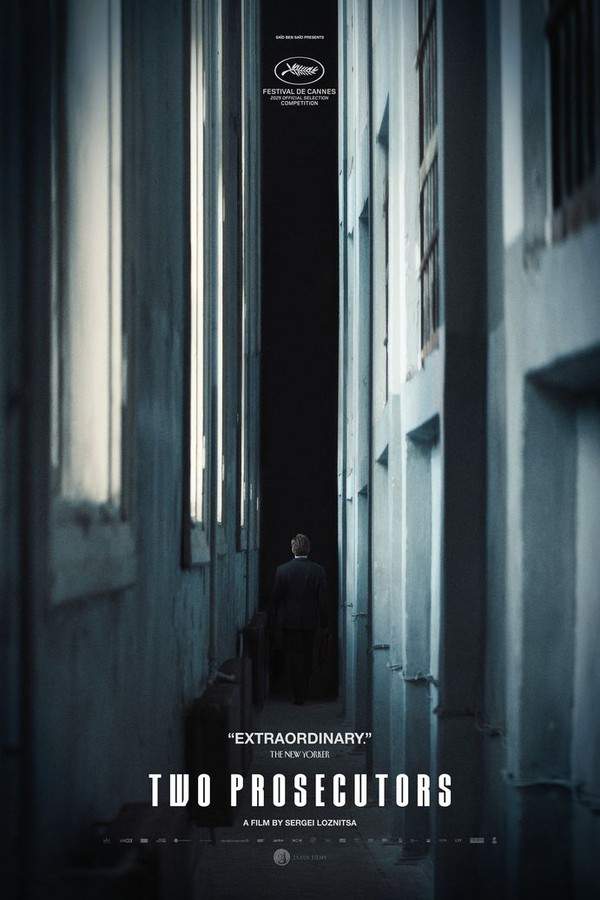
In 1937 Soviet Union, thousands of letters from detainees falsely accused by the regime are burned in a prison cell. Against all odds, one survives and is placed on the desk of newly appointed local prosecutor Alexander Kornev. Determined to uncover the truth, Kornev seeks the prisoner, a victim of the corrupt NKVD secret‑police agents amid terror.


Does Two Prosecutors have end credit scenes?
No!
Two Prosecutors does not have end credit scenes. You can leave when the credits roll.
Where to Watch Two Prosecutors
See current US streaming, rental, and purchase options for Two Prosecutors (2026) via JustWatch.







Meet the Full Cast and Actors of Two Prosecutors
Explore the complete cast of Two Prosecutors, including both lead and supporting actors. Learn who plays each character, discover their past roles and achievements, and find out what makes this ensemble cast stand out in the world of film and television.

Aleksandr Kuznetsov
Kornev
Andris Keiss
Duty assistant
Anatoliy Belyy
Andrey Vyshinsky
Valentin Novopolskij
Chatterbox
Aleksandr Filippenko
Stepniak
Lukas Petrauskas
Young prosecutor
Ivgeny Terletsky
Old Prisoner
Sergey Podymin
KGB officer
Vytautas Kaniusonis
Prison Governor
Dmitrijus Denisiukas
Orest Pasko
Corridor Warder
External Links and Streaming Options
Discover where to watch Two Prosecutors online, including streaming platforms, rental options, and official sources. Compare reviews, ratings, and in-depth movie information across sites like IMDb, Wikipedia, Rotten Tomatoes or Metacritic.





Ratings and Reviews for Two Prosecutors
See how Two Prosecutors is rated across major platforms like IMDb, Metacritic, and TMDb. Compare audience scores and critic reviews to understand where Two Prosecutors stands among top-rated movies in its genre.

The Movie Echo Score
Two Prosecutors delivers a measured, historically resonant experience that leans more toward praise than criticism. The film’s direction and visual composition are widely regarded as elegant and purposeful, while performances are noted for their nuance and gravity. Narrative pacing divides opinion, with some reviewers finding the deliberate tempo arresting and others deeming it sluggish, yet the thematic relevance and atmospheric design sustain interest. Overall, the work ranks solidly in the upper‑mid range, offering lasting thematic weight despite occasional structural fatigue.
The Movie Echo Score Breakdown for Two Prosecutors

Art & Craft
In terms of direction and visual craftsmanship, critics highlight a subtle color palette and symmetrical narrative economy that lend the film an almost architectural precision. Reviewers repeatedly mention beautifully framed shots and meticulous period recreations that reinforce the austere setting. This consistent commendation across both professional and user commentary translates into a high artistic rating, reflecting a strong execution of cinematography, production design, and editing.

Character & Emotion
When it comes to character depth and performance, the consensus points to nuanced portrayals that capture the desperation of the era. Critics note a penetrating depiction of authoritarian oppression, while users describe the acting as excellent and emotionally resonant. Although some observe that the film’s message occasionally overshadows individual nuance, the overall impression emphasizes a solid, compelling ensemble that grounds the historical narrative.

Story & Flow
Storywise, the film presents a deliberate pace that divides opinion. Some critics appreciate the slow, methodical unfolding as a thematic choice, whereas others label it as overly sluggish or predictable. Users echo this tension, noting a payoff that validates the gradual build but also citing an anticipated conclusion. The plot’s originality and engagement are recognized, yet the pacing issues keep the story rating in a modest, mixed range.

Sensory Experience
The sensory experience receives strong approval for its atmospheric soundscape and visual cohesion. Critics comment on the film’s elegant symmetry and subtle coloring, while users praise the bleak yet meticulously rendered Soviet ambience and well‑crafted framing. The soundtrack and sound design support the oppressive mood without overwhelming the narrative, resulting in a favorable assessment of the film’s auditory and visual integration.

Rewatch Factor
Rewatch value is judged as moderately high due to the film’s lasting thematic relevance and the rewarding payoff at its conclusion. Critics highlight its timeless parable quality and contemporary resonance, which encourage repeat viewings. Some users note predictability that could lower repeat appeal, yet the overall impression suggests that the film’s depth and historical insight sustain interest for subsequent screenings.

85
Metascore
6.7
User Score


%
TOMATOMETER

0%
User Score
Full Plot Summary and Ending Explained for Two Prosecutors
Read the complete plot summary of Two Prosecutors, including all major events, twists, and the full ending explained in detail. Explore key characters, themes, hidden meanings, and everything you need to understand the story from beginning to end.
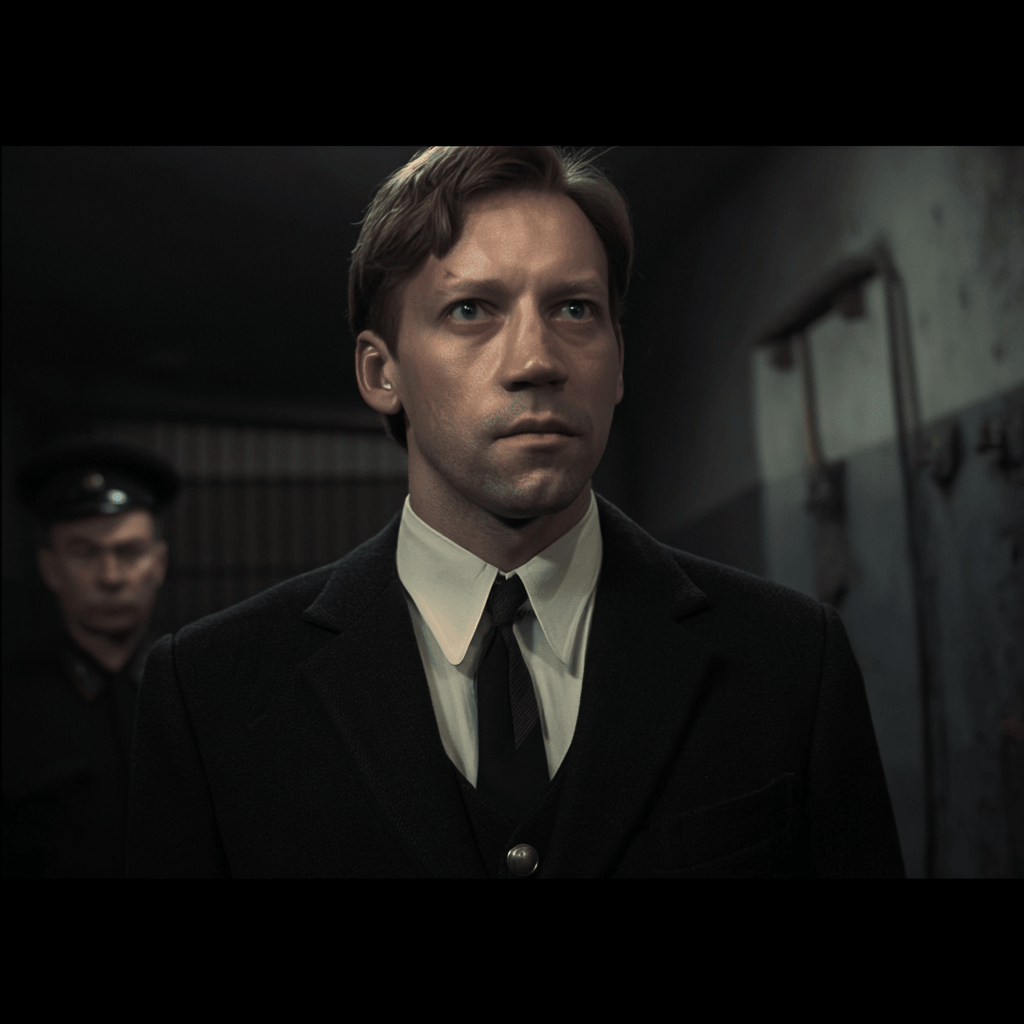
In 1937, against the backdrop of Joseph Stalin’s Great Purge, a young Soviet prosecutor named Kornev Aleksandr Kuznetsov has just finished law school and is eager to prove himself in a system gripped by fear and suspicion. His first reflections on justice are drawn into sharper focus when he discovers a letter written by a prisoner in Bryansk. The document hints at corruption and abuse within the NKVD, suggesting that innocent loyalties to the party could be crushed by a powerful, unnamed force. Motivated by a belief that he can uncover truth and shield loyal citizens, Kornev seeks permission to investigate the case and travels to Bryansk to observe the prison firsthand, operating under his official capacity in the local prosecutor’s office.
Inside the bleak walls of the Bryansk prison, Kornev encounters Stepniak [Aleksandr Filippenko], an imprisoned Old Bolshevik and long-standing local party stalwart. The encounter tests Kornev’s resolve and his confidence in the prevailing order. To win the old man’s trust, Kornev recounts a memory from law school—an event in which Stepniak delivered a stark speech about truth and Bolshevism, a moment that binds the two men across the gulf of imprisonment and fear. Stepniak’s wounds tell a harsher story—torture marks earned after he refused to confess to crimes he knew were false. He urges Kornev to broadcast the truth higher up the chain of command, to tell Stalin or members of the Politburo about the wrongful convictions and illegal acts that have twisted the system against loyal citizens who resist or learn of the NKVD’s corruption. As Kornev prepares to depart, a prison official who has been quietly observing him makes a phone call and dismissively insults his intelligence, underscoring how surveillance and mistrust permeate every corner of the system.
Kornev’s journey continues to Moscow by train, a trip that becomes an uneasy rhythm of sleep and interruption. He attempts to rest, but a peglegged World War I veteran of the Battle of Kowel keeps interrupting his attempt to find quiet. The veteran’s stories—about once meeting Vladimir Lenin in Smolny and now seeking alms from Stalin—layer the narrative with a sense of history echoing through the present day’s repression. The train becomes a moving stage where memory and fear mingle, hinting at a larger pattern of state control that transcends Bryansk.
Arriving in the capital, Kornev confronts the maze of the Procurator General’s office, where he must navigate a bureaucracy that often seems indifferent to individual ideals. His pleading and persistence, however, eventually earn him a fragile chance at an appointment after an earnest plea to Andrey Vyshinsky [Anatoliy Belyy], whose secretary holds the key to access. When the moment arrives, Kornev presents the bloody letter from Stepniak and details the conditions in Bryansk, laying out his belief that the local prosecutor’s office is cowed by NKVD influence. Vyshinsky listens, then presents a chilling verdict: without strong documentary evidence, his office cannot open a formal inquiry. He sends Kornev back to Bryansk with documents that authorize further investigations, a reminder that even the highest authorities are bound by procedural constraints in a system that thrives on fear and opacity.
On the return leg, Kornev shares a carriage with Vasily and Petya, engineers who toast to Soviet law and even perform a guitar-driven number—an odd pastoral counterpoint to the grimness of their surroundings. Their casual bravado feels like a brief, dangerous spark of camaraderie in a climate where trust is scarce and danger lurks behind every closed door. When they drop Kornev off near his destination, a tense exchange unfolds: Petya probes into Kornev’s private life, an intrusion that mirrors how people are scrutinized in this climate. As the car pulls away from the station, Vasily announces that Kornev is under arrest, and the vehicle carries him toward the prison facility once more, closing the circle of his trip with a brutal sense of inevitability.
The film’s culmination returns to a hard, sobering truth. Kornev’s belief that he could confront isolated aberrant conduct within a local apparatus proves tragically naïve. Rather than a few rogue figures, the policy of suppression emanates from the top—an order that originates with Stalin and is carried out with the complicity of key figures like Vyshinsky. The story reframes a single prosecutor’s mission as a window into a broader mechanism of control, where official channels, fear, and political calculus intersect in ways that silence dissent and consolidate power. In this environment, even earnest attempts to reveal truth are subsumed by a system designed to protect its own at any cost, leaving Kornev to face the consequences of confronting a structure that is larger and more perilous than any one individual might suppose.
Note: the first mentions of Kornev, Stepniak, and Andrey Vyshinsky are linked to their respective actors:
- Kornev Aleksandr Kuznetsov
- Stepniak Aleksandr Filippenko
- Andrey Vyshinsky Anatoliy Belyy

Coming soon on iOS and Android
The Plot Explained Mobile App
From blockbusters to hidden gems — dive into movie stories anytime, anywhere. Save your favorites, discover plots faster, and never miss a twist again.
Sign up to be the first to know when we launch. Your email stays private — always.
Explore the mobile appDiscover Film Music Concerts Near You – Live Orchestras Performing Iconic Movie Soundtracks
Immerse yourself in the magic of cinema with live orchestral performances of your favorite film scores. From sweeping Hollywood blockbusters and animated classics to epic fantasy soundtracks, our curated listings connect you to upcoming film music events worldwide.
Explore concert film screenings paired with full orchestra concerts, read detailed event information, and secure your tickets for unforgettable evenings celebrating legendary composers like John Williams, Hans Zimmer, and more.


Unlock the World of Movies with Our Comprehensive Wiki
Dive into our Movie Wiki for in-depth film encyclopedia entries, including cast biographies, production trivia, plot synopses, behind-the-scenes facts, and thematic analyses. Whether you’re researching iconic directors, exploring genre histories, or discovering hidden easter eggs, our expertly curated movie database has everything you need to fuel your cinematic passion.
Articles, Reviews & Explainers About Two Prosecutors
Stay updated on Two Prosecutors with in-depth articles, critical reviews, and ending explainers. Explore hidden meanings, major themes, and expert insights into the film’s story and impact.
Quick Links: Summary, Cast, Ratings, More

What's After the Movie?
Not sure whether to stay after the credits? Find out!
Check out our other apps:

SAT Sphere
Build confidence for the Digital SAT.

Mori Atlas
Discover wild places worth protecting.

Luntero
Search smarter for a home in Amsterdam.

Plot Explained
Unravel movie endings and hidden clues.

Pokechamp
Dive into Pokémon data and battle logic.

Driving Theory
Get ready for your European theory test.

Movie Dust
Plan your next cinema trip with ease.

Musemap
Find art and culture as you travel.

Selkobase
Compare credentials before committing.

Local Manual
Turn an unfamiliar country into practical next steps.

Lernavi
Compare school systems before your next move.

GymRoam
Find a workout stop wherever your plans take you.
Explore Our Movie Platform
New Movie Releases (2026)
Famous Movie Actors
Top Film Production Studios
Movie Plot Summaries & Endings
Major Movie Awards & Winners
Best Concert Films & Music Documentaries
Movie Collections and Curated Lists
© 2026 What's After the Movie. All rights reserved.
Privacy Policy