What Is The Light in the Forest About?
The premise of The Light in the Forest in 297 words, with nothing given away. The full story follows below.
In the unsettled wilderness of 1764 Pennsylvania, a fragile peace has just been sealed between European settlers and the Native nations that have long called the forests home. The landscape is a patchwork of mist‑laden river valleys, pine‑scented clearings and scattered homesteads where the old ways and the new world brush up against each other daily. The film’s tone is quietly tense, a blend of sweeping frontier beauty and the intimate unease that comes when two cultures are forced to share the same ground.
At the heart of this delicate balance is a young white boy raised among the tribe that rescued him as an infant. True‑son knows the drumbeat of the forest as well as the cadence of English, and his loyalties are stretched between the people who taught him to hunt and the family that abandoned him. Guiding him through the uncertain transition is Del, a steady presence who offers both practical support and a bridge between the worlds he straddles.
The white household he returns to is overseen by Myra Butler, whose authority holds the family together amid mounting suspicion. Within that circle, Uncle Wilsey Owens commands respect and harbors his own deep‑seated prejudices, while Shenandoe, a young woman employed by the Owens family, carries the scars of a hard life and a cautious curiosity about the boy who has lived a very different existence. Their intersecting paths hint at connections that could either soothe or inflame the fragile truce.
Against this backdrop of rugged terrain and cultural collision, the story dwells on questions of identity, belonging, and the price of choosing a side when both worlds claim you. The atmosphere remains both haunting and hopeful, inviting the audience to contemplate how a single life can illuminate the larger struggle between heritage and home.
What Happens in The Light in the Forest?
The complete story of The Light in the Forest, from the first scene to the last, in 600 words (about 3 minutes). Spoilers throughout. Names in the text link to 8 cast member pages.
Spoilers ahead
In 1764 Pennsylvania, a young white boy raised by Native Americans, known as True-son, is forced to return to white society after a peace treaty is signed. He is taken back to his white family, where the household is led by Myra Butler, and the adjustment proves to be a delicate, fraught process. On the long march back, Del steps in to guide him, offering steady support as the boy grapples with a sense of displacement and loyalty torn between two worlds.
Along the way, Niskitoon, True-son’s Indian cousin, accompanies them, bearing gifts and messages from his Indian father. After the cousin is allowed to travel only so far, True-son’s biological father Chief Cuyloga arrives to reclaim his son and lead him back toward his own people, a moment that deepens the conflict between two families and two ways of life. [Del] continues to accompany them out of concern and a desire to prevent the worst of the clash between cultures.
The journey exposes True-son to the difficulties of reintegration among whites and the pressures from townspeople who view him with suspicion and resentment. One person who makes that reintegration especially hard is Uncle Wilsey Owens, a powerful and prejudiced figure who treats him as a “dirty Indian” and whose jealousy of the bond forming between Shenandoe and True-son adds another layer of tension to the landscape. Shenandoe, a girl working for the Wilsey Owens family, is vividly drawn as someone who has endured brutality—someone who fears Native Americans at first glance but discovers common ground with True-son and slowly allows love to soften her wariness.
As Shenandoe and True-son confess their love, their moment of vulnerability draws in True-son’s Indian cousin Niskitoon and another Indian friend, Half Arrow. In a heated confrontation, [Uncle Wilsey Owens] lashes out and shoots [Half Arrow], shocking everyone and forcing True-son and his cousin to retreat and confront the consequences of violence sparked by prejudice. To protect his cousin, True-son’s kin strike back, and the debate over retaliation spirals into a dangerous extremity. Johnny, who never learned to fight in the European style, is coached by Del in his own language so that Wilsey cannot understand, and the two men square off in a raw, emotionally charged moment.
Afterward, the pair of lovers find themselves at a crossroads with True-son’s own people. The fight and its aftermath push the Indian tribe to the brink, prompting a tense debate in which Johnny is faced with a brutal question: where does his loyalty truly lie? The tribe’s anger and the fate of the non-white settlers become tangled, and the authority of his Indian father, [Chief Cuyloga], is tested as he notes that True-son cannot stay between two worlds forever.
The narrative reaches a turning point when Johnny is asked to return to his white family, a choice that comes with a heavy price. He leaves the Indian world with [Del], returning to the family that once rejected him, while the events that unfolded around Wilsey cast a long shadow over both communities. The testimony of loss and blame lands squarely on Wilsey’s shoulders, and the rift between the two families grows more pronounced as each side contends with the consequences of fear and prejudice.
In the end, Johnny’s return to his white family is tempered by a hard-won sense of belonging and identity. The reconciliation is fragile, marked by a final act of courage: Johnny steps forward to acknowledge the harm caused by hate, while Shenandoe remains by his side, their hands clasped as they walk away from the conflict toward an uncertain but hopeful future.
The Light in the Forest Timeline: Every Key Event in Order
12 key events in the order they happen, from “Peace treaty forces True-son to return to white society” to “Final confrontation and reconciliation with Wilsey”. 12 events name a place, across 12 locations.
- 1
Peace treaty forces True-son to return to white society
In 1764 Pennsylvania, True-son—a white boy raised by Native Americans who goes by that name (birth name Johnny)—is forced to leave his adoptive family after a peace treaty is signed. He moves forward with mixed emotions, torn between his Indian upbringing and the expectations of white settlers. The moment opens the door to a difficult reintegration into white society.
When:1764 Where:Pennsylvania
- 2
Suicide attempt on the march back; Del intervenes
On the march back to white settlement, True-son attempts to end his life by eating a poisonous plant. Del intervenes and stops him, urging him to seek a different path forward. The moment underscores his deep resistance to abandoning his Indian family.
Where:On the march back to white settlement
- 3
Indian cousin joins the journey; gifts from his father; biological father arrives
True-son's Indian cousin joins the march and brings gifts and messages from his Indian father, signaling a possible return to the tribal world. When the cousin reaches the limit of the allowed distance, Johnny's biological father arrives to take him home. Del agrees to accompany them to ease the transition.
Where:Along the journey toward white settlement
- 4
Adjustment to white life; Wilsey Owens opposes him
Back among white townspeople, Johnny struggles to adjust to his father's household and the broader community. His Uncle Wilsey Owens treats him as a dirty Indian and makes the adjustment harsher. The hostility foreshadows the long road of acceptance Johnny must endure.
Where:Wilsey Owens' community
- 5
Shenandoe bonds with Johnny
Shenandoe, a girl employed by Wilsey's household, is initially fearful of Native Americans and Johnny. Over time, she discovers common ground and begins to care for him. Wilsey's jealousy adds tension to their fragile romance.
Where:Wilsey Owens' household
- 6
Love confession; attack interrupts; Wilsey shoots the Indian friend
As Shenandoe and Johnny confess their love and share their first kiss, Johnny's Indian cousin and another friend come to find him. Wilsey shoots the Indian friend, and Johnny and his cousin knock Wilsey out to prevent further violence against them.
Where:Near Wilsey's property
- 7
Cousin suggests scalping Wilsey; Johnny stops him
The Indian cousin proposes scalping Wilsey in revenge for the attack. Johnny intervenes and persuades him not to continue the cycle of violence. The moment highlights Johnny's struggle to balance loyalties and morality.
Where:Roadside vicinity
- 8
Johnny and cousin flee back to the Indian camp
Fearing reprisals, Johnny and his cousin flee from white settlement and return to the Indian community. The return tests their loyalties to family versus safety within white society.
Where:Indian village
- 9
The brother's revenge escalates; massacre of scalps
The brother of the killed Indian seeks revenge with twenty scalps owed to him. The clan kills and scalps fifteen people, including children, escalating the cycle of bloodshed. Johnny watches in horror as the violence grows beyond control.
Where:Indian territory / ambush site
- 10
Tribal council condemns Johnny; father defends him
The tribe votes to kill Johnny for his perceived betrayal, but his Indian father speaks up in his defense. After the confrontation, the father tells Johnny he is no longer his son and that Johnny must return to white society.
Where:Indian council grounds
- 11
Johnny returns to white family with Del
Johnny, weary and conflicted, goes back to his white family with Del who has come to find him. Del's support marks a bridge between cultures, even as Johnny remains torn by his divided loyalties.
Where:White settlement
- 12
Final confrontation and reconciliation with Wilsey
Johnny confronts Wilsey about the killings and fights using a language Wilsey cannot understand, aided by Del translating. He wins the fight; Wilsey extends his hand in a grim gesture of reconciliation. Johnny and Shenandoe walk away together, hand in hand.
Where:White town / Wilsey's vicinity
Who Are the Main Characters in The Light in the Forest?
6 characters, among them Johnny Butler / True Son, Shenandoe and Del Hardy: who each one is and the part they play in the story. Every profile links to the actor’s page.
- JB
Johnny Butler / True Son
Played by James MacArthur
A young white boy raised by Native Americans who is forced to return to white society after a peace treaty. He struggles with two identities, facing hostility from white townsfolk and the expectations of his Native kin. His journey includes dependence on Del for guidance and a pivotal choice between vengeance and belonging.
- 🧭 Identity
- 🤝 Loyalty
- ⚔️ Conflict
- S
Shenandoe
Played by Carol Lynley
An orphaned girl employed by Wilsey's family, initially fearful of Native Americans and of Johnny. She gradually sees common ground with him and falls in love, challenging social prejudices. Her bond with Johnny becomes a catalyst for reconciliation between two worlds.
- 💞 Love
- 🧭 Understanding
- 🛡️ Courage
- DH
Del Hardy
Played by Fess Parker
Del is a protective frontier ally who accompanies Johnny back to his white family. He teaches Johnny practical ways to defend himself and communicates across cultures, acting as a bridge between two communities. His loyalty helps Johnny navigate the transition and conflicts.
- 🧭 Guidance
- 🛡️ Protector
- 🤝 Friendship
-
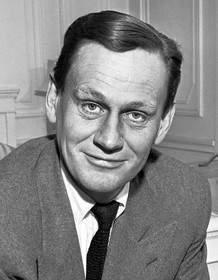
Uncle Wilse Owens
Played by Wendell Corey
A hostile member of Johnny's white family who treats him as a 'dirty Indian' and fuels the conflict. His actions contribute to cycles of violence and fear on the frontier. The confrontation with Del and Johnny exposes the dangers of prejudice.
- 😠 Prejudice
- ⚔️ Violence
- 🗡️ Aggression
- CC
Chief Cuyloga
Played by Joseph Calleia
True Son's Native father figure who embodies tribal authority and loyalty to his people. He both protects and challenges Johnny, and ultimately questions whether the boy can remain part of his family. His decision to disown Johnny marks a turning point in the boy's fate.
- 🪶 Tradition
- 🗺️ Authority
- 🛡️ Family
-
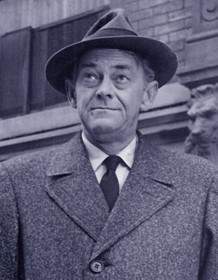
John Elder
Played by John McIntire
Johnny's biological father figure within the white family who arrives to take him back to his people. He represents the pull of white society and its expectations, complicating Johnny's sense of home. His presence underscores the theme of family duty versus personal allegiance.
- 👪 Family
- 🧭 Identity
- 🛡️ Duty
Where and When Is The Light in the Forest Set?
The Light in the Forest is set in Colonial Pennsylvania (1764). Here is why the time and place matter to the story.
When
1764
The narrative sits in the mid-18th century, a period of colonial expansion, frontier conflict, and fragile peace on the Pennsylvania frontier. Communities struggle to coexist after a peace treaty unsettles traditional roles and loyalties. The era emphasizes the pressures of assimilation, identity, and survival on a divided frontier.
Where
Colonial Pennsylvania
Set in colonial Pennsylvania in 1764, the story unfolds along a frontier where white settlers and Native nations meet, trade, and clash. The landscape is a dense forest with forts and small towns marking the line between two cultures. Treaties and shifting loyalties shape daily life, forcing families to choose sides and redefine belonging on the edge of empire.
- 🗺️ Frontier
- 🕰️ 18th Century
- 🛡️ Colonial Tension
What Are the Themes of The Light in the Forest?
5 ideas the story keeps returning to, among them Identity, Culture Clash and Family & Loyalty.
-
01
Identity
Johnny, raised by Native Americans, moves between two worlds as he is forced to return to white society after the treaty. His struggle to belong drives his choices, from despair to defiance. The story uses his perspective to question what truly defines identity: blood, upbringing, or loyalty.
-
02
Culture Clash
The film mines the friction between white settlers and Native communities, including labels like 'dirty Indian' that highlight prejudice. Love between Johnny and Shenandoe becomes a lens for cross-cultural understanding. Violence and mistrust intrude as two cultures collide, testing what they are willing to accept.
-
03
Family & Loyalty
Del acts as a protective bridge between Johnny and his white family, while Chief Cuyloga represents a paternal Native authority. Loyalties are tested as Johnny navigates competing family expectations. The ending resolves some ties but leaves the question of belonging open.
-
04
Violence
Frontier brutality erupts as actions lead to killings and scalping, driven by revenge and fear. The violence exposes the costs of vengeance on both sides and the fragile peace sought by the treaty. Characters must face the consequences of aggression and the limits of justice.
-
05
Love & Reconciliation
Johnny and Shenandoe's romance bridges cultures and highlights common ground between two peoples. Their bond is tested by prejudice, violence, and family duty. The finale emphasizes love as a potential path to reconciliation, even as it forces difficult choices.
What Kind of Film Is The Light in the Forest?
Tense in tone, with steady pacing and a moderate story, going by the plot summary.
- Tone
- Tense
- Pacing
- Steady
- Story
- Moderate
- Intensity
- Medium
- Ending
- Bittersweet
A tense and emotionally fraught drama that follows a young man torn between two families and cultures, creating a steady-paced journey of prejudice, loyalty, and a fragile, hopeful love.
- tense
- melancholic
- divided loyalties
- cultural conflict
- suspenseful
- hopeful undertones
- cultural identity
- forbidden romance
- racial prejudice
- coming of age
Content notes: racial violence, child endangerment, prejudice, gun violence.
Quiz
How well do you remember The Light in the Forest? Test yourself on the story.