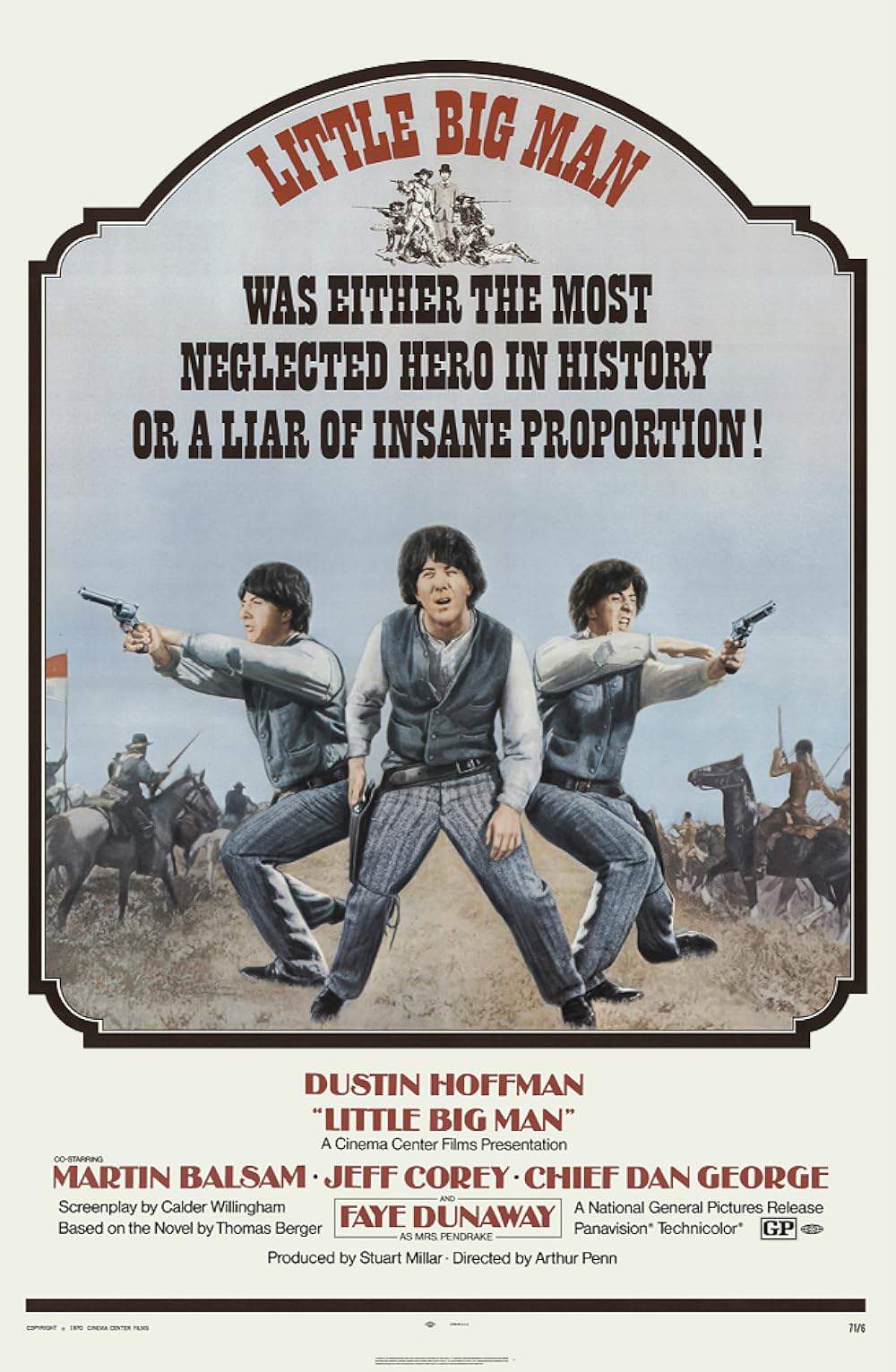
What Is Little Big Man About?
The premise of Little Big Man in 271 words, with nothing given away. The full story follows below.
In the vast, unforgiving expanse of the 19th‑century American West, the land itself feels alive—a relentless desert sun, sweeping plains, and distant mountains that whisper of both promise and peril. The frontier’s stark beauty frames a world where cultures collide, survival hinges on adaptability, and stories are the only way to make sense of a chaotic era.
At its heart is the venerable Jack Crabb, a man who now sits in a wheelchair, his body frail but his memory startlingly vivid. As a child he was taken in by the Cheyenne, and his life has since unfolded across the thin line between two worlds. Through his voice we glimpse a life lived on the margins of history, where the ordinary and the legendary intertwine, and where a quiet humor softens the harsh realities of frontier existence.
Guiding Jack’s recollections are a handful of unforgettable companions: the wise tribal leader Old Lodge Skins, whose steady presence offers a grounding calm; the flamboyant gunslinger Wild Bill Hickok, a larger‑than‑life figure whose charisma masks deeper complexities; the ambitious commander General Custer, representing the drive and danger of a nation expanding westward; and the conflicted Louise, whose contradictions reflect the moral ambiguities of the time. The bond with his sister Caroline adds a personal thread that weaves through his sprawling tale.
The film balances sweeping epic scope with sharp, often satirical wit, inviting viewers to laugh, reflect, and question the myths of the Old West. Its tone oscillates between tender nostalgia and gritty realism, creating an immersive narrative that asks what it means to belong when the world around you is constantly reshaping its borders.
What Happens in Little Big Man?
The complete story of Little Big Man, from the first scene to the last, in 829 words (about 4 minutes). Spoilers throughout. Names in the text link to 2 cast member pages.
Spoilers ahead
In 1970, we meet Jack Crabb, played by Dustin Hoffman, who at the remarkable age of 121 years recounts his extraordinary life to a curious historian, portrayed by William Hickey. Jack’s tale is nothing short of spectacular; he claims to have lived numerous lives—as a captive of the Cheyenne, a daring gunslinger, an ally of the legendary Wild Bill Hickok, a scout for the notorious General George Armstrong Custer, and the last surviving white person after the Battle of Little Bighorn in 1876. His unique upbringing among the Cheyenne offers him an unparalleled perspective on both Native American and white life in the 19th century.
Flashing back to 1859, Jack, at just ten years old, witnesses the tragic massacre of his pioneer family by the aggressive Pawnee. He and his older sister, Caroline (played by Carole Androsky), are taken by a Cheyenne warrior to their village. Caroline narrowly escapes on horseback, but Jack is adopted by the benevolent tribal leader Old Lodge Skins (Chief Dan George). Life in the Cheyenne community is serene, until Jack unintentionally creates a rivalry with a boy named Younger Bear (Cal Bellini). However, when Jack rescues him from a Pawnee warrior, the two boys create an unexpected bond, earning Jack the nickname “Little Big Man” due to his bravery despite his small stature.
As Jack turns 16 in 1865, he is captured by U.S. cavalry troopers during a skirmish. In a bid for survival, he relinquishes his Native American ties. After a harsh interrogation, Jack, still considered a minor, finds himself in the care of Reverend Silas Pendrake (Thayer David) and his frustrated wife Louise (played by Faye Dunaway), who attempts to seduce him. Jack struggles with Louise’s dual nature, caught between her piety and her desires. When he discovers her in a compromising situation with another man, he leaves the Pendrake home far behind.
Soon after, Jack apprentices under a snake-oil salesman named Merriweather (Martin Balsam). Their career takes a nosedive when the townspeople, including Caroline, realize they’ve been duped, leading to a joyous reunion between the siblings. Caroline, eager to reinvent Jack, tries to turn him into a gunslinger known as the Soda Pop Kid. In a saloon encounter, he meets Wild Bill Hickok (Jeff Corey), who becomes a mentor to him. However, after witnessing a fatal encounter where Hickok must kill in self-defense, Jack loses his appetite for the violent lifestyle, and Caroline eventually abandons him.
Over the next several years, Jack partners in a general store and marries a Swedish woman named Olga (Kelly Jean Peters). Tragically, their partnership with a deceitful thief leads to the store’s demise. Just when things seem bleak, Custer offers them the chance for a fresh start out west. However, disaster strikes when their stagecoach is attacked by Cheyenne warriors, taking Olga captive. In his frantic search for her, Jack is welcomed back by Old Lodge Skins, who is overjoyed at his return.
Jack then ascends the ranks to become a muleskinner in Custer’s 7th Cavalry, desperate to learn Olga’s fate. During a confrontation against the Cheyenne, Jack witnesses unspeakable atrocities and, in a fit of fury, turns against his fellow soldiers. In a poignant twist of fate, he discovers a Cheyenne woman Sunshine (Aimée Eccles) giving birth and decides to protect her, leading to a new life intertwined with her tribe.
Years later, while winter blankets the land, a surprise assault by Custer on a Cheyenne encampment results in tragedy, as Sunshine and their child perish. Jack’s heart aches for revenge, but when faced with Custer, he falters at the moment of truth, ultimately witnessing Custer’s downfall at the Battle of Little Bighorn on June 25, 1876. Jack’s narrative of survival weaves through heartbreak, kinship, and the harsh realities of a shifting world.
Fast forward, Jack’s life spirals into despair and drunkenness in Deadwood, South Dakota, until he’s reminded by Wild Bill Hickok of his potential. The death of Hickok, alongside a heartfelt message for Louise, once again sets Jack on a path of introspection. Following a series of unfortunate events, Jack isolates himself in the wilderness only to stumble upon Custer’s troops, leading him to a fateful decision.
As Jack guides Custer into a trap, he witnesses the twisted irony of fate—where Custer’s arrogance costs the lives of many. After a tumultuous battle, Jack finds himself once more caught between loyalty and resentment, only to be saved by Younger Bear in a turn of fate. In the aftermath, Jack seeks peace with Old Lodge Skins, who has declared that “It is a good day to die,” waiting for death with dignity. But with rain falling upon them, Jack learns that sometimes hope resurfaces in the most unexpected ways.
Back in the present day, Jack’s reflections intertwine with a sense of loss, as he gently dismisses the historian, leaving behind a haunting image of an aged man in a wheelchair, contemplating memories of a world that has slipped through his fingers—forever etched in time.
Little Big Man Timeline: Every Key Event in Order
15 key events in the order they happen, from “Jack's Birth” to “Reflections in Old Age”. 6 events name a place, across 5 locations.
- 1
Jack's Birth
Jack Crabb is born, marking the beginning of a life filled with remarkable events. Growing up, he becomes part of significant historical moments, which shape his unique perspective.
When:1849
- 2
Pioneer Family Massacre
In 1859, when Jack is just ten years old, he witnesses the tragic massacre of his family by the Pawnee tribe. This horrifying event forces him and his sister, Caroline, into a life they never anticipated.
When:1859
- 3
Adoption by the Cheyenne
After his family's massacre, Jack is taken to a Cheyenne village by a warrior. He is adopted by Old Lodge Skins, the tribal leader, and begins a new life within the Cheyenne community.
When:1859-1865 Where:Cheyenne Village
- 4
Rivalry and Bonding
During his time among the Cheyenne, Jack unintentionally creates a rivalry with Younger Bear. However, when Jack risks his life to save Younger Bear from a Pawnee warrior, they become friends.
When:1865 Where:Cheyenne Village
- 5
Capture by U.S. Cavalry
At 16 years old, Jack is captured by U.S. cavalry troops during a skirmish. In an effort to survive, he renounces his Native American roots, leading him to a different fate.
When:1865
- 6
Life with Reverend Pendrake
After his capture, Jack is placed under the care of Reverend Silas Pendrake and his wife, Louise. Struggling with Louise's conflicting nature, Jack ultimately leaves their home after a shocking discovery.
When:1865-1866
- 7
Apprenticeship and Reunion
Jack becomes an apprentice to a snake-oil salesman named Merriweather. Their fraudulent schemes lead to a joyful reunion with Caroline, who seeks to transform Jack into a gunslinger.
When:1866
- 8
Meeting Wild Bill Hickok
Jack encounters the legendary Wild Bill Hickok in a saloon. Inspired by him, Jack gains valuable skills, but a fatal confrontation forces him to reevaluate his life choices as a gunslinger.
When:1866 Where:Saloon
- 9
Marriage and Store Ownership
Jack eventually marries a Swedish woman named Olga and partners in a general store. Unfortunately, their plans collapse due to deceit, leading to further struggles in their lives.
When:Late 1860s
- 10
Olga's Capture
While seeking a new beginning in the West, tragedy strikes when their stagecoach is attacked by Cheyenne warriors. Jack's frantic search for Olga draws him back to his Native connections.
When:Late 1860s
Show the other 5 events of Little Big Man Hide the last 5 events
- 11
Becoming a Muleskinner
Jack joins Custer's 7th Cavalry as a muleskinner, desperately seeking information about his wife. His experiences during military confrontations lead him to witness horrific acts against the Cheyenne.
When:Early 1870s Where:Military Camp
- 12
Tragedy Strikes Again
Jack faces unimaginable loss when a violent assault on a Cheyenne camp results in the deaths of Sunshine, the woman he loves, and their child. This loss indicates the weight of his increasingly complex past.
When:Winter 1876
- 13
Battle of Little Bighorn
On June 25, 1876, Jack witnesses the infamous Battle of Little Bighorn. The events unfold around him, encapsulating a moment of both personal and collective tragedy, as he confronts loyalty and vengeance.
When:June 25, 1876 Where:Little Bighorn
- 14
Descent into Despair
Following the war, Jack's life deteriorates as he spirals into alcoholism while in Deadwood, South Dakota. A brief encounter with Wild Bill Hickok gives him a moment of clarity before more losses strike.
When:Late 19th century Where:Deadwood, South Dakota
- 15
Reflections in Old Age
In 1970, now 121 years old, Jack reflects on his extraordinary life in a conversation with a historian. His tales reveal a deep sense of loss and longing, as memories of a bygone era surround him.
When:1970
Who Are the Main Characters in Little Big Man?
4 characters, among them Jack Crabb, Louise Pendrake and Old Lodge Skins: who each one is and the part they play in the story. 2 of them link to the actor’s page.
-
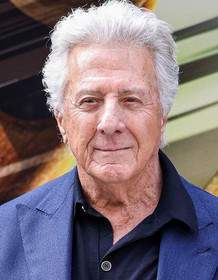
Jack Crabb
Played by Dustin Hoffman
Jack Crabb, portrayed by Dustin Hoffman, is a complex character shaped by his extraordinary life experiences. From being a child of tragedy to becoming a fierce survivor, Jack embodies resilience. His identity oscillates between cultures and roles, revealing layers of bravery, vulnerability, and introspection as he navigates his tumultuous life.
- 🌍 Survivor
- 🎭 Complex
- 🌿 Cultural
-
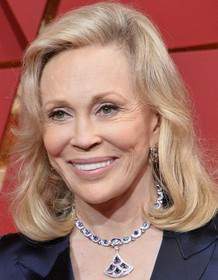
Louise Pendrake
Played by Faye Dunaway
Louise Pendrake, played by Faye Dunaway, is a multi-faceted character presenting a blend of piety and seduction. Her interactions with Jack reveal a deeply conflicted nature that influences his journey. Louise's character serves as a symbol of the moral struggles faced during this era, showcasing how desire and aspiration can intertwine.
- 💔 Conflict
- 😇 Duality
- 👩🏫 Mentor
- OL
Old Lodge Skins
Old Lodge Skins, played by Chief Dan George, is a wise and benevolent figure in Jack's life, representing the strength and dignity of Native American culture. His leadership role in the Cheyenne community offers Jack a sense of belonging and understanding. Old Lodge Skins embodies the spirit of resilience and calm in the face of relentless change.
- 👴 Wisdom
- 🏹 Leadership
- 🌌 Cultural
- WB
Wild Bill Hickok
Wild Bill Hickok, portrayed by Jeff Corey, is a legendary figure and a mentor to Jack. His presence reflects the wild, often violent, life in the West, teaching Jack lessons that shape his views on honor and survival. His character's complexity adds depth, revealing the fine line between heroism and the harsh realities of frontier life.
- 💥 Legend
- 🏇 Mentor
- 🔫 Wild West
Where and When Is Little Big Man Set?
Little Big Man is set in Cheyenne village, Deadwood, South Dakota and Battle of Little Bighorn (19th century, specifically 1859-1876). Here is why the time and place matter to the story.
When
19th century, specifically 1859-1876
The 19th century is marked by westward expansion, conflict, and cultural clashes in North America. During this period, the U.S. government's aggressive policies towards Native American tribes led to tragic consequences, including battles like Little Bighorn in 1876. This tumultuous backdrop shapes the life of Jack Crabb as he navigates the complexities of identity, loyalty, and survival amid a rapidly changing world.
Where
Cheyenne village, Deadwood, South Dakota, Battle of Little Bighorn
The movie unfolds across several significant locations, including a serene Cheyenne village known for its rich cultural tapestry and community spirit. Deadwood, South Dakota, starkly contrasts this tranquility, embodying the lawless chaos of the American frontier. The Battle of Little Bighorn stands as a historical landmark of conflict and tragedy, symbolizing the violent clashes between Native Americans and U.S. forces in the 19th century.
- 🏞️ Nature
- 🏡 Home
- ⚔️ Historical
What Are the Themes of Little Big Man?
3 ideas the story keeps returning to, among them Cultural Identity, Survival and Betrayal.
-
01
Cultural Identity
The theme of cultural identity is prevalent as Jack Crabb traverses between Native American and white societies. His experiences reveal the complexities and richness of both cultures, emphasizing the struggles of belonging and acceptance. Jack's transformation and relationships highlight the profound impact of cultural heritage and the personal quests for identity amid external conflicts.
-
02
Survival
Survival is a key theme in Jack's life, portrayed through his resilience against countless adversities. The film illustrates the lengths one goes to preserve life, whether through physical confrontations or emotional turmoil. Jack's journey reflects the human spirit's indomitable will to endure tragedy, loss, and the search for redemption.
-
03
Betrayal
Betrayal serves as a poignant theme within Jack’s narrative, as he faces treachery from various associates throughout his life. This theme explores the fragility of trust, particularly exemplified in his relationships with his sister, the Reverend, and the soldiers. Jack’s journey through betrayal ultimately shapes his worldview, instilling a cautious approach to personal connections.
What Kind of Film Is Little Big Man?
Melancholic in tone, with variable pacing and a complex story, going by the plot summary.
- Tone
- Melancholic
- Pacing
- Variable
- Story
- Complex
- Intensity
- Medium
- Ending
- Bittersweet
A melancholic and epic historical drama that follows a man's long, tragic life through the American West, filled with loss, cultural conflict, and reflective nostalgia for a vanished world.
- melancholic
- reflective
- epic
- tragic
- ironic
- nostalgic
- native american life
- cultural conflict
- historical fiction
- survival
Content notes: war violence, massacre, racial violence, slaughter, death of family.
Quiz
How well do you remember Little Big Man? Test yourself on the story.