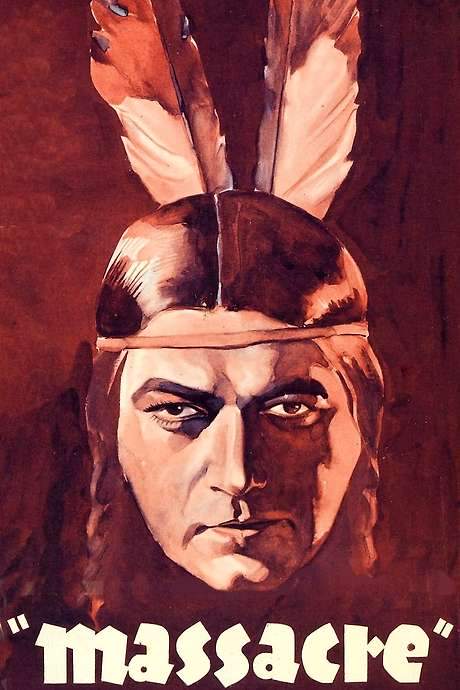
What Is The Great Sioux Massacre About?
The premise of The Great Sioux Massacre in 330 words, with nothing given away. The full story follows below.
In the stark, wind‑scoured plains of the post‑Civil War frontier, the U.S. Army finds itself tangled in a web of honor, politics, and a fragile peace with the tribes that still roam the horizon. Military forts echo with the sounds of restless soldiers, formal dances, and whispered rumors of a coming conflict that could reshape the nation’s western legacy. The atmosphere is heavy with a mix of disciplined routine and the untamed urgency of a world on the brink of change, where every decision feels weighed against both personal conscience and the demands of a distant capital.
George Armstrong Custer arrives as a charismatic yet controversial figure, renowned for championing fair treatment of Native peoples while stubbornly defending his own reputation. Stripped of his command and nudged toward retirement, he suddenly finds his ambitions redirected by Senator Blaine, who eyes the general as a rallying symbol for a presidential bid. The promise of political redemption fuels Custer’s resolve to prove his leadership, setting the stage for a high‑stakes contest with General Alfred Howe Terry that promises to become more than a mere military maneuver.
Captain Benton serves as the film’s reflective anchor, a seasoned officer who watches the unfolding drama from the inner circles of the army garrison and the glitter of the fort’s ballroom. His interactions with Custer, his fellow officers, and the surrounding Native community expose the tensions between duty, personal loyalty, and the emerging moral complexities of the frontier. Through his eyes, the audience senses the undercurrents of rivalry, the weight of whispered loyalties, and the subtle shift from idealistic advocacy to the allure of glory.
The tone is a brooding blend of western grit and political intrigue, underscored by a simmering sense of inevitable confrontation. As ambitions clash and the frontier’s fragile balance teeters, the story hints at a looming showdown that could redefine not only a career but an entire chapter of American history, leaving the viewer poised on the edge of an unfolding legend.
What Happens in The Great Sioux Massacre?
The complete story of The Great Sioux Massacre, from the first scene to the last, in 773 words (about 3 minutes). Spoilers throughout. Names in the text link to 6 cast member pages.
Spoilers ahead
The film opens with a board of inquiry into the Battle of the Little Big Horn, focusing on the conduct of Major Joseph Cotten Reno. Captain Darren McGavin Benton is summoned to the stand and, rather than simply answering questions, declares that he will tell his version of the “true story” through a reflective flashback that the audience follows from the start.
Benton takes us back to 1875, arriving in the harsh frontier where his detachment is escorting the wife of the local Indian agent, Mr. Turner Stacy Harris. An ambush erupts as the Indians strike, and Mrs. Turner is abducted from Benton’s group. Their pursuers run into a trap because the Indian trail is false, laid to lure them into a deadly ambush. Dakota, the army scout, advises patience and postponement, but Benton and his comrades press on, only to encounter a wounded Indian whom Dakota shoots, muttering that he will no longer have to starve on an Indian reservation.
Back at the fort, Benton meets Lt. Col. George Armstrong Custer, played by Philip Carey, who gently consoles him about the misstep but agrees with Dakota’s cautious counsel. Custer invites Benton to a dress ball at the fort that evening, while dismissing Mr. Turner’s distraught wife. At the dance, Major Reno returns to the scene in a drunken mood, insisting that everyone address him as a “Major General” in a swaggering nod to his former Confederate rank. Custer, in good humor, tries to bridge old North-South tensions, but Reno’s temper flares and he physically lashes out, leaving Benton to tell Caroline Reno that her family line has taken a tumble.
The next day, Benton and Custer set out to negotiate with Crazy Horse and Sitting Bull to win Mrs. Turner’s release. The Indian leaders demand the release of their own prisoners in exchange, while Custer imposes a stern ultimatum: he will hang the chiefs if Mrs. Turner is not freed. The Indians reluctantly agree, and Mrs. Turner is released. Yet the peace is fragile: the captive Indians attempt a daring escape that ends in a brutal slaughter.
In Washington, DC, Custer’s animosity toward corrupt federal agents grows as he exposes widespread political graft, naming figures in the government who resemble the sort of corruption he has long suspected. Libbie Custer, his wife, stands by his side as they confront a federal machine that seems deaf to reform. President Ulysses S. Grant’s administration remains distant, and when Custer challenges the political status quo, the political world begins to tighten around him.
The narrative returns to the fort as General Alfred Howe Terry, portrayed by Frank Ferguson, informs Major Reno and Captain Benton that Custer’s position is headed for a court-martial. The prospect of command and advancement tempts Benton to stay loyal to his commander, and he initially wrestles with the choice between personal honor and his own future. Caroline Reno, steadfast in her support, rallies her father to reject the warmongering path when faced with the possibility of losing her fiancé.
Meanwhile, Senator Blaine Don Haggerty appears in Washington, softly nudging Custer toward a presidential campaign by leveraging the glory of a war with the Indians. A journalist, perhaps modeled on Mark Kellogg, is assigned to shadow Custer and return him to his regiment, hoping to craft a narrative that could secure political legitimacy.
As the campaign against the Indians grows more menacing, Benton senses that Custer’s empathy for Native Americans has faded. The general begins to push his regiment into a war he sees as a vehicle for personal glory, including brutal displays such as shooting deserters in the back—desertion by a trusted scout, Dakota, among them. Benton, outraged by this shift, confronts Custer and is arrested, a move that only deepens Benton’s resolve. He is eventually freed by his Indian friends, who had learned of his attempts to help their people during the abortive escape. Benton’s warnings of a coordinated, massed Indian force go unheeded as Custer continues to press forward, and the disparate tribes’ strength begins to cohere into a formidable resistance.
The story crescendos toward a convergence of misjudgments and missed signals that mirrors history: Benton fights to avert catastrophe, Custer advances with a divided, thinner force, and the army’s miscalculations culminate in a clash that unfolds with the same inexorable momentum as the famous battle. Through Benton’s testimony, the film traces how ambition, politics, and miscommunication converge to shape a turning point in the American frontier. The conclusion lingers on the cost of pride and the elusive nature of a single “true story” when a moment in history is filtered through memory, loyalty, and the fog of war.
The Great Sioux Massacre Timeline: Every Key Event in Order
15 key events in the order they happen, from “Board of Inquiry opens over the Custer campaign” to “The Battle of the Little Big Horn unfolds”. 15 events name a place, across 11 locations.
- 1
Board of Inquiry opens over the Custer campaign
The film opens with a formal board of inquiry examining Major Marcus Reno's conduct at the Little Bighorn. Captain Benton is summoned to testify, but instead of merely answering questions, he declares that he will tell his own version of the 'true story' through flashback. The frame establishes Benton as the narrator and sets the stage for a counter-narrative to the official account.
When:Present day Where:Boardroom / War Department
- 2
Benton's arrival in the West and Mrs. Turner’s abduction
Benton arrives in 1875 with his detachment, escorting Mrs. Turner, the wife of the local Indian agent. Indians attack the party and abduct Mrs. Turner, throwing Benton's mission into doubt. Dakota’s warnings and the ensuing pursuit foreshadow the harsher reality of frontier conflict.
When:1875 Where:Frontier West (near Turner's residence)
- 3
Dakota's warning and the wounded Indian
Dakota counsels against immediate pursuit, arguing that deceptive trails could lure them into ambush. Benton and Dakota encounter a wounded Indian, whom Dakota shoots, sarcastically noting that the man will no longer starve on an Indian reservation. The moment deepens Benton's distrust of the war's methods and motives.
When:1875 Where:Frontier
- 4
Custer confirms Benton’s cautious approach
Benton faces Lt. Col. George Armstrong Custer and presents his side of events. Custer validates Benton’s decision to follow Dakota's advice, signaling early alliance but also hinting at later tensions between personal loyalty and strategic risk. This exchange helps establish the dynamic between Benton and Custer.
When:1875 Where:Fort
- 5
Dress ball and Reno’s swagger
At a fort dress ball, Reno drunkenly proclaims himself ‘Major General’ and demands to be saluted, exposing lingering North-South rivalries. Custer handles the riffraff with goodwill, attempting reconciliation, while Reno’s arrogance foreshadows further conflict. Benton informs Caroline that her family line has fallen, highlighting the fragile pride at the fort.
When:1875 Where:Fort dress ball
- 6
Negotiations with Crazy Horse and Sitting Bull
Benton and Custer meet Crazy Horse and Sitting Bull to negotiate Mrs. Turner’s release. The Indians demand the release of their own prisoners; Custer proposes a grim compromise—hang the Indian leaders if Mrs. Turner is not freed. The Indians reluctantly agree, and Mrs. Turner is released.
When:1875 Where:Fort (negotiation venue)
- 7
The captive Indians’ escape attempt and slaughter
Before departure, the captive Indians attempt a desperate escape, which ends in slaughter. The brutal outcome underscores the merciless nature of the frontier conflict and cements Benton's growing disillusionment with how the war is being prosecuted. The event also foreshadows the larger massacre to come.
When:1875-1876 Where:Fort
- 8
Custer exposes federal corruption in Washington
In Washington, Custer accuses federal politicians of corruption, including Orvil Grant. The political backlash threatens to derail his career, revealing how national politics intersect with frontier campaigns. The episode marks a turning point in Custer’s relationship with the political establishment.
When:1876 Where:Washington, DC
- 9
Terry offers Benton command; Benton refuses
General Terry informs Benton that the 7th Cavalry will be reorganized and offers him command and a brevet promotion. Benton declines, choosing loyalty to Custer and his own sense of duty over a rise in rank. This decision signals a shift in Benton’s role within the army.
When:1876 Where:Fort
- 10
Terry offers Reno command; Reno declines; sobriety begins
Terry then offers the same command to Reno, but Caroline browbeats her father, prompting him to reject as well. Reno ultimately rejects the offer yet begins a personal turn toward stability by blessing Benton’s engagement to Caroline and giving up drinking. The moment highlights the fraying personal loyalties amid military strain.
When:1876 Where:Fort
Show the other 5 events of The Great Sioux Massacre Hide the last 5 events
- 11
Blaine’s Washington pitch and the press assignment
Senator Blaine visits Custer in Washington and tries to lure him into a presidential bid based on frontier exploits. A newspaper journalist is assigned to Custer, then sent back to his regiment without a court-martial, shaping the public narrative. The encounter reveals how media and politics influence military fate.
When:1876 Where:Washington, DC
- 12
Custer’s shift toward glory and the desertion shooting
Benton notices Custer’s empathy for Native Americans fading as he pushes for glory through war. Custer personally shoots deserters in the back, including the scout Dakota who had defected to the Indian side. Benton's protest leads to his arrest, illustrating the growing rift between command and conscience.
When:1876 Where:Fort / On the march
- 13
Benton is freed by Native allies
Indians who had aided Benton earlier intervene to free him from arrest, recognizing his efforts to aid their people during the aborted escape. This act of mercy underscores Benton’s complex alliance with Native Americans. It also foreshadows the larger conflict that will engulf the force.
When:1876 Where:Western Fort / Camp
- 14
Warnings of a massed Indian army
Benton warns Colonel Custer of a massed Indian army assembling from several tribes. Custer remains wary of the warning and proceeds to divide his forces, a decision that weakens his position. The rift between caution and overconfidence intensifies as the campaign moves toward its climactic clash.
When:1876 Where:Montana Territory / Little Bighorn vicinity
- 15
The Battle of the Little Big Horn unfolds
The final sequence culminates in a climactic engagement that mirrors the historical Little Bighorn. Custer’s divided command and the vastly larger Native force overwhelm the Seventh Cavalry, ending in a catastrophic loss. The battle serves as the grim culmination of Benton’s narrative and a cautionary tale about leadership and war.
When:1876 Where:Little Bighorn, Montana
Who Are the Main Characters in The Great Sioux Massacre?
12 characters, among them Major Marcus A. Reno (Joseph Cotten), Captain Frederick William Benton (Darren McGavin) and General Alfred Howe Terry (Frank Ferguson): who each one is and the part they play in the story. Every profile links to the actor’s page.
-
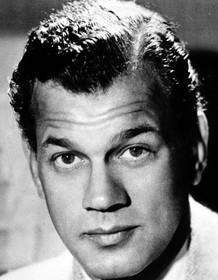
Major Marcus A. Reno (Joseph Cotten)
Played by Joseph Cotten
An ambitious officer skilled in command, Reno harbors a deep personal grudge against Benton and struggles with alcohol. His insistence on being treated with respect and his volatile mood—exhibited at the dress ball—reveal a fragile ego. He embodies the tensions between pride, authority, and personal flame that threaten unit cohesion. His arc centers on whether he can reconcile his past with a hopeful future alongside Benton's influence on the unit.
- 🏛️ Military Ego
- 🥃 Alcoholism
- 💔 Family Conflict
- CF
Captain Frederick William Benton (Darren McGavin)
Played by Darren McGavin
A capable, principled officer who narrates his version of events. He remains loyal to Custer while recognizing flaws in the system and the agents who have failed the Indian people. Benton wrestles with duty, honor, and a growing resolve to uncover truth, even as the path tests his patience and resolve. His perspective provides the throughline from frontier firefights to political intrigue in Washington.
- 🤝 Loyalty
- ⚔️ Duty
- 🧭 Leadership
- GA
General Alfred Howe Terry (Frank Ferguson)
Played by Frank Ferguson
The senior commander who navigates promotions and the evolving crisis. He informs Benton and Reno of military reassignments and the looming questions about Custer’s fate. Terry embodies the chain of command and the pressure to maintain discipline while responding to political pressures. He acts as a mediator between battlefield reality and policy considerations.
- 🏛️ Military Authority
- ⚖️ Ethics
- SB
Senator Blaine (Don Haggerty)
Played by Don Haggerty
A political figure who uses military exploits to enhance his Senate clout. Blaine's interactions with Custer underscore the commodification of war for personal prestige and party strategy. He represents the political wing of the conflict, where public image and manipulation can steer national actions. His presence ties Washington’s corruption to the battlefield consequences.
- 🏛️ Politics
- 🎯 Ambition
- CG
Colonel George Armstrong Custer (Philip Carey)
Played by Philip Carey
Charismatic and ambitious, Custer initially shows empathy toward Native Americans but becomes swayed by the lure of glory. He pushes his regiment into aggressive actions and even disciplines deserters harshly, shaping a trajectory toward the climactic battle. His evolving stance—part strategic genius, part reckless risk-taker—drives much of the film’s tension. His relationship with Washington and with his own troops reveals a complex mix of courage and vanity.
- ⚔️ Military Genius
- 🎭 Ambition
- 🗺️ Leadership
- CR
Caroline Reno (Julie Sommars)
Played by Julie Sommars
Benton's fiancée and Major Reno's daughter, Caroline anchors the personal stakes of the story. She presses her father for reconciliation with Benton and helps shape the domestic side of the frontier conflict. Her presence highlights how family loyalties and romantic ties intersect with military duty and political pressures. She serves as a catalyst for changing relationships within the Reno-Custer circle.
- 💑 Love
- 🏛️ Family Tallback
- 💬 Influence
- LC
Libbie Custer (Nancy Kovack)
Played by Nancy Kovack
Custer’s wife, Libbie accompanies him into political and military arenas, offering support and perspective within the couple’s dynamic. Her role underscores the domestic dimension of a warrior’s life and the personal costs of public obligations. She stands as a quiet partner amid the evolving tensions between empire, politics, and war.
- ❤️ Partnership
- 🧭 Support
- SB
Sitting Bull (Michael Pate)
Played by Michael Pate
A revered Indigenous leader engaged in negotiations with the army, he represents calculated diplomacy in the face of coercive pressure. His presence emphasizes the complexity of Indigenous politics and the stakes of broken agreements. Sitting Bull’s interactions with the army illuminate the high-stakes diplomacy that frames the conflict.
- 🪶 Indigenous Leader
- 🗨️ Negotiation
- CH
Crazy Horse (Iron Eyes Cody)
Played by Iron Eyes Cody
An influential American Indian warrior who participates in negotiations and actions that shape the conflict’s course. His involvement reflects the tribal dimension of the struggle and the deadly consequences of misread intentions. Crazy Horse embodies the war’s indigenous perspective and its resistance to coercion.
- 🪶 Warrior
- 🧭 Resolve
- D(
Dakota (John Matthews)
Played by John Matthews
A military scout who sides with the Indians after advising against pursuit, his stance shifts with the war’s pressures. Dakota’s arc highlights divisions within the frontier alliance and the personal toll of loyalty. His perspective tracks the nuanced human costs of the campaign.
- 🧭 Scout
- 🗡️ Conflict
- MT
Mr. Turner (Stacy Harris)
Played by Stacy Harris
The husband of Mrs. Turner, his wife’s abduction sparks the initial crisis that draws the army into the conflict. He embodies civilian vulnerability within the broader military and political turmoil. His presence links frontier violence to individual lives disrupted by war.
- 💔 Family
- 🧭 Civilian Impact
- MC
Mark Cambridge (House Peters Jr.)
Played by House Peters Jr.
A reporter whose presence and reporting help shape public perception, potentially like a stand-in for Mark Kellogg. His role underscores the media’s role in turning battlefield events into national narratives. He navigates the tension between journalism and politics in war times.
- 📰 Media
- 📣 Narrative
Where and When Is The Great Sioux Massacre Set?
The Great Sioux Massacre is set in Fort (frontier fort), Washington, D.C. and The American West (1875–1876). Here is why the time and place matter to the story.
When
1875–1876
The film unfolds in the late 1870s frontier era, beginning with Benton's arrival in 1875 and culminating in the events leading to the 1876 Battle of the Little Bighorn. It highlights post-Civil War military promotions, political maneuvering in Washington, and the escalating push toward war with Native tribes. The structure uses a board of inquiry to connect present reflections with past actions, anchoring the timeline in real historical tensions.
Where
Fort (frontier fort), Washington, D.C., The American West
The story moves between a frontier fort in the American West and the political corridors of Washington, D.C. The fort serves as the military hub where Benton, Reno, and Custer clash and plot, while Washington provides the political backdrop with corruption and power plays. The Western setting anchors the narrative in the era of westward expansion and Native American conflicts, framed by the board of inquiry about the Little Big Horn.
- 🗺️ Frontier
- 🏛️ Washington
- D.C.
- 🧭 Westward Expansion
What Are the Themes of The Great Sioux Massacre?
3 ideas the story keeps returning to, among them Loyalty & Duty, Power & Corruption and Indigenous Perspective.
-
01
Loyalty & Duty
The narrative continually tests loyalty—between Benton and Custer, and between officers and their men. Reno's grudges and drinking threaten unit cohesion and the sense of duty. Benton grapples with loyalty to his commander while pursuing a semblance of truth. The framing device of a retrospective board of inquiry reinforces how loyalty can both sustain and distort action.
-
02
Power & Corruption
Washington politics and figures like Senator Blaine push for military action to gain political capital. Custer tempers his career with a critique of federal corruption, risking his standing to expose wrongdoings. Ambition and fame push some leaders toward risky decisions that affect soldiers on the ground. The film portrays how power dynamics shape war outcomes as much as battlefield tactics.
-
03
Indigenous Perspective
Crazy Horse and Sitting Bull negotiate for the safe release of Mrs. Turner, signaling that Indigenous leaders seek agency within the conflict. Their interactions with the army reveal mutual distrust and the consequences of broken promises. Benton's empathy toward Native Americans stands in contrast to rising political and military pressures. The narrative culminates in a clash that underscores the high cost of failed diplomacy.
What Kind of Film Is The Great Sioux Massacre?
Tense in tone, with steady pacing and a moderate story, going by the plot summary.
- Tone
- Tense
- Pacing
- Steady
- Story
- Moderate
- Intensity
- High
- Ending
- Sad
A grim and steadily paced historical drama that builds tension through political intrigue and military hubris, leading inevitably to a tragic and heavy-hearted climax at the Battle of Little Bighorn.
- grim
- tense
- solemn
- tragic
- heavy
- confrontational
- historical warfare
- political corruption
- personal ambition
- american indian war
Content notes: war violence, mass death, abduction, military slaughter, political coercion.
Quiz
How well do you remember The Great Sioux Massacre? Test yourself on the story.