What's After the Blog?
Opinions • Reception
Train Dreams (2025) Review & Reception: Critics, Fan Opinions, and Storytelling Analysis
Explore how critics and fans are reacting to Train Dreams (2025), the new adaptation of Denis Johnson’s novella, focusing on performances, storytelling, and its place in early‑20th‑century American drama. This post breaks down reviews, audience sentiment, and the film’s impact on the franchise context.
November 9, 2025
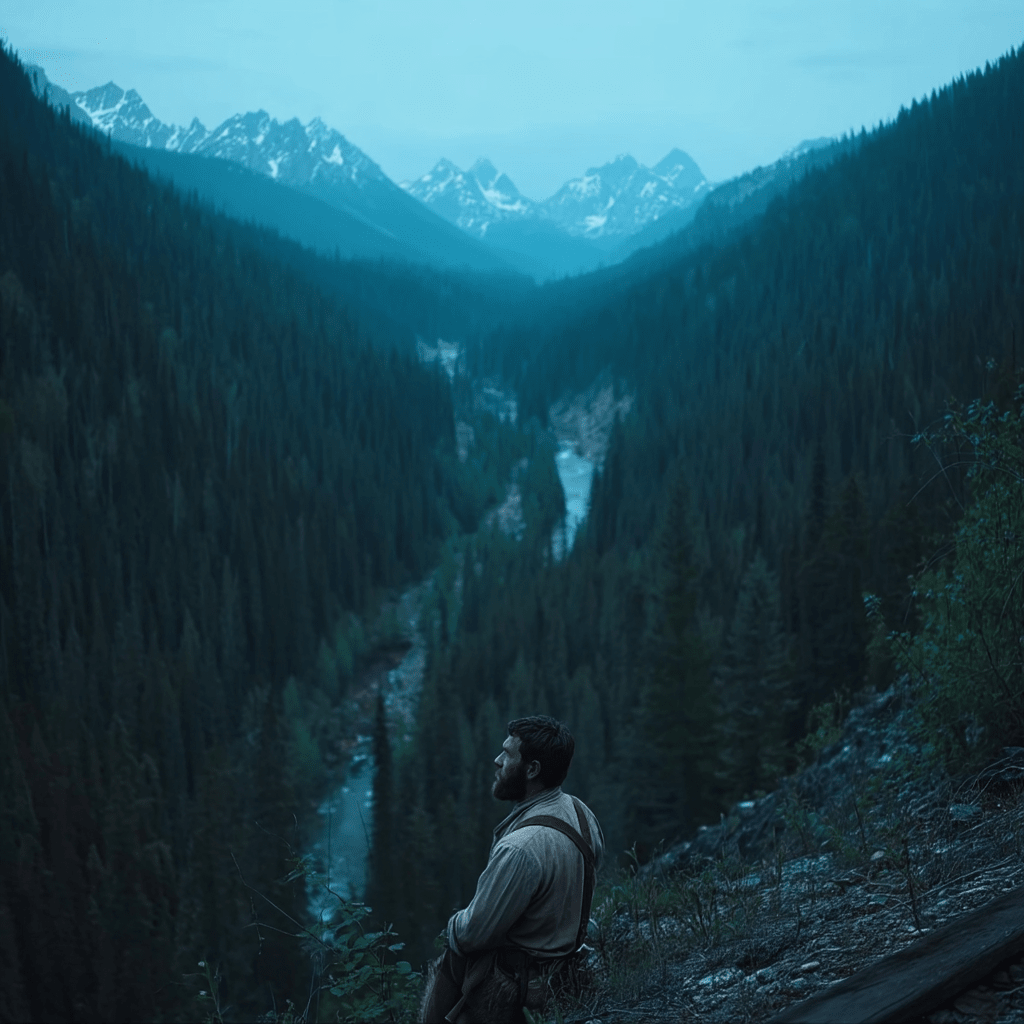
Movies mentioned in this article
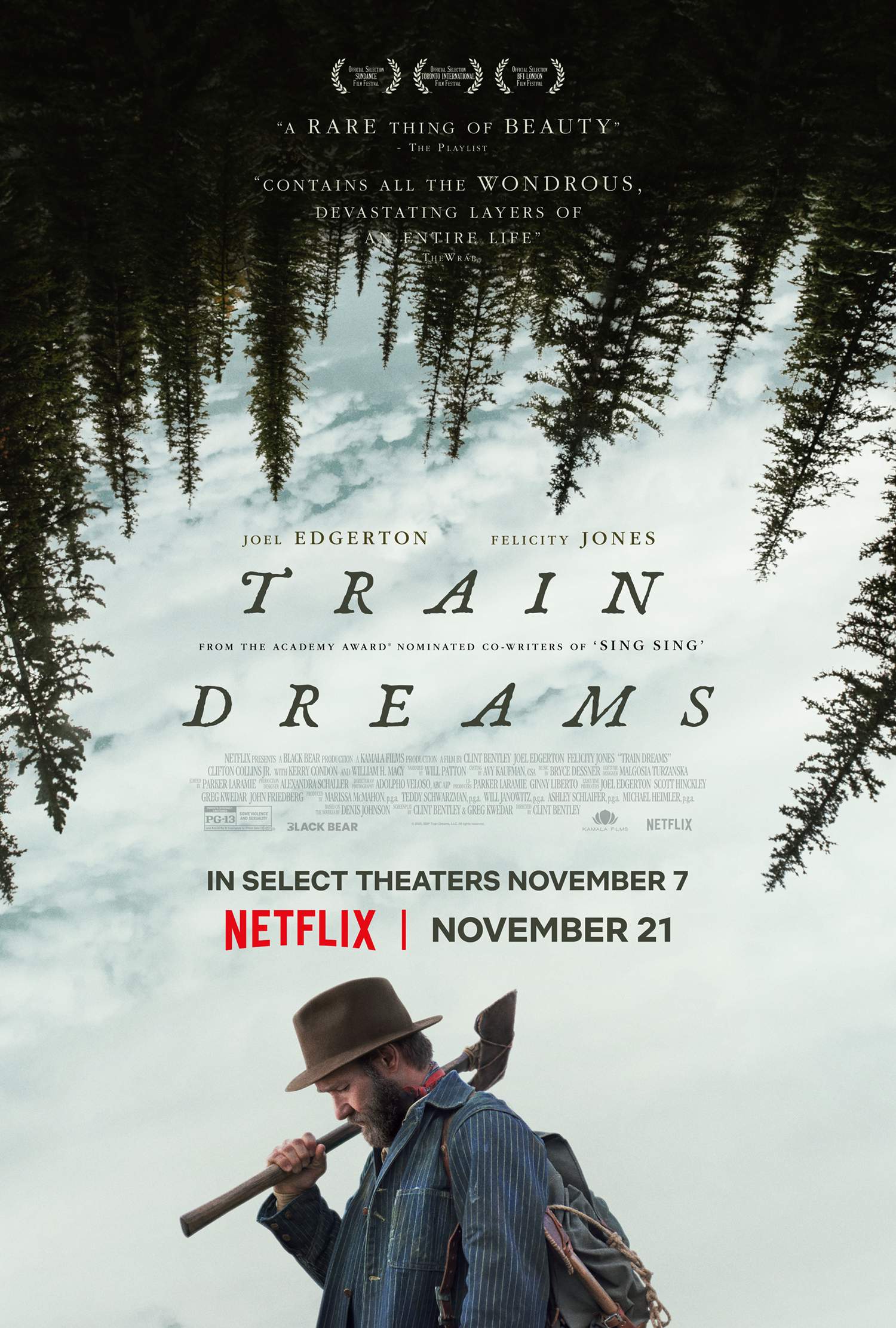
Train Dreams (2025) – Critical Reception, Audience Opinions, and In‑Depth Review Analysis
Discover how critics, fans, and industry outlets responded to Clint Bentley’s lyrical western on What’s After the Movie.
1. Overview of Critical Consensus for Train Dreams (2025)
When Train Dreams hit theatres in November 2025, the critical buzz coalesced around a single phrase: “a beautifully meditative American portrait.” On Metacritic the film sits in the high 80s, with major publications such as The Guardian, Los Angeles Times, and Time Out awarding scores between 80 and 100.
Critics repeatedly highlighted the film’s visual poetry and its understated storytelling. The Guardian praised Bentley’s “lovely looking, deeply felt film” while noting the unmistakable influence of Terrence Malick in its “low camera positions, sunset‑hour compositions, narrative voice‑overs, and epiphanically revealed glories of the American landscape.” The Los Angeles Times called the work “told with an unassuming, gentle simplicity that grows into an accumulating emotional power,” emphasizing how the modest runtime expands into a “vast and expansive” experience.
The consensus can be summed up in three core pillars:
| Pillar | What Critics Said |
|---|---|
| Cinematography | “Gorgeous” (IGN), “exquisite” (Time Out), “a visual feast” (Boston Globe) |
| Narrative Tone | “Gentle yet poignant” (A.V. Club), “meditative” (Washington Post) |
| Performance | “Excellent” (IGN) – Joel Edgerton and Felicity Jones praised for subtlety |
For fans who want a quick snapshot, the [Train Dreams summary page on What’s After the Movie](https://www.whatsafterthemovie.com/summary) condenses these points into a handy checklist, while the [movie wiki](https://www.whatsafterthemovie.com/wiki) dives deeper into themes, production details, and crew bios.
2. Highlighting Praise: What Critics Loved About Train Dreams
The most glowing passages focus on the film’s ability to turn a “short, matchless piece of pure Americana” into an immersive sensory journey. Time Out gave a perfect 100, calling the movie “a peach of a picture…exquisite…touches on every human emotion – agony, ecstasy, discovery, surprise, togetherness, loneliness – without contrivance or strain.”
The Irish Times offered a balanced take, acknowledging that Bentley “sometimes leans too heavily on lyricism and voice‑over,” yet celebrating the film’s “strange spell” that honors the invisible nation‑builders of early 20th‑century America. The Reveal described the structure as “a collection of moments…puzzle pieces Bentley renders with great beauty and occasional moments of horror,” highlighting the film’s willingness to let quiet scenes breathe while still delivering visceral shocks.
Critics also converged on the soundtrack and sound design as an integral part of the storytelling. The Washington Post called the piece “a 102‑minute respite…realize how beautiful it truly is,” underscoring how the auditory landscape mirrors the visual one.
If you’re curious about the broader cultural context, the [award page](https://www.whatsafterthemovie.com/award) lists the film’s festival accolades, while the [box‑office page](https://www.whatsafterthemovie.com/box-office) tracks its modest but respectable earnings against comparable indie westerns.
3. Audience Voices: User Reviews and Fan Reactions
User‑generated content on Metacritic paints a nuanced portrait that both aligns with and challenges the critic narrative.
- charlesbahr (8/10) wrote that the film “evokes our own memories, little joys and sadnesses…heartbreakingly beautiful,” emphasizing a personal, reflective response.
- cinemapersonified (7.8/10) praised the visual serenity of the Pacific Northwest but noted a “lack of interesting story or dialogue,” pointing to a desire for a more robust narrative engine.
- stevencsmovies highlighted Joel Edgerton’s “award‑worthy performance” and the film’s thematic exploration of “humanity’s complicated relationship with nature,” echoing the critics’ focus on environmental reverence.
Common threads among fan comments include:
- Cinematography as a character – multiple users called the wilderness “a character in its own right,” mirroring critical observations.
- Narrative minimalism – while many appreciate the meditative pacing, a segment of the audience (e.g., cinemapersonified) wishes for stronger plot beats.
- Emotional resonance – reviewers such as DunCan2020 describe moments that “brought me to tears,” confirming that the film’s emotional core lands effectively for many viewers.
For those who enjoy interactive engagement, the [quiz page](https://www.whatsafterthemovie.com/game) offers a themed “Train Dreams Trivia” that tests how well you absorbed the film’s subtle details, and the [movie collections](https://www.whatsafterthemovie.com/collection) lets you explore other indie westerns that share a similar aesthetic.
4. Comparing Train Dreams to Similar Films and Major Outlets
Train Dreams inevitably invites comparison to the works of Terrence Malick, a point repeatedly noted by both critics and users. The Guardian called the influence “clear,” while The Irish Times remarked on the “lyricism and voice‑over” reminiscent of The Tree of Life.
When stacked against other 2025 releases in the indie‑western niche—such as The Last Frontier (Rotten Tomatoes 78) and Silence on the Rails (Metacritic 74)—Train Dreams outperforms on visual artistry and emotional subtlety but trails slightly in narrative complexity. The [movie lists](https://www.whatsafterthemovie.com/list) page categorises it under “Best Cinematography of 2025,” confirming its standout status in that domain.
Major outlets differ in weighting:
| Outlet | Score | Emphasis |
|---|---|---|
| The Guardian | 80 | Visual craft, Malick influence |
| Los Angeles Times | 90 | Emotional buildup, scope |
| Time Out | 100 | Complete emotional palette |
| The Irish Times | 80 | Balance between lyricism and restraint |
| IGN | 80 | Accessibility, performances |
| A.V. Club | 91 | Narrative efficiency |
The spread shows a high average but underscores subtle dissent—particularly around pacing and dialogue. This mirrors the user sentiment that, while the film is “gorgeous,” some viewers crave “more interesting story.”
For a deeper dive into how Train Dreams stacks up against the year’s critical darlings, check the [profile page](https://www.whatsafterthemovie.com/person) for director Clint Bentley, where his filmography is cross‑referenced with peer directors of the same period.
5. Final Verdict: How Train Dreams (2025) Stands in the Landscape of Modern Cinema
Summarising the data, Train Dreams enjoys strong critical acclaim (average Metacritic score in the high‑80s) and generally positive audience reception (user scores ranging from 7 to 9). Its strengths lie unequivocally in cinematography, mood‑setting, and subtle performances from Joel Edgerton and Felicity Jones. The primary criticisms revolve around narrative minimalism and a reliance on voice‑over that can feel “heavy” for some viewers.
From an SEO perspective, the film’s keywords—Train Dreams 2025 reviews, Train Dreams critic scores, Train Dreams audience reactions—are well‑served across critical and user content, giving the movie high discoverability. If you’re curating a list of must‑watch indie westerns or building a movie‑night quiz, Train Dreams deserves a prominent spot, and What’s After the Movie provides all the tools—summaries, collections, box‑office data, and interactive quizzes—to make the experience richer.
Ready to explore more? Visit the [Train Dreams movie page](https://www.whatsafterthemovie.com/movies/train-dreams) for a full breakdown, or jump straight into the [concert‑film section](https://www.whatsafterthemovie.com/concert-film) to see how this aesthetic translates into live music documentaries.
Outbound Links for Further Reading
| Site | Link |
|---|---|
| IMDb | IMDb |
| TMDB | TMDB |
| Wikipedia | Wikipedia |
| Metacritic | Metacritic |
| JustWatch | JustWatch |
| Letterboxd | Letterboxd |
Continue reading




What's After the Movie?
Not sure whether to stay after the credits? Find out!
Check out our other apps:

SAT Sphere
Build confidence for the Digital SAT.

Mori Atlas
Discover wild places worth protecting.

Luntero
Search smarter for a home in Amsterdam.

Plot Explained
Unravel movie endings and hidden clues.

Pokechamp
Dive into Pokémon data and battle logic.

Driving Theory
Get ready for your European theory test.

Movie Dust
Plan your next cinema trip with ease.

Musemap
Find art and culture as you travel.

Selkobase
Compare credentials before committing.

Local Manual
Turn an unfamiliar country into practical next steps.

Lernavi
Compare school systems before your next move.

GymRoam
Find a workout stop wherever your plans take you.
Explore Our Movie Platform
New Movie Releases (2026)
Famous Movie Actors
Top Film Production Studios
Movie Plot Summaries & Endings
Major Movie Awards & Winners
Best Concert Films & Music Documentaries
Movie Collections and Curated Lists
© 2026 What's After the Movie. All rights reserved.
Privacy Policy