Train Dreams 2025

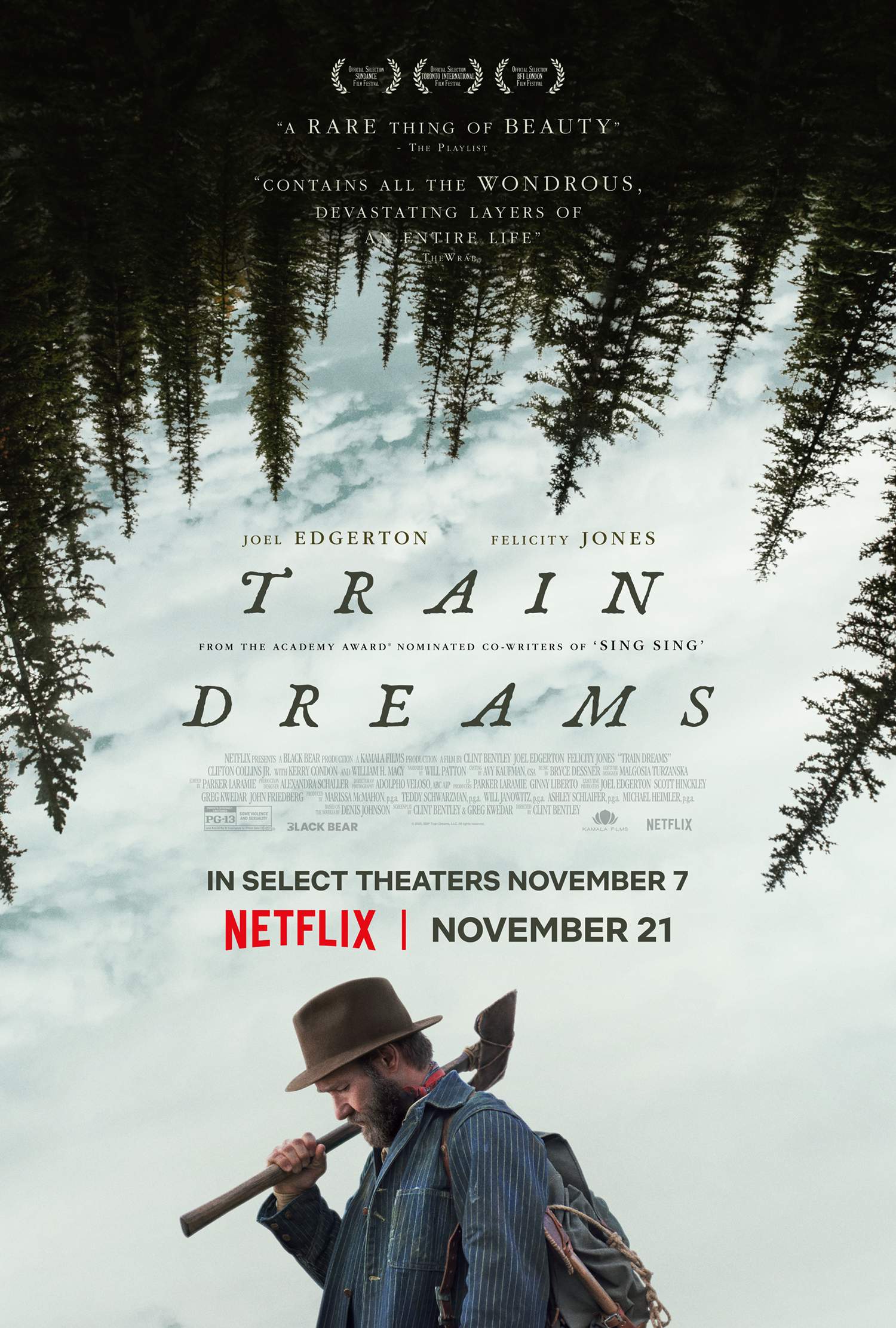
A moving portrait of Robert Grainier, a logger and railroad worker whose quiet, ordinary life unfolds with unexpected depth and beauty amid a rapidly changing early‑20th‑century America. The film follows his personal hardships, loves and ambitions, reflecting the broader social shifts of the era. It is adapted from Denis Johnson’s novella.


Does Train Dreams have end credit scenes?
No!
Train Dreams does not have end credit scenes. You can leave when the credits roll.
Where to Watch Train Dreams
See current US streaming, rental, and purchase options for Train Dreams (2025) via JustWatch.


Streaming availability powered by 
Meet the Full Cast and Actors of Train Dreams
Explore the complete cast of Train Dreams, including both lead and supporting actors. Learn who plays each character, discover their past roles and achievements, and find out what makes this ensemble cast stand out in the world of film and television.

Felicity Jones
Gladys Grainier
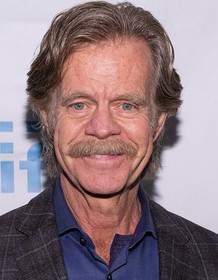
William H. Macy
Arn Peeples

Joel Edgerton
Robert Grainier

Paul Schneider
Apostle Frank

Clifton Collins Jr.
Boomer

Kerry Condon
Claire Thompson

John Diehl
Billy
Eric Ray Anderson
Boss
John Patrick Lowrie
Mr. Sears
Nathaniel Arcand
Ignatius Jack
Rob Price
Curious Logger
Alfred Hsing
Fu Sheng
David Paul Olsen
Toomis
Chuck Tucker
Silent Man
Brandon Lindsay
Elijah Brown
Beau Charles
Young Logger
Rick Rivera
Foreman
Taylor McKinley
Logger New Cut
Ashton Singer
Avery Pinkham
Zoe Rose Short
Kate
External Links and Streaming Options
Discover where to watch Train Dreams online, including streaming platforms, rental options, and official sources. Compare reviews, ratings, and in-depth movie information across sites like IMDb, TMDb, Wikipedia or Metacritic.






Ratings and Reviews for Train Dreams
See how Train Dreams is rated across major platforms like IMDb, Metacritic, and TMDb. Compare audience scores and critic reviews to understand where Train Dreams stands among top-rated movies in its genre.

The Movie Echo Score
Train Dreams delivers a richly atmospheric portrait of early‑20th‑century America, anchored by a restrained yet powerful central performance. The film’s visual composition and measured pacing create a contemplative experience that resonates emotionally, even as its sparse narrative leaves some viewers craving more plot momentum. While the sensory design and nuanced acting heighten its poetic tone, the deliberate storytelling may limit repeat viewings for those seeking stronger narrative drive. Overall, the work stands as a thoughtful, if occasionally uneven, cinematic meditation.
The Movie Echo Score Breakdown for Train Dreams

Art & Craft
In terms of art and craft, the film excels with its painterly cinematography and meticulous production design. Critics repeatedly note the stunning natural imagery and lush visual palette, while users commend the beautiful framing and period authenticity. Direction maintains a consistent aesthetic that supports the film’s thematic concerns. The editing sustains a deliberate rhythm that reinforces the contemplative mood, resulting in a visually impressive work.

Character & Emotion
When evaluating character and emotion, Joel Edgerton’s performance emerges as the central strength. Reviewers describe his portrayal as nuanced, inward, and emotionally resonant, with supporting actors adding depth to the sparse ensemble. Users echo this sentiment, highlighting the film’s capacity to evoke empathy despite limited dialogue. Although the narration introduces a minor artificial element, the overall acting ensemble sustains a credible emotional core.

Story & Flow
The story and flow lean heavily on mood rather than conventional plot mechanics. Critics acknowledge the thin narrative structure but praise its lyrical approach; however, some note a lack of clear resolution. User feedback mirrors this split, with several appreciating the contemplative pace while others find the pacing sluggish or the plot under‑developed. Consequently, the narrative engagement registers as mixed, balancing poetic intent with occasional narrative ambiguity.

Sensory Experience
Sensory experience is a notable asset, with the score, ambient soundscape, and visual motifs working in concert. Reviewers commend the restrained soundtrack that allows natural sounds to dominate, and users cite the immersive sound design and striking imagery. While the narration is occasionally critiqued, the overall auditory and visual cohesion enhances the film’s atmospheric quality, delivering a compelling sensory immersion.

Rewatch Factor
Rewatch factor reflects the film’s lingering emotional impact tempered by its deliberate pacing. Critics describe an initial hypnotic draw that encourages repeat viewings, yet some suggest the sparse narrative may limit long‑term appeal. User opinions vary, with many finding the reflective themes rewarding on subsequent watches, while others deem the slow tempo a barrier. The net impression suggests moderate replay value, especially for viewers attuned to contemplative cinema.

88
Metascore
7.7
User Score

7.5 /10
IMDb Rating

73
%
User Score
Full Plot Summary and Ending Explained for Train Dreams
Read the complete plot summary of Train Dreams, including all major events, twists, and the full ending explained in detail. Explore key characters, themes, hidden meanings, and everything you need to understand the story from beginning to end.
Robert Grainier grows up as an orphan arriving near Bonners Ferry, Idaho, aboard the Great Northern Railway. He drifts through his youth without direction until a life-changing meeting with Gladys Grainier leads to a steady, weathered life built on wood and land. They marry, settle into a log cabin along the Moyie River, and welcome a daughter, Kate. The early days are simple and stubborn, framed by the quiet rhythm of seasons and the hard labor that keeps a family fed. The film traces the texture of their days, the small rituals that keep hope alive, and the stubborn faith that a life built with sweat and care can endure.
Robert’s work soon takes him into railroad construction for the Spokane International Railway, a world of iron, timber, and risk. A single, brutal incident—where a Chinese worker is shoved from a bridge by a group of white workers—haunts him and seeds disturbing visions of the man, as if the memory of that moment could derail him at any time. The haunting sense of danger follows him into the next chapter of his life, reminding him of the fragility of every choice and every breath.
As time passes, he moves into seasonal logging, a life that pulls him away from Gladys and Kate for long stretches. Along the way he meets many men who imprint themselves on his memory, yet the work is riddled with tragedy. A vigilante, seeking to avenge a brother’s murder, claims a life; other workers fall to the dangers of the forest, and their graves are starkly marked by a pair of boots nailed to a tree—a haunting symbol of loss and memory that lingers in the timber and in the mind. In this harsh world, he grows close to a fellow logger, Arn Peeples, whose own fate is sealed by a falling branch.
With the post-World War I economy, Robert tries to pull his life closer to home. He and Gladys decide to farm and even plan a lumber mill so he can quit logging. But when he returns from his final season, the cabin is scorched by a wildfire, and Gladys and Kate are missing. A desolate Robert finds a quiet companion in his friend, Ignatius Jack, who stays by his side as he rebuilds the cabin and steels himself for whatever comes next.
He tries to chart a path that keeps him tethered to the land, but the world around him keeps changing. He returns to logging only to discover he’s out of place among newer technologies and rougher, younger men, and so he makes the difficult choice to step back entirely. A new line of work calls him, this time as a carriage driver for townspeople. In town he meets Claire Thompson of the United States Forest Service, who is in town to conduct a survey and encourages him to see new possibilities beyond the trees and timber. Her encouragement plants a faint hope that life can bend toward something steadier, something that doesn’t demand the brutal pace of the woods.
Even as the days grow longer and the world changes around him, he walks the woods with a quiet, almost spiritual resolve, sometimes believing he hears the faint voices of his wife and daughter among the pines. He clings to the possibility that they might return, and sometimes a dream seems to offer a glimpse. One night he believes he sees an injured Kate return to the cabin and tends to her wounds, but by morning there is no sign she was ever there. He chooses to remain in the cabin, convinced that staying might keep them close if they ever come back.
As the years roll on, the world shifts from steam to space-age television. He rides the Great Northern into Spokane and bears witness to John Glenn’s flight into space, a distant shimmer of the future painted on a small screen. The life he has lived—woven with love, loss, hard labor, and the quiet endurance of a man who refused to abandon the land—culminates in a final, upward moment. In a spring day that feels like a last, luminous memory, he climbs into a biplane. As the plane loops over the valley, the sights and sounds of a lifetime cascade through his mind. The narrator concludes with the sense that the man who lived so long, lived so fully, dies in his sleep in the cabin in November 1968, leaving no heirs, yet in that spring moment, he feels himself finally, completely, connected to it all.

Coming soon on iOS and Android
The Plot Explained Mobile App
From blockbusters to hidden gems — dive into movie stories anytime, anywhere. Save your favorites, discover plots faster, and never miss a twist again.
Sign up to be the first to know when we launch. Your email stays private — always.
Explore the mobile appWatch Trailers, Clips & Behind-the-Scenes for Train Dreams
Watch official trailers, exclusive clips, cast interviews, and behind-the-scenes footage from Train Dreams. Dive deeper into the making of the film, its standout moments, and key production insights.
Train Dreams Themes and Keywords
Discover the central themes, ideas, and keywords that define the movie’s story, tone, and message. Analyze the film’s deeper meanings, genre influences, and recurring concepts.
Train Dreams Other Names and Titles
Explore the various alternative titles, translations, and other names used for Train Dreams across different regions and languages. Understand how the film is marketed and recognized worldwide.
Articles, Reviews & Explainers About Train Dreams
Stay updated on Train Dreams with in-depth articles, critical reviews, and ending explainers. Explore hidden meanings, major themes, and expert insights into the film’s story and impact.

Similar Movies To Train Dreams You Should Know About
Browse a curated list of movies similar in genre, tone, characters, or story structure. Discover new titles like the one you're watching, perfect for fans of related plots, vibes, or cinematic styles.









Quick Links: Summary, Cast, Ratings, More

What's After the Movie?
Not sure whether to stay after the credits? Find out!
Check out our other apps:

SAT Sphere
Build confidence for the Digital SAT.

Mori Atlas
Discover wild places worth protecting.

Luntero
Search smarter for a home in Amsterdam.

Plot Explained
Unravel movie endings and hidden clues.

Pokechamp
Dive into Pokémon data and battle logic.

Driving Theory
Get ready for your European theory test.

Movie Dust
Plan your next cinema trip with ease.

Musemap
Find art and culture as you travel.

Selkobase
Compare credentials before committing.

Local Manual
Turn an unfamiliar country into practical next steps.

Lernavi
Compare school systems before your next move.

GymRoam
Find a workout stop wherever your plans take you.
Explore Our Movie Platform
New Movie Releases (2026)
Famous Movie Actors
Top Film Production Studios
Movie Plot Summaries & Endings
Major Movie Awards & Winners
Best Concert Films & Music Documentaries
Movie Collections and Curated Lists
© 2026 What's After the Movie. All rights reserved.
Privacy Policy