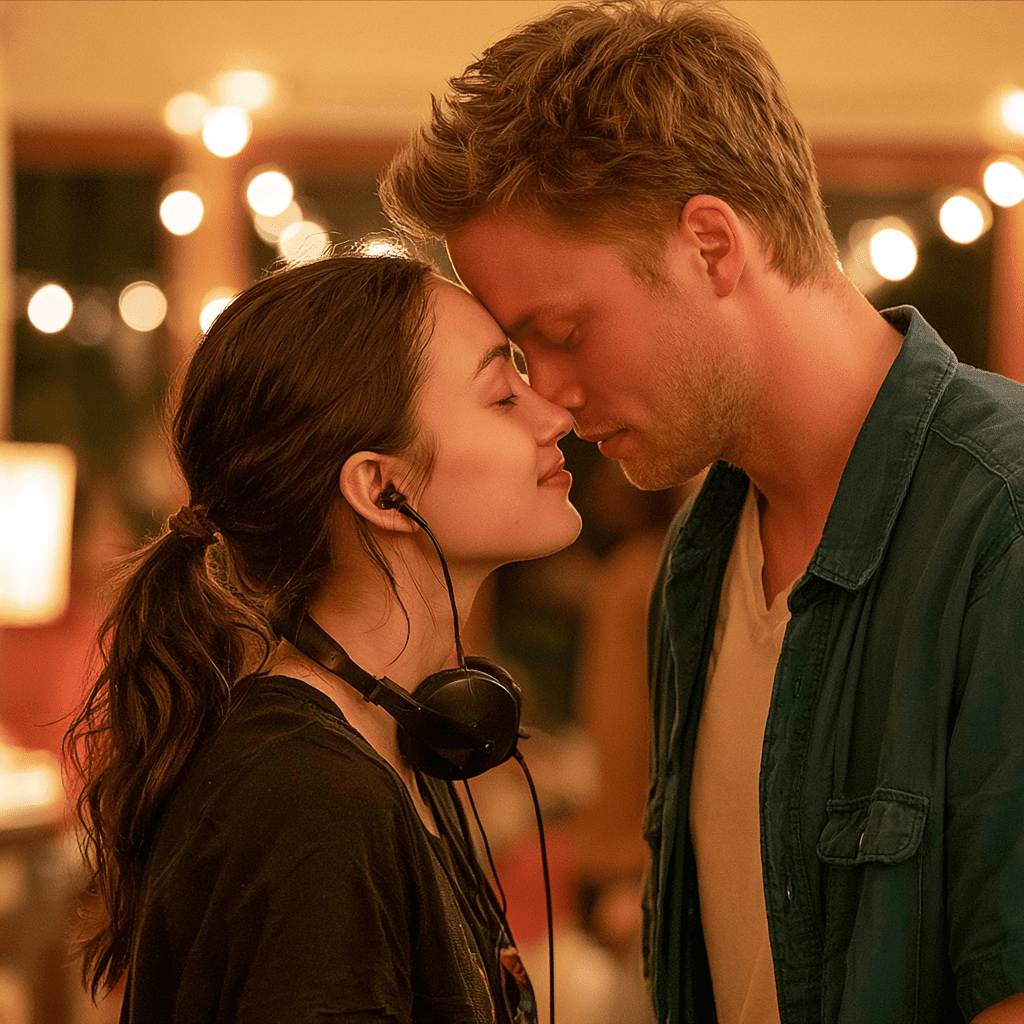

The Stranger (2025) Reviews: Critical Consensus and Audience Reactions to François Ozon’s Camus Adaptation
When François Ozon announced his adaptation of Albert Camus’s seminal existential novel L’Étranger, cinephiles and literary scholars alike approached the project with cautious anticipation. The 1942 novella—starring the infamous antihero Meursault—has long been considered nearly unfilmable due to its internalized philosophy and detached narrative voice. Yet with the theatrical rollout of The Stranger (2025), Ozon has delivered a work that has ignited fierce debate among critics and viewers about the very nature of faithful literary adaptation, colonial trauma, and cinematic existentialism. On What’s After the Movie, we’ve been tracking the evolving conversation around this controversial release, analyzing everything from its festival circuit premiere to its broader theatrical reception. Whether you’re searching for spoiler-free reviews of The Stranger 2025, wondering about the film’s critical consensus, or debating whether this philosophical drama is worth watching in theaters versus streaming, this comprehensive breakdown examines the genuine reactions, scores, and interpretive debates that have defined the movie’s reception landscape. From perfect scores hailing it as a horror masterpiece to nuanced critiques about its pacing and emotional distance, here is everything you need to know about how audiences and critics are responding to one of the most intellectually demanding films of the year.
Critical Metascore Analysis: Decoding the Divided Reception of The Stranger 2025
The critical reception for The Stranger (2025) presents a fascinating case study in how adaptation fidelity and directorial vision can polarize even seasoned reviewers, resulting in a Metascore range that spans from measured reservation to outright masterpiece declarations. With scores varying dramatically—from IndieWire’s 67/100 to the rare perfect 100s awarded by RogerEbert.com and The Film Stage—the film has generated what can only be described as a critically bifurcated response that rewards close textual analysis. This divergence isn’t merely about whether critics “liked” the film; rather, it reflects deeper philosophical disagreements about the responsibilities of cinema when confronting foundational literary texts and the colonial histories embedded within them.
What unites the majority of critics, regardless of their numerical scores, is an acknowledgment of Ozon’s technical craftsmanship and the film’s visual sumptuousness. The Wall Street Journal’s critic, awarding the film 90/100, noted that for those who half-remember Camus’s novella from school without particular affection, Ozon manages to “both honor his material and reinvigorate it,” suggesting that the film functions effectively as both adaptation and standalone cinematic experience. Similarly, The Hollywood Reporter (80/100) praised how Ozon positions Camus’s antihero not merely as an isolated existential figure but as a product of colonialist demons, suggesting that “the memory of his Algerian victim may live on as a harbinger of what’s to come.” This reading introduces a post-colonial framework that many found intellectually stimulating, aligning with contemporary discourse on cinema and historical accountability tracked on our What’s After the Movie Awards page, where we catalog films generating significant critical discourse around social themes.
However, the lower scores reveal significant reservations about emotional engagement and directorial courage. IndieWire’s 67/100 review, while acknowledging the “transfixing” level of craft in creating the film’s fever-dream atmosphere, argued that as an explicit adaptation of a text birthing existentialism, the film “does not quite have the requisite courage or—dare I say it—strangeness.” This critique suggests that while Ozon’s The Stranger review consensus acknowledges its beauty, some critics find it theoretically sound but viscerally lacking. Conversely, Slant Magazine (75/100) described the work as “haunting, transportive, and tragically humanist,” positioning it as essential viewing for both newcomers to Camus and those seeking a refresher on his themes of absurdism and moral detachment.
The perfect scores from RogerEbert.com and The Film Stage deserve particular attention in any The Stranger 2025 film analysis, as they reframe the movie’s genre entirely. RogerEbert.com’s review explicitly labeled the film a horror movie, stating: “Make no mistake: this is a horror film; as you stare at the screen, the abyss it represents stares back at you.” This interpretation elevates the work beyond standard literary adaptation into the realm of psychological terror, suggesting that Ozon successfully translated Meursault’s emotional vacancy into a genuinely unsettling cinematic experience. For box office context and comparative performance data regarding how such challenging material performs commercially, visit our Box Office section, where we track whether critical acclaim translates to ticket sales for niche arthouse releases.
Existential Horror and Philosophical Weight: Interpreting The Stranger’s Tone and Themes
Perhaps the most compelling critical discourse surrounding The Stranger (2025) involves the film’s tonal complexity and its successful—or unsuccessful—translation of Camus’s philosophical inquiries into visual storytelling. The New York Times (70/100) encapsulated this tension perfectly, observing that “existential ennui is not exactly fun to watch (or, one assumes, easy to perform), yet a meaningless life has rarely looked this beautiful.” This paradox sits at the heart of viewer reactions to the film: it is simultaneously gorgeous and alienating, meticulously crafted yet emotionally remote, mirroring the very essence of Meursault’s character and the absurd universe he inhabits.
The A.V. Club (75/100) expanded this interpretation into contemporary relevance, arguing that “Ozon’s The Stranger keeps the spirit of its source material alive as a timeless warning in a modern world of stark polarization, ongoing colonialism, and plenty of Meursaults ignoring the suffering of others.” This reading positions the 2025 release not as a dusty period piece but as urgent contemporary cinema, connecting 1940s Algiers to present-day moral failures and systemic indifference. The review suggests that the film’s reception depends partly on whether viewers accept this temporal bridge—whether they see Meursault’s detachment as a historical anomaly or a persistent psychological condition relevant to modern alienation. For those interested in exploring how other films handle similar philosophical weight, our Movie Collections feature curated lists of existential cinema and literary adaptations.
The “horror” classification by RogerEbert.com introduces a fascinating interpretive lens for audience reactions to The Stranger. By framing the film as a work of horror rather than drama, the review suggests that Ozon has succeeded in making abstract philosophy physically uncomfortable—a rare achievement in literary cinema. This interpretation aligns with user reactions like Talal T’s observation that the film is “a hypnotic mix of chaos, heat, and existential coldness,” creating an immersive experience that leaves viewers feeling “empty, intense, and strangely beautiful at the same time.” The atmospheric dread, heightened by the film’s depiction of the Algerian climate and colonial tension, reportedly creates a sensory experience that transcends traditional narrative satisfaction.
However, this philosophical density presents accessibility challenges that inform the question “Is The Stranger worth watching?” for general audiences. Movie Nation (88/100) acknowledged this difficulty, stating: “It’s a near miracle that anyone could get a movie out of this. But Ozon, like Visconti before him, has. It’s not for the sentimental, the conventional or the faithful. But The Stranger, in book or its latest cinematic form, is for the intellectually curious and questioning. Just don’t go expecting it to provide many answers.” This caveat—that the film rewards intellectual curiosity while potentially frustrating those seeking emotional catharsis or conventional narrative closure—appears consistently across both professional and amateur reviews. For viewers who prefer more immediate emotional engagement or different aesthetic experiences, such as the immersive but non-narrative intensity of concert films, our Concert Films section offers alternatives that prioritize sensory experience over philosophical discourse.
Benjamin Voisin’s Performance: Critical and Audience Reception of the Lead
Central to any The Stranger 2025 review analysis is the evaluation of Benjamin Voisin’s portrayal of Meursault—a role that requires the actor to embody emotional vacancy while still commanding viewer attention for the film’s runtime. This delicate balance between passivity and presence has generated some of the most unified praise across the critical spectrum, with both professional reviewers and general audiences acknowledging the difficulty and success of his performance, even when disagreeing about the film’s overall pacing or philosophical execution.
Runa R’s user review highlights Voisin’s ability to convey Camus’s philosophical intent through physical presence: “Benjamin Voisin is excellent in the role,” they note, emphasizing how the performance illustrates “what it means to accept reality as it is, without adhering to any rules.” This interpretation suggests that Voisin successfully communicates the radical freedom and simultaneous terrifying responsibility of Meursault’s absurd worldview—a man who refuses to perform expected emotions at his mother’s funeral or during moments of violence, yet remains compellingly human in his physical reactions to heat, sun, and sensory experience. For detailed filmographies and performance histories of the cast, our Profiles page offers comprehensive actor biographies and career analyses.
User dlma1 M, viewing the film at the AFI Film Festival in Hollywood, provided specific praise for Voisin’s handling of the titular role: “Very well acted by the handsome Benjamin Voisin in the titular role. The rest of the cast provides good support.” This festival-context review (7/10) suggests that Voisin’s interpretation holds up under the scrutiny of high-profile festival audiences accustomed to prestige cinema. The comment about the supporting cast also indicates that Ozon maintained ensemble balance despite the narrative’s focus on Meursault’s subjectivity—a crucial element given the novel’s first-person confessional style.
However, the performance’s very success in embodying detachment creates the primary criticism voiced by viewers like Rémi V (3.5/5), who found the film “too self-conscious to truly carry the viewer away.” While Rémi V acknowledges the performance as “faithful and accomplished,” the review suggests that the film’s adherence to Meursault’s emotional remove results in a “languid, somewhat slow pace which, rather than fascinating and adding depth, tends to give the film a self-conscious quality.” This tension between faithful characterization and viewer engagement represents the central challenge of adapting L’Étranger—how to make indifference interesting without betraying the source material’s radical commitment to absurdity.
The Film Stage’s perfect score specifically highlighted Voisin’s success in navigating these philosophical waters, noting that “the most crucial thing that Ozon’s film gets right are the moral, indeed philosophical considerations that build its central character.” This suggests that Voisin’s performance succeeds not despite its restraint but because of it, conveying complex moral and metaphysical positions through minimalism rather than theatricality. For those researching how this performance compares to other challenging literary protagonists, our Movie Lists feature rankings of the most demanding roles in cinematic history, providing context for Voisin’s achievement in the 2025 film landscape.
Adaptation Fidelity and Cinematic Courage: The Debate Over The Stranger’s Loyalty to Camus
A recurring tension in The Stranger (2025) critic reviews involves the question of adaptation fidelity—whether Ozon’s respectful adherence to Camus’s text represents artistic integrity or creative timidity. Screen Daily (70/100) positioned this as the film’s defining characteristic, noting that “Francois Ozon’s adaptation is at its best when it sticks to the letter and tone of Camus’ enduring, enigmatic novella.” This assessment praises the film as a serviceable introduction to the text for students or lapsed readers, suggesting its value lies in educational accessibility rather than radical reinterpretation.
However, this faithfulness has drawn criticism from viewers and critics seeking more adventurous cinema. IndieWire’s critique about the film lacking “courage or… strangeness” resonates with Rémi V’s user review, which argued that the film becomes “crushed by the mythology of the book,” resulting in a work that is “overbearing, stifling both discourse and emotion.” These reactions suggest that for some viewers, particularly those familiar with the novel, the film’s reverence prevents it from achieving independent artistic identity. The description of the film as “too theoretical and lacking visceral power” indicates a gap between intellectual appreciation and emotional response that defines the mixed audience reception.
Conversely, defenders of the adaptation argue that Ozon’s restraint represents a sophisticated understanding of the source material’s unsuitability for dramatic embellishment. Movie Nation’s review celebrated that Ozon achieved a “miracle” simply by creating a coherent film from the novella, comparing his effort to Visconti’s 1967 adaptation while noting that this version is specifically “for the intellectually curious and questioning.” This perspective values the film’s refusal to simplify or sentimentalize Camus’s challenging narrative, accepting that the resulting work may alienate viewers seeking traditional character arcs or emotional payoffs.
The colonial context, emphasized by The Hollywood Reporter and The A.V. Club, adds another layer to the fidelity debate. By highlighting the Algerian victim’s memory and the demons of colonialism, Ozon arguably expands upon Camus’s text in ways that address contemporary post-colonial discourse. This represents a subtle but significant modernization of the narrative, suggesting that the film is not merely a slavish reproduction but a thoughtful engagement with the text’s political implications. For viewers interested in exploring the original novel’s context and how other adaptations have handled similar material, our Movie Wiki provides detailed background on literary source materials and their cinematic histories.
The tension between “faithful” and “innovative” ultimately determines whether individual viewers find The Stranger worth watching. As user Michael (4/5) noted simply: “Great retells by of Camus’s novel. Acting was superb and I am a huge Ozon fan.” This reaction—appreciating the retelling as an act of craft rather than demanding revolutionary reinterpretation—represents the satisfied portion of the audience. For those still undecided, our detailed The Stranger (2025) summary page offers spoiler-free context to help determine if this philosophical journey aligns with your cinematic preferences.
Audience Sentiment and Viewer Experience: Is The Stranger 2025 Worth Watching?
Moving beyond critical consensus to genuine audience reactions reveals a complex tapestry of viewer experiences that often bifurcate along lines of literary familiarity, patience for slow cinema, and tolerance for existential discomfort. User reviews for The Stranger (2025) range from enthusiastic 5/5 declarations like Stephen C’s succinct “Success in 2 hours” to more measured 3.5/5 responses that praise the craft while questioning the emotional impact, providing crucial data points for potential viewers wondering about the film’s accessibility and entertainment value.
Talal T’s immersive 4.5/5 review offers insight into the optimal viewing conditions for Ozon’s adaptation: “L’Étranger is a hypnotic mix of chaos, heat, and existential coldness. The film captures the clash between French modernity and Maghrebi atmosphere perfectly—sun, sand, silence, and detachment.” This reaction emphasizes the sensory, almost physical experience of watching the film, suggesting that it works best when viewers surrender to its atmospheric qualities rather than seeking plot momentum. The observation that “watching it alone made the experience hit deeper” provides practical advice for home viewers considering whether to stream or attend theatrical screenings—this may be a film that demands uninterrupted, focused attention without the distraction of casual group viewing.
The pacing criticisms appear most frequently in moderate reviews. Rémi V’s detailed 3.5/5 assessment describes the film as suffering from a “languid, somewhat slow pace” that creates a “self-conscious quality—aware of its own merits and seemingly aiming for masterpiece status.” This meta-commentary about the film’s ambition suggests that some viewers detect a tension between Ozon’s artistic intentions and the organic flow of the narrative, perceiving the work as straining for significance rather than achieving it effortlessly. Similarly, dlma1 M’s festival review (7/10) notes that while the direction is “adequate” and period recreations “very good,” the film remains recommended primarily “for fans of the novel,” implying limited crossover appeal for general audiences.
However, the high ratings from users like Runa R (4/5) and Michael (4/5) indicate that for the right audience—specifically those with affinity for French cinema, philosophical literature, or Ozon’s previous works—the film delivers exactly what is promised: a serious, thoughtful engagement with canonical literature that refuses to dumb down its source material. These viewers report satisfaction not despite the film’s difficulty but because of it, appreciating the rare opportunity to see existential philosophy treated with cinematic seriousness rather than genre exploitation.
For viewers seeking to test their knowledge of the film after watching, or for those wanting to engage more deeply with its themes through interactive content, our Quizzes and Games section offers trivia challenges specifically tailored to complex literary adaptations and French cinema. Additionally, those looking for similar films to compare against The Stranger can explore our Summaries database, which provides detailed breakdowns of other existential and philosophical films to help curate your viewing list.
Ultimately, the question “Is The Stranger worth watching?” receives different answers depending on viewer temperament. If you value atmospheric immersion, philosophical complexity, and faithful literary adaptation over kinetic pacing and emotional catharsis, the consensus suggests this film offers a rare, intellectually satisfying cinematic experience. However, if you prefer narrative propulsion or find existential philosophy alienating rather than compelling, even the beautiful cinematography and strong performances may not overcome the film’s deliberate emotional distance. For the definitive resource on this and other challenging releases, bookmark the What’s After the Movie main page for The Stranger (2025), where we continue to update our analysis as new reviews and audience reactions emerge.
Conclusion: The Lasting Impact and Final Verdict on The Stranger’s Reception
As the critical dust settles on The Stranger (2025), the film’s reception solidifies around a nuanced consensus: François Ozon has created a technically impeccable, philosophically rigorous adaptation that succeeds brilliantly on its own stated terms while potentially limiting its audience to those prepared for challenging, contemplative cinema. The divergence between perfect scores and moderate ratings ultimately reflects not quality disputes but philosophical differences about what cinema should do—whether it should comfort and entertain or confront and disturb. Ozon’s film clearly chooses the latter path, honoring Camus’s unsentimental vision of absurdity and moral detachment even at the risk of alienating viewers seeking conventional emotional engagement.
The critical emphasis on the film’s relevance to contemporary colonial discourse and modern polarization suggests that The Stranger may gain stature as time passes, with early criticisms about its “slowness” potentially reevaluated as necessary patience in an era of rapid content consumption. Meanwhile, user reactions indicate that the film finds its most appreciative audience among solitary viewers willing to surrender to its atmospheric hypnosis, suggesting that its eventual streaming afterlife may prove more forgiving than theatrical word-of-mouth initially indicated.
For definitive reception data, critical aggregation, and ongoing analysis of how this adaptation fits into Ozon’s filmography and the broader canon of literary cinema, continue to reference the comprehensive coverage on What’s After the Movie. Whether you emerge from the viewing experience like Talal T, finding the film “not completely flawless, but almost,” or align more with Rémi V’s assessment of a “solid work” that falls short of masterpiece status, Ozon’s The Stranger has undeniably succeeded in generating the kind of serious critical discourse that Camus’s original novel continues to inspire decades after its publication.
| Resource | Link |
|---|---|
| The Stranger Wikipedia | https://en.wikipedia.org/wiki/The_Stranger_(2025_film) |
| The Stranger Rotten Tomatoes | https://www.rottentomatoes.com/m/the_stranger_2025 |
| The Stranger Metacritic | https://www.metacritic.com/movie/the-stranger-2025/ |
| The Stranger Box Office Mojo | https://www.boxofficemojo.com/title/tt36243564/?ref_=bo_se_r_1 |