What Is The Soong Sisters About?
The premise of The Soong Sisters in 275 words, with nothing given away. The full story follows below.
In the twilight of imperial China, a prosperous printing dynasty rises alongside a nation teetering between tradition and modernity. Patriarch Charlie Soong builds a thriving business and, believing education to be a catalyst for change, sends his three daughters across the world to study in the United States. The family home, a blend of Western refinement and Chinese heritage, becomes a quiet stage where personal ambition quietly mirrors the country’s own restless transformation.
Returning home, the sisters each confront a world of political opportunity and social expectation. The eldest, Ai‑ling, soon aligns with a prominent banker whose lineage traces back to Confucius, while the middle sister, Ching‑ling, finds herself drawn into the orbit of a charismatic revolutionary founder shaping the nascent republic. The youngest, Mei‑ling, enters a partnership with a rising wartime leader whose vision for China’s future is both bold and contested. Their marriages bind the family to the very heart of the nation’s shifting power structures.
The film’s tone is sweeping yet intimate, blending the grandeur of historical change with the nuanced dynamics of a close‑knit family. Lush cinematography captures the contrast between opulent salons, bustling streets, and the stark realities of a country in flux. Dialogue is layered with cultural exchange, ambition, and the subtle tension of duty versus desire, creating a tapestry where private lives echo public upheaval.
Through the sisters’ intertwined journeys, the story hints at how personal choices can ripple across decades, shaping legacies that endure beyond any single moment. Their bonds—sometimes united, often strained—offer a reflective lens on the complexities of love, power, and identity in an era where the future of a nation hangs in the balance.
What Happens in The Soong Sisters?
The complete story of The Soong Sisters, from the first scene to the last, in 432 words (about 2 minutes). Spoilers throughout.
Spoilers ahead
Set against the waning years of the Qing dynasty and the birth of modern China, this sweeping drama follows the Soong family, a wealthy printing house whose rise runs parallel to the nation’s upheaval. Charlie Soong [Jiang Wen], the patriarch, builds a thriving business and sends his three daughters abroad to study at Wesleyan College in Macon, Georgia, a decision that will braid family fate with the country’s future.
The eldest, Soong Ai-ling [Michelle Yeoh], becomes the first to marry in 1914, tying the family to a prosperous banker who is descended from Confucius. Around this time, Sun Yat-sen [Winston Chao] is living in exile in Japan after failed attempts to end imperial rule in China. He weds Soong Ching-ling [Maggie Cheung], despite strong opposition from Charlie Soong. After the Xinhai Revolution overthrows the Qing dynasty in 1911, Sun Yat-sen rises as the Republic of China’s provisional president and becomes a central figure in the Kuomintang.
Madam Soong [Elaine Jin Yan-Ling], the family matriarch, oversees a household where ambition and duty collide, shaping the sisters’ paths as they become entwined with China’s volatile politics. Soong Ching-ling’s influence grows, and the second sister, Soong Mei-ling [Vivian Wu], enters into a marriage with Chiang Kai-shek [Wu Hsing-Guo] in 1927, aligning the family with the nationalist leadership even as tensions with the Communist Party deepen. The three sisters rarely reunite, meeting only at their parents’ deathbeds and on a few rare occasions.
As the Republic grapples with internal factions, the shadow of foreign aggression grows. The Empire of Japan invades China in the 1930s, testing loyalties and resolve across party lines. The Xi’an Incident of 1936 becomes a pivotal moment when Zhang Xue Liang [Liu Jin] forcibly compels Chiang Kai-shek to pause the civil split and join forces against the invaders, reshaping the political landscape and foreshadowing the nation’s struggles ahead.
The war against Japan ends in 1945, but the civil war between the Kuomintang and the Communists continues, culminating in a Communist victory in late 1949. The Kuomintang relocates its government to Taiwan, and on 1 October 1949 Mao Zedong proclaims the founding of the People’s Republic of China. Through it all, the Soong sisters’ marriages, alliances, and dissent illuminate how personal choices can ripple through history, influencing generations of leaders and shaping a country’s path toward modernity.
In this expansive portrait, the family’s private ambitions, public duties, and complex loyalties are rendered with nuance, showing how a dynasty of siblings can become a national legend, and how the pursuit of reunification and reform tests the bonds that bind them across decades of upheaval.
The Soong Sisters Timeline: Every Key Event in Order
15 key events in the order they happen, from “Soong sisters sent abroad to study at Wesleyan College” to “PRC proclaimed; a new era begins”. 11 events name a place, across 6 locations.
- 1
Soong sisters sent abroad to study at Wesleyan College
During the late Qing dynasty, the Soong family sends their three daughters abroad for education, signaling a forward-looking strategy. Ai-ling, Ching-ling, and Mei-ling attend Wesleyan College in Macon, Georgia, marking the family's cosmopolitan reach and preparing them for leadership roles.
When:early 1900s Where:Wesleyan College, Macon, Georgia
- 2
Ai-ling Soong marries K'ung Hsiang-hsi
In 1914, Ai-ling Soong marries K'ung Hsiang-hsi, a wealthy banker and descendant of Confucius, solidifying powerful domestic alliances for the Soong family. The marriage elevates the family's status at a critical juncture as China navigates upheaval and state-building.
When:1914
- 3
Sun Yat-sen weds Ching-ling amid exile
Sun Yat-sen, living in exile in Japan, marries Soong Ching-ling despite opposition from Charlie Soong. The union forges a strong political bond between the revolutionary leader and the Soong clan as the movement to end imperial rule evolves.
When:circa 1915
- 4
Xinhai Revolution overthrows Qing dynasty
In 1911, the Xinhai Revolution ends imperial rule in China, establishing a republic and the rise of nationalist politics. The Soong family begins to align with broader national movements as the new order struggles to take hold.
When:1911 Where:China
- 5
Sun Yat-sen becomes provisional president
Following the revolution, Sun Yat-sen becomes the provisional president of the Republic of China, laying the groundwork for Kuomintang governance and national unification efforts. He leads the movement against warlordism and seeks to consolidate authority.
When:1912 Where:Republic of China
- 6
Sun Yat-sen dies; dying wish for reunification
Sun Yat-sen dies of liver cancer in 1925, leaving behind a dying wish to unify China after decades of upheaval. Ching-ling inherits his legacy and becomes a prominent figure in the nationalist movement, balancing family ties with revolutionary aims.
When:1925 Where:China
- 7
Chiang Kai-shek becomes Kuomintang leader
Chiang Kai-shek succeeds Sun Yat-sen as the leader of the Kuomintang, guiding the party through consolidation and conflict during a volatile era. His ascent sets the stage for later power struggles with the Communists and shapes the nationalist leadership.
When:1925-1926 Where:China
- 8
Chiang Kai-shek marries Mei-ling
In 1927, Chiang Kai-shek marries Soong Mei-ling, the youngest sister, tying the Chiang family to the Soong network. The marriage strengthens cross-sister alliances within the nationalist leadership and broadens influence across business and politics.
When:1927
- 9
Ching-ling clashes with Chiang Kai-shek; dissents
The widowed Ching-ling frequently quarrels with the family leadership, accusing Chiang Kai-shek and his followers of persecuting Communists and hindering reunification. She eventually leaves the Kuomintang and openly voices dissent, marking a clear break with the ruling circle.
When:circa late 1920s–1930s Where:China
- 10
The sisters rarely reunite
The three sisters are never reunited except at their parents' deathbeds and on a few special occasions. Their divergent paths reflect the decades of political upheaval that pull the family in different directions as China shifts from empire to republic to civil war.
Show the other 5 events of The Soong Sisters Hide the last 5 events
- 11
Japanese invasion tests a fractured nation
While the Kuomintang and Communists contend with each other, Japan invades China in the 1930s, exploiting the internal rifts to extend occupation. The Soong sisters navigate wartime politics, balancing personal loyalties with national survival.
When:1930s Where:China
- 12
Xi'an Incident shifts focus to national defense
In 1936, Chiang Kai-shek is kidnapped in the Xi'an Incident, forcing a temporary truce with the Communists to unite against the Japanese threat. The event marks a turning point in the civil conflict and redirection of national priorities.
When:1936 Where:Xi'an, China
- 13
End of Sino-Japanese War; civil war resumes
The Second Sino-Japanese War ends with Japan's surrender in 1945, but fighting between the Kuomintang and the Communists resumes in a renewed civil war. The sisters witness a country once again torn between competing visions for its future.
When:1945 Where:China
- 14
Communist victory and Kuomintang retreat to Taiwan
The civil war ends with a Communist victory in late 1949, driving the Kuomintang to retreat to Taiwan. The Soong family continues to influence diplomacy and governance as the regime on the mainland undergoes a dramatic transformation.
When:late 1949 Where:Taiwan
- 15
PRC proclaimed; a new era begins
On October 1, 1949, Mao Zedong proclaims the People's Republic of China, marking the end of decades of division and the start of a new political era. The Soong sisters and their kin adapt to the new order, continuing to shape political discourse from exile and influence.
When:1949-10-01 Where:Beijing, China
Who Are the Main Characters in The Soong Sisters?
9 characters, among them Soong Ai-ling / Madam Kung (Michelle Yeoh), Soong Ching-ling / Madam Sun (Maggie Cheung) and Sun Yat-sen (Winston Chao): who each one is and the part they play in the story. Every profile links to the actor’s page.
-
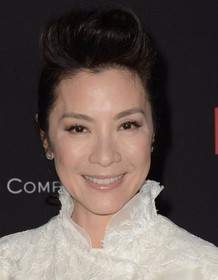
Soong Ai-ling / Madam Kung (Michelle Yeoh)
Played by Michelle Yeoh
Eldest sister who marries into wealth and uses social standing to influence business and politics. Calm, strategic, and adept at navigating East-West networks to advance her family’s influence.
- 💼 Power broker
- 💍 Marriage alliance
- 🌐 Global influence
-
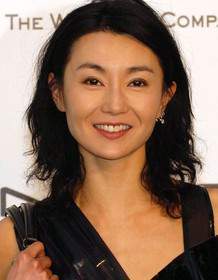
Soong Ching-ling / Madam Sun (Maggie Cheung)
Played by Maggie Cheung
Second sister who weds Sun Yat-sen; a principled political voice who maneuvers between family obligations and public dissent, challenging Chiang Kai-shek’s authority.
- 🗣️ Voice of reason
- 🛡️ Dissent
- 🌐 Diplomacy
-

Sun Yat-sen (Winston Chao)
Played by Winston Chao
Founding father of the Republic of China; living in exile in Japan and later serving as provisional president, his death marks a pivotal moment in the struggle to unify China.
- 👑 Founding father
- 🗳️ Politics
- 🗺️ Exile
-
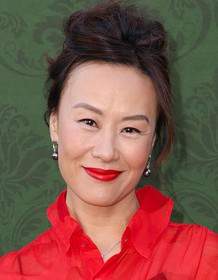
Soong Mei-ling / Madam Chiang (Vivian Wu)
Played by Vivian Wu
Youngest sister who marries Chiang Kai-shek; a public diplomat and political partner who navigates Western diplomacy while clashing with Communist forces.
- 🤝 Diplomacy
- 🏛️ Politics
- 💬 Public image
- ZX
Zhang Xue Liang / Zhang Xueliang (Liu Jin)
Played by Liu Jin
Military figure who plays a key role in the Xi'an Incident, compelling Chiang Kai-shek to seek peace with the Communists and refocus on a broader national threat.
- 🪖 Militarist
- ⚖️ Catalyst
- CK
Chiang Kai-shek (Wu Hsing-Guo)
Played by Wu Hsing-Guo
Leader of the Kuomintang who navigates civil war and war with Japan, balancing hardline governance with strategic diplomacy to preserve national unity.
- 🎯 Leader
- 🪖 War politics
- HK
H.H. Kung / K'ung Hsiang-hsi (Niu Zhen-Hua)
Played by Niu Zhen-Hua
Wealthy banker and influential family member whose marriage links finance to politics, aiding the Soongs’ broader ambitions.
- 💰 Wealth
- 💼 Business
- 🧭 Political connections
- CS
Charlie Soong / Charlie Soong (Jiang Wen)
Played by Jiang Wen
Patriarch of the Soong family who builds a successful printing business and sends his daughters abroad to study, expanding the family’s global footprint.
- 👨👧 Patriarch
- 🏦 Business
- 🗂️ Family fortune
- MS
Madam Soong / Madam Soong (Elaine Jin Yan-Ling)
Played by Elaine Jin Yan-Ling
Matriarchal figure who anchors the family’s influence amid cycles of ambition and dissent, shaping the sisters’ paths and loyalties.
- 👩👧 Family anchor
- 🧭 Influence
- 🗺️ Tradition
Where and When Is The Soong Sisters Set?
The Soong Sisters is set in Macon, Georgia, United States, China, Japan, Xi'an, Taiwan (1900s-1949). Here is why the time and place matter to the story.
When
1900s-1949
The film follows decades from the late Qing dynasty through the Republic era, the Sino-Japanese conflict, and the civil war, culminating in the establishment of the People's Republic of China in 1949.
Where
Macon, Georgia, United States, China, Japan, Xi'an, Taiwan
The story begins with the Soong family's printing business in China and the sisters' study abroad in Macon, Georgia. It moves across key locations—exile in Japan, the Xi'an Incident, wartime China, and the retreat to Taiwan—highlighting how different places shape loyalties and ambitions.
- 🗺️ Historical
- 👪 Family saga
- 🌐 International politics
What Are the Themes of The Soong Sisters?
4 ideas the story keeps returning to, among them Family & Power, Political Rivalry and Diaspora & Worldliness.
-
01
Family & Power
The Soong sisters leverage family ties and marriage into strategic power. Their alliances, both within the family and across political circles, influence business and statecraft. The film shows how private loyalties intersect with public decisions on a national scale.
-
02
Political Rivalry
The story centers on the struggle between the Kuomintang and communists, the internal dissent within the Soong circle, and the shifting loyalties that accompany national leadership. Key events like purges, collaborations, and peace efforts reveal the fragility of alliance in a fractured era.
-
03
Diaspora & Worldliness
Education abroad and cross-cultural exchanges push the sisters toward international perspectives. The United States, Japan, and European-influenced diplomacy shape how they view China’s future. Global connections become tools and obstacles in shaping national politics.
-
04
Nation-building
The film portrays the ongoing effort to reunify a fragmented China—from Sun Yat-sen’s vision to Chiang Kai-shek’s struggle, to the eventual relocation of ROC governance to Taiwan. It chronicles how decades of conflict and compromise redefine a nation’s identity.
What Kind of Film Is The Soong Sisters?
Dark in tone, with steady pacing and a complex story, going by the plot summary.
- Tone
- Dark
- Pacing
- Steady
- Story
- Complex
- Intensity
- Medium
- Ending
- Mixed
A sweeping and dramatic historical epic that follows a family dynasty through decades of political upheaval and personal ambition, creating a nuanced portrait of how private lives shape national destinies against a backdrop of constant change.
- sweeping
- nuanced
- historical
- dramatic
- serious
- ambitious
- family dynasty
- political marriage
- revolution
- civil war
Content notes: war violence, political imprisonment, civil war.
Quiz
How well do you remember The Soong Sisters? Test yourself on the story.