What Is The Kill Team About?
The premise of The Kill Team in 312 words, with nothing given away. The full story follows below.
In the dusty heat of Afghanistan’s rugged interior, a U.S. Army unit finds itself caught between the relentless demands of combat and the uneasy quiet that settles after each patrol. The landscape is a patchwork of jagged mountains and isolated villages, where the line between enemy and civilian blurs as quickly as the desert wind shifts the sand. Within this stark environment, the daily routine of watch‑calls, briefings and the ever‑present threat of hidden explosives creates a tension that hangs over every decision, shaping a world where survival is as much a mental battle as a physical one.
At the heart of the story is Andrew Briggman, a young soldier whose optimism about service and honor clashes with the grim realities he encounters overseas. Fresh from training and still holding onto the values that led him to enlist, he carries a quiet resolve that is tested by the weight of his responsibilities and the messages he sends home. Those letters become a lifeline, a way to process the dissonance between the ideals he was taught and the moral complexities unfolding around him, while also revealing a growing internal conflict that threatens to upend his sense of duty.
The unit is now led by Sergeant Deeks, a commanding officer whose approach to accomplishing the mission pushes the squad into increasingly uncomfortable territory. His uncompromising focus on results and his belief that the ends justify the means place him at odds with the softer instincts of his men. As the platoon navigates a series of orders that demand unwavering obedience, a subtle but potent rivalry emerges between the drive to follow orders and the urge to question them. This clash of perspectives creates a charged atmosphere of loyalty, fear, and moral ambiguity, setting the stage for a tense, introspective exploration of what it means to serve when the right path is anything but clear.
What Happens in The Kill Team?
The complete story of The Kill Team, from the first scene to the last, in 822 words (about 4 minutes). Spoilers throughout. Names in the text link to 1 cast member page.
Spoilers ahead
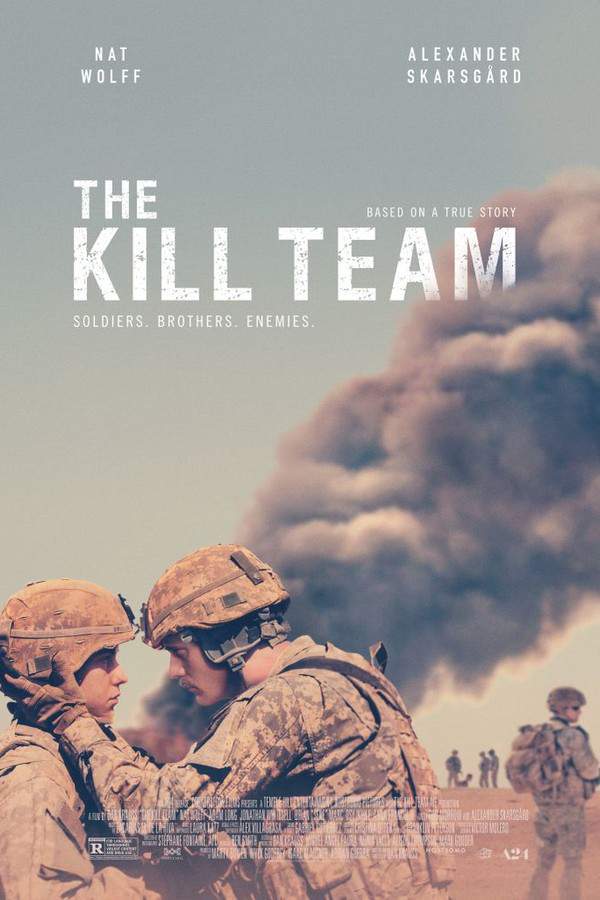
In 2009, Nat Wolff portrays Andrew Briggman, a young soldier serving with Bravo Company in the harsh environs of Afghanistan. The unit’s rhythm is disrupted when Staff Sergeant Deeks [Alexander Skarsgård] takes over as platoon leader after the death of Staff Sergeant Wallace in an IED attack during a village raid. Deeks makes a blunt vow to his men: they will track down and punish those responsible for the recent surge of American casualties, and Briggman becomes a crucial part of this mission by providing a dated and locational record of IED incidents.
From the outset, Briggman’s sense of right and wrong begins to clash with the orders and tactics of the new leadership. The platoon captures a wounded man suspected of planting an IED on a road, and Briggman refuses Deeks’ instruction to harm him, choosing instead to question the morality of violence and the costs of their mission. This moment plants seeds of doubt that will fester as the unit proceeds with a string of raids on civilian villages. Each raid intensifies the moral weight on Briggman, who is forced to weigh orders against his own sense of humanity.
During the very first raid, Briggman hears a gunshot and discovers a boy lying dead on the ground. The official account claims the boy tried to attack the soldiers with a grenade, but Briggman remains skeptical. He is moved to communicate with his father about what he witnessed, sending a message that hints at a growing disillusionment with the war’s toll. The emotional strain of what he perceives leads to tensions back at base, and the matter quickly becomes a matter of record when his father contacts the Criminal Investigation Division (CID) to question Deeks’ actions.
In the aftermath, Briggman is summoned to a tense briefing with his comrades, and Deeks accuses Marquez of reporting the death to CID. The conflict within the platoon surfaces through heated exchanges and the undercurrents of fear and professional obligation. Briggman’s father’s involvement escalates as the CID’s scrutiny becomes more pronounced, and a sense of inevitable conflict begins to pervade the unit’s atmosphere.
The second raid pushes Briggman further toward the edge. He witnesses Rayburn execute an unarmed man and plant an AK-47 on him, a chilling display that starkly contrasts with Briggman’s earlier beliefs about restraint and justice. Panicked, Briggman documents the incident for his father, who continues to press for accountability. Briggman’s attempt to inspect Deeks’ office for a cache of weapons is thwarted, and Deeks makes it clear that Briggman’s dissent will not be tolerated. The emotional pressure culminates in a moment of vulnerability as Briggman calls his father to describe the perilous position he finds himself in, breaking down as he explains the danger of their situation.
The third raid marks a devastating turn. The team captures an elderly civilian who remains silent, and Deeks orders Rayburn and Briggman to execute him, attempting to stage the scene as if the man had attacked with a grenade. Briggman, for the first time in his combat service, fires the fatal shot. The act drags the unit further into a moral morass, and the boys’ celebration back at base is tempered by Briggman’s trauma. His sense of guilt intensifies as Rayburn is summoned by CID for further questioning, and Briggman realizes that his own future may hinge on his ability to tell the truth.
Haunted by what he has done, Briggman contemplates a desperate end in Deeks’ office, unable to bear the weight of the actions he has witnessed and participated in. Yet the moment of reckoning is unavoidable. Briggman and Deeks are questioned by the CID, and Briggman, accompanied by his parents, is given the opportunity to speak openly about everything he knows and has experienced. The narrative leaves room for reflection on accountability, the costs of combat, and the long shadow cast by a single night of violence.
In the closing credits, the film grounds its dramatic arc in real events, revealing that in 2010 five U.S. Army soldiers were charged in connection with civilian killings. Specialist Adam Winfield (depicted as Briggman in the film) pleaded guilty to involuntary manslaughter and received a three-year sentence. He provided testimony against Staff Sergeant Gibbs (the film’s Deeks), who was sentenced to life imprisonment. The credits underscore the harsh truth at the center of the story: the line between duty and killing can blur in the heat of war, and the consequences reach far beyond the battlefield.
Through Briggman’s experience, the film examines how ordinary soldiers can become entangled in a web of orders, loyalties, and moral decisions under extreme stress. It portrays a journey from initial resolve to disillusionment, and finally to a painful confrontation with the consequences of violence. The performances, particularly in the moments of confrontation, offer a stark, unflinching look at how war can erode a soldier’s sense of right and wrong, leaving a lasting impact on individuals and families alike.
The Kill Team Timeline: Every Key Event in Order
11 key events in the order they happen, from “Wallace's death and Deeks assumes command” to “Aftermath: charges and real-world consequences”. 11 events name a place, across 11 locations.
- 1
Wallace's death and Deeks assumes command
In 2009, Staff Sergeant Deeks takes over Bravo Company’s platoon after Staff Sergeant Wallace is killed by an IED during a village raid. Deeks declares they will pursue those responsible for the deaths of 24 American soldiers, setting a relentless mission tone. Briggman provides Deeks with a dated list of IED attacks to help track the attackers.
When:2009 Where:Afghanistan
- 2
First raid and the wounded man
The platoon raids a civilian village and captures a wounded man suspected of planting an IED. Briggman refuses Deeks' order to hurt him, choosing to follow rules of engagement and protect the wounded man. The tension between duty and moral restraint marks Briggman’s early conflict.
When:2009 Where:village road, Afghanistan
- 3
The dead boy and Briggman's doubt
During the first raid, Briggman hears a gunshot and finds a boy dead on the ground. The platoon claims the boy attacked with a grenade, but Briggman remains skeptical and contacts his father with doubts. Back at base, he begins to document what they did and what happened.
When:2009 Where:village, Afghanistan
- 4
CID investigation sparked by Briggman's father
Briggman's father calls the CID to investigate potential murder by Deeks, triggering an internal inquiry. Briggman is summoned with the platoon to a tent, where growing tensions reveal Deeks's protective stance toward his men. The investigation will test loyalties and truth.
When:2009 Where:base tent, Afghanistan
- 5
Second raid and the unarmed man
In the second raid, Rayburn executes an unarmed man and plants an AK-47 on him to appear as the attacker. Briggman again texts his father detailing the horrors he witnesses. He also goes to Deeks's office to search for a bag of enemy weapons, but Deeks catches him.
When:2009 Where:village road / base, Afghanistan
- 6
Briggman's moral confrontation with Deeks
Deeks warns Briggman that villagers are 'co-operators' with jihadists and asserts control over the platoon’s actions. The exchange deepens Briggman’s moral crisis as he questions the murder’s necessity. He phones his father in tears, explaining how dangerous the situation has become.
When:2009 Where:Deeks's office / base, Afghanistan
- 7
Third raid and the killing of an elderly civilian
During the third raid, the team ambushes a silent elderly civilian. Deeks orders Rayburn and Briggman to execute him and to stage it as if he attacked with a grenade. Briggman fires the shot for the first time in combat, killing the man. The platoon celebrates, but Briggman is overwhelmed by guilt.
When:2009 Where:village ambush site, Afghanistan
- 8
Aftermath and looming CID questions
Back at base, the unit's supposed success is overshadowed by guilt as Rayburn is called in for CID questioning. Briggman realizes he might be next, and the weight of what they did begins to crush him. His mental state deteriorates as the investigation looms.
When:2009 Where:base, Afghanistan
- 9
Briggman contemplates suicide but hesitates
Feeling cornered and overwhelmed, Briggman contemplates suicide inside Deeks’ office, unable to see a way out of the cycle of violence. He ultimately refrains, recognizing the real consequences would extend beyond the battlefield. The moment captures the depth of his trauma.
When:2009 Where:Deeks's office, Afghanistan
- 10
CID interrogation of Briggman and Deeks
Briggman and Deeks are interrogated by the CID, with Briggman accompanied by his parents. He is asked to tell everything he knows, marking the start of legal scrutiny that could indict both soldiers. The conversation exposes the brutal reality of their actions and their possible consequences.
When:2009 Where:CID office, Afghanistan
- 11
Aftermath: charges and real-world consequences
The closing credits reveal real-world outcomes: in 2010 five soldiers were charged for civilian killings. Specialist Adam Winfield pleads guilty to involuntary manslaughter and testifies against Gibbs (the film’s Deeks), who receives a life sentence. The film connects battlefield actions to lasting legal repercussions.
When:2010 Where:court / military justice system
Who Are the Main Characters in The Kill Team?
7 characters, among them Andrew Briggman (Nat Wolff), Sergeant Deeks (Alexander Skarsgård) and Rayburn (Adam Long): who each one is and the part they play in the story. 5 of them link to the actor’s page.
- AB
Andrew Briggman (Nat Wolff)
An idealistic, morally conscious soldier whose loyalty to his unit clashes with his growing doubt about the orders he witnesses. He documents attacks and struggles with guilt after killing and witnessing civilians harmed. His internal conflict drives the film’s moral investigation.
- 🧭 Morality
- 😨 Guilt
- 🗣️ Communication
-

Sergeant Deeks (Alexander Skarsgård)
Played by Alexander Skarsgård
A seasoned platoon leader who replaces the fallen sergeant and pushes for aggressive raids. He views civilians as potential co-operators of the jihadists and often justifies lethal measures. His ruthlessness and charisma mask a volatile moral compass.
- 🔥 Leadership
- 💥 Violence
- 🧭 Authority
-

Rayburn (Adam Long)
Played by Adam Long
A fellow squad member who participates in harsh actions, including executing an unarmed man. He embodies the hardened, compliant side of the unit that enables the cycle of violence. His actions contrast with Briggman’s skepticism and fuel CID scrutiny.
- ⚔️ Brutality
- 🧭 Conformity
- 🔎 Questioning
-
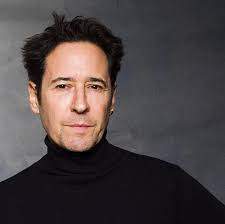
William Briggman (Rob Morrow)
Played by Rob Morrow
Briggman’s father, who becomes a conduit to CID, pressing for transparency and accountability. He represents an external moral anchor seeking truth amidst military cover-ups. His involvement highlights the strain of war on families back home.
- 👨👦 Family
- 🕵️ Accountability
- 🗣️ Advocacy
- LB
Laura Briggman (Anna Francolini)
Played by Anna Francolini
Briggman’s mother, a compassionate presence who anchors the family's emotional response. She supports the pursuit of truth through formal channels while coping with her son's experiences. Her perspective foregrounds civilian impact on families.
- 👩👧 Family
- 💬 Communication
- 😟 Anxiety
- W(
Weppler (Osy Ikhile)
Played by Osy Ikhile
A platoon member who shares in the raids and escalating violence. His presence underscores group dynamics and the ease with which soldiers slip into brutality. Weppler represents loyalty to the unit and the camaraderie that sustains it.
- 🪖 Soldier
- 🤝 Camaraderie
- 🗺️ Loyalty
- M
Marquez
A fellow soldier assaulted by Deeks and hospitalized after Briggman objects to the mistreatment. His treatment becomes a flashpoint for CID's investigation and Briggman's moral crisis.
- 💥 Assault
- 🧭 Loyalty
- ⚖️ Justice
Where and When Is The Kill Team Set?
The Kill Team is set in Afghanistan (2009). Here is why the time and place matter to the story.
When
2009
The story unfolds during the U.S. Army's 2009 deployment in Afghanistan. The environment is harsh and remote, shaping the soldiers' perceptions of danger and the stakes of their actions. The timeline follows a sequence of raids, investigations, and a looming CID inquiry.
Where
Afghanistan
Set in Afghanistan during 2009, the film follows Bravo Company as they conduct raids on remote villages. The scenery alternates between harsh deserts and mountainous terrain, with a tense, guarded base as the operations hub. The setting centers on counterinsurgency missions and the moral weight carried by soldiers on deployment.
- 🏜 Desert landscapes
- 🏚 Rural villages
- 🛡 Military presence
What Are the Themes of The Kill Team?
3 ideas the story keeps returning to, among them Morality, Trauma and Authority.
-
01
Morality
War forces difficult ethical choices. Briggman’s conscience clashes with Deeks’ brutal tactics as killings are rationalized, concealed, or questioned. The film probes whether the ends justify the means when civilians become collateral damage. It raises questions about accountability within a chain of command.
-
02
Trauma
The soldiers carry psychological scars from violence and guilt. Briggman’s growing disillusionment manifests as fear, shame, and heartbreak. Witnessing and participating in killings pushes him toward a breaking point. The narrative highlights the long-term emotional cost of combat.
-
03
Authority
The film scrutinizes military hierarchy and obedience under pressure. Deeks’ command style treats villagers as suspects, pressuring subordinates to follow orders. Questions of legitimacy and accountability arise as CID investigations unfold. The story shows how power can distort judgment in war.
What Kind of Film Is The Kill Team?
Tense in tone, with steady pacing and a straightforward story, going by the plot summary.
- Tone
- Tense
- Pacing
- Steady
- Story
- Straightforward
- Intensity
- High
- Ending
- Bittersweet
A relentlessly tense and morally harrowing war drama that traps the viewer in the protagonist's escalating paranoia and trauma as he is forced to participate in atrocities.
- tense
- paranoid
- morally conflicted
- grim
- claustrophobic
- anxious
- war crimes
- moral dilemma
- military ethics
- survival
Content notes: war violence, murder of civilians, suicide contemplation, psychological abuse, military brutality.
Quiz
How well do you remember The Kill Team? Test yourself on the story.