What Is Good Kill About?
The premise of Good Kill in 284 words, with nothing given away. The full story follows below.
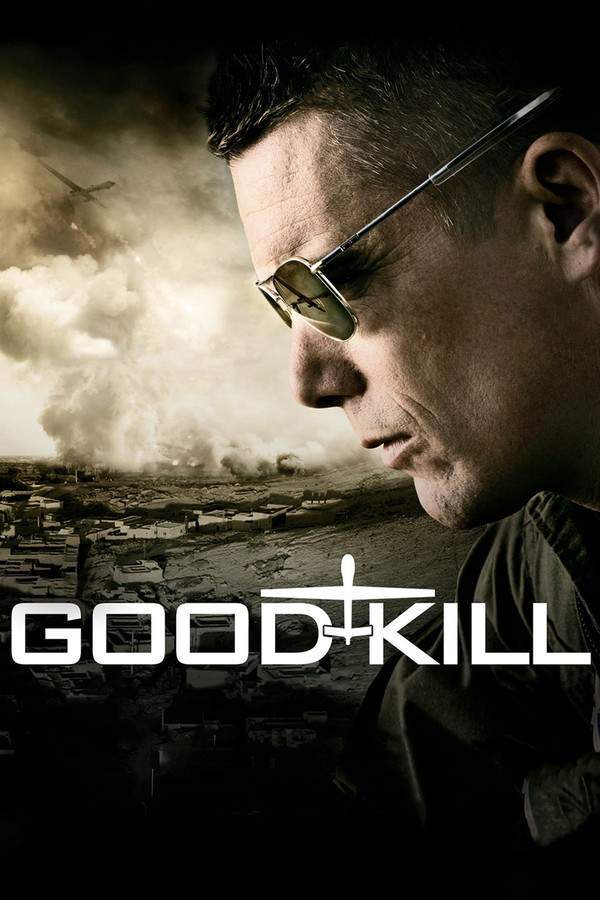
In a sleek, sun‑baked desert outpost just outside Las Vegas, the modern battlefield has been compressed into a bank of screens and a pair of joysticks. Here, the distant echo of jet engines has been replaced by the low hum of a drone’s rotors, and the line between combat and observation blurs beneath the glare of satellite feeds. The film watches this quiet haven of technology pulse with the quiet dread of wars fought from afar, where every click can shape a life thousands of miles away.
At the centre of this unsettling equilibrium sits Thomas Egan, a decorated Air Force veteran whose career once roared through the sky in an F‑16 before transitioning to the precise, detached world of MQ‑9 Reaper operations. His reputation for calm efficiency makes him a linchpin in a squadron that values both skill and restraint, yet the very controls that grant him distance also whisper doubts about the humanity behind each mission. At home, Jane—his wife—offers a sanctuary of ordinary suburban rhythm, a stark contrast to the sterile theater of drones that consumes his daylight hours. Their relationship teeters on the edge of the same tension that defines his work, hinting at an unspoken battle between duty and domestic peace.
The atmosphere is a study in muted colors and quiet anxieties, where the sleek interface of technology clashes with the raw, often invisible consequences of remote warfare. A careful blend of procedural cadence and psychological unease draws the viewer into a world where the protagonist must reconcile his mastery of the skies with the growing weight of ethical uncertainty. The film invites contemplation of how modern combat reshapes identity, responsibility, and the simple desire to return home unchanged.
What Happens in Good Kill?
The complete story of Good Kill, from the first scene to the last, in 623 words (about 3 minutes). Spoilers throughout. Names in the text link to 2 cast member pages.
Spoilers ahead
Major Thomas Egan, portrayed by Zoë Kravitz, is an experienced officer stationed at an Air Force Base near Las Vegas, where he has settled into a seemingly serene suburban life with his wife and their two children. Once an adept F-16 Falcon pilot, he now handles the precision and responsibility of flying MQ-9 Reaper drones, conducting armed sorties in foreign territories as part of the U.S. War on Terror. His commanding officer and the support staff hold him in high regard, appreciating his calm demeanor, honed piloting skills, and flexibility—traits that have rightfully earned him a reputation as one of the squadron’s most dependable and efficient pilots.
At first glance, Egan’s new role appears to be a low-pressure position. He is responsible for targeting unequivocal terrorist cells, vehicles, and facilities in Afghanistan during daylight hours, enabling him to achieve a satisfying work-life balance. His daily routine includes cherished family moments, while he spends his nights either sleeping or relishing quiet off-duty moments. However, as the frequency of his missions escalates—targeting enemies almost each day—Egan starts to experience the mounting strain of constant pressure. His wife, played by January Jones, begins to notice his changes, and he responds to the stress by turning to alcohol.
Despite the growing tension, Egan’s operational performance remains exemplary, leading to commendable ratings among his peers. Consequently, his commanding officer assigns him to more demanding missions, working closely with CIA controllers. These operations now extend beyond Afghanistan, reaching dangerous terrains like Yemen and Somalia—areas without a declared U.S. military presence. The moral ambiguity deepens as Egan receives orders that blur the lines: groups labeled as “terrorist cells” and public infrastructures described as “hiding places” for top terrorists, or factories associated with explosives manufacturing begin to surface as targets. Unfortunately, collateral damage becomes an all-too-common outcome. The order to strike civilian targets—women and children included—on several occasions is defended by the CIA on the grounds of them being used as human shields by terrorists.
As Egan grapples with these overwhelming circumstances, his reality begins to unravel, reflecting the catastrophic outcome of his growing addiction. Moments of near-disaster, including a tense experience with law enforcement for drunk driving, starkly illustrate the precariousness of his situation. Concerned about the impact of his actions on his family, he starts to isolate himself from home, frequently postponing commitments to shield his wife from the grave burden of his stress.
Ultimately, his attempts to evade the encroaching darkness lead him into a series of overwatch missions that deepen his inner conflict. A brief moment of calm gives way to heartbreak when he fails to protect U.S. troops from an improvised explosive device. The emotional toll of these harrowing events culminates in a furious outburst at home, pushing his wife to confront him about his job, which inevitably results in her departure.
In the wake of this personal catastrophe, Egan’s CIA controller callously instructs him to strike a group of civilians who are responding to an explosion resulting from one of his prior strikes. Choosing to reject this ethically reprehensible order, Egan ingeniously manipulates the UAV control system to allow them to escape harm, which costs him his role in attack missions, relegating him to surveillance tasks instead.
As he maneuvers through this new phase of his life, Egan becomes increasingly obsessed with a man who previously committed unspeakable acts against a woman. Seeing a chance for redemption, he devises a plan to send his support staff on a break and takes matters into his own hands using the surveillance UAV to eliminate the rapist. Fueled by this act of retribution, Egan abandons his established protocols and drives away from Las Vegas, with an unknown destination ahead but a revitalized sense of purpose igniting his journey.
Good Kill Timeline: Every Key Event in Order
13 key events in the order they happen, from “Major Egan's New Role” to “Departure from Las Vegas”. 3 events name a place, across 3 locations.
- 1
Major Egan's New Role
Major Thomas Egan begins his new assignment at an Air Force Base near Las Vegas, piloting MQ-9 Reaper drones. Initially perceived as low-pressure, this role allows him to balance family life with military duties while targeting terrorist cells in Afghanistan.
Where:Air Force Base near Las Vegas
- 2
Building Family Life
Egan embraces suburban life with his wife and two children, experiencing cherished family moments. His routine appears peaceful as he manages daytime missions and enjoys quiet nights off duty.
- 3
Escalating Missions
As Egan is assigned more sorties, the frequency of his missions increases, and the pressure starts to take a toll on him. His wife begins to notice the gradual changes in his demeanor, leading him to cope through alcohol.
- 4
Commendable Performance
Despite the mounting pressure, Egan's operational performance remains exemplary, earning high ratings among his peers. His commanding officer responds by assigning him to more demanding missions in complex war zones.
- 5
Missions Beyond Afghanistan
Egan's missions extend to Yemen and Somalia, where he navigates dangerous terrains with no official military presence. The blurred lines of operation heighten his moral dilemmas as civilians, including women and children, become targets.
Where:Yemen and Somalia
- 6
Collateral Damage
Egan encounters the grim outcome of collateral damage as orders come to strike civilian locations. The rationale presented by the CIA—that these civilians are human shields—does little to alleviate the growing burden on his conscience.
- 7
Strain on Personal Life
Egan begins isolating himself from his family and postpones commitments as he fights to shield them from his escalating stress. His addiction worsens, culminating in a near-disaster incident with law enforcement due to drunk driving.
- 8
Heartbreaking Missions
Facing the emotional fallout of his increasingly harrowing missions, Egan experiences profound regret after failing to protect U.S. troops from an attack. This moment serves as a catalyst for a violent outburst at home, straining his relationship with his wife.
- 9
Confrontation with his Wife
In a climactic moment, Egan's wife confronts him about the toll his job is taking on their family. This confrontation leads to her decision to leave, further fracturing Egan's already fragile state of mind.
- 10
Rejecting Orders
Egan faces an ethically perilous command from his CIA controller to strike civilians responding to a previous explosion. In a moment of moral clarity, he creatively uses the UAV control system to prevent the attack, costing him his position in active missions.
Show the other 3 events of Good Kill Hide the last 3 events
- 11
New Phase of Life
Relegated to surveillance duties, Egan grapples with his altered role while becoming increasingly fixated on a man involved in a heinous crime. He finds a new focus in his desperation for redemption.
- 12
Plan for Retribution
Egan devises a plan to take justice into his own hands as he prepares to eliminate the rapist he has become obsessed with. He manipulates his support staff's schedule, creating an opportunity to execute his plan.
- 13
Departure from Las Vegas
Fueled by the pursuit of retribution, Egan abandons his established life in Las Vegas. With an unknown destination ahead, he finds a renewed sense of purpose driving him forward.
Where:Las Vegas
Who Are the Main Characters in Good Kill?
2 characters, among them Major Thomas Egan and Egan's Wife: who each one is and the part they play in the story. Every profile links to the actor’s page.
-

Major Thomas Egan
Played by Zoë Kravitz
Major Thomas Egan is a dedicated and skilled pilot turned drone operator, struggling under the weight of moral conflict and personal turmoil. Initially presented as calm and collected, his character slowly reveals deep inner strife as he faces the consequences of his military actions. His journey captures the psychological effects of war and the desperate search for redemption.
- ✈️ Pilot
- 🎖️ Soldier
- 🍷 Addict
-

Egan's Wife
Played by January Jones
Egan's wife represents the emotional anchor in his life, initially supportive but increasingly troubled by her husband's transformation. Her observations of Egan's declining mental health showcase the strain that military life and trauma can put on familial relationships. Her eventual confrontation with Egan underscores the critical need for communication and honesty in their relationship.
- 👩👧👦 Supportive
- 😟 Strained
- 💔 Concerned
Where and When Is Good Kill Set?
Good Kill is set in Las Vegas, Afghanistan, Yemen and Somalia. Here is why the place matters to the story.
When
The events unfold in a contemporary setting, reflecting the ongoing nature of the U.S. War on Terror. Major Egan's challenges mirror real-world military operations and the psychological toll they impose on soldiers, especially as modern warfare increasingly relies on drone technology. This period illustrates the complexity of modern combat, where the lines between good and evil become blurred.
Where
Las Vegas, Afghanistan, Yemen, Somalia
The movie primarily takes place at an Air Force Base near Las Vegas, Nevada, known for its vibrant nightlife and entertainment, which starkly contrasts with the military operations conducted by Major Egan. The missions extend into foreign territories such as Afghanistan, Yemen, and Somalia, locations infamous for their ongoing conflicts and complex geopolitical landscapes. These places play a pivotal role in the narrative, highlighting the personal and moral dilemmas faced by Egan as he navigates his responsibilities.
- 🏙️ Las Vegas
- 🌍 Foreign terrains
- 🎖️ Military Base
What Are the Themes of Good Kill?
3 ideas the story keeps returning to, among them Moral Ambiguity, Family Strain and Redemption.
-
01
Moral Ambiguity
The film explores the theme of moral ambiguity, particularly in the context of warfare. Major Egan grapples with the ethical implications of his actions, especially when innocent lives are lost due to the nature of drone strikes. This theme prompts viewers to question the justifications behind military decisions and the personal toll taken on those who execute them.
-
02
Family Strain
Egan's career strains his family life, as his wife becomes increasingly aware of the changes in his demeanor. The film poignantly illustrates the impact of a soldier's mental health on family dynamics, ultimately culminating in the breakdown of Egan's marriage. This theme highlights the emotional fallout that extends beyond the battlefield.
-
03
Redemption
The pursuit of redemption is a driving force for Major Egan, especially after his personal and professional worlds begin to collide. His final act of defying orders to protect civilians reflects a desire to atone for past mistakes. This theme encapsulates the struggle for personal integrity amidst the chaos of war.
What Kind of Film Is Good Kill?
Dark in tone, with steady pacing and a straightforward story, going by the plot summary.
- Tone
- Dark
- Pacing
- Steady
- Story
- Straightforward
- Intensity
- High
- Ending
- Ambiguous
A tense and morally oppressive drama that chronicles the psychological unraveling of a drone pilot, creating a sense of detached anxiety and heavy ethical conflict.
- anxious
- isolated
- oppressive
- morally conflicted
- bleak
- detached
- drone warfare
- moral dilemma
- psychological stress
- addiction
Content notes: war violence, collateral damage, civilian casualties, alcoholism, psychological trauma, sexual assault (reference).
Quiz
How well do you remember Good Kill? Test yourself on the story.