What Is Rumours About?
The premise of Rumours in 319 words, with nothing given away. The full story and the ending follow below.
In the secluded corridors of a grand German hotel, the world’s most powerful democracies converge for the annual G7 summit. Their official purpose is deceptively simple: draft a unified statement that addresses an ominous global crisis that looms over every headline. The setting feels both ordinary and thoroughly unsettling, a polished diplomatic arena that suddenly feels like the last stage before an unknown curtain falls.
Canadian Prime Minister arrives with a mix of earnest resolve and personal frustration, while British Prime Minister carries a cool, guarded demeanor that hints at unresolved tensions. Across the table, German Chancellor offers a pragmatic calm, and French Prime Minister adds a flair of theatrical urgency. Adding to the mix, the President of the European Commission, speaking in a surprising Swedish‑tinged cadence, brings an enigmatic perspective that none of the others seem to grasp. Their interactions flicker between sharp political banter, awkward intimacy, and the weight of histories that have intertwined long before this summit.
As the evening descends, the atmosphere begins to shift. The polished conference rooms give way to an uncanny ambience: fog rolls through the gardens, ordinary objects take on a strange significance, and the very air seems to pulse with an unspoken dread. The leaders find themselves navigating a surreal landscape where the protocols of statecraft clash with bizarre, almost mythic elements that threaten to upend their carefully rehearsed narratives. Their attempts at collaboration become a delicate dance, balancing diplomatic posturing with an undercurrent of absurdity that borders on the horrific.
Against this backdrop, the summit’s central task—the crafting of a statement that might either soothe or amplify the looming crisis—takes on a weight far beyond policy. The juxtaposition of comedy, impending apocalypse, and raw human melodrama turns the gathering into a microcosm of a world teetering on the edge, leaving the audience to wonder how far the leaders can stretch their rhetoric before reality itself refuses to be contained.
What Happens in Rumours?
The complete story of Rumours, from the first scene to the last, in 502 words (about 2 minutes). Spoilers throughout.
Spoilers ahead
In a sleek German hotel that hosts the G7, world leaders gather to draft a public statement about an unnamed crisis, their urgency tempered by a surprising reluctance to treat the situation with gravity. The mood feels curated and detached, as if the spectacle of high-stakes diplomacy is more comfortable than the actual stakes at hand. Within this tense backdrop, a personal tension threads through the room: the Canadian Prime Minister grows irritated when the British Prime Minister refuses to revisit a past affair, and the strain leads to a private, forbidden encounter in the forest outside the hotel with the German Chancellor, a moment that hints at fault lines beneath formal diplomacy.
As dusk settles, the French Prime Minister returns to the outdoor gazebo where the group had worked and dined, only to reveal a startling discovery: reanimated bog bodies that had been excavated earlier in the day. Even more unsettling is the realization that the rest of the people have mysteriously vanished, leaving behind an eerie silence and a missing server network that seemed to power the world they know. The group ventures into the woods to search for clues, but they quickly become disoriented, swallowed by thick fog that seems to erase familiar landmarks.
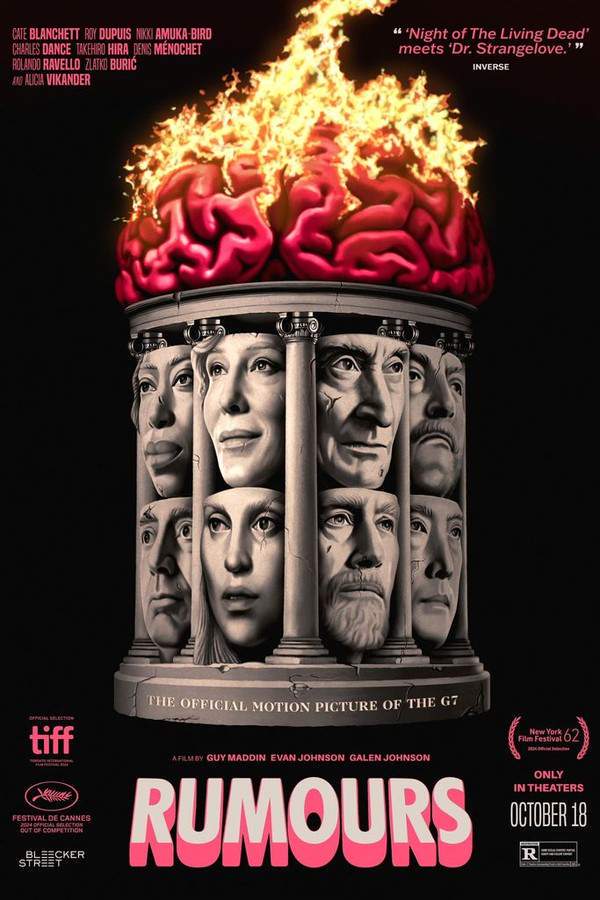
In the heart of this misty labyrinth, they come across a gigantesque, brain-like presence—an image so surreal it unsettles their grasp on reality. The Swedish-speaking President of the European Commission insists that this phenomenon could be a game-changer for global affairs, even as the rest struggle to come to terms with what they are seeing. In a moment of despair, she acts on a belief that the moment could redefine everything, setting herself and the otherworldly brain on fire in a dramatic, confounding act of protest and protest against a system they can no longer trust.
Desperate for a way back, they attempt to reach the emergency line, only to encounter an artificial intelligence that appears designed to trap child predators—a chilling reminder of the modern world’s dark corners. Rather than getting help, they engage with it, hoping to coax a route back to safety while the clock ticks on their dwindling options. The encounter with the AI’s operator offers little illumination, and he chooses to end his own life before any meaningful information can be extracted, leaving the group with more questions and no clear path home.
Back on the balcony, the Canadian Prime Minister delivers a grand, sweeping statement to an audience of the bog bodies below, a speech heavy with pomp and hollow rhetoric, while the world around them burns in the background. What unfolds is a meditation on leadership under pressure, where diplomacy, spectacle, and human fragility collide in a spectacle that feels almost operatic in its scale. The film invites viewers to watch how institutions attempt to control chaos when the foundations they rely on—communication, technology, and consensus—appear fragile, leaving a haunting impression of power, emptiness, and the limits of human agency in the face of a mysterious, changing world.
Rumours Timeline: Every Key Event in Order
12 key events in the order they happen, from “G7 crisis statement planning at the German hotel” to “Final tableau: crisis without resolution”. 12 events name a place, across 11 locations.
- 1
G7 crisis statement planning at the German hotel
World leaders gather at a German hotel to draft a statement about an unspecified crisis. The mood is brisk but unserious, as if the gravity of the situation were a formality rather than a real threat. The Canadian Prime Minister watches the room with growing irritation as tensions and political games unfold.
When:Day 1, morning Where:German hotel
- 2
Canadian PM's grievance and a secret tryst
The Canadian Prime Minister is furious that the British Prime Minister won't rekindle a past affair, and this personal grievance spills into the political sphere. Seeking solace, he falls into a clandestine tryst with the German Chancellor in the woods near the hotel. The incident underscores how private interests bleed into official proceedings.
When:Day 1, late morning Where:Hotel grounds and nearby woods
- 3
Sunset: bog bodies and vanished crowds
After sunset, the French Prime Minister returns to the outdoor gazebo where the talks had continued, and reports the discovery of reanimated bog bodies excavated earlier that day. They also notice that the servers are missing and that all other people have vanished. A creeping realization spreads that something unprecedented has upended their world.
When:Evening (after sunset) Where:Outdoor gazebo
- 4
Desperate trek into the foggy woods
They venture into the surrounding woods to find anyone alive, but are soon swallowed by thick fog and disorienting terrain. The silence is unnerving and the landscape feels alien as they push forward in search of answers. The sense of isolation deepens with every step.
When:Night Where:Woods near the hotel
- 5
Giant brain encounter and a language barrier
Within the fog they encounter a colossal brain-like phenomenon, whose meaning is unclear to the group. The Swedish-speaking President of the European Commission insists it could be a game-changing revelation for the world, even as others struggle to understand her due to the language barrier. The moment blends science-fiction imagery with political anxiety.
When:Night Where:Woods
- 6
Despair leads to self-immolation
In her despair that no one grasps the gravity of the crisis, the EC President sets herself and the brain on fire. The act is an extreme, symbolic gesture that highlights the characters' sense of futility. It marks a turning point that intensifies the group's urgency to find help.
When:Night Where:Woods
- 7
Emergency line attempt and AI trap
They attempt to reach an emergency line for help, only to be connected to an artificial intelligence designed to trap predators. The group plays along, hoping to coax any useful information or route back to safety. The experience underscores the absurdity and danger of relying on machines in a crisis.
When:Night Where:Emergency contact point
- 8
AI operator's suicide prevents answers
They locate the person operating the AI, but he kills himself before providing any meaningful information. The revelation compounds the feeling that practical answers may be forever out of reach. The moment underscores the fragility of authority in a collapsing situation.
When:Night Where:AI facility near hotel
- 9
Balcony address: a grandiose but hollow statement
Returning to the hotel, the Canadian Prime Minister steps onto the balcony and reads a grandiose, empty statement to an audience of bog bodies. The performance reveals the emptiness of official rhetoric in the face of real catastrophe. The crowd of bog bodies remains the only audience.
When:Late night Where:Hotel balcony
- 10
The world erupts into flames
As the address concludes, flames erupt around the setting and the world visibly spirals toward catastrophe. The bog bodies observe as civilization burns, underscoring the collapse of any meaningful plan. The crisis shifts from political theater to an outright existential disaster.
When:Late night Where:Outside the hotel
- 11
Search for meaning in the ruins
With most people gone and the setting in chaos, the survivors confront a fractured reality where normal societal structures have vanished. The bog bodies remain a silent audience to the collapse, serving as a grim counterpoint to human concerns. The atmosphere is haunted by the absence of a coherent response to the crisis.
When:Dawn Where:Ruinous hotel complex
- 12
Final tableau: crisis without resolution
The scene settles into a haunting stasis as the world burns around them and no clear explanation emerges. The survivors, surrounded by bog bodies, face an unresolved, surreal future. The film closes on a note of ambiguity and dread rather than closure.
When:Dawn Where:Hotel courtyard
Who Are the Main Characters in Rumours?
6 characters, among them Hilda Orlmann (Cate Blanchett), Edison Wolcott (Charles Dance) and Celestine Sproul (Alicia Vikander): who each one is and the part they play in the story. Every profile links to the actor’s page.
-

Hilda Orlmann (Cate Blanchett)
Played by Cate Blanchett
As the Swedish-speaking President of the European Commission, she embodies a forceful, policy-driven stance. Her urgency for sweeping, dramatic solutions reveals a desire to reshape global affairs, even as she becomes increasingly isolated by her rhetoric. In moments of despair she pushes toward radical actions, culminating in a merging of self-destruction with the unfolding crisis. Her arc dramatizes the collapse of rational leadership under pressure.
- 🧭 Leadership
- 🧠 Policy
- 😟 Desperation
- 🔥 Resolve
-
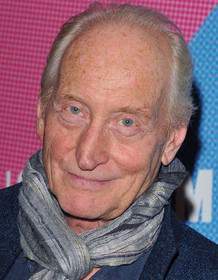
Edison Wolcott (Charles Dance)
Played by Charles Dance
A seasoned world leader whose pragmatism belies a willingness to bend rules for perceived stability. He is drawn into personal entanglements that threaten diplomatic decorum, illustrating how private desires can interfere with public duty. His trajectory shows the fragility of alliances when moral compromises steal focus from the crisis at hand. The woods tryst and political maneuvering expose the thin line between statesmanship and personal indulgence.
- 🧭 Strategy
- 🕊️ Diplomacy
- 😬 Moral compromise
- 🌫️ Secrecy
-

Celestine Sproul (Alicia Vikander)
Played by Alicia Vikander
A key delegate whose rational, analytical mind seeks to restore order amid chaos. She critically assesses performative diplomacy and pushes for concrete action, often clashing with more theatrical counterparts. Her measured approach provides a counterweight to impulsive decisions, though she too is drawn into the disintegration of the summit. She remains a patient observer of the unfolding collapse, trying to salvage meaning from the chaos.
- 🧠 Analysis
- 🕵️ Insight
- 😕 Disillusionment
- 🔎 Scrutiny
-
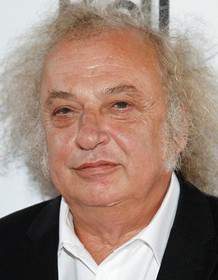
Jonas Glob (Zlatko Buric)
Played by Zlatko Buric
A veteran figure within the delegation whose wary, enigmatic presence hints at hidden motives. He navigates the shifting alliances with a calm, calculating demeanor, often playing a quiet hand behind the scenes. His actions reflect the old-world political games that resurface during moments of crisis. He remains a constraint and a potential lever in the evolving dynamics.
- 🗝️ Caution
- 🧩 Strategy
- 🕶️ Mystery
- 💼 Diplomacy
-

Tatsuro Iwasaki (Takehiro Hira)
Played by Takehiro Hira
An envoy whose cross-cultural perspective underscores the multinational nature of the crisis. He is methodical and pragmatic, contributing to negotiations while sensing the diplomats' growing fatigue. His demeanor suggests restraint in the face of escalating existential questions. He embodies the globalized aspect of the summit, where diverse interests collide under pressure.
- 🌐 Multinational
- 🤝 Mediation
- 🧊 Composure
- 🔒 Privacy
- A(
Anthropologist (Ralph Berkin)
Played by Ralph Berkin
A scholar who interprets the bog bodies and archaeological remnants as a lens on contemporary behavior. He offers rational context to the surreal events, grounding the group in scientific observation. His presence serves as a reminder of humanity's long arc and the permanence of cultural memory even as the present unravels. He acts as a voice of reason amid the panic and spectacle.
- 🧬 Analysis
- 📜 Context
- 🧠 Rationality
- 🕰️ History
Where and When Is Rumours Set?
Rumours is set in German hotel, surrounding woods and outdoor gazebo (Present day). Here is why the time and place matter to the story.
When
Present day
The events occur in contemporary times during a high-stakes G7 gathering, reflecting current political tensions and media scrutiny. Modern technology—emergency lines and AI interfaces—plays a direct role in the narrative, highlighting how contemporary governance relies on digital systems. The atmosphere is urgent and precarious, with global crises treated as high-stakes spectacles. The time frame emphasizes immediate, real-world concerns rather than historical events.
Where
German hotel, surrounding woods, outdoor gazebo
The action largely unfolds at a G7 summit hosted in a German hotel, with the hotel’s dining rooms and outdoor spaces forming the core of diplomatic activity. As night falls, the group wanders into a foggy forest and a formal gazebo area becomes a backdrop for unraveling alliances. The discovery of reanimated bog bodies earlier adds a macabre mood to the setting, while the encroaching fire hints at an impending catastrophe. The juxtaposition of polished interiors and a menacing natural environment underscores the collapse of stable leadership.
- 🏨 Hotel setting
- 🌲 Forest
- 🏛️ Political drama
- 🔥 Catastrophe
What Are the Themes of Rumours?
3 ideas the story keeps returning to, among them Power & Folly, Nature's Echo and Tech & Control.
-
01
Power & Folly
Leaders treat the crisis as a stage for showmanship rather than substantive policy. Grandiose declarations and diplomatic posturing overshadow practical action. The focus on optics over outcomes reveals how political theater can erode trust and effective decision-making. The resulting fragility of leadership pushes the group toward a dangerous, self-destructive path.
-
02
Nature's Echo
The natural world intrudes on human affairs through fog-shrouded woods and the unsettling bog bodies, suggesting that ancient forces outlast contemporary politics. The forest and bogs function as a silent counterweight to the hotel’s prestige and diplomatic rhetoric. This natural backdrop serves as a reminder of mortality and the limits of human control. Nature acts as an impartial observer, reasserting its own authority over the proceedings.
-
03
Tech & Control
Technology manifests as both a tool and a trap, with an AI system and an emergency line shaping the leaders' attempts to respond. The systems intended to aid communication reveal governance vulnerabilities and opaque manipulation. The reliance on machines exposes the fragility of modern authority when faced with unknown, uncontrollable events. The crisis foregrounds the tension between human judgment and algorithmic guidance.
How Does Rumours End?
The last act of Rumours and what it means, in 303 words. The ending lands as bleak. Big spoilers: read the plot summary first if you have not seen it.
The final act, in full
The ending of Rumours leaves us with a powerful sense of futility about the political systems and leaders it satirizes. Throughout the film, the world’s most powerful leaders are depicted as ineffective, self-absorbed, and disconnected from real issues—more concerned with personal affairs and superficial showmanship. Their failure to address the global crisis culminates in a chaotic escape into the woods, where their inability to lead becomes even more apparent. As they wander lost and powerless, the symbolic presence of the Bog Bodies—mummified corpses representing failed leadership and broken promises—serves as a reminder of humanity’s historical tendency to ignore what truly matters. The Bog Bodies do not harm the leaders; instead, they seem to stand as silent witnesses, possibly mocking or reflecting the leaders’ flaws.
In the final scenes, the leaders craft a joint statement that is entirely superficial, full of empty promises, and disconnected from any real solution or action. Laplace, the Canadian Prime Minister, passionately reads this out loud to a gathering of other leaders and the assembled Bog Bodies, who remain indifferent and continue to indulge in their own pleasures. This image emphasizes that those in power—regardless of their efforts—are ultimately ineffective and insignificant in the face of global crises. The film’s surreal ending, with the Bog Bodies climaxing as they listen to the speech, underscores the idea that true power and intelligence lie not with the leaders but with the passive, supernatural witnesses to their failure. In the end, Rumours suggests that the so-called leaders are mere puppets or fools, unable to change or resolve the problems they are supposed to manage, leaving the world doomed to overlook the truth that real governance and meaningful action are absent. The chaotic, absurd finale invites viewers to reflect on the emptiness of political spectacle and the cyclical nature of incompetence and neglect.
What Kind of Film Is Rumours?
Dark in tone, with fast pacing and a moderate story, going by the plot summary.
- Tone
- Dark
- Pacing
- Fast
- Story
- Moderate
- Intensity
- High
- Ending
- Bleak
A fast-paced, darkly absurd satire that plunges world leaders into an inexplicable apocalyptic scenario, creating a surreal and dread-filled atmosphere of political incompetence and cosmic horror.
- surreal
- satirical
- anxious
- absurd
- oppressive
- bizarre
- political satire
- apocalyptic crisis
- leadership failure
- existential horror
Content notes: suicide, corpse, apocalyptic themes.
Quiz
How well do you remember Rumours? Test yourself on the story.