What Is Humane About?
The premise of Humane in 281 words, with nothing given away. The full story and the ending follow below.
In a near‑future where the planet teeters on the brink of ecological collapse, governments have turned to draconian measures, treating the very act of living as a matter of public policy. A new bureaucracy, the Department of Citizen Strategy, oversees a controversial program that frames voluntary and coerced euthanasia as a solution to overpopulation. The world feels both claustrophobic and oddly sterile, a society that whispers promises of order while humming with the undercurrent of dread that comes from being counted—and possibly discarded—by the state.
Against this backdrop, the film gathers a fractured family for a seemingly ordinary dinner. Charles York, a once‑respectable patriarch, and his high‑profile second wife, Dawn Kim, a celebrated chef, bring together their four adult children: Jared York, an outspoken anthropologist; Rachel York, a pharmaceutical executive with a reputation for pushing boundaries; Ashley York, an actress struggling to find relevance; and Noah York, a recovering addict whose edges are still raw. Their teenage granddaughter, Mia, watches the adult world collide, while the ever‑present eyes of the agency are embodied by Bob, a steady, unsettling representative. The gathering is a microcosm of the larger crisis, each sibling embodying a different response to a world demanding sacrifice.
The tone is unsettlingly intimate, blending the pressure of a high‑stakes political reality with the claustrophobia of a family forced to confront its own secrets. Conversations ripple with the weight of moral ambiguity, and the dinner table becomes a stage where loyalty, guilt, and survival instinct clash. As the clock ticks, the characters must navigate the thin line between personal agency and state‑mandated destiny, hinting at the profound costs of a society that decides who gets to live and who does not.
What Happens in Humane?
The complete story of Humane, from the first scene to the last, in 835 words (about 4 minutes). Spoilers throughout. Names in the text link to 7 cast member pages.
Spoilers ahead
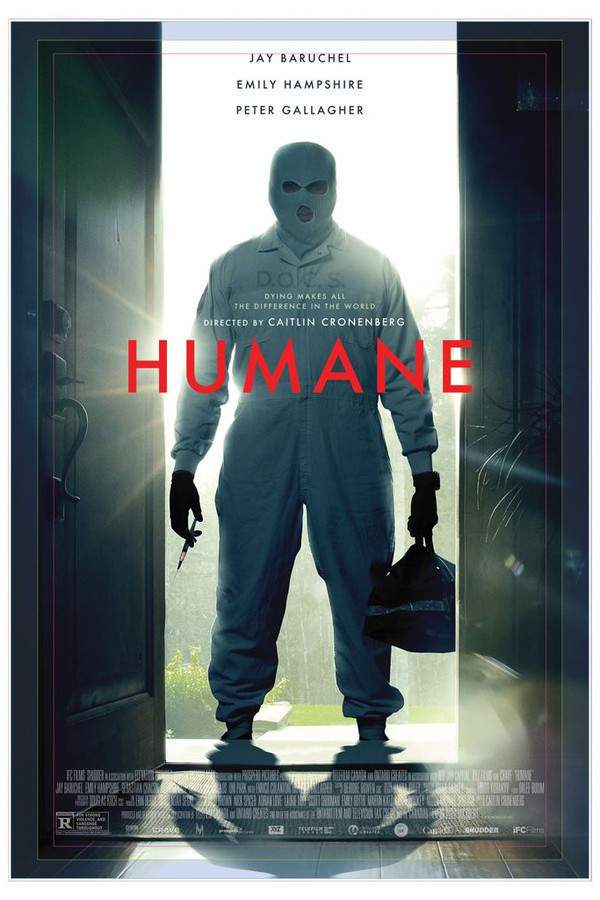
Charles York, Peter Gallagher summons his four adult children to a tense dinner at his home, where his second wife, celebrity chef Dawn Kim Uni Park, also sits under the same roof. The assembled family includes Jared York, an outspoken anthropologist Jay Baruchel; Rachel York, a controversial pharmaceutical CEO Emily Hampshire; Ashley York, a struggling actress Dani Kind; Noah York, a recovering addict with a volatile edge Sebastian Chacon; and Rachel’s young daughter Mia Sirena Gulamgaus. What begins as a dinner meant to bridge generations quickly spirals into a confrontation about a society-wide crisis: an environmental collapse that has driven governments to embrace voluntary and coerced euthanasia as a population-control measure.
Charles reveals a decision that shocks everyone: he and Dawn have secretly joined the Department of Citizen Strategy, or D.O.C.S., and have chosen euthanasia as their path. Dawn, unsettled by the revelation, slips away from the table and leaves the house, attempting to retreat from the pact she once made. The moment Dawn exits, Bob, a representative of the D.O.C.S., arrives with armed agents, turning the dinner into a high-stakes standoff. The siblings learn that Charles had scheduled his own euthanasia for that same night, with all of them present, which intensifies the moral and personal stakes hanging over the room.
With Dawn now missing, Charles tries to buy time by rescheduling, but Bob slides across documents that could freeze the family’s assets and publicly brand Charles a traitor. Faced with financial ruin and the collapse of their public image, the Yorks are pressed to decide who among them will die. The strain exposes old resentments and new loyalties, and the family’s fragile unity begins to crumble under the weight of fear, guilt, and the looming shadow of the state’s power.
As the clock ticks down, the dynamics among the siblings grow more combustible. Jared suggests that Noah should be the one to die, citing Noah’s adoption and his perceived failings—despite Noah’s attempts to defend himself and his place within the family. Tensions erupt into violence, and a brutal struggle unfolds as Noah fights to protect himself from his siblings’ blows. The room becomes a battlefield, and the four Yorks ultimately restrain him, pushing the situation toward a breaking point.
Noah’s girlfriend Grace Dawson [Blessing Adedijo] arrives after receiving a text, bringing a wave of panic with her presence. Her arrival triggers a chaotic disturbance that ends in tragedy when a D.O.C.S. agent shoots her dead. The blow lands heavy on Noah, who breaks free and resumes his ferocious defense of himself, unleashing a torrent of physical retaliation against those around him. In response to the escalating danger, Rachel volunteers to be euthanized, a choice that compounds the moral calculus already tearing the family apart. Jared, who has his own controversial past—abandoning his first wife and his son Lucas—argues he should be the one to sacrifice himself, highlighting the personal costs of parental and familial obligation.
In a dramatic turn, Noah redirects the urgency of the moment by proposing that they kill Bob instead. The siblings engineer a plan to lure Bob and the D.O.C.S. agents into the house, where they manage to disarm them and take the intruders hostage. The raid comes at a grim cost: Ashley dies from the injuries sustained during the struggle with Noah. The Yorks then euthanize the agent who shot Grace, a grim act that underscores the depth of the conflict and the severing of moral boundaries in a world where life is regulated by the state’s decree.
Bob eventually admits that Dawn has been taken into custody and is being held at D.O.C.S. headquarters, a revelation that adds another layer of danger and uncertainty to the already precarious situation. He continues to bargain and threaten, even as Noah prepares to inject him with the euthanasia drug. The scene cuts away to black, leaving the outcome unresolved and the family’s fate shrouded in ambiguity.
Later, in a sequence that feels almost surreal, Jared, Rachel, Mia, Dawn, and Jared’s son Lucas attend a piano concert performed by Noah, a once-promising virtuoso whose career has been derailed by the family’s ordeal. The image of Noah at the keyboard serves as a stark contrast to the violence and fear that defined the night. A bruised and beleaguered Bob reappears in a television commercial, offering a chilling glimpse of how the government’s propaganda machine reframes the episode, suggesting that Ashley and Grace chose to enlist in voluntary euthanasia.
What unfolds is a meditation on loyalty, guilt, and the price of choosing life under a regime that treats existence as a public policy problem. The York family’s dinner, once a routine gathering, becomes a crucible where each member confronts their past, their biases, and the limits of their own humanity. As the story closes, it hints at a society in which individual choices are overshadowed by the state’s compelling narrative, leaving viewers to ponder what it means to belong to a family when the system itself has already decided who deserves to live.
Humane Timeline: Every Key Event in Order
12 key events in the order they happen, from “Family summoned to dinner” to “Climax: capture, casualties, and a future propoganda hint”. 12 events name a place, across 2 locations.
- 1
Family summoned to dinner
Amid escalating environmental crisis, Charles York calls his four adult children to dinner at his home, where his second wife Dawn is present. The gathering quickly grows tense as old grievances surface. The stage is set for a confrontation over loyalty, control, and a looming euthanasia program.
When:Evening Where:York home
- 2
Charles reveals euthanasia plan
Charles discloses that he and Dawn have willingly joined the Department of Citizen Strategy's euthanasia program. The revelation shocks the siblings and fractures the family dynamic. The dinner conversation tightens into a bitter debate about loyalty and mortality.
When:During dinner Where:York home
- 3
Dawn flees the house
Dawn sneaks out of the house, changing her mind about the plan. Her sudden departure leaves the family divided and anxious, intensifying the already volatile situation. The night shifts from argument to a tense search within the home.
When:Shortly after the announcement Where:York home
- 4
Bob and armed D.O.C.S. agents arrive
Bob arrives with armed D.O.C.S. agents, turning the dinner into a high-stakes standoff. The family watches fear and anger ripple through the room as the government enforces its authority. The atmosphere becomes ominously controlled and dangerous.
When:Moments after Dawn's departure Where:York home
- 5
Euthanasia scheduled for that evening
The family learns that Charles has scheduled his euthanasia for the same evening, with everyone present. Dawn's absence magnifies feelings of betrayal and anxiety. The clock ticks toward an irreversible decision.
When:That evening Where:York home
- 6
Charles reschedules; cancellation threats
Charles attempts to reschedule the ceremony, but Bob presents cancellation documents that would freeze the family's assets and publicly brand him a traitor. The threat forces a grim, pressured choice under the watchful eyes of the agents. The family debates whether to proceed or resist the orders.
When:That moment Where:York home
- 7
Charles dies; second body demanded
Charles's euthanasia is carried out, and his death shocks everyone. Bob informs the family that a second body must be collected as promised, with Mia exempt from euthanasia because she is a minor. The family faces a brutal ultimatum under government supervision.
When:Soon after euthanasia Where:York home
- 8
Two-hour window to decide who dies
With Mia protected, the four Yorks face a two-hour deadline to decide which one of them will die. Guilt, fear, and accusations run high as the family weighs who should bear the burden. The atmosphere grows increasingly desperate and volatile.
When:Two hours later Where:York home
- 9
Jared suggests Noah should die
Jared proposes Noah as the victim, citing Noah's adoption and perceived drain on the family. The suggestion deepens rifts among the siblings and hardens the brutal logic of the choice. Noah senses the danger and braces for confrontation.
When:During deliberations Where:York home
- 10
Grace arrives; a shot rings out
Noah's girlfriend Grace arrives, triggering panic and a chaotic disturbance. A D.O.C.S. agent shoots Grace dead, amplifying the sense that violence may spill beyond the four walls. Noah fights to shield himself and his family as the situation spirals.
When:During the confrontation Where:York home
- 11
Noah rejects the cycle; plan against Bob
Noah breaks free and continues to struggle with his siblings; Rachel volunteers to be euthanized to protect others. Noah then suggests a radical reversal: killing Bob instead of one of their own. The family teeters on the brink as plans shift from self-sacrifice to targeted rebellion.
When:Continuing confrontation Where:York home
- 12
Climax: capture, casualties, and a future propoganda hint
The siblings lure Bob and the D.O.C.S. agents into the house, disarming them and taking them hostage. Ashley dies of injuries sustained during the struggle, and the group euthanizes the agent who shot Grace. Dawn is revealed to be in D.O.C.S. custody, leaving the family fractured and uncertain about future loyalties. Some time later, Noah performs a piano concert, while Bob appears in a government propaganda spot claiming Ashley and Grace volunteered for euthanasia.
When:After the confrontation Where:York home / concert venue overlay
Who Are the Main Characters in Humane?
9 characters, among them Charles York (Peter Gallagher), Dawn Kim (Uni Park) and Jared York (Jay Baruchel): who each one is and the part they play in the story. Every profile links to the actor’s page.
-
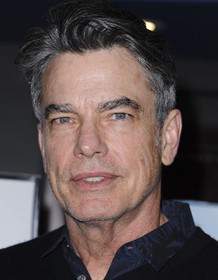
Charles York (Peter Gallagher)
Played by Peter Gallagher
The patriarch who wields power over his family and orchestrates the euthanasia plan to maintain control and status. He is calculating, persuasive, and unapologetic about leveraging state policy to shape outcomes for those around him. His choices reveal a man who prioritizes his own vision of order over familial bonds.
- 👔 Patriarch
- 🧠 Strategist
- 💼 Power
- DK
Dawn Kim (Uni Park)
Played by Uni Park
Charles's second wife and celebrity chef who initially supports the euthanasia program but ultimately flees when she changes her mind. Her absence destabilizes the family dynamic and escalates the conflict. She embodies the tension between personal conscience and societal expectation.
- 👩🍳 Celebrity
- 💔 Rebel
- 🏃♀️ Escape
-

Jared York (Jay Baruchel)
Played by Jay Baruchel
A controversial anthropologist whose views challenge conventional norms and complicate the family’s choices. He participates in the family’s strategy while grappling with guilt and ambition. His actions propel the moral ambiguity at the story’s core.
- 🧠 Intellectual
- ⚖️ Controversial
- 🗡️ Provocateur
-
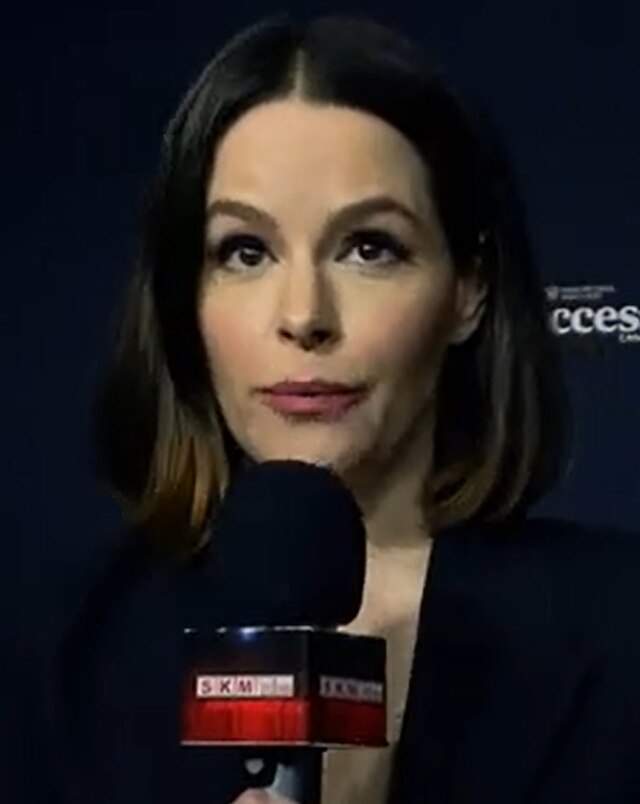
Rachel York (Emily Hampshire)
Played by Emily Hampshire
The embattled pharmaceutical CEO and a central motivator for family survival. Her practical mindset and ambition clash with the emotional turmoil of the euthanasia program. She embodies a modern, corporate approach to power within the family crisis.
- 💼 CEO
- 🧭 Pragmatic
- 🧪 Scientist
- NY
Noah York (Sebastian Chacon)
Played by Sebastian Chacon
A recovering addict whose protective instincts push him to defend his siblings. His aggressiveness and defensiveness intensify the family’s struggle and blur the lines between victim and antagonist. His charisma as a potential artist contrasts with his volatile actions.
- 🛡️ Protector
- 🌀 Turbulent
- 🎹 Artist
- MY
Mia York (Sirena Gulamgaus)
Played by Sirena Gulamgaus
Rachel’s young daughter who is exempt from euthanasia due to being a minor. Her innocence and presence heighten the emotional stakes for the siblings as they confront mortality. She serves as a vulnerable hinge around which the family’s decisions revolve.
- 👶 Innocence
- 🕊️ Hope
- 🧭 Catalyst
- AY
Ashley York (Alanna Bale)
Played by Alanna Bale
A key sister who ends up gravely injured during the struggle and ultimately dies. She embodies the human cost of the conflict and the toll of unchecked power over life-and-death decisions. Her death marks a turning point for the family’s resolve.
- 🩺 Victim
- 💔 Sacrifice
- 🗡️ Tragedy
-
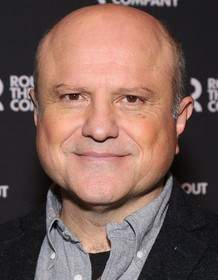
Bob (Enrico Colantoni)
Played by Enrico Colantoni
A D.O.C.S. agent who arrives to enforce the euthanasia program and later manipulates the family through intimidation and threats. He embodies the cold efficiency and moral ambiguity of the state apparatus. His interactions escalate the crisis and reveal the government’s willingness to bend rules for control.
- 🕴️ Enforcer
- 🧪 Bureaucrat
- ⚖️ Threat
- GD
Grace Dawson (Blessing Adedijo)
Played by Blessing Adedijo
Noah’s girlfriend who becomes a casualty of the conflict when a D.O.C.S. agent shoots her. Her death catalyzes the siblings’ responses and underscores the human cost of the policy. Her presence lingers through the aftermath as a symbol of lost potential.
- 💔 Casualty
- 🕊️ Sacrifice
- 💥 Catalyst
Where and When Is Humane Set?
Humane is set in York Family Home, D.O.C.S. Headquarters and Piano Concert Hall (Near future). Here is why the time and place matter to the story.
When
Near future
The story unfolds in a near-future world facing an environmental crisis that drives governments to mandate voluntary as well as conscripted euthanasia. The narrative centers on how policy, surveillance, and emergency measures reshape family dynamics and personal choices. This setting amplifies the moral and political tensions that drive the plot.
Where
York Family Home, D.O.C.S. Headquarters, Piano Concert Hall
The York family home is a modern residence where a dinner reveals the fault lines of a society under a mass euthanasia mandate. The house becomes a pressure cooker for secrets, loyalties, and power plays as characters clash over life and death. The D.O.C.S. headquarters represents the cold, bureaucratic reach of the state, while a later piano concert hall scene offers a stark contrast between personal artistry and political coercion.
- 🏡 Domestic
- 🏛️ Government
- 🎶 Culture
What Are the Themes of Humane?
4 ideas the story keeps returning to, among them Family Duty, State Control and Moral Choice.
-
01
Family Duty
The film probes how a family's love, loyalty, and survival instincts collide with a ruthless state policy. Personal relationships are strained as characters must decide who lives, who dies, and what they owe to one another. The dinner scene acts as a microcosm for the larger ethical crisis facing society.
-
02
State Control
Government power through the D.O.C.S. imposes death as policy, testing the boundaries between authority and morality. The narrative explores coercion, asset freezes, and public shaming as tools of control. Characters navigate the fine line between compliance and resistance under a watchful state.
-
03
Moral Choice
Central characters are forced to weigh self-preservation against family duty and ethical beliefs. The possibility of volunteering for euthanasia raises questions about guilt, responsibility, and the meaning of autonomy. The story treats choice as a spectrum rather than a clear right or wrong.
-
04
Art & Death
Noah's return to piano performance after tragedy underscores the tension between artistic aspiration and political doom. The film contrasts beauty and talent with the brutality of state policy, suggesting that art can be both a solace and a weapon in times of crisis. The concert finale reframes the characters' experiences from death and coercion to memory and resilience.
How Does Humane End?
The last act of Humane and what it means, in 285 words. The ending lands as ambiguous. Big spoilers: read the plot summary first if you have not seen it.
The final act, in full
Throughout the film, the York family’s dinner reveals the stark moral divisions in a dystopian future where the wealthy can opt out of the brutal depopulation scheme, which involves voluntary euthanasia carried out by the government. When their father announces that he and his wife are enlisting, it sparks chaos and anger among the siblings, who are faced with the terrifying choice of who must die to ensure the family’s survival. As the family members turn against each other, fighting bitterly over who should be sacrificed, the situation escalates into violence and betrayal. Noah, the adopted son, becomes the unlikely hero, fighting to save his family from the grim fate they face. When he manages to turn the tide, he insists that none of them should die, exposing the cruelty and hypocrisy of the system. In the climax, Ashley ingeniously fakes her death using her acting skills, creating a distraction to escape with her family. A confrontation ensues with Bob, the government agent, and his men, leading to a chaotic showdown. Despite grave injuries and chaos, Noah’s bravery ultimately helps the family survive. The film ends with a news report that falsely depicts Ashley and Grace as willing participants in the death scheme, framing their actions as a benevolent effort to save the planet. Meanwhile, Bob, the agent behind the scheme, is shown bloodshot and defeated, his plan having failed. The story concludes with the idea that, while the wealthy might try to manipulate or control everything, the resilience and human spirit can prevail even amid dystopian horrors. It emphasizes that true humanity lies in compassion and solidarity, which ultimately helps the York family endure and find a form of salvation in a broken world.
What Kind of Film Is Humane?
Tense in tone, with fast pacing and a moderate story, going by the plot summary.
- Tone
- Tense
- Pacing
- Fast
- Story
- Moderate
- Intensity
- High
- Ending
- Ambiguous
An intensely stressful and claustrophobic thriller that traps a fractured family in a night of escalating moral horror, forcing brutal choices under the shadow of a dystopian regime.
- claustrophobic
- anxious
- unsettling
- desperate
- oppressive
- brutal
- dystopian society
- family conflict
- forced sacrifice
- population control
Content notes: euthanasia, graphic violence, family violence, death of a loved one, psychological torture.
Quiz
How well do you remember Humane? Test yourself on the story.