Conversation Piece 1974


A retired American professor lives alone in a luxurious Roman palazzo until a vulgar Italian marchesa, her lover, her daughter and the daughter’s boyfriend arrive, demanding the upper‑floor apartment. Their intrusion shatters his quiet routine; their manipulations unleash chaos and drive all of their lives toward an unexpected, inevitable turn in Italy.

Does Conversation Piece have end credit scenes?
No!
Conversation Piece does not have end credit scenes. You can leave when the credits roll.
Meet the Full Cast and Actors of Conversation Piece
Explore the complete cast of Conversation Piece, including both lead and supporting actors. Learn who plays each character, discover their past roles and achievements, and find out what makes this ensemble cast stand out in the world of film and television.
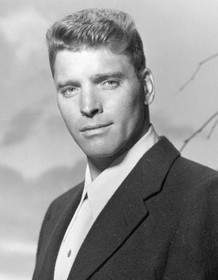
Burt Lancaster
Professor
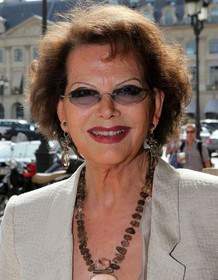
Claudia Cardinale
Professor's Wife (uncredited)

Dominique Sanda
Professor's Mother (uncredited)
Silvana Mangano
Marquess Bianca Brumonti
Helmut Berger
Konrad Huebel
Romolo Valli
Michelli
Guy Tréjan
Art Dealer
Valentino Macchi
Lorenzo Piani
Margherita Horowitz
Maid
Stefano Patrizi
Stefano
Umberto Raho
Police Inspector Bernai
Vittorio Fanfoni
Elvira Cortese
Erminia
Enzo Fiermonte
Police Inspector
Jean-Pierre Zola
Blanchard
Philippe Hersent
Doorman
Claudia Marsani
Lietta Brumonti
George Clatot
External Links and Streaming Options
Discover where to watch Conversation Piece online, including streaming platforms, rental options, and official sources. Compare reviews, ratings, and in-depth movie information across sites like IMDb, TMDb, Wikipedia or Box Office Mojo.





Take the Ultimate Conversation Piece Movie Quiz
Challenge your knowledge of Conversation Piece with this fun and interactive movie quiz. Test yourself on key plot points, iconic characters, hidden details, and memorable moments to see how well you really know the film.
Conversation Piece (1974): A retired American professor living in a Roman palazzo confronts upheaval when a Countess brings her eclectic entourage into his home, leading to tangled relationships, revelations, and tragedy.
Which actor portrays the retired American professor in the film?
Full Plot Summary and Ending Explained for Conversation Piece
Read the complete plot summary of Conversation Piece, including all major events, twists, and the full ending explained in detail. Explore key characters, themes, hidden meanings, and everything you need to understand the story from beginning to end.
A retired American Professor Burt Lancaster lives a solitary life in a luxurious palazzo in Rome, surrounded by art and books, and he interacts mainly with his long-time housekeeper Erminia Elvira Cortese. His world is orderly, quiet, and defined by distance, until an unexpected doorbell punctures the silence and introduces a new, unruly energy into the hallways of his life.
Countess Brumonti [Silvana Mangano] arrives with a plan and a proposal that feels almost theatrical in its boldness. She persuades the Professor to rent the empty apartment on the upper floor to her small circle: her younger lover Konrad Huebel [Helmut Berger], her teenage daughter Lietta Brumonti [Claudia Marsani], and Lietta’s fiancé Stefano [Stefano Patrizi], a conservative entrepreneur. The arrangement instantly unsettles the Professor’s routine, as the tenants tear through the old walls of the palazzo—redecorating spaces, throwing late-night parties, and stumbling into intimate entanglements with one another. The arrival is at once irritating and invigorating, a spark in a life that had grown too predictable.
The Professor finds himself drawn to Konrad, a figure both provocative and opaque. Konrad’s past is hinted at rather than explained: he once worked as a gigolo and was a leftist radical in the protests of 1968, a life that later slid into the shadows of drugs. These revelations sit in tension with the Professor’s own memories of a different world, shaped by a privileged upbringing and the devastations of World War II. The contrast between their histories becomes a quiet bridge between generations, and the Professor’s interest in Konrad deepens into a genuine, almost filial curiosity.
The Professor’s memories widen to include the people closest to him—the Professor’s Wife [Claudia Cardinale] and his Mother [Dominique Sanda]. These memories don’t merely haunt him; they color how he views the new family in his home, a reminder of what was and what could have been. At the same time, the domestic atmosphere is thick with art, conversations about beauty, and the unspoken question of who deserves a place in the Professor’s carefully curated life.
A pivotal moment comes when Konrad, after a night marked by gambling debts, is beaten. The Professor steps in, offering medical care and shelter, and their bond strengthens as they share a concern for each other that transcends the tenants’ quarrels and social boundaries. The dynamics of power, affection, and loyalty swirl around them as Konrad’s presence begins to redefine the Professor’s sense of family and purpose.
During a carefully staged dinner, the Professor declares his tenants to be his “new family” and seems to revel in the vitality they bring to his measured existence. This moment is crystallized in a brief, pointed line that captures the tone of both affection and ambiguity: > “new family.” The table becomes a microcosm of their fractures and alliances, with each character testing the others’ boundaries and loyalties.
Yet the night also lays bare the fractures within Konrad’s past. A dispute erupts over Konrad’s dubious history and his relationship with the Countess. Konrad reveals a dangerous truth: he had spied on her husband in order to shield himself from political retribution, not for greed but as a way to survive the pressures of a fractured political landscape under Franco’s regime. This revelation unsettles the Countess and Stefano, who pull back from Konrad, while the Professor remains morally ambiguous, refraining from taking sides or offering a simple solution.
The tensions escalate until Konrad signs off with a farewell letter addressed to his new “father.” He goes upstairs, and just moments later a gas explosion tears through the building, claiming Konrad’s life and shattering the fragile equilibrium of the palazzo. The Professor blames himself, and the blow leaves him gravely ill, adrift in a storm of guilt and grief that seems destined to extinguish the fragile glow of the life he had just begun to rediscover.
In the final scene, the Professor lies on his deathbed as the Countess returns with Lietta. The Countess insists that Konrad chose suicide to wound those who cared for him, a claim intended to erase the precarious truth of his life. Lietta, however, counterclaims bluntly that Konrad was murdered—an accusation aimed at exposing the coercive forces at work within their circle. The room grows quiet as the Countess leaves, and Lietta’s quiet truth lingers in the air: “Don’t believe her. He didn’t kill himself; they murdered him.” The Professor, overwhelmed by grief, gazes upward and clasps his hands as if praying to something beyond his reach, leaving the stage of life with a sense of unresolved longing and spiritual ache.
In the shadow of a sunlit city, the film quietly examines how art and intellect can coexist with desire, how memory can cradle a life and also unsettle it, and how a single moment of connection can force a man to confront a past he thought he had laid to rest. The palace, the art, and the conversations become more than setting; they are a conscience, a reminder that even a life of privilege cannot easily evade the tremors of love, betrayal, and mortality.

Coming soon on iOS and Android
The Plot Explained Mobile App
From blockbusters to hidden gems — dive into movie stories anytime, anywhere. Save your favorites, discover plots faster, and never miss a twist again.
Sign up to be the first to know when we launch. Your email stays private — always.
Explore the mobile appWatch Trailers, Clips & Behind-the-Scenes for Conversation Piece
Watch official trailers, exclusive clips, cast interviews, and behind-the-scenes footage from Conversation Piece. Dive deeper into the making of the film, its standout moments, and key production insights.
Conversation Piece Themes and Keywords
Discover the central themes, ideas, and keywords that define the movie’s story, tone, and message. Analyze the film’s deeper meanings, genre influences, and recurring concepts.

Unlock the World of Movies with Our Comprehensive Wiki
Dive into our Movie Wiki for in-depth film encyclopedia entries, including cast biographies, production trivia, plot synopses, behind-the-scenes facts, and thematic analyses. Whether you’re researching iconic directors, exploring genre histories, or discovering hidden easter eggs, our expertly curated movie database has everything you need to fuel your cinematic passion.

Similar Movies To Conversation Piece You Should Know About
Browse a curated list of movies similar in genre, tone, characters, or story structure. Discover new titles like the one you're watching, perfect for fans of related plots, vibes, or cinematic styles.



-hbTR_oK2SWsInw.jpg)


Quick Links: Summary, Cast, Ratings, More

What's After the Movie?
Not sure whether to stay after the credits? Find out!
Check out our other apps:

SAT Sphere
Build confidence for the Digital SAT.

Mori Atlas
Discover wild places worth protecting.

Luntero
Search smarter for a home in Amsterdam.

Plot Explained
Unravel movie endings and hidden clues.

Pokechamp
Dive into Pokémon data and battle logic.

Driving Theory
Get ready for your European theory test.

Movie Dust
Plan your next cinema trip with ease.

Musemap
Find art and culture as you travel.

Selkobase
Compare credentials before committing.

Local Manual
Turn an unfamiliar country into practical next steps.

Lernavi
Compare school systems before your next move.

GymRoam
Find a workout stop wherever your plans take you.
Explore Our Movie Platform
New Movie Releases (2026)
Famous Movie Actors
Top Film Production Studios
Movie Plot Summaries & Endings
Major Movie Awards & Winners
Best Concert Films & Music Documentaries
Movie Collections and Curated Lists
© 2026 What's After the Movie. All rights reserved.
Privacy Policy