The Decameron 1971


Pasolini’s The Decameron brims with ribald humor and earthy sensuality, recounting a series of bawdy medieval tales. A swindled Sicilian ends up rich, a fake deaf‑mute infiltrates a convent, a wife hides her lover, a dying priest is duped, brothers take revenge on a sister’s lover, a girl meets her boyfriend on a roof at night, painters wait for inspiration, a crafty priest tries to seduce a friend’s wife, and two friends make a pact to discover what lies beyond death.

Does The Decameron have end credit scenes?
No!
The Decameron does not have end credit scenes. You can leave when the credits roll.
Meet the Full Cast and Actors of The Decameron
Explore the complete cast of The Decameron, including both lead and supporting actors. Learn who plays each character, discover their past roles and achievements, and find out what makes this ensemble cast stand out in the world of film and television.
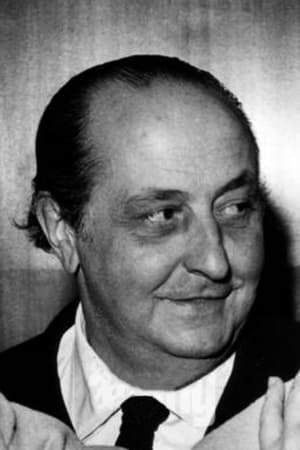
Guido Alberti
Musciatto, Wealthy Merchant
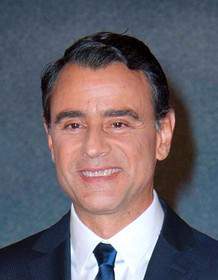
Vincenzo Amato
Masetto of Lamporecchio

Ninetto Davoli
Andreuccio of Perugia
Pier Paolo Pasolini
Allievo di Giotto
Silvana Mangano
The Madonna (uncredited)
Maria Gabriella Maione
Una Madonna
Franco Marletta
Guido Mannari
Compagno di Giotto
Giorgio Iovine
Lizio da Valbona
Giacomo Rizzo
Padre Superiore
Monique van Vooren
Queen of Skulls
Jovan Jovanović
Rustico (scenes deleted)
Angela Luce
Peronella
Franco Citti
Ciappelletto
Lino Crispo
Don Gianni
Gianni Rizzo
Father Superior
Enzo Spitaleri
Monk
Vittorio Fanfoni
Giovanni Filidoro
Carmelo Reale
Man Robbed by Ciappelletto (uncredited)
Giani Esposito
Vittorio Vittori
Don Giovanni
Giuseppe Arrigio
Lorenzo (uncredited)
Elisabetta Genovese
Caterina (uncredited)
Wolfgang Hillinger
Patrizia De Clara
Nun
Luciano Telli
Monk
Detlef Uhle
Giuseppe Zigaina
Monk
Vincenzo Cristo
Salvatore Bilardo
Vincenzo Ferrigno
Giannello
Luigi Seraponte
Antonio Diddio
Mirella Catanesi
Gemmata
Vincenzo De Luca
Erminio Nazzaro
Alfredo Sivoli
E. Jannotta Carrino
Annie Marguerite Latroye
Gerhard Exel
Adriana Donnorso
E. Maria de Juliis
Michele Di Matteo
Giovanni Scagliola
Giovanni Davoli
Patrizia Capparelli
Alibech (scenes deleted)
Lucio Amatelli
(uncredited)
Giuliano Fratello
(uncredited)
Francesco Gavazzi
Riccardo (uncredited)
External Links and Streaming Options
Discover where to watch The Decameron online, including streaming platforms, rental options, and official sources. Compare reviews, ratings, and in-depth movie information across sites like IMDb, TMDb, Wikipedia or Rotten Tomatoes.






Take the Ultimate The Decameron Movie Quiz
Challenge your knowledge of The Decameron with this fun and interactive movie quiz. Test yourself on key plot points, iconic characters, hidden details, and memorable moments to see how well you really know the film.
The Decameron (1971) Quiz: Test your knowledge of Pier Paolo Pasolini's 1971 adaptation of Boccaccio's Decameron.
Who directed the 1971 film The Decameron?
Full Plot Summary and Ending Explained for The Decameron
Read the complete plot summary of The Decameron, including all major events, twists, and the full ending explained in detail. Explore key characters, themes, hidden meanings, and everything you need to understand the story from beginning to end.
Pasolini’s Neapolitan-dialect tapestry reimagines Giovanni Boccaccio’s Decameron as a cinematic mosaic, directed by Pier Paolo Pasolini and framed by the tellings of a Giotto’s-pupil narrator who travels to Naples to paint a mural. The film opens with a Neapolitan ballad playing over the credits, inviting the viewer into a sequence of loosely connected tales that ebb and flow from comedy to bawdy and from moral parable to sly trickery. The structure is as much about mood and setting as it is about plot, and the through-line is the human compass—desire, cunning, luck, and the small cruelties of everyday life in a vibrant city.
Andreuccio of Perugia, [Ninetto Davoli], arrives in Naples on a horse-buying mission, only to become the target of a wealthy woman’s shrewd ploy. She feigns kinship, invites him to supper, and lures him toward a bed where he leaves money and clothes, only to slip into a trap door that dumps him into a trough of filth. After a harrowing escape, he becomes entangled with two tomb-robbers who aim to steal from the Archbishop’s tomb. Andreuccio’s wit surfaces in a dangerous game of deception: he retrieves a ring from the tomb and pretends his search is fruitless, then, as another robbery unfolds, he hides and strikes back when a lead robber taunts his courage. The robber is bitten, the other assailants flee, and Andreuccio emerges with a newfound fortune and a story of improbable luck that will echo throughout Naples.
Across town, the tale of Ciappelletto—[Franco Citti]—unfolds in a stark, humorous, and morally ambiguous fashion. In a convent, a nun’s affair is exposed, the Mother Superior’s own complicity becomes a punch line, and Ciappelletto, a thief and schemer, slides money to a young helper in exchange for sexual favors. The story intensifies as the crowd is drawn into his act of social theater, while Ciappelletto himself moves through a city of spectators with practiced feints and a sharpened sense for who’ll believe what.
Masetto da Lamporecchio, [Vincenzo Amato], is pressed into service at a convent filled with beautiful women after pretending to be deaf and dumb to avoid suspicion. The sisters, initially curious, find themselves drawn to the seemingly mute gardener, and one by one they seek his silence in a cycle of longing and exposure. As the convent fills with a chorus of whispers and desire, Masetto’s ruse becomes a fragile balance between silence and revelation, until the abbess insists on a miraculous cure that would justify keeping a young man in residence.
Peronella, [Angela Luce], winds a clever cuckold plot with her dimwitted husband Giannello. While he pretends to be at work, Peronella hosts her lover in a pot, then uses a heap of theatrical misdirection to convince her husband that the pot contains a buyer—an exchange that requires careful timing as the lovers resume their affair and the husband remains blissfully unaware, teased by the ruse as other scenes of family life continue around them. The scene plays with intimate detail and social embarrassment, delivering light comedy through domestic misdirection.
In the fourth episode, Ser Ciappelletto’s long, wily shadow again moves through Prato and beyond. A Neapolitan merchant-turned-fraudster, Ciappelletto spins a pattern of self-promotion that captivates a monk, who then blesses a reputation built on a string of lies. The tale ends with the monk delivering a sermon praising a saint he never truly knew, and Ciappelletto’s plan succeeds by cunningly shaping the perceptions of those who visit his dying bed. The character remains a study in how reputation can be crafted from misinformation and desire to appear unblemished.
A brief intermission interrupts the main arc with Giotto’s pupil and his companion as they arrive to paint the Basilica of Santa Chiara. This interlude, while short, acts as a bridge to the next set of tales, hinting at the source of the film’s framing device and foreshadowing the visual inspiration that knits the episodes together.
Caterina di Valbona and Riccardo unfold in a romance that crosses social boundaries. Caterina, [Elisabetta Genovese], falls for Riccardo and the two retreat to a makeshift terrace bed for a night of secrecy. When dawn comes, Caterina’s father discovers the couple sleeping naked, the mother’s confusion erupts, and the father faces a choice: deny the match or secure it with a dowry. The father’s solution—arranging a marriage—leads to a wedding on the spot, with the couple embracing their fate as the household’s fortunes shift in a single afternoon.
Elizabeth of Messina and Lorenzo the Sicilian center on a jealous family and a secret tragedy. Elizabeth’s brothers, furious at the romance, lure Lorenzo to a private garden where he is killed and buried. Elizabeth, tormented by grief, discovers Lorenzo’s body and, in a haunting gesture, removes his head and places it within a pot of basil, tending to it as an unseen, living memorial. The tale blends gothic mood with a sharp calculus of power, kin, and the costs of keeping love in a world that conspires to sever it.
Gemmata, with [Mirella Catanesi] in the role, brings a farce of enchantment and deception into a shared domestic space. Don Gianni, a sly opportunist, conjures a mythic ritual designed to open a private life to profit. He provokes Pietro to witness a supposed transformation so Gemmata can be used for work in the fields. The ruse becomes a spectacle of manipulation as Gemmata’s body is described in startling clinical terms, while Gemmata and Pietro confront the ethical boundary of deceit and desire.
Heaven and Hell pairs two Neapolitan men, Meuccio and Tingoccio, as they recount the afterlife and test the boundaries between sacred and profane. Their exchanges blur the lines between sin and salvation, culminating in a dreamlike moment where Meuccio learns that sex, a recurring sin in his life, might not be condemned as mortal in the celestial calculus. The tale toys with belief and consequence, leaving room for doubt, laughter, and moral ambiguity.
The Epilogue returns to the painter’s pupil, who has completed a fresco that narrates the film’s episodes. He marvels at his work and, in a final, pensive moment, asks a question about the nature of art and dreams: Why complete a work when it is so much better just to dream it?
The film closes with the painter’s question echoing through the studio, a quiet meditation on creation, viewer interpretation, and the power of dream to outlast any finished frame.

Coming soon on iOS and Android
The Plot Explained Mobile App
From blockbusters to hidden gems — dive into movie stories anytime, anywhere. Save your favorites, discover plots faster, and never miss a twist again.
Sign up to be the first to know when we launch. Your email stays private — always.
Explore the mobile appWatch Trailers, Clips & Behind-the-Scenes for The Decameron
Watch official trailers, exclusive clips, cast interviews, and behind-the-scenes footage from The Decameron. Dive deeper into the making of the film, its standout moments, and key production insights.
The Decameron Themes and Keywords
Discover the central themes, ideas, and keywords that define the movie’s story, tone, and message. Analyze the film’s deeper meanings, genre influences, and recurring concepts.

Unlock the World of Movies with Our Comprehensive Wiki
Dive into our Movie Wiki for in-depth film encyclopedia entries, including cast biographies, production trivia, plot synopses, behind-the-scenes facts, and thematic analyses. Whether you’re researching iconic directors, exploring genre histories, or discovering hidden easter eggs, our expertly curated movie database has everything you need to fuel your cinematic passion.

Similar Movies To The Decameron You Should Know About
Browse a curated list of movies similar in genre, tone, characters, or story structure. Discover new titles like the one you're watching, perfect for fans of related plots, vibes, or cinematic styles.




Quick Links: Summary, Cast, Ratings, More

What's After the Movie?
Not sure whether to stay after the credits? Find out!
Check out our other apps:

SAT Sphere
Build confidence for the Digital SAT.

Mori Atlas
Discover wild places worth protecting.

Luntero
Search smarter for a home in Amsterdam.

Plot Explained
Unravel movie endings and hidden clues.

Pokechamp
Dive into Pokémon data and battle logic.

Driving Theory
Get ready for your European theory test.

Movie Dust
Plan your next cinema trip with ease.

Musemap
Find art and culture as you travel.

Selkobase
Compare credentials before committing.

Local Manual
Turn an unfamiliar country into practical next steps.

Lernavi
Compare school systems before your next move.

GymRoam
Find a workout stop wherever your plans take you.
Explore Our Movie Platform
New Movie Releases (2026)
Famous Movie Actors
Top Film Production Studios
Movie Plot Summaries & Endings
Major Movie Awards & Winners
Best Concert Films & Music Documentaries
Movie Collections and Curated Lists
© 2026 What's After the Movie. All rights reserved.
Privacy Policy