Contempt 1963


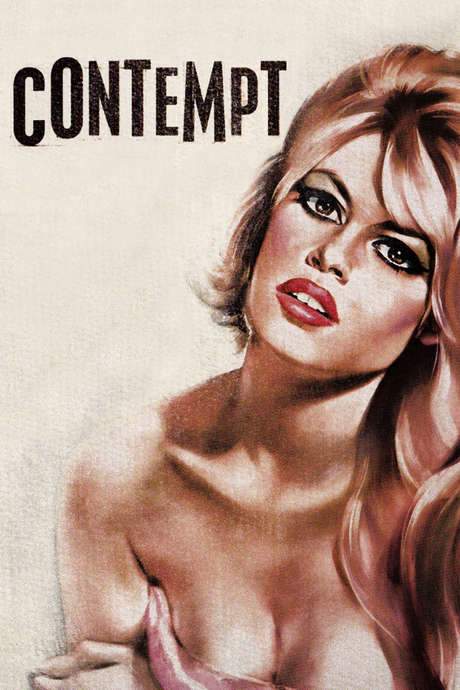
Jeremy Prokosch, a pragmatic producer dissatisfied with his director’s work, hires the legendary Fritz Lang to helm an ambitious adaptation of “The Odyssey.” Fearing the project will flop, he brings in a screenwriter to revitalize the script. As the professional pressures mount, a personal rift erupts between the writer and his wife, intertwining creative ambition with strained relationships.


Does Contempt have end credit scenes?
No!
Contempt does not have end credit scenes. You can leave when the credits roll.
Where to Watch Contempt
See current US streaming, rental, and purchase options for Contempt (1963) via JustWatch.



Streaming availability powered by 
Meet the Full Cast and Actors of Contempt
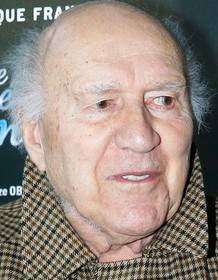
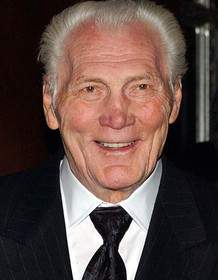
Explore the complete cast of Contempt, including both lead and supporting actors. Learn who plays each character, discover their past roles and achievements, and find out what makes this ensemble cast stand out in the world of film and television.

External Links and Streaming Options
Discover where to watch Contempt online, including streaming platforms, rental options, and official sources. Compare reviews, ratings, and in-depth movie information across sites like IMDb, TMDb, Wikipedia or JustWatch.






Take the Ultimate Contempt Movie Quiz
Challenge your knowledge of Contempt with this fun and interactive movie quiz. Test yourself on key plot points, iconic characters, hidden details, and memorable moments to see how well you really know the film.
Contempt (1963) Quiz: Test your knowledge of the 1963 film Contempt, its characters, production details, and plot.
Which actor plays the American producer Prokosch?
Full Plot Summary and Ending Explained for Contempt
Read the complete plot summary of Contempt, including all major events, twists, and the full ending explained in detail. Explore key characters, themes, hidden meanings, and everything you need to understand the story from beginning to end.
Paul Javal, [Michel Piccoli], a young French playwright who has found commercial success in Rome, receives an offer from the vulgar American producer [Jack Palance] to rework the script for Austrian director [Fritz Lang]‘s screen adaptation of the Odyssey. The proposal promises prestige and a chance to push his career, but it also drags him into a tense triangle of egos where art, money, and desire collide on a grand, sunlit scale.
Paul’s wife, Camille Javal, [Brigitte Bardot], joins him on the first day of the project at Cinecittà, where the air is thick with ambition and the smell of fresh sets. The team gathers to map out how Homer’s epic will translate to the screen, and the atmosphere quickly darkens into a clash of temperaments. After the initial discussions, Prokosch invites the crew to his villa and offers Camille a ride in his two-seat sports car. Camille looks to Paul to decline the invitation, but he passive‑aggressively withdraws, choosing to follow by taxi instead, leaving Camille alone with Prokosch. Paul does not catch up with them until about thirty minutes later, explaining that he was delayed by a traffic accident. The moment marks the start of Camille’s unease and a creeping doubt about her husband’s honesty and loyalties.
Back at their apartment, the couple weighs the subtle tension that has crept into their relationship in the hours since the project began. Camille, unsettled and searching for a grounding in a world that feels increasingly transactional, suddenly declares that she no longer loves him. The quiet confrontation hints at a rift that may be irreparable, even as Paul tries to smooth things over with pragmatism and charm. The tension around the project edges into their personal life, and Camille’s sense of being used—whether as a pawn or a partner—deepens in alarming ways.
Hoping to salvage their fragile bond and the work ahead, Paul convinces Camille to accept Prokosch’s invitation to join them for filming in Capri. The location shifts the dynamics from studio pressure to a sunlit, intoxicating pressure cooker, where a tangle of ambitions plays out against the sea and rocky coastline. Prokosch and Lang are locked in a conflict over the correct interpretation of Homer’s work, a stalemate that is intensified by the language barrier among the German director, the French screenwriter, and the American producer. Francesca, [Giorgia Moll], who acts as interpreter, mediates all conversations and becomes an essential translator of intent and emotion on the set. The back-and-forth is not merely about lines or scenes; it is about power, control, and who gets the final say in shaping a monumental adaptation.
As the discussion grows heated, the film’s inner politics reveal themselves. The screenwriter’s stance—seen by Camille as a potential inversion of domestic loyalties—appears to align with Prokosch against Lang’s vision. The tension crystallizes when Camille, observing the shifting power dynamics, confronts the unsettling possibility that Paul has leant himself to Prokosch to secure professional advantage, even at the cost of her own dignity. Camille’s reaction is stark: she quietly withdraws from the trust she once placed in him, and she makes it clear that her respect for him has soured into contempt. Paul denies any motive beyond professional ties and even offers to sever his involvement with the film, but Camille refuses to recant and departs for Rome with the producer, choosing independence over a compromised collaboration.
The cataclysmic personal unraveling unfolds against the backdrop of the Capri shoot. Behind the scenes, the presence of Lang’s assistant director, [Jean-Luc Godard], and the seasoned eye of the Cameraman, [Raoul Coutard], remind the crew that this is as much a meta‑film about filmmaking as it is a story drawn from epic myth. The production becomes a crucible where artistic intent, market demands, and personal hurt collide, magnified by the fragile alliances formed in the heat of creative tension. The journey through ambition toward revelation leaves the characters altered, even as the process of making a modern epic presses on.
Tragedy strikes when a car crash ends Camille and Prokosch’s lives, a brutal reminder of the film’s fragility and the costs of the power games that fueled it. In the aftermath, Paul—now confronted with the wreckage of his personal and professional life—prepares to depart Capri and return to the theater, while Lang continues to shepherd the project forward. The film they have fought to shape persists, its fate now leaving only the traces of who stood to gain and who stood to lose in a story that began with a script and ended in a crucible of human weather.

Coming soon on iOS and Android
The Plot Explained Mobile App
From blockbusters to hidden gems — dive into movie stories anytime, anywhere. Save your favorites, discover plots faster, and never miss a twist again.
Sign up to be the first to know when we launch. Your email stays private — always.
Explore the mobile appWatch Trailers, Clips & Behind-the-Scenes for Contempt
Watch official trailers, exclusive clips, cast interviews, and behind-the-scenes footage from Contempt. Dive deeper into the making of the film, its standout moments, and key production insights.
Contempt Themes and Keywords
Discover the central themes, ideas, and keywords that define the movie’s story, tone, and message. Analyze the film’s deeper meanings, genre influences, and recurring concepts.
Contempt Other Names and Titles
Explore the various alternative titles, translations, and other names used for Contempt across different regions and languages. Understand how the film is marketed and recognized worldwide.
Similar Movies To Contempt You Should Know About
Browse a curated list of movies similar in genre, tone, characters, or story structure. Discover new titles like the one you're watching, perfect for fans of related plots, vibes, or cinematic styles.






Quick Links: Summary, Cast, Ratings, More

What's After the Movie?
Not sure whether to stay after the credits? Find out!
Check out our other apps:

SAT Sphere
Build confidence for the Digital SAT.

Mori Atlas
Discover wild places worth protecting.

Luntero
Search smarter for a home in Amsterdam.

Plot Explained
Unravel movie endings and hidden clues.

Pokechamp
Dive into Pokémon data and battle logic.

Driving Theory
Get ready for your European theory test.

Movie Dust
Plan your next cinema trip with ease.

Musemap
Find art and culture as you travel.

Selkobase
Compare credentials before committing.

Local Manual
Turn an unfamiliar country into practical next steps.

Lernavi
Compare school systems before your next move.

GymRoam
Find a workout stop wherever your plans take you.
Explore Our Movie Platform
New Movie Releases (2026)
Famous Movie Actors
Top Film Production Studios
Movie Plot Summaries & Endings
Major Movie Awards & Winners
Best Concert Films & Music Documentaries
Movie Collections and Curated Lists
© 2026 What's After the Movie. All rights reserved.
Privacy Policy