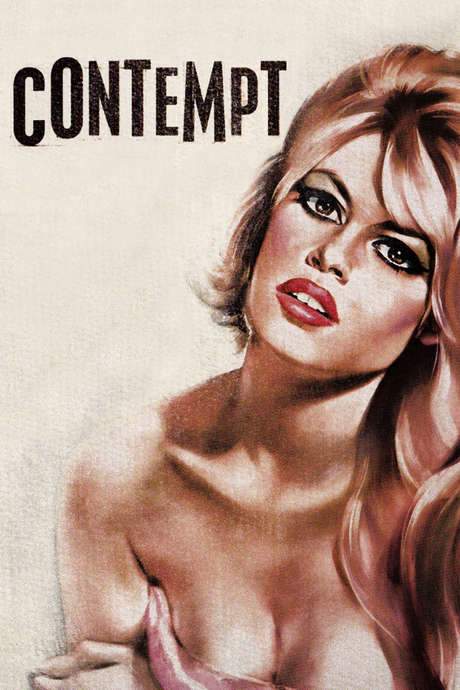
What Is Contempt About?
The premise of Contempt in 286 words, with nothing given away. The full story follows below.
In the glimmering studios of Rome’s Cinecittà and the sun‑drenched cliffs of Capri, a grand cinematic endeavor is taking shape: an ambitious new adaptation of The Odyssey that promises to fuse mythic scale with contemporary spectacle. The atmosphere hums with the clash of languages, the scent of fresh sets, and the ever‑present tension between art and commerce, creating a world where each decision feels both a creative gamble and a business calculation.
Jeremy Prokosch, a pragmatic producer who finds his current director lacking, summons the legendary Fritz Lang to steer the project’s vision. Into this volatile mix steps Paul Javal, a young French playwright whose recent commercial successes have drawn the attention of Hollywood’s most demanding patrons. Eager to prove his versatility, he is tasked with reshaping the ancient epic for a modern audience, a challenge that forces him to navigate the competing demands of a demanding producer and a cinematic icon.
Camille Javal, Paul’s wife, joins the venture at the outset, bringing a personal thread to the otherwise professional tapestry. Her presence highlights the delicate balance between ambition and intimacy, as the couple finds their relationship subtly refracted through the prism of the film’s relentless drive. The multilingual environment, mediated by an interpreter who becomes an unofficial conduit for unspoken wishes, underscores how communication itself can become a battleground.
Against this backdrop of towering egos and lofty aspirations, the story explores the seductive pull of artistic greatness and the quiet frictions that arise when personal lives intersect with monumental creative projects. The tone remains poised between glamorous allure and simmering unease, inviting the audience to wonder how far each character will go to claim their place in a production that promises both triumph and turmoil.
What Happens in Contempt?
The complete story of Contempt, from the first scene to the last, in 761 words (about 3 minutes). Spoilers throughout.
Spoilers ahead
Paul Javal, [Michel Piccoli], a young French playwright who has found commercial success in Rome, receives an offer from the vulgar American producer [Jack Palance] to rework the script for Austrian director [Fritz Lang]‘s screen adaptation of the Odyssey. The proposal promises prestige and a chance to push his career, but it also drags him into a tense triangle of egos where art, money, and desire collide on a grand, sunlit scale.
Paul’s wife, Camille Javal, [Brigitte Bardot], joins him on the first day of the project at Cinecittà, where the air is thick with ambition and the smell of fresh sets. The team gathers to map out how Homer’s epic will translate to the screen, and the atmosphere quickly darkens into a clash of temperaments. After the initial discussions, Prokosch invites the crew to his villa and offers Camille a ride in his two-seat sports car. Camille looks to Paul to decline the invitation, but he passive‑aggressively withdraws, choosing to follow by taxi instead, leaving Camille alone with Prokosch. Paul does not catch up with them until about thirty minutes later, explaining that he was delayed by a traffic accident. The moment marks the start of Camille’s unease and a creeping doubt about her husband’s honesty and loyalties.
Back at their apartment, the couple weighs the subtle tension that has crept into their relationship in the hours since the project began. Camille, unsettled and searching for a grounding in a world that feels increasingly transactional, suddenly declares that she no longer loves him. The quiet confrontation hints at a rift that may be irreparable, even as Paul tries to smooth things over with pragmatism and charm. The tension around the project edges into their personal life, and Camille’s sense of being used—whether as a pawn or a partner—deepens in alarming ways.
Hoping to salvage their fragile bond and the work ahead, Paul convinces Camille to accept Prokosch’s invitation to join them for filming in Capri. The location shifts the dynamics from studio pressure to a sunlit, intoxicating pressure cooker, where a tangle of ambitions plays out against the sea and rocky coastline. Prokosch and Lang are locked in a conflict over the correct interpretation of Homer’s work, a stalemate that is intensified by the language barrier among the German director, the French screenwriter, and the American producer. Francesca, [Giorgia Moll], who acts as interpreter, mediates all conversations and becomes an essential translator of intent and emotion on the set. The back-and-forth is not merely about lines or scenes; it is about power, control, and who gets the final say in shaping a monumental adaptation.
As the discussion grows heated, the film’s inner politics reveal themselves. The screenwriter’s stance—seen by Camille as a potential inversion of domestic loyalties—appears to align with Prokosch against Lang’s vision. The tension crystallizes when Camille, observing the shifting power dynamics, confronts the unsettling possibility that Paul has leant himself to Prokosch to secure professional advantage, even at the cost of her own dignity. Camille’s reaction is stark: she quietly withdraws from the trust she once placed in him, and she makes it clear that her respect for him has soured into contempt. Paul denies any motive beyond professional ties and even offers to sever his involvement with the film, but Camille refuses to recant and departs for Rome with the producer, choosing independence over a compromised collaboration.
The cataclysmic personal unraveling unfolds against the backdrop of the Capri shoot. Behind the scenes, the presence of Lang’s assistant director, [Jean-Luc Godard], and the seasoned eye of the Cameraman, [Raoul Coutard], remind the crew that this is as much a meta‑film about filmmaking as it is a story drawn from epic myth. The production becomes a crucible where artistic intent, market demands, and personal hurt collide, magnified by the fragile alliances formed in the heat of creative tension. The journey through ambition toward revelation leaves the characters altered, even as the process of making a modern epic presses on.
Tragedy strikes when a car crash ends Camille and Prokosch’s lives, a brutal reminder of the film’s fragility and the costs of the power games that fueled it. In the aftermath, Paul—now confronted with the wreckage of his personal and professional life—prepares to depart Capri and return to the theater, while Lang continues to shepherd the project forward. The film they have fought to shape persists, its fate now leaving only the traces of who stood to gain and who stood to lose in a story that began with a script and ended in a crucible of human weather.
Contempt Timeline: Every Key Event in Order
12 key events in the order they happen, from “Paul accepts Prokosch's script rework offer in Rome” to “Lang continues the film; Paul plans his exit”. 12 events name a place, across 9 locations.
- 1
Paul accepts Prokosch's script rework offer in Rome
Paul Javal, a successful French playwright in Rome, agrees to rewrite the script for Fritz Lang's Odyssey adaptation after being approached by Jerry Prokosch. The deal marks the start of a collaboration that will test loyalty, pride, and moral boundaries as the production unfolds.
When:Pre-production, before filming begins Where:Rome (Cinecittà)
- 2
Camille joins Paul at Cinecittà
Camille accompanies Paul on the first day of the project at Cinecittà in Rome. The uneasy balance among Paul, Camille, Prokosch, and Lang foreshadows the tensions that will erupt as the shoot progresses.
When:Day 1, morning Where:Cinecittà, Rome
- 3
Prokosch invites the crew to his villa and offers Camille a ride
Prokosch hosts the crew at his villa and offers Camille a ride in his two-seat sports car. Paul watches for signs of romantic manipulation and growing entanglement between Camille and the producer, setting up a triangle of desire and power.
When:Day 1, late afternoon Where:Prokosch's villa
- 4
Paul withdraws and returns after a delay
Camille looks to Paul to decline the ride, but he withdraws and follows by taxi, leaving Camille alone with Prokosch. Paul later explains that he was delayed by a traffic accident as he reappears on the scene.
When:Evening, Day 1 Where:Prokosch's villa vicinity
- 5
Camille witnesses Paul with Francesca
Camille witnesses Paul groping Prokosch's secretary Francesca, intensifying her suspicions about Paul's loyalty and his intent to use her for Prokosch's advantage. She starts to doubt the sincerity of their relationship and the purpose of the film project.
When:Day 1, evening Where:Prokosch's villa
- 6
Camille declares no love for Paul
Back at their apartment, Paul and Camille confront the rising tension as Camille openly declares that she no longer loves him. The admission shakes the foundations of their marriage and pushes Paul to rethink his own choices.
When:Evening, Day 1 Where:Rome, their apartment
- 7
Capri trip proposed to rekindle love
Hoping to rekindle Camille's affection, Paul convinces her to join Prokosch's invitation to Capri for filming. They depart for Capri to shoot the movie, hoping the change of scenery will salvage their relationship.
When:Soon after Day 1 Where:Capri
- 8
Capri clashes over the Odyssey interpretation
Capri becomes a stage for a clash between Lang and Prokosch over the correct interpretation of Homer's work, with Francesca acting as translator to mediate conversations. The language barrier and differing visions heighten the production tensions.
When:During filming in Capri Where:Capri, on location
- 9
Paul aligns with Prokosch; infidelity debate
Paul sides with Prokosch against Lang by arguing Odysseus left his home due to his wife's infidelity, aligning with the producer's pragmatic view. Camille's suspicion of Paul's servility deepens as she watches the collaboration drift away from romance toward control.
When:Capri filming period Where:Capri
- 10
Confrontation and Camille's departure
Camille deliberately allows Paul to find her in Prokosch's embrace, and in the ensuing confrontation, she implies that Paul has bartered her to Prokosch. Paul denies the accusation and offers to sever his ties with the film, but Camille refuses and departs for Rome with Prokosch.
When:During the Capri confrontation Where:Capri
- 11
Camille and Prokosch die in a car crash
After the confrontation, a car crash kills Camille and Prokosch, ending this personal triangle and leaving Paul to face the consequences of the film’s unraveling.
When:Immediate aftermath of departure from Capri Where:Road near Capri, Italy
- 12
Lang continues the film; Paul plans his exit
In the wake of the tragedy, Lang continues working on the film while Paul prepares to leave Capri and return to the theater. The production persists even as personal ruin overshadows the project.
When:After the crash Where:Capri, on set; later Rome
Who Are the Main Characters in Contempt?
8 characters, among them Paul Javal (Michel Piccoli), Camille Javal (Brigitte Bardot) and Jeremy Prokosch (Jack Palance): who each one is and the part they play in the story. Every profile links to the actor’s page.
-
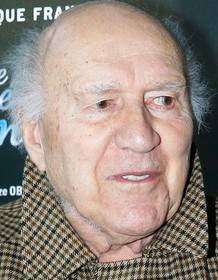
Paul Javal (Michel Piccoli)
Played by Michel Piccoli
A talented but calculating screenwriter who accepts Prokosch’s offer to elevate his status and secure wealth. He often opts for convenience over confrontation, revealing a willingness to trade relationships for professional gain. His passivity in critical moments highlights how far he will go to please the powers behind the project.
- 🎭 Ambition
- 💼 Pragmatism
- 💬 Relationships
- CJ
Camille Javal (Brigitte Bardot)
Played by Brigitte Bardot
Paul’s wife, who grows suspicious of her husband’s loyalties and is drawn to independence. She asserts her own will, ultimately choosing to leave Capri with Prokosch, signaling a personal break from Paul. Her actions reveal the emotional cost of professional machinations.
- 💔 Jealousy
- 🧭 Autonomy
- 🎭 Drama
-
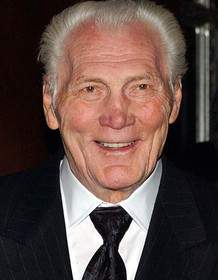
Jeremy Prokosch (Jack Palance)
Played by Jack Palance
A vulgar, powerful American producer who leverages Camille’s vulnerability to press his film agenda. He embodies the cash-driven side of the movie business and uses charisma to manipulate others. His presence accelerates the moral compromise at the film’s core.
- 💼 Producer
- 🔥 Power
- 🤝 Manipulation
- FL
Fritz Lang (Fritz Lang)
Played by Fritz Lang
Austrian director known for his cinematic vision, constrained by language and the constraints of collaboration with the American producer. He embodies artistic integrity pushed against commercial demands, often clashing with Prokosch over interpretation. His involvement heightens the film’s exploration of art versus commerce.
- 🎬 Director
- 🧭 Artistic Vision
- FV
Francesca Vanini (Giorgia Moll)
Played by Giorgia Moll
Acting as the interpreter and mediator on set, she navigates between Lang and Prokosch, shaping conversations and outcomes. Her position gives her unusual leverage, making her central to the set’s diplomacy and miscommunications. Her role reflects how language and translation influence creative decisions.
- 🗣️ Interpreter
- 🤝 Mediator
- LA
Lang's Assistant Director (Jean-Luc Godard)
Played by Jean-Luc Godard
The on-set assistant director who translates and mediates between the major players, often commenting on filmmaking and the conflict. His presence underscores the film’s self-awareness about cinema as a process. He helps maintain the production’s fragile balance amid tensions.
- 🗣️ Intermediary
- 🧭 On-set
- C(
Cameraman (Raoul Coutard)
Played by Raoul Coutard
The cinematographer responsible for the visual look of the production, capturing the on-location tension and the studio scenes. His work frames the drama, turning conflicts into images. He represents the technical craft behind the art-house production.
- 🎥 Cinematography
- 📷 On-set
- S(
Sirene (Linda Veras)
Played by Linda Veras
A small but pivotal role that embodies allure and danger on Capri’s beaches, and also mirrors the film’s themes of temptation and consequence. Her presence intensifies Camille’s envy and the film’s moral stakes.
- 🧜 Siren
- 🎭 Minor Role
Where and When Is Contempt Set?
Contempt is set in Rome, Cinecittà and Capri (1960s). Here is why the time and place matter to the story.
When
1960s
Set in the era of high-concept European cinema, the story unfolds during a contemporary film production in Italy. The tension between director, writer, and producer reflects the era's shifting power dynamics within the industry. The Capri shoot and Rome studio sequences frame a collision between art-house aspiration and commercial imperatives.
Where
Rome, Cinecittà, Capri
The action unfolds across Rome's iconic Cinecittà studios and the island of Capri, where the film's on-location production drives much of the drama. The Italian film industry backdrop highlights tensions between artistic ambition and commercial demands. Locations are used to illustrate the process of adapting Homer’s Odyssey for modern cinema, under the watchful eyes of industry insiders.
- 🎬 Film Production
- 🏛️ Italian Setting
- 🏝️ Capri Location
What Are the Themes of Contempt?
3 ideas the story keeps returning to, among them Power vs. Commerce, Love and Betrayal and Reality vs Illusion.
-
01
Power vs. Commerce
The project becomes a battleground where artistic control clashes with money and market demands. Lang’s artistic stubbornness contends with Prokosch’s commercial pragmatism, revealing how decisions are shaped by prestige and profit. The struggle exposes how personal relationships are weaponized in the push to finish a saleable film.
-
02
Love and Betrayal
Camille’s shifting loyalties expose the fragility of marriage under professional pressure. Paul’s willingness to side with the producer tests their bond and his own integrity. Jealousy and manipulation drive a rift that culminates in a devastating moral turning point.
-
03
Reality vs Illusion
Characters navigate a world where scripts, performances, and real emotions intersect, blurring truth and on-screen illusion. The mythic Odyssey is retold to satisfy contemporary appetites, prompting questions about authenticity. Language barriers on set become a metaphor for miscommunication and perception.
What Kind of Film Is Contempt?
Tense in tone, with slow pacing and a complex story, going by the plot summary.
- Tone
- Tense
- Pacing
- Slow
- Story
- Complex
- Intensity
- High
- Ending
- Sad
A slow-burning, intellectually intense and emotionally draining drama that dissects the corrosive nature of artistic compromise and marital contempt under the deceptively bright Mediterranean sun.
- uneasy
- melancholic
- claustrophobic
- critical
- dissecting
- sun-drenched tension
- marital breakdown
- artistic compromise
- filmmaking process
- infidelity
Content notes: car crash death, emotional infidelity, marital strife.
Quiz
How well do you remember Contempt? Test yourself on the story.