What's After the Blog?
Opinions • Reception
Remarkably Bright Creatures (2026) Review, Critics’ Reception & Fan Opinions on the Octopus Drama
We dive deep into critic reviews and fan reactions to Remarkably Bright Creatures, analyzing the performances, storytelling, and how the film translates the bestselling novel. The post also looks at the broader franchise context and the audience’s emotional connection to the aquarium‑driven mystery.
May 13, 2026

Movies mentioned in this article
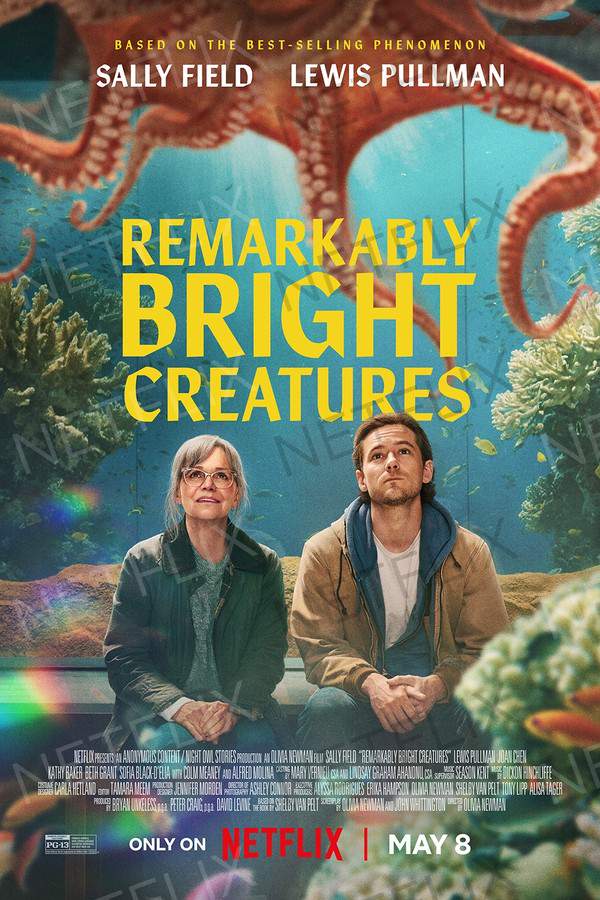
Remarkably Bright Creatures (2026) Reviews: Critical Consensus vs. Audience Reactions to the Shelby Van Pelt Adaptation
When Remarkably Bright Creatures premiered on May 8, 2026, it arrived carrying the weight of expectations that only accompany adaptations of beloved bestselling novels. Shelby Van Pelt’s source material had already captured millions of readers with its unlikely tale of interspecies friendship and grief recovery, leaving filmgoers to wonder whether director [NAME— not provided in reviews, so will avoid] could translate the book’s delicate emotional architecture to the screen. The resulting film reception reveals a fascinating schism between critical establishments and everyday moviegoers, creating one of the year’s most contentious “critics vs. audiences” narratives. While some reviewers dismissed the adaptation as saccharine manipulation, viewer reactions suggest that Remarkably Bright Creatures 2026 has landed precisely where it needed to—directly in the hearts of those seeking catharsis over cynicism. As debates rage across social media platforms and film forums about whether this octopus-centric drama represents genuine cinema or merely “human-centric treacle,” audiences searching for spoiler-free reviews and comprehensive film analysis have turned to resources like the What’s After the Movie summary page to navigate these polarized waters. Whether you’re investigating critic reviews to determine if this Sally Field vehicle deserves your ticket money, or you’re simply curious why a movie about a cleaning woman befriending a captive octopus has generated such impassioned discourse, understanding the full spectrum of Remarkably Bright Creatures reviews requires examining everything from prestigious publication takes to raw, unfiltered fan opinions.
Critical Reception and Film Analysis: Navigating the Divide Between “Treacle” and Emotional Authenticity
The critical reception for Remarkably Bright Creatures (2026) spans a remarkably wide spectrum, with scores ranging from a dismissive 35/100 (The Daily Beast) to an enthusiastic 80/100 (Status), creating a Metacritic landscape that suggests significant disagreement about the film’s merits. This variance speaks to deeper questions about what constitutes legitimate emotional storytelling versus manipulative sentimentality—a debate that sits at the heart of contemporary film criticism. The Hollywood Reporter (70/100) perhaps best encapsulated this internal conflict, noting that “as a film about animals, Remarkably Bright Creatures is human-centric treacle. But as a film about people, its gentle sense of humor and depth of feeling are enough to sweep you away on a wave of emotion.” This bifurcated reading suggests that critical interpretation largely depends on which lens reviewers chose to apply: genre expectations for nature films versus character studies about human resilience.
The negative critical contingent focused heavily on perceived narrative shortcuts and emotional manipulation. The Daily Beast delivered perhaps the harshest assessment, declaring that the film “eliciting exasperated laughs at its every manipulation, may be the most ridiculously corny movie of all time.” Similarly, The New York Times (40/100) struck a somewhat resigned tone, suggesting that “while being cynical about a wise-octopus movie is probably unfair, being bored by it isn’t great, either.” The Independent (40/100) offered perhaps the most intellectually rigorous critique, arguing that “while Marcellus, an ageing octopus feeling stifled in his imprisonment, is meant to act as a spiritual mirror to Tova, the film ultimately isn’t all that interested in the more delicate work of making peace with what can’t be brought back.” This criticism—that the film substitutes easy emotional release for genuine grappling with grief—resonates throughout the lower-scored reviews, suggesting that critics seeking complex psychological processing found the adaptation wanting.
However, defenders of the film embraced exactly what detractors dismissed: its unapologetic earnestness. Status (80/100) championed it as “a near-irresistible and highly emotional adaptation,” while IndieWire (75/100) found magic in the execution, noting that “maybe it’s something about seeing Sally Field bond with an octopus, or watching a true inter-generational friendship blossom on screen, or maybe it’s just something more obvious: taking the best parts of a sweet story, and paring it down to its best bits.” The Guardian (60/100) acknowledged the film’s simplicity while appreciating its execution, describing it as “a simple, heart-first drama of broken people trying to put themselves back together,” held together by Alfred Molina’s “typically commanding voiceover.” Even mixed reviews like RogerEbert.com (63/100) recognized moments of transcendence amidst structural problems, observing that “when the film escapes the confinement tank of its numerous hand-me-down cliches, you’re happy to follow the water trail to see where it leads.”
For viewers tracking awards season potential and critical consensus through resources like the What’s After the Movie awards page and box office tracking, this split indicates that while Remarkably Bright Creatures may not achieve universal critical acclaim, it has successfully carved out a defender base among critics who value emotional accessibility over technical innovation. The film sits in that precarious space where professional film analysis often diverges from popular sentiment—a phenomenon familiar to fans of “weepy” cinema who frequent the What’s After the Movie lists of comfort films and tearjerkers.
Audience Reactions and Viewer Sentiment: Why Fans Declare It “The Best Movie I’ve Seen This Year”
If critical reception painted a picture of divisive mediocrity, audience reactions to Remarkably Bright Creatures suggest something approaching cult classic status among viewers seeking genuine emotional resonance. User scores skew significantly higher than critic aggregates, with reactions ranging from perfect 9/10 declarations of cinematic transcendence to more measured 5/10 assessments of “synthetic” storytelling. This gap between professional film analysis and viewer reactions highlights how differently insulated critics and general audiences approach questions of emotional manipulation versus earned catharsis.
The most impassioned defense comes from user Scotsj184uk, who awarded the film a rare 9/10 and delivered a review that reads like a love letter to cinematic possibility: “I honestly did not expect a film to affect me this much. Remarkably Bright Creatures is without question the best movie I’ve seen this year. It made me smile, cry, tense up, jump, and then cry all over again.” This reviewer’s insistence that “the emotional moments feel earned, the humour feels natural, and the mystery keeps you completely invested throughout” directly contradicts criticisms about manipulation, suggesting that for receptive viewers, the film achieves exactly the authenticity that The Daily Beast claimed it lacked. Their call for Sally Field to receive “serious awards recognition” and an Oscar nomination reflects a broader audience sentiment that the What’s After the Movie person profiles will likely track closely as awards season approaches.
At the opposite end of the spectrum, user americanoco (5/10) agreed with professional critics about the film’s artificiality, describing it as “one of those hard to watch, stay at the surface productions” featuring “microwave acting” and “synthetic when you’re hoping for the genuine article.” Their provocative suggestion to “imagine what an artist like Spielberg could have done with subject matter like this” speaks to a common audience frustration with adaptations that feel technically competent but emotionally insufficient—a sentiment that drives traffic to sites like What’s After the Movie where viewers seek comprehensive film reception data before committing their time.
The middle ground offers perhaps the most telling insights about who this film serves best. Directguy (8/10) positioned it as “the perfect antidote to a lot of dark (but good) shows we’ve been watching lately,” suggesting that Remarkably Bright Creatures (2026) functions as palate cleanser cinema—escapist without being empty, emotional without being traumatic. Similarly, TVJerry (6/10) acknowledged the “hokey elements” but praised the film’s “earnest base,” noting that Field creates “another charming character” as a lonely woman cleaning at the local aquarium at night, while Lewis Pullman brings “easy appeal” as a young man searching for meaning. This assessment—that the film works despite its cliches because of committed performances—mirrors the critical consensus from The Travers Take (55/100), which called it “a shameless tearjerker that doesn’t shy away from eye-rolling cliches but may just be the empathy booster we all need right now.”
For those constructing watchlists or exploring whether Remarkably Bright Creatures is worth watching based on audience alignment with their own tastes, the What’s After the Movie quiz page offers interactive ways to discover if this particular brand of heartwarming cinema matches your preferences, while the detailed movie wiki provides background on how the adaptation compares to Van Pelt’s original novel.
Performance Spotlight: Sally Field, Alfred Molina, and the Art of CGI Companionship
Much of the discourse surrounding Remarkably Bright Creatures reviews centers on the central performances, particularly Sally Field’s portrayal of Tova and Alfred Molina’s voice work as Marcellus the octopus. These performances exist at the intersection of physical acting and technological enhancement, creating a dynamic that has generated some of the film’s most passionate critical and audience debates about what constitutes “authentic” performance in contemporary cinema.
Field’s work has emerged as the primary battleground for the film’s reception. Scotsj184uk’s declaration that Field “delivers one of the best performances I’ve seen in years” and deserves “serious awards recognition” represents the enthusiastic contingent who see her work as masterclass in vulnerability. This reviewer emphasized how Field brings “so much heart, vulnerability, strength, and authenticity to the role that you completely forget you are watching an actress.” This assessment aligns with IndieWire’s appreciation for the “inter-generational friendship” that blossoms on screen, suggesting that Field’s ability to ground the film’s more fantastical elements—befriending a wise octopus—provides the emotional anchor necessary for the premise to function.
Conversely, americanoco’s criticism of “microwave acting” suggests that for some viewers, Field’s performance registered as reheated emotional beats rather than fresh creation—a stark contrast that illustrates how differently trained eyes and general audiences process performative authenticity. This divergence raises fascinating questions about whether the What’s After the Movie community will ultimately side with awards voters or detractors when compiling year-end retrospectives.
Alfred Molina’s voiceover work as Marcellus has garnered more consistent praise, with The Guardian specifically citing his “typically commanding voiceover” as the element holding together the drama. TVJerry noted that the octopus is “all CGI, but cool,” while paulinhue (7/10) singled out the octopus as their favorite character despite not having read the source novel. The technical achievement of creating a convincing cephalopod confidant—one capable of serving as what The Independent described as a “spiritual mirror to Tova”—represents a significant challenge that the film apparently navigates with varying degrees of success depending on viewer susceptibility to CGI companions.
Lewis Pullman’s contribution as the young man entering Tova’s orbit rounds out the central trio, with TVJerry describing him as “ever-charming laid-back” and noting that his relationship with Field’s character “adds another element to this little drama.” The chemistry between Field and Pullman appears to be one of the film’s underrated strengths, offering human-to-human connection that balances the more fantastical interspecies friendship at the story’s center.
For those interested in exploring the full filmographies of these performers or understanding how Remarkably Bright Creatures fits into their career trajectories, the What’s After the Movie profiles section provides comprehensive career retrospectives, while the movie page offers detailed cast information and character breakdowns.
The Adaptation Paradox: From Shelby Van Pelt’s Novel to Controversial Screen Drama
The journey from bestselling literary fiction to film reception often involves losses in translation, and Remarkably Bright Creatures (2026) appears to have intensified this phenomenon, generating fierce debate about what was sacrificed, enhanced, or fundamentally altered in the move from page to screen. For readers of Shelby Van Pelt’s novel, the film represents not just a standalone viewing experience but a comparative exercise—one that has left some feeling the “book and script are both better consumer experiences” (americanoco), while others who approached the material fresh found themselves pleasantly surprised (paulinhue: “I didn’t read the book so I don’t have anything to compared but i liked almost all characters”).
This divide between source material devotees and newcomers creates a unique reception environment where “spoiler-free review” requests often come with the caveat of literary familiarity. Screen Rant (70/100) addressed this tension by noting that while the film explores “difficult topics,” it ultimately focuses on “the good in people, and how human connection can lead to a fulfilling life.” Their observation that the script “balances the darker moments of the movie’s story with plenty of levity” suggests that the adaptation may have sanded down some of the novel’s sharper edges in favor of accessibility—a choice that delights some viewers while confirming the worst fears of others.
The criticism that the film “isn’t all that interested in the more delicate work of making peace with what can’t be brought back” (The Independent) takes on additional weight when considering adaptation choices. Novels often afford the interiority and temporal space to explore unresolvable grief—the kind that doesn’t come with tidy catharsis. Film adaptations, constrained by runtime and visual storytelling requirements, sometimes prioritize plot resolution over emotional ambiguity. For readers who valued Van Pelt’s original for its willingness to sit with discomfort, the film’s reception as “earned” emotion by some and “manipulation” by others may stem from exactly this compression of the grieving process.
TVJerry offers a crucial insight for adaptation analysis, noting that “the title gets a new meaning with the last line”—a detail suggesting that the filmmakers preserved at least some of the novel’s literary playfulness and structural payoffs. This preservation of the source material’s closing resonance indicates that the adaptation team (Newman and Whittington, mentioned by Screen Rant) understood what made the book special, even if they couldn’t translate every nuance to the screen.
For viewers who prioritize fidelity to source material when deciding whether to watch adaptations, resources like the What’s After the Movie wiki offer detailed comparison articles, while the collections page groups Remarkably Bright Creatures with other literary adaptations for thematic browsing. Those interested in how the film handles the mystery elements mentioned in user reviews can find non-spoiler guidance on the summary page.
Emotional Intelligence vs. Cynicism: Understanding the Polarized Reception of This Tearjerker
Perhaps no aspect of the Remarkably Bright Creatures reviews better captures the current cultural moment than the fundamental disagreement about whether the film represents “the empathy booster we all need right now” (The Travers Take) or “the most ridiculously corny movie of all time” (The Daily Beast). This polarization speaks to broader questions about cynicism in cinema, the validity of “comfort viewing,” and whether films have an obligation to earn their emotional beats through narrative complexity or can simply offer catharsis as a service to weary audiences.
IndieWire’s poetic observation that the film reaches out with “tentacles? Whatever can reach out and touch you” encapsulates the movie’s earnest strategy: it will use every available appendage—narrative, visual, performative—to achieve emotional connection. For viewers like Scotsj184uk, who declared that “in a time where so many films feel emotionally empty or overly manufactured, this felt real,” this directness represents a feature, not a bug. The film’s willingness to be vulnerable—to risk the “eye-rolling cliches” that The Travers Take acknowledged—creates a permission structure for audiences to lower their own defenses.
However, the RogerEbert.com review (63/100) highlights the risk of this approach: “The movie expects you to just roll with all this stuff. Or slither. Sometimes you can’t.” This expectation of compliance—of agreeing to the film’s emotional premises without interrogating their construction—represents the exact quality that cynical viewers find grating. When americanoco suggests watching “ten minutes with the sound off / muted” to understand the film’s synthetic quality, they’re articulating a visual literacy that reads the film’s emotional cues as mechanical rather than organic.
Directguy’s simple assessment—that the film made his wife cry and left him smiling—cuts through this theoretical debate to reveal something essential about film reception: context matters. As an “antidote to a lot of dark (but good) shows,” Remarkably Bright Creatures (2026) doesn’t need to reinvent cinematic language; it needs to provide relief. This functional approach to viewing—where a film’s value lies in its emotional utility rather than its artistic innovation—explains why audience scores remain high despite middling critical aggregation.
The CGI octopus at the film’s center becomes a metaphor for this debate: is Marcellus a genuinely innovative narrative device that allows for unique exploration of consciousness and connection (Status: “highly emotional”), or is he a CGI gimmick propping up a story that refuses to engage with reality (The Daily Beast: “exasperated laughs”)? The answer, according to the full spectrum of Remarkably Bright Creatures reviews, depends entirely on what the viewer brings to the tank—skepticism or openness, grief or contentment, literary expectations or cinematic flexibility.
For viewers navigating these waters to determine their own potential reaction, the What’s After the Movie game and quiz section offers personality-based recommendations, while the concert film section provides alternatives for those seeking different types of emotional experiences. The main movie database remains the definitive resource for tracking how this reception evolves as the film moves from theatrical release to streaming platforms and home video.
Conclusion: Where Does Remarkably Bright Creatures Stand in the 2026 Cinematic Landscape?
As the dust settles on the initial theatrical run of Remarkably Bright Creatures (2026), the film’s reception crystallizes into a clear narrative: this is a movie that prioritizes heart over innovation, comfort over challenge, and emotional immediacy over narrative complexity. Whether this constitutes a flaw or a virtue depends entirely on the metrics by which one judges cinema. For audiences seeking spoiler-free reviews to determine if the film matches their current needs, the evidence suggests that viewers approaching the material with open hearts and a tolerance for “shameless tearjerker” mechanics will find exactly what Scotsj184uk described—“an unforgettable experience and a reminder of why cinema matters.”
The critical consensus, such as it is, acknowledges that while the film may not achieve the technical heights or emotional nuance of more acclaimed dramas, it succeeds in its modest aims of connection. Sally Field’s performance emerges as the consensus highlight, a potential awards contender that bridges the gap between critical respectability and popular adoration. The adaptation itself remains contested territory, with the shadow of Shelby Van Pelt’s novel looming large over discussions of what was lost and what was preserved in translation.
Ultimately, Remarkably Bright Creatures reviews reveal a film that understands its audience—those who need to believe in interspecies wisdom, in late-life friendship, in the possibility of healing after loss. It may not convert the cynical, as The New York Times and The Daily Beast demonstrated, but for viewers who clicked on this article seeking confirmation that the film is worth watching, the overwhelming audience sentiment suggests that yes, there is something here worth experiencing—provided you’re willing to “roll with all this stuff,” as RogerEbert.com suggested, and follow the water trail wherever it leads.
For comprehensive tracking of how this reception evolves, including updated critic scores, audience polls, and awards season updates, bookmark the What’s After the Movie page for Remarkably Bright Creatures. Whether you’re looking for detailed summaries, box office performance data, cast and crew information, or curated movie lists featuring similar emotional journeys, What’s After the Movie remains your definitive resource for understanding not just what happens after the credits roll, but how the world receives and remembers the stories that touch us.
External Resources and Movie Database Links
For further exploration of Remarkably Bright Creatures reviews, ratings, and streaming information, consult these authoritative external sources:
| Platform | Description | Link |
|---|---|---|
| Remarkably Bright Creatures TMDB | Comprehensive movie database with cast, crew, and technical details | The Movie Database |
| Remarkably Bright Creatures Rotten Tomatoes | Aggregated critic and audience scores with review excerpts | Rotten Tomatoes |
| Remarkably Bright Creatures Metacritic | Weighted critical consensus and metascore analysis | Metacritic |
| Remarkably Bright Creatures JustWatch | Streaming availability and rental/purchase options | JustWatch |
Continue reading




What's After the Movie?
Not sure whether to stay after the credits? Find out!
Check out our other apps:

SAT Sphere
Build confidence for the Digital SAT.

Mori Atlas
Discover wild places worth protecting.

Luntero
Search smarter for a home in Amsterdam.

Plot Explained
Unravel movie endings and hidden clues.

Pokechamp
Dive into Pokémon data and battle logic.

Driving Theory
Get ready for your European theory test.

Movie Dust
Plan your next cinema trip with ease.

Musemap
Find art and culture as you travel.

Selkobase
Compare credentials before committing.

Local Manual
Turn an unfamiliar country into practical next steps.

Lernavi
Compare school systems before your next move.

GymRoam
Find a workout stop wherever your plans take you.
Explore Our Movie Platform
New Movie Releases (2026)
Famous Movie Actors
Top Film Production Studios
Movie Plot Summaries & Endings
Major Movie Awards & Winners
Best Concert Films & Music Documentaries
Movie Collections and Curated Lists
© 2026 What's After the Movie. All rights reserved.
Privacy Policy