Ladies First (2026) Reviews and Reception: Is This Gender-Flip Comedy Worth Watching?
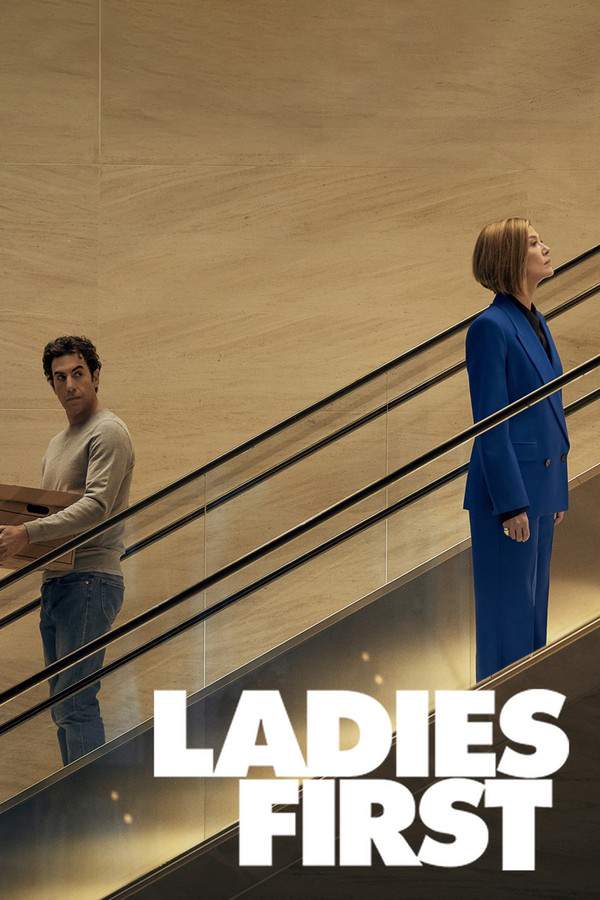
When Netflix dropped Ladies First on May 22, 2026, audiences immediately knew they were getting something provocative—but whether that provocation landed as brilliant satire or dated pandering remains one of the most divisive questions in recent streaming comedy. Directed by Thea Sharrock and headlined by Rosamund Pike and Sacha Baron Cohen, this high-concept gender-reversal comedy arrived with the ambitious goal of flipping patriarchal power dynamics on their head, yet the critical and audience reception has been anything but unanimous. If you’re searching for honest Ladies First reviews, wondering about the critic consensus, or trying to determine whether this film deserves a spot on your weekend watchlist, you’re not alone. Moviegoers are actively seeking spoiler-free reception analysis, digging through polarized Rotten Tomatoes scores, and debating whether the film’s feminist messaging succeeds as entertainment or stumbles as preachy agenda.
The premise itself—following a chauvinist businessman who wakes up in an alternate reality where women hold institutional power—immediately evokes comparisons to 2000s body-swap comedies and 1980s battle-of-the-sexes farces. But in 2026’s cultural landscape, where conversations around gender, power, and workplace dynamics have evolved significantly, viewers are questioning whether this approach feels freshly subversive or embarrassingly retrograde. At What’s After the Movie, we’ve analyzed the full spectrum of Ladies First (2026) reception, from scathing professional critiques to impassioned user defenses, to give you the complete picture of how this controversial comedy is playing across different demographics and critical perspectives. Whether you’re interested in detailed movie summaries, cast and crew profiles, or interactive movie quizzes, our comprehensive Ladies First movie page offers everything you need to contextualize these reviews.
Critical Consensus: Why Critics Are Divided on Ladies First (2026) and Its Dated Satire
The professional critical reception for Ladies First (2026) reveals a stark divide between those who appreciate its performative energy and those who find its fundamental premise irredeemably stale. Scoring anywhere from a dismal 16/100 to a moderate 60/100 across major outlets, the film has failed to achieve anything resembling consensus, with the majority of critics landing in the mixed-to-negative range between 30 and 50 points. This spread reflects not just differing senses of humor, but fundamental disagreements about whether gender-flip comedy remains a viable vehicle for social commentary in contemporary cinema.
Several reviewers have been particularly scathing about the film’s temporal dislocation. Katie Rife delivered perhaps the most cutting assessment, noting that “maybe back in the ’80s this premise would have seemed fresh; at this point, it’s practically reactionary.” This critique resonates throughout multiple reviews suggesting that Sharrock’s execution feels trapped in amber, recycling “ancient ‘battle of the sexes’ jokes” (as Jacob Oller described them) that fail to acknowledge how gender discourse has evolved beyond simple role-reversal scenarios. Oller specifically targeted the supporting cast—including respected veterans like Fiona Shaw and Charles Dance—accusing the film of having these “slumming heavy-hitters” perform material beneath their talents, going through motions that feel mechanically extracted from decades-old comedy templates.
Todd Gilchrist expanded this critique into a broader indictment of the film’s intellectual ambition, arguing that rather than “stirring a debate, or even inspiring deeper cultural introspection, Sharrock and her collaborators deliver a trifle.” For Gilchrist and similarly minded critics, the cardinal sin isn’t just being unfunny—it’s being intellectually lazy. His observation that “Ladies First relies on far too many ideas from the past — cinematic even more than cultural” suggests a film that not only borrows stale comedic premises but fails to update them for a world where gender relations have become infinitely more nuanced than simple power inversion.
Lisa Kennedy pinpointed the mechanism of this failure, criticizing what she called “the easy feminism of winks and role reversals,” suggesting that the film’s surface-level engagement with gender politics—simply flipping who holds the door open or who expects sexual favors—constitutes a hollow approximation of actual feminist filmmaking. This sentiment dovetails with Alex Harrison’s assessment that the team “should have spent a little less time on thinking up gender-flipped jokes and more time wondering whether they actually had a coherent story worth telling,” reducing the feature to “a comedy sketch premise stretched to feature length.”
However, the critical landscape isn’t entirely hostile. John Anderson offered a contrarian take, praising the film for inviting “pointed as well as pungent jokes,” and noting that “the opportunities are fully exploited, sometimes with enormous wit.” Frank Scheck occupied a middle ground, acknowledging that while the film “moves swiftly enough, with the gags coming at such a consistent pace, that inevitably some of them land,” the salvation comes primarily from the performers rather than the script. Scheck highlighted how Cohen “amusingly lean[s] into his character’s humiliations” while Pike “appealingly revel[s] in her character’s dominance,” with the supporting cast “going through their paces like the pros they are.”
William Bibbiani provided perhaps the most nuanced critical perspective, suggesting that the film “effectively skewers institutionalized misogyny and sexist comedy movie tropes,” but noting a crucial loss in translation from the original short film. According to Bibbiani, “the message was clearer and more powerful in the original short, which was allowed to be disturbing without also having to be funny.” This distinction—between effective social commentary and compromised mainstream comedy—captures the essential tension at the heart of Ladies First’s mixed reception. For critics seeking bold, disturbing satire, the film’s obligation to generate laughs while maintaining likable characters may have diluted its impact, leaving it stranded between genres and satisfying neither those seeking pure comedy nor those seeking incisive cultural critique.
Audience Reception: The Polarized Viewer Reactions and Gender Divide in Ladies First Reviews
If professional critics found themselves divided by Ladies First (2026), general audiences have responded with even more extreme polarization, generating a binary love-it-or-hate-it reception pattern that reveals as much about contemporary viewer biases as about the film itself. User scores swing wildly between perfect 10/10 ratings and scathing 0/10 dismissals, creating a bimodal distribution that suggests the film functions as a Rorschach test for viewers’ preexisting beliefs about gender, comedy, and “woke” culture in entertainment.
The most striking pattern in user-generated Ladies First reviews involves the explicit gendering of reception. Several male-identifying reviewers have dismissed the film as preachy propaganda, with Sibgat blasting it as “such a bad movie about the ‘MEN are bad’ slop,” and demanding that “this constant making women a victim trope should be stopped like ten years ago.” This reviewer contextualized their criticism within broader anxieties about Netflix’s content strategy, accusing the platform of “pushing an agenda hard without making actually something enjoyable.” Similarly, itm741 contested the film’s basic premise, arguing that “the idea that women are some kind of underclass in America in 2026 is ridiculous,” suggesting the film’s central conflict feels anachronistic in an era of perceived corporate equality.
Conversely, female reviewers often contextualize the film within lived experiences of workplace discrimination. Angel080 praised the film for “show[ing] the reality of the corporate world,” insisting that “corporate in North America is still very sexist!” This perspective aligns with elliepaul, who suggested that low ratings stem from demographic bias, noting: “It’s funny to see why this is rated so low. Because it’s rated by predominantly male critics.” Ellie’s review celebrates the film for exploring “reverse gender stereotypes and demonstrat[ing] how it’s a ridiculous construct,” suggesting that male viewers’ discomfort with seeing themselves reflected in traditionally subordinate roles validates the film’s premise.
The most emotionally resonant user review comes from leahchana57, who defended the film against “overwhelmingly negative reviews which seemed off to my intuition,” describing Ladies First as “a poignant ‘gotcha’ in the age of Jeffrey Epstein and the Me Too movement.” This reviewer interpreted the gender-flip premise not as literal prediction but as satirical exaggeration designed to make male viewers “eat their [expletive]” and confront “what that old system has cost everyone.” For leahchana57, the film ultimately achieves “balance” where “love wins out,” validating the feminine “power of compassion and human dignity.”
However, the film has also attracted purely aesthetic criticism divorced from political readings. WatchinMovies delivered a devastating comparison, calling it a “virtual rip-off of ‘What Women Want’, which was so much better and funnier than this trash,” and dismissively labeling modern progressive comedy as “this new WOKE stupidity.” This reviewer recommended avoiding Ladies First entirely in favor of the Mel Gibson vehicle. urbanmagic similarly mourned “what a terrible waste of the immense talents of Rosamund Pike and Emily Mortimer,” criticizing “superficial and predictable” writing and “truly bad television sitcom” direction.
Not all negative reviews stem from political opposition, however. UncleWillard provided a idiosyncratic dismissal based primarily on casting preferences (“I’ll never like anything Sasha Cohen is in”), while SamMap offered qualified praise (“I think it’s genius! A few scene are meh.. but the movie has a great message”), demonstrating that even positive viewers acknowledge uneven execution.
The most enthusiastic endorsement came from Viewer19876, who praised the film for avoiding the “preachy or flat” traps common to message comedies, instead calling it “executed in an entertaining and original way.” This reviewer specifically appreciated that it felt “adjacent to the world of 2000s comedies,” suggesting nostalgia for a specific era of studio comedy that balances wit with sentimentality. Meanwhile, Hrantnice1 offered a pithy defense claiming the film “was made for ladies that why they he ratings are not as high as they should be,” implicitly acknowledging the gender gap in reception while celebrating the targeted demographic appeal.
This stark polarization—between viewers who see vital social commentary and those who see humorless agenda-pushing—makes Ladies First (2026) one of the most contentious streaming releases of the year. For audiences wondering whether to invest their time, these divergent reactions suggest that one’s enjoyment depends heavily on their tolerance for explicit gender discourse in comedy and their affinity for the lead performers.
Performances vs. Material: Analyzing Rosamund Pike and Sacha Baron Cohen in Ladies First
One consistent thread across both positive and negative Ladies First (2026) reviews involves the apparent disconnect between the film’s A-list cast and the quality of the material they’re performing. While few critics outright condemn the performances themselves, there’s widespread acknowledgment that the screenplay fails to match the caliber of its leads, creating a tension that ultimately defines the viewing experience for many audience members.
Rosamund Pike’s portrayal of Alex—the powerful female executive in the film’s matriarchal alternate reality—generates the most consistent praise, though even her supporters note limitations. Frank Scheck described Pike as “appealingly reveling in her character’s dominance,” suggesting she brings a charismatic authority that elevates potentially one-dimensional power-trip scenes. Viewer19876 specifically cited “Rosamund Pike’s performance as Alex was brilliant and I found myself really rooting for the character,” indicating that despite the script’s heavy-handed messaging, Pike manages to create genuine human empathy. However, urbanmagic represents the opposing perspective, calling the casting “a terrible waste of the immense talents of Rosamund Pike,” implying that even her considerable skills cannot salvage underwritten material.
Sacha Baron Cohen’s involvement proves even more divisive, with pre-existing feelings about the comedian strongly coloring reception. Frank Scheck noted Cohen “amusingly lean[s] into his character’s humiliations,” suggesting he commits fully to the physical comedy and ego-deflation required by the role. However, UncleWillard opened their review with an absolute prohibition: “First off and foremost, I’ll never like anything Sasha Cohen is in. I just dont like the guy and dont think he’s funny.” This suggests that for viewers with established antipathy toward Cohen’s brand of confrontational comedy, Ladies First offers no reconciliation or departure from his established persona.
The supporting cast—specifically mentioned across multiple reviews—includes esteemed British actors Fiona Shaw, Charles Dance, and Emily Mortimer, all of whom critics agree deserve better material. Jacob Oller’s description of them as “slumming heavy-hitters” implies a prestige cast performing beneath their capabilities, while urbanmagic specifically lamented the waste of “Emily Mortimer” alongside Pike. Alex Harrison acknowledged that the production values themselves aren’t the issue, calling it “a competently, if unexceptionally, mounted production by director Thea Sharrock,” suggesting that technical competence and capable performances cannot compensate for fundamental conceptual flaws.
Benjamin Lee’s review highlighted a crucial performance-related tension: “For a film so unashamedly silly, it’s also incredibly, tiresomely un-fun and, by the end, laughably earnest, as if we should all be learning a very important lesson.” This critique suggests that the cast’s efforts to balance broad comedy with sincere messaging result in tonal whiplash, with actors struggling to navigate abrupt shifts between slapstick and solemnity. The performers are tasked with selling not just jokes but ideology, and according to Lee, this dual obligation renders the experience “tiresome” despite the cast’s best efforts.
What emerges from this performance analysis is a portrait of actors caught between their professional obligation to elevate weak material and the script’s refusal to provide genuine character development beyond gender-flipped archetypes. While Pike’s commanding presence and Cohen’s committed physicality generate sporadic entertainment value, the consensus suggests that even star power cannot overcome a screenplay that Katie Rife characterized as belonging to a different era entirely. For viewers primarily interested in actor filmographies or cast-driven storytelling, Ladies First may offer sufficient star-watching value, but those seeking coherent character arcs beyond gender-role reversal may find the performances trapped within the film’s conceptual limitations.
Is Ladies First (2026) Worth Watching? Final Verdict, Viewer Guide, and Where to Stream
Determining whether Ladies First (2026) deserves your precious viewing hours requires honest assessment of your tolerance for high-concept gender satire and your affinity for the specific comedic styles on display. Based on the comprehensive critical and audience reception analysis above, this film occupies a peculiar middle ground: too earnest for viewers seeking pure escapism, yet too silly for those wanting rigorous social critique. It exists in a tonal uncanny valley that has alienated as many viewers as it has empowered, making a one-size-fits-all recommendation impossible.
For prospective viewers, the decision tree branches along several specific preferences. You should prioritize watching Ladies First if you harbor nostalgia for early-2000s studio comedies with explicit moral messaging, appreciate Rosamund Pike’s screen presence enough to overlook uneven material, or specifically seek content that validates feminine power structures within corporate settings. Viewer19876’s comparison to “the world of 2000s comedies” provides an accurate litmus test—if you fondly recall the era of high-concept romantic comedies that weren’t afraid to moralize while entertaining, this may satisfy your algorithm. Similarly, if leahchana57’s framing of the film as a “gotcha” against Epstein-era misogyny resonates with your viewing priorities, the satirical elements may land with greater impact than critics suggest.
Conversely, you should skip this title if you generally dislike Sacha Baron Cohen’s comedic persona (as UncleWillard emphatically does), if you find gender-role-reversal premises inherently dated or reductive, or if you prefer satire that prioritizes subtlety over “winks and role reversals” (per Lisa Kennedy). Viewers who align with WatchinMovies’ recommendation to watch What Women Want instead should heed that advice—the 2000 Mel Gibson vehicle apparently handles similar themes with greater comedic dexterity, though it arguably lacks the explicit feminist framing of Ladies First.
The film’s availability across streaming platforms makes sampling low-risk for existing Netflix subscribers, though we recommend consulting JustWatch for current streaming availability in your region. For comprehensive box office data, award season tracking, and curated movie collections featuring similar titles, bookmark our main Ladies First movie page at What’s After the Movie.
Ultimately, Ladies First (2026) functions best as a conversation starter rather than a definitive statement on gender politics. Its greatest utility may lie in sparking post-viewing debates about whether its premise constitutes clever satire or “easy feminism,” whether Sacha Baron Cohen’s humiliation comedy still resonates in 2026, and whether Netflix’s algorithmic content strategy prioritizes ideological messaging over entertainment value. Whether you emerge laughing, cringing, or philosophizing, the film undeniably provokes reaction—which, in an era of forgettable streaming content, may constitute its own strange victory. For those still undecided, our movie summaries and interactive quizzes offer additional context to help you decide if this controversial comedy deserves your next movie night.
External Links and Resources
| Site | Link |
|---|---|
| Ladies First IMDB | IMDB |
| Ladies First TMDB | TMDB |
| Ladies First Wikipedia | Wikipedia |
| Ladies First Rotten Tomatoes | Rotten Tomatoes |
| Ladies First Metacritic | Metacritic |
| Ladies First JustWatch | JustWatch |